

Benefits of xAI Acquisition of X
 Suyash Raizada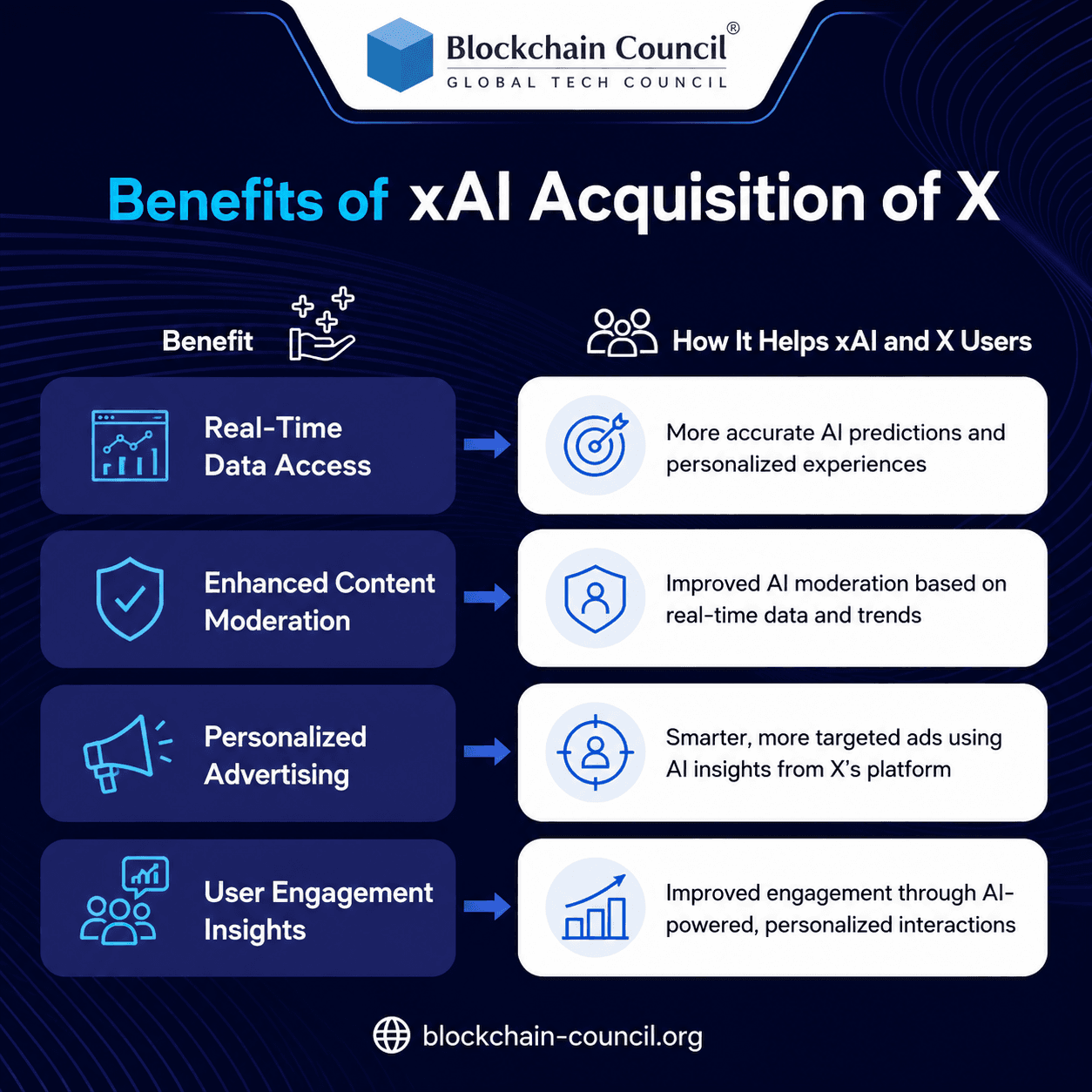
The integration of artificial intelligence into social media platforms has been accelerating for years, but the strategic alignment between xAI and X (formerly Twitter) represents something more ambitious. It signals a shift toward deeply integrated, real-time AI systems that operate at global scale.
The acquisition of X by xAI is not just a corporate move. It is a technological convergence that combines massive real-time data streams with advanced AI capabilities. This combination has the potential to redefine user experiences, digital communication, advertising, and content moderation.

This article explores the key benefits of xAI’s acquisition of X, explains how it impacts users and businesses, and examines its long-term implications.
Understanding xAI and X
xAI is an artificial intelligence company focused on building advanced AI systems capable of reasoning, learning, and interacting with real-world data. X, on the other hand, is one of the largest real-time social platforms, hosting millions of daily interactions.
The combination of these two entities creates a powerful ecosystem. X provides real-time data, while xAI brings advanced processing and decision-making capabilities. Together, they form a system that can learn, adapt, and respond instantly.
To understand the technical foundations behind such systems, professionals often explore programs like the Agentic AI expert certification and the AI Expert certification, which focus on building intelligent, autonomous AI systems.
Key Benefits of xAI Acquisition of X
Real-Time Data Access
One of the most significant advantages of this acquisition is access to real-time data. X generates vast amounts of user-generated content every second, including opinions, trends, and interactions.
By integrating this data with AI systems, xAI can train models that are more accurate and context-aware. This leads to better predictions, improved recommendations, and more relevant user experiences.
For example, during global events, AI systems can analyze millions of posts instantly to identify trends and provide insights. This level of responsiveness was not possible with static datasets.
Enhanced Content Moderation
Content moderation has always been a challenge for social media platforms. Traditional systems rely on predefined rules and manual review, which can be slow and inconsistent.
With xAI’s capabilities, moderation becomes more dynamic. AI can analyze context, detect harmful content, and adapt to new patterns in real time.
This improves platform safety while reducing the workload on human moderators. It also ensures that decisions are more consistent and scalable.
Personalized Advertising
Advertising is a major revenue driver for social platforms, and personalization plays a key role in its effectiveness.
By leveraging AI insights from X’s data, xAI can deliver highly targeted advertisements. These ads are based on user behavior, preferences, and real-time interactions.
Professionals working in this domain can enhance their skills through the AI Powered digital marketing certification, which focuses on using AI to optimize marketing strategies.
For businesses, this means higher engagement rates and better return on investment. For users, it results in more relevant and less intrusive ads.
Improved User Engagement Insights
Understanding user behavior is essential for improving platform experiences. The integration of xAI allows for deeper analysis of engagement patterns.
AI can identify what content resonates with users, how they interact with posts, and what drives engagement. This information can be used to improve content recommendations and platform design.
For example, creators can receive insights into which posts perform best and why. This helps them refine their strategies and connect more effectively with their audience.
Smarter AI-Driven Interactions
The integration of advanced AI models enables more intelligent interactions on the platform. Users can interact with AI assistants that provide information, answer questions, and even generate content.
Programs like the Claude AI expert certification focus on building conversational AI systems that can handle complex interactions.
These capabilities enhance user experience by making the platform more interactive and responsive.
Real-World Applications
News and Information Dissemination
X has always been a major source of real-time news. With AI integration, the platform can filter misinformation, highlight credible sources, and provide context for trending topics.
This improves the quality of information available to users and helps combat the spread of false content.
Business Intelligence
Companies can use AI-powered insights from X to understand market trends, customer preferences, and competitor strategies.
For example, a brand launching a new product can analyze user reactions in real time and adjust its marketing strategy accordingly.
Developer Ecosystem
The integration also opens opportunities for developers. By combining AI capabilities with social data, developers can build innovative applications.
Professionals interested in this area can benefit from the AI Powered coding expert certification, which focuses on creating AI-driven applications.
Challenges and Considerations
Data Privacy
Access to real-time data raises concerns about privacy. Ensuring that user data is handled responsibly is critical.
Companies must implement strong security measures and comply with regulations to maintain trust.
Bias and Ethical Concerns
AI systems can reflect biases present in their training data. With access to large-scale social data, there is a risk of amplifying these biases.
Addressing this requires careful design and continuous monitoring.
Over-Reliance on AI
While AI improves efficiency, over-reliance can lead to reduced human oversight. Balancing automation with human judgment is essential.
Future Implications
The acquisition of X by xAI represents a step toward fully integrated AI ecosystems. In the future, we can expect platforms where AI not only analyzes data but also actively participates in interactions.
This could lead to more personalized experiences, improved decision-making, and new forms of digital communication.
Industries such as marketing, media, and technology will continue to evolve as AI becomes more deeply integrated into their operations.
Conclusion
The benefits of xAI’s acquisition of X are significant and far-reaching. From real-time data access and enhanced moderation to personalized advertising and improved engagement insights, this integration has the potential to transform how social platforms operate.
However, these benefits come with challenges that must be addressed carefully. Privacy, ethics, and human oversight remain critical considerations.
As AI continues to evolve, the combination of advanced intelligence and real-time data will shape the future of digital ecosystems. Those who understand and adapt to these changes will be better positioned to succeed in this rapidly evolving landscape.
FAQs
1. What is xAI and how is it related to X?
xAI is an artificial intelligence company focused on building advanced AI systems, while X is a social media platform known for real-time interactions. The acquisition connects AI capabilities with massive user-generated data. This allows for more intelligent processing of information. It enhances platform functionality and user experience. The relationship creates a powerful technological ecosystem.
2. What are the main benefits of this acquisition?
The main benefits include real-time data access, improved content moderation, and personalized advertising. It also enhances user engagement insights and AI-driven interactions. These improvements make the platform more efficient and user-friendly. Businesses benefit from better targeting and analytics. Overall, it transforms how the platform operates.
3. How does real-time data improve AI performance?
Real-time data allows AI systems to stay updated with current trends and behaviors. This improves accuracy and relevance. AI can respond quickly to changes in user activity. It also enhances decision-making capabilities. This leads to better predictions and insights.
4. How will users benefit from this integration?
Users will experience more personalized content and improved interactions. AI-driven features make the platform more engaging. Content moderation becomes more effective. Users also receive more relevant advertisements. Overall, the experience becomes smoother and more intuitive.
5. What impact does this have on digital marketing?
Digital marketing becomes more targeted and efficient. AI analyzes user behavior to deliver personalized ads. This improves engagement and conversion rates. Businesses can optimize campaigns in real time. It increases return on investment.
6. Is data privacy a concern?
Yes, data privacy is a major concern. Handling large amounts of user data requires strong security measures. Companies must comply with regulations. Transparency is important for maintaining trust. Proper safeguards are essential.
7. How does AI improve content moderation?
AI can analyze content quickly and accurately. It detects harmful or inappropriate material. It adapts to new patterns in real time. This improves consistency and efficiency. It reduces the need for manual review.
8. What industries benefit the most?
Industries such as marketing, media, and technology benefit significantly. These sectors rely on data and user engagement. AI enhances their operations. It improves decision-making and efficiency. This creates new opportunities.
9. Can businesses use these insights effectively?
Yes, businesses can use AI insights to understand customers better. They can optimize products and services. Real-time data helps in making informed decisions. It improves competitiveness. This leads to growth.
10. What role does AI play in user engagement?
AI analyzes user behavior and preferences. It provides personalized recommendations. This increases engagement. It also improves user satisfaction. AI makes interactions more meaningful.
11. Are there risks of AI bias?
Yes, AI systems can reflect biases in data. This can affect decision-making. Continuous monitoring is required. Ethical practices must be followed. Addressing bias is important.
12. How does this affect developers?
Developers gain access to new tools and data. They can build innovative applications. AI integration expands possibilities. It creates new opportunities. Developers can enhance their skills.
13. What is the future of AI in social media?
AI will become more integrated into platforms. It will enhance interactions and decision-making. Personalization will improve. New features will emerge. AI will play a central role.
14. Can AI replace human moderators?
AI can assist moderators but not fully replace them. Human judgment is still important. AI handles large volumes of content. Humans manage complex decisions. A balanced approach is needed.
15. How does AI help in trend analysis?
AI analyzes large datasets quickly. It identifies patterns and trends. This helps businesses and users. It improves decision-making. Trend analysis becomes more accurate.
16. What challenges does this integration face?
Challenges include data privacy, system complexity, and bias. Integration requires resources and planning. Security must be maintained. Continuous updates are needed. These challenges must be addressed.
17. Is this beneficial for small businesses?
Yes, small businesses can benefit from targeted marketing. AI tools improve efficiency. They provide valuable insights. This helps in growth. It levels the playing field.
18. How does AI improve advertising?
AI delivers personalized ads. It analyzes user preferences. This increases engagement. Ads become more relevant. It improves marketing results.
19. What skills are needed to work in this field?
Skills include AI knowledge, data analysis, and programming. Understanding algorithms is important. Certifications can help. Continuous learning is necessary. Practical experience is valuable.
20. How will this shape the future of technology?
This integration will drive innovation. AI will become more advanced. Digital ecosystems will evolve. New opportunities will emerge. It will shape the future significantly.
Related Articles
View All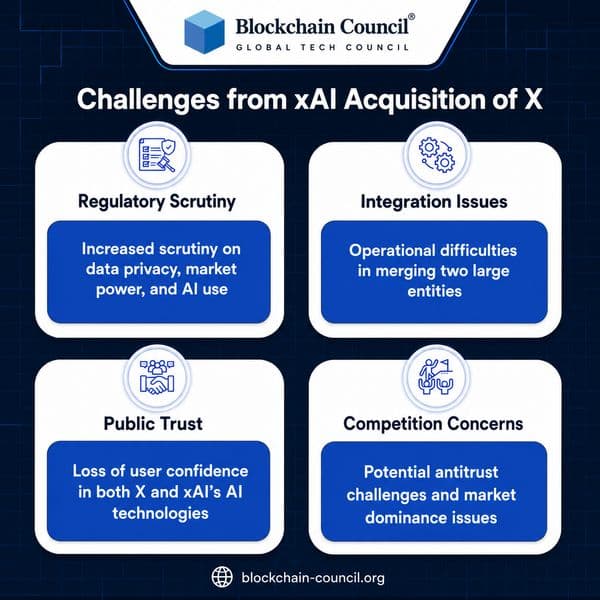
Infographics
Challenges from xAI Acquisition of X
Explore the major challenges arising from xAI’s acquisition of X including privacy concerns, AI ethics, regulation, misinformation, and platform integration risks.
Infographics
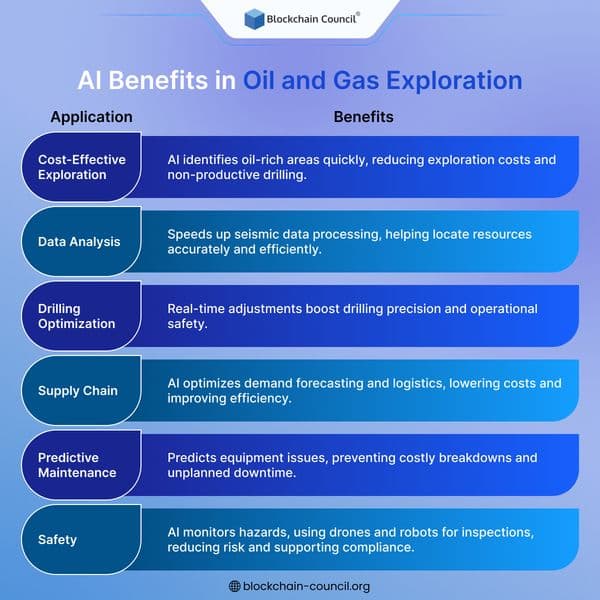
AI Benefits in Oil and Gas Exploration
AI in oil and gas exploration improves resource discovery, predictive maintenance, and operational efficiency using advanced data analytics.

Infographics
Benefits of Blockchain Digital Product Passports
Blockchain digital product passports improve compliance, supply chain traceability, and consumer trust with tamper-proof records, smart contracts, and privacy-preserving proofs.
Trending Articles
The Role of Blockchain in Ethical AI Development
How blockchain technology is being used to promote transparency and accountability in artificial intelligence systems.
AWS Career Roadmap
A step-by-step guide to building a successful career in Amazon Web Services cloud computing.
What is AWS? A Beginner's Guide to Cloud Computing
Everything you need to know about Amazon Web Services, cloud computing fundamentals, and career opportunities.