

AI Agent Implementation Challenges and Risks
 Suyash Raizada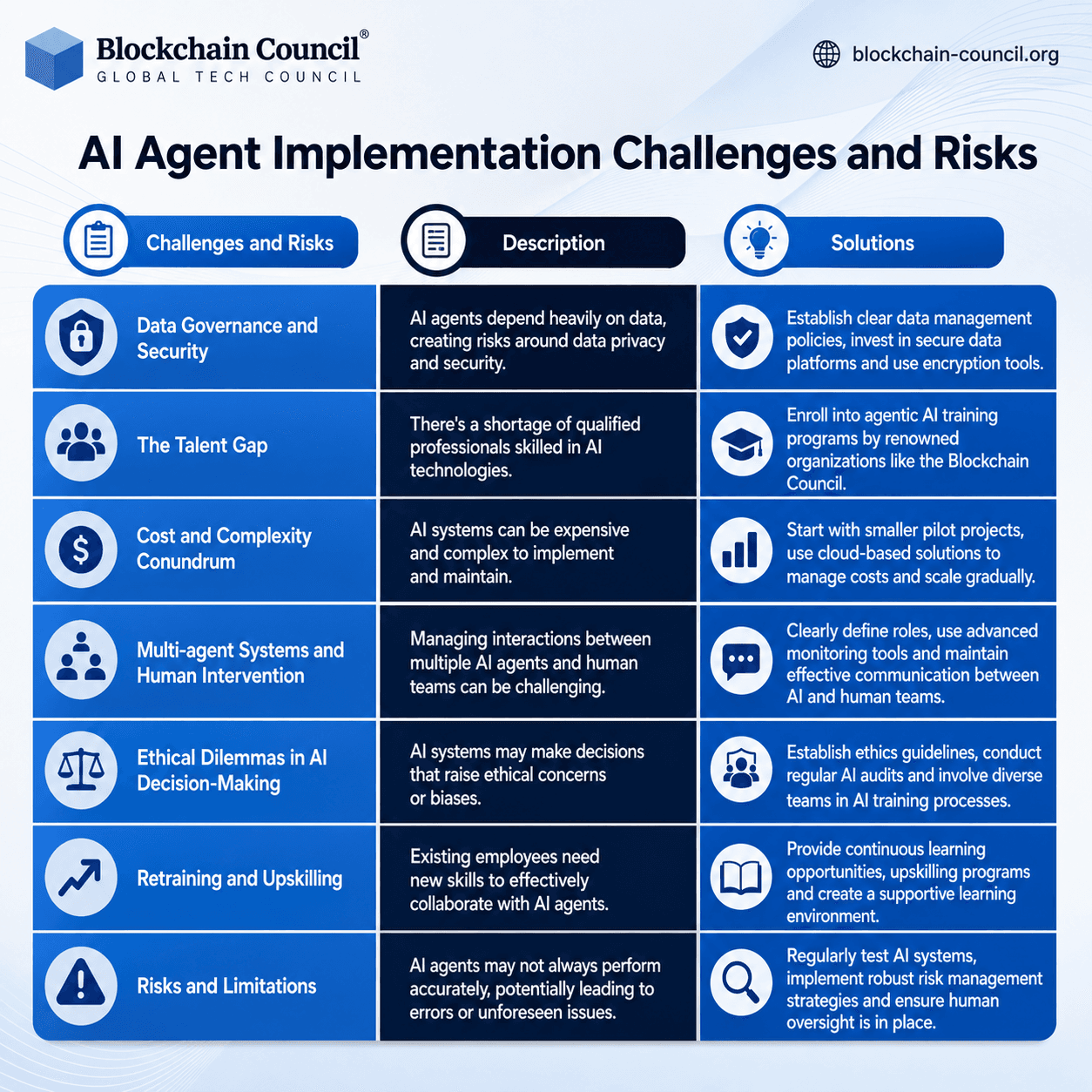
Artificial Intelligence (AI) agents are transforming industries by enabling automation, decision-making, and intelligent interaction with complex environments. From customer service chatbots to autonomous vehicles and enterprise workflow systems, AI agents are becoming an integral part of modern digital infrastructure.
However, implementing AI agents is not as simple as deploying software and expecting instant results. Organizations face numerous challenges and risks, including technical complexity, ethical concerns, data privacy issues, and operational uncertainties. Understanding these challenges is essential for successful AI adoption.

This article provides an in-depth analysis of the implementation challenges and risks associated with AI agents, along with real-world examples, recent developments, and practical strategies for mitigation. It also emphasizes the importance of professional training through certifications such as the Agentic AI expert certification, AI expert certification, and Claude AI Certification.
What Are AI Agents?
AI agents are systems designed to perceive their environment, process information, and take actions to achieve specific goals. They can operate autonomously or semi-autonomously, making them highly valuable in dynamic and data-driven environments.
Key Characteristics
AI agents are goal-oriented, adaptive, and capable of learning from data. They interact with users, systems, and environments, making them suitable for applications such as automation, analytics, and decision-making.
Why AI Agent Implementation Is Complex
Implementing AI agents involves integrating multiple technologies, including machine learning, natural language processing, and data analytics. Unlike traditional software, AI systems require continuous learning and adaptation.
Factors Contributing to Complexity
Integration with existing systems
Dependence on large datasets
Need for continuous monitoring and updates
Requirement for specialized skills
This complexity often leads to significant implementation challenges.
Major Challenges in AI Agent Implementation
1. Data Quality and Availability
AI agents rely heavily on data for training and decision-making. Poor-quality data can lead to inaccurate results and unreliable performance.
Real-World Example
In healthcare, inaccurate patient data can result in incorrect diagnoses by AI systems, potentially causing serious consequences.
2. Technical Complexity
Developing AI agents requires expertise in programming, machine learning, and system integration. Many organizations lack the necessary technical skills.
Professionals can build these skills through programs like the AI Powered coding expert Course.
3. Integration with Legacy Systems
Many organizations operate on outdated systems that are not compatible with modern AI technologies. Integrating AI agents into these systems can be challenging and costly.
4. Scalability Issues
AI agents must handle large volumes of data and interactions. Scaling these systems without compromising performance is a significant challenge.
5. Cost of Implementation
AI development, deployment, and maintenance require substantial investment. This includes infrastructure, talent, and ongoing updates.
Key Risks Associated with AI Agents
1. Data Privacy and Security Risks
AI agents often process sensitive data, making them vulnerable to security breaches. Unauthorized access can lead to data leaks and legal consequences.
Example
Financial institutions using AI agents must ensure strict data protection to avoid breaches.
2. Bias and Ethical Concerns
AI systems can inherit biases from training data, leading to unfair or discriminatory outcomes.
Example
Hiring algorithms may favor certain demographics if trained on biased data.
3. Lack of Transparency
AI agents often operate as “black boxes,” making it difficult to understand how decisions are made.
4. Over-Reliance on Automation
Organizations may become overly dependent on AI, reducing human oversight and increasing risk.
5. Operational Risks
AI agents may fail or behave unpredictably, especially in complex environments.
Recent Developments in AI Agent Risks
Increased Regulation
Governments are introducing policies to ensure responsible AI usage.
Explainable AI (XAI)
Efforts are being made to improve transparency and interpretability.
AI Governance Frameworks
Organizations are adopting frameworks to manage AI risks effectively.
Integration with Generative AI
AI agents are increasingly using generative models, adding new layers of complexity and risk.
Industry-Specific Challenges
Healthcare
Data sensitivity
Regulatory compliance
Accuracy requirements
Finance
Security risks
Fraud detection challenges
Regulatory constraints
Retail and Marketing
AI agents are widely used in customer engagement and marketing strategies. Professionals can enhance their expertise through the AI powered digital marketing course.
Manufacturing
Integration with machinery
Real-time decision-making
Strategies to Mitigate AI Risks
Improve Data Quality
Ensure accurate, clean, and relevant data for training AI models.
Implement Strong Security Measures
Use encryption, access controls, and monitoring systems to protect data.
Ensure Ethical AI Practices
Develop guidelines to minimize bias and ensure fairness.
Maintain Human Oversight
Combine AI automation with human judgment to reduce risks.
Continuous Monitoring and Updates
Regularly evaluate AI performance and update models.
Importance of AI Skills and Certifications
To address implementation challenges, professionals must develop strong AI skills. Certifications such as:
help individuals gain expertise and stay competitive in the job market.
Future Outlook
The future of AI agents will involve:
Improved transparency and explainability
Stronger regulatory frameworks
Enhanced security measures
Greater integration with other technologies
Organizations that address current challenges effectively will benefit from AI-driven innovation.
Best Practices for AI Agent Implementation
Start with clear objectives
Use high-quality data
Ensure ethical compliance
Invest in skilled professionals
Monitor performance continuously
Ethical Considerations
Protect user privacy
Avoid algorithmic bias
Ensure accountability in decision-making
Conclusion
AI agents offer significant benefits but come with considerable challenges and risks. From data quality issues to ethical concerns and technical complexities, organizations must carefully plan and manage AI implementation.
By adopting best practices, investing in skills, and ensuring responsible AI usage, businesses can successfully navigate these challenges and unlock the full potential of AI agents.
FAQs
1. What are AI agent implementation challenges?
AI agent implementation challenges include data quality issues, technical complexity, and integration difficulties. Organizations must manage these challenges carefully. Poor planning can lead to failures. Continuous monitoring is required. Skills are essential. Challenges are significant.
2. Why is data important for AI agents?
Data is essential for training and decision-making. High-quality data improves accuracy. Poor data leads to errors. Data must be clean and relevant. Continuous updates are needed. It is crucial for performance.
3. What are the risks of AI agents?
Risks include privacy concerns, bias, and security issues. AI systems may behave unpredictably. Ethical concerns arise. Organizations must manage risks. Continuous monitoring helps. Risks are significant.
4. How can AI bias be reduced?
Bias can be reduced by using diverse datasets and monitoring outputs. Ethical guidelines help. Regular audits are important. Transparency improves trust. Continuous improvement is needed. It is manageable.
5. Are AI agents secure?
Security depends on implementation. Strong measures are required. Data protection is essential. Monitoring systems help. Risks exist. Security must be prioritized.
6. What industries face AI challenges?
Industries such as healthcare, finance, and retail face challenges. Applications vary. Risks differ by sector. Adoption is increasing. Challenges are common. Solutions are evolving.
7. Can small businesses implement AI agents?
Yes, but costs and skills may be barriers. Cloud solutions help. Implementation must be planned. Benefits can be significant. Accessibility is improving. It is possible.
8. What is explainable AI?
Explainable AI improves transparency in decision-making. It helps users understand AI outputs. Trust increases. It reduces risks. Adoption is growing. It is important.
9. How does AI affect jobs?
AI automates tasks and changes roles. New opportunities are created. Skills are required. Adaptation is necessary. Impact varies. It reshapes industries.
10. What is the cost of AI implementation?
Costs include development, infrastructure, and maintenance. Investment can be high. Long-term benefits may outweigh costs. Planning is essential. Costs vary. It depends on scale.
11. How can organizations reduce AI risks?
Organizations can reduce risks through planning and monitoring. Security measures help. Ethical practices are important. Continuous updates are needed. Training improves outcomes. Risk management is essential.
12. What is the role of regulations in AI?
Regulations ensure responsible AI use. They protect users. Compliance is required. Policies are evolving. Organizations must adapt. Regulations are important.
13. Can AI agents fail?
Yes, AI agents can fail due to errors or unexpected situations. Monitoring is important. Backup systems help. Failures can be minimized. Risks exist. Management is necessary.
14. What skills are needed for AI agents?
Skills include programming and data analysis. AI knowledge is essential. Continuous learning is required. Certifications help. Skills improve effectiveness. Demand is growing.
15. How does AI improve efficiency?
AI automates tasks and reduces manual work. Productivity increases. Accuracy improves. Costs decrease. Efficiency improves. It is valuable.
16. What is the future of AI agents?
The future includes advanced capabilities and wider adoption. AI will improve autonomy. Integration will increase. Innovation will continue. Impact will expand. Growth is expected.
17. How does AI affect decision-making?
AI analyzes data and provides insights. Decisions become data-driven. Accuracy improves. Efficiency increases. It supports users. It is effective.
18. What are ethical concerns in AI?
Concerns include bias, privacy, and transparency. Responsible use is important. Guidelines are needed. Monitoring helps. Ethics are essential. Awareness is increasing.
19. Why are AI certifications important?
Certifications validate skills and knowledge. They improve job prospects. Employers value expertise. Learning becomes structured. Opportunities increase. They are beneficial.
20. How can I start learning AI?
Start with basic concepts and programming. Take courses and certifications. Practice regularly. Learn from experts. Stay updated. Skills will improve.
Related Articles
View All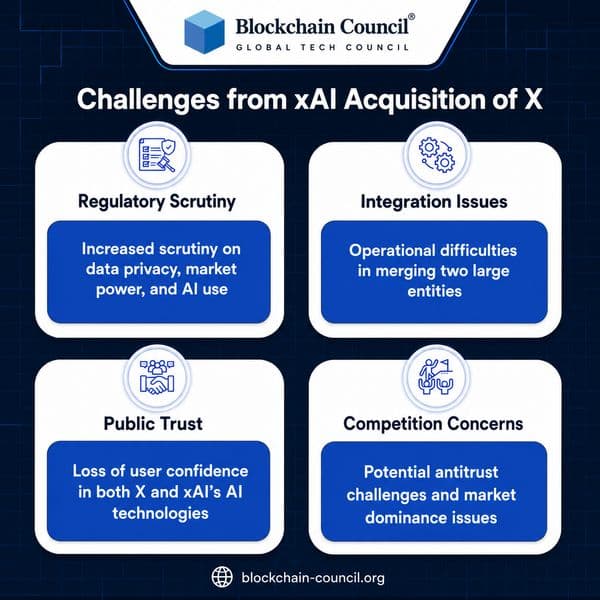
Infographics
Challenges from xAI Acquisition of X
Explore the major challenges arising from xAI’s acquisition of X including privacy concerns, AI ethics, regulation, misinformation, and platform integration risks.
Infographics
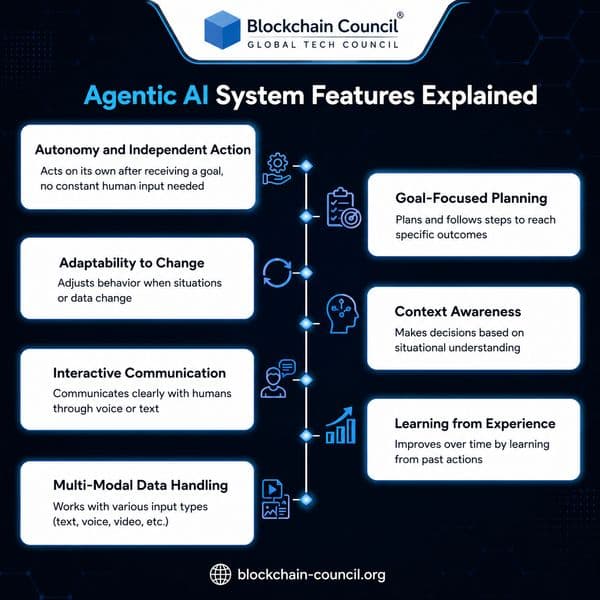
Agent AI System Features Explained
Explore the key features of Agentic AI systems including autonomy, planning, memory, reasoning, adaptive learning, and multi-agent collaboration.
Infographics
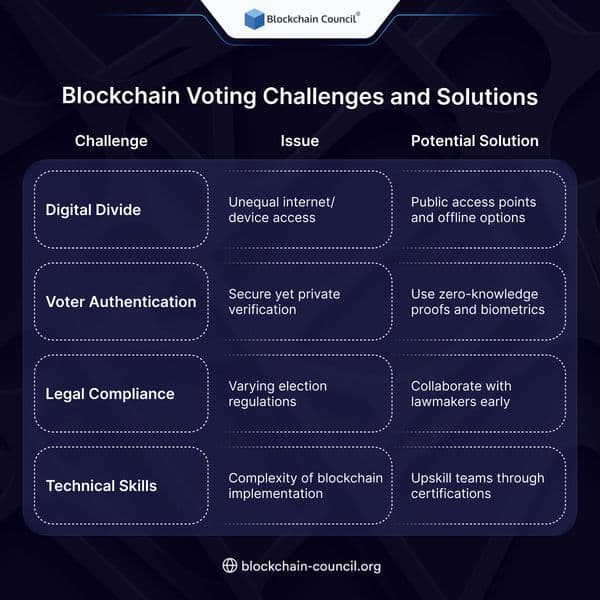
Blockchain Voting Challenges and Solutions
Understand the challenges of blockchain voting systems and explore solutions for secure, transparent, and reliable elections.
Trending Articles
How Blockchain Secures AI Data
Understand how blockchain technology is being applied to protect the integrity and security of AI training data.

Can DeFi 2.0 Bridge the Gap Between Traditional and Decentralized Finance?
The next generation of DeFi protocols aims to connect traditional banking with decentralized finance ecosystems.
How to Install Claude Code
Learn how to install Claude Code on macOS, Linux, and Windows using the native installer, plus verification, authentication, and troubleshooting tips.