

AI in Energy Efficiency Optimization
 Suyash Raizada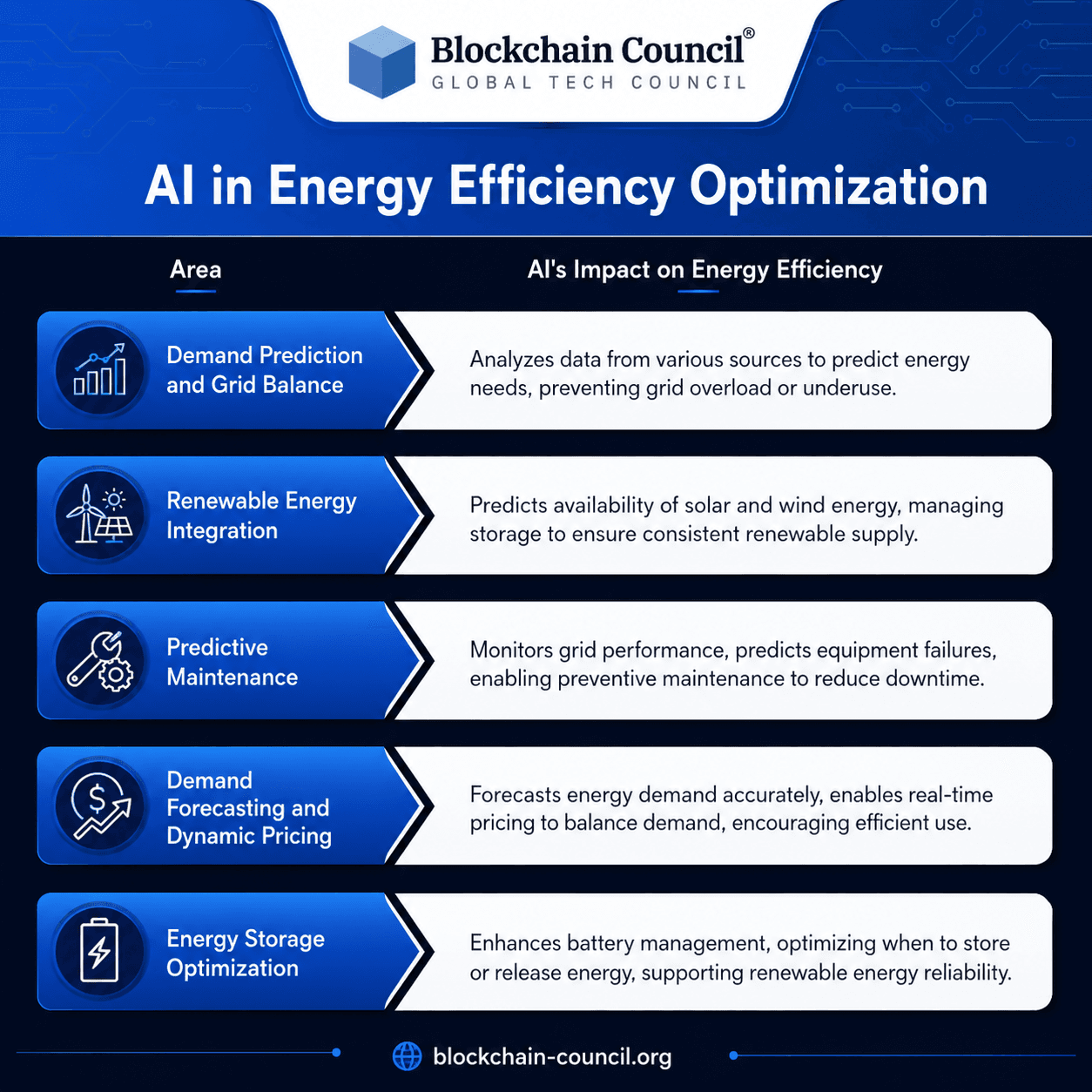
Energy efficiency has become a global priority as industries, governments, and individuals strive to reduce costs, lower carbon emissions, and achieve sustainability goals. Traditional energy management systems often rely on static models and manual monitoring, which limit their effectiveness in dynamic environments. This is where Artificial Intelligence (AI) is making a significant impact.
AI enables real-time analysis, predictive insights, and automated decision-making, allowing organizations to optimize energy consumption more effectively than ever before. From smart grids and industrial automation to residential energy management systems, AI is revolutionizing how energy is produced, distributed, and consumed.

This article explores how AI is driving energy efficiency optimization, highlighting technologies, applications, benefits, challenges, and future trends. It also emphasizes the importance of professional development through certifications such as the AI expert certification, Claude AI Certification, and ChatGPT Expert certification.
Understanding Energy Efficiency Optimization
Energy efficiency optimization refers to the process of using less energy to perform the same task while maintaining or improving performance. It involves monitoring, analyzing, and adjusting energy usage to minimize waste.
Key Objectives
Reduce energy consumption
Lower operational costs
Minimize environmental impact
Improve system performance
AI enhances these objectives by enabling intelligent and adaptive energy management.
Role of AI in Energy Systems
AI integrates with energy systems to analyze large volumes of data and identify patterns that humans may not detect. It enables predictive and automated decision-making.
Core Capabilities
Real-time monitoring
Predictive analytics
Automated control systems
Demand forecasting
These capabilities make AI a powerful tool for energy optimization.
Key Technologies Behind AI Energy Optimization
Machine Learning
Machine learning algorithms analyze historical data to predict energy usage patterns and optimize consumption.
Internet of Things (IoT)
IoT devices collect real-time data from sensors, enabling AI systems to monitor energy usage continuously.
Big Data Analytics
AI processes large datasets to identify inefficiencies and opportunities for improvement.
Cloud Computing
Cloud platforms provide scalable infrastructure for AI-driven energy systems.
Applications of AI in Energy Efficiency
Smart Grids
AI enhances smart grids by balancing energy supply and demand in real time. It improves grid stability and reduces energy loss.
Industrial Energy Management
Manufacturing facilities use AI to monitor equipment and optimize energy usage. Predictive maintenance reduces downtime and energy waste.
Building Energy Optimization
Smart buildings use AI to control lighting, heating, and cooling systems. This reduces energy consumption while maintaining comfort.
Renewable Energy Integration
AI helps integrate renewable energy sources such as solar and wind by predicting generation patterns and optimizing distribution.
Transportation Systems
AI optimizes fuel consumption and energy usage in transportation networks.
Real-World Examples
Google Data Centers
Google uses AI to optimize cooling systems in its data centers, reducing energy consumption significantly.
Smart Cities
Cities worldwide use AI to manage energy usage in public infrastructure, such as street lighting and transportation.
Manufacturing Plants
Industrial facilities use AI to monitor energy usage and improve efficiency.
Marketing and Energy Awareness
AI-driven campaigns promote energy-efficient practices. Professionals can enhance their expertise through the AI powered digital marketing course.
Software Development for Energy Systems
Developers build AI solutions for energy optimization. Programs like the AI Powered coding expert Course support these skills.
Benefits of AI in Energy Efficiency
Cost Reduction
AI reduces energy costs by optimizing usage and minimizing waste.
Improved Sustainability
Lower energy consumption leads to reduced carbon emissions.
Enhanced Performance
AI improves system efficiency and reliability.
Scalability
AI systems can manage energy usage across large networks.
Real-Time Decision-Making
AI enables immediate adjustments to optimize energy consumption.
Challenges in AI Energy Optimization
High Implementation Costs
Deploying AI systems requires significant investment.
Data Privacy Concerns
Energy systems collect sensitive data that must be protected.
Technical Complexity
Integration with existing systems can be challenging.
Dependence on Data Quality
AI performance depends on accurate and reliable data.
Recent Developments
AI-Driven Smart Grids
Advanced AI systems are improving grid efficiency and reliability.
Edge AI
Processing data locally reduces latency and improves performance.
Energy Storage Optimization
AI optimizes battery usage and energy storage systems.
AI Regulations
Governments are implementing policies to ensure responsible AI usage.
Importance of AI Skills
As AI adoption grows, professionals need relevant skills. Certifications such as:
help individuals stay competitive in the job market.
Future of AI in Energy Efficiency
The future includes:
Fully automated energy systems
Increased use of renewable energy
Advanced predictive analytics
Integration with smart homes and cities
AI will play a crucial role in achieving global sustainability goals.
Best Practices
Use high-quality data
Ensure system security
Monitor performance regularly
Invest in skilled professionals
Ethical Considerations
Protect user data
Ensure transparency
Avoid misuse of AI systems
Conclusion
AI is transforming energy efficiency optimization by enabling intelligent, data-driven decision-making. Its applications across industries highlight its potential to reduce costs, improve sustainability, and enhance performance.
While challenges remain, the benefits of AI-driven energy optimization are significant. By adopting best practices and investing in skills, organizations can unlock the full potential of AI in energy management.
FAQs
1. What is AI in energy efficiency optimization?
AI in energy efficiency optimization refers to the use of artificial intelligence to analyze and improve energy consumption. It helps reduce waste and improve performance. AI systems monitor usage patterns. They provide insights for better decision-making. Automation enhances efficiency. It is a modern approach.
2. How does AI improve energy efficiency?
AI analyzes data and identifies inefficiencies. It provides recommendations for optimization. Real-time monitoring enables quick adjustments. Automation reduces manual effort. Performance improves significantly. It is effective.
3. What are smart grids?
Smart grids use AI and technology to manage energy distribution. They balance supply and demand. Efficiency improves. Energy loss is reduced. Systems become more reliable. They are essential.
4. What industries use AI for energy optimization?
Industries such as manufacturing, healthcare, and transportation use AI. Applications are diverse. Adoption is increasing. Impact is significant. Efficiency improves. It supports innovation.
5. What are the benefits of AI in energy systems?
Benefits include cost reduction and sustainability. Efficiency improves. Performance is enhanced. Scalability increases. Real-time decisions are possible. It is valuable.
6. What are the challenges of AI in energy?
Challenges include costs and complexity. Data privacy concerns exist. Integration can be difficult. Continuous updates are needed. Limitations exist. Improvements are ongoing.
7. Can AI reduce energy costs?
Yes, AI optimizes usage and reduces waste. Costs decrease significantly. Efficiency improves. Long-term savings are achieved. It is beneficial. It supports sustainability.
8. How does AI support renewable energy?
AI predicts energy generation and optimizes distribution. Integration improves. Efficiency increases. Systems become reliable. It supports sustainability. It is important.
9. What is predictive maintenance?
Predictive maintenance uses AI to detect issues before they occur. It reduces downtime. Efficiency improves. Costs decrease. Maintenance becomes proactive. It is effective.
10. Is AI expensive to implement?
Initial costs can be high. Long-term benefits outweigh costs. Efficiency improves. Savings are achieved. Investment varies. It depends on scale.
11. Can small businesses use AI for energy optimization?
Yes, small businesses can adopt AI solutions. Cloud-based tools help. Costs vary. Benefits include efficiency and savings. Accessibility is improving. It is possible.
12. How does AI improve building energy use?
AI controls lighting and temperature systems. Efficiency improves. Energy waste is reduced. Comfort is maintained. Automation enhances performance. It is effective.
13. What is edge AI?
Edge AI processes data locally. It reduces latency. Performance improves. Systems become faster. It enhances efficiency. It is advanced.
14. What is the future of AI in energy?
The future includes automation and innovation. AI will improve efficiency. Renewable integration will increase. Systems will become smarter. Growth is expected. It is promising.
15. How can I learn AI for energy systems?
You can learn through courses and practice. Certifications help. Hands-on experience is important. Learning from experts is beneficial. Staying updated is essential. Skills improve.
16. What role does data play in AI?
Data is essential for AI performance. It drives analysis and predictions. Accuracy depends on data quality. Continuous updates improve results. Data is crucial. It supports AI systems.
17. How does AI reduce carbon emissions?
AI optimizes energy usage and reduces waste. Efficiency improves. Emissions decrease. Sustainability increases. Environmental impact is reduced. It is important.
18. Are AI energy systems secure?
Security depends on implementation. Data must be protected. Monitoring systems help. Risks exist. Security is improving. Awareness is necessary.
19. Why are AI certifications important?
Certifications validate skills and knowledge. They improve job prospects. Employers value expertise. Learning becomes structured. Opportunities increase. They are beneficial.
20. How can AI benefit consumers?
AI improves energy efficiency and reduces costs. Convenience increases. Sustainability improves. Systems become smarter. User experience improves. It is valuable.
Related Articles
View All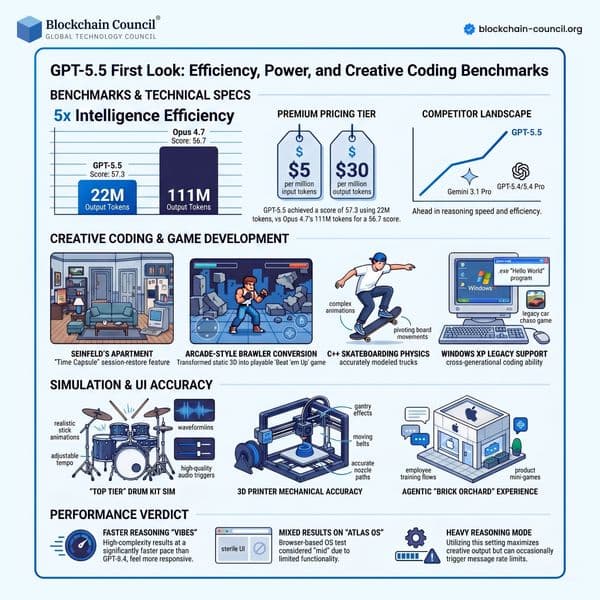
Infographics
GPT 5.5 First Look: Efficiency, Power, and Creative Coding Benchmarks
GPT 5.5 delivers improved efficiency, stronger performance, and better coding benchmarks compared to previous models.
Infographics
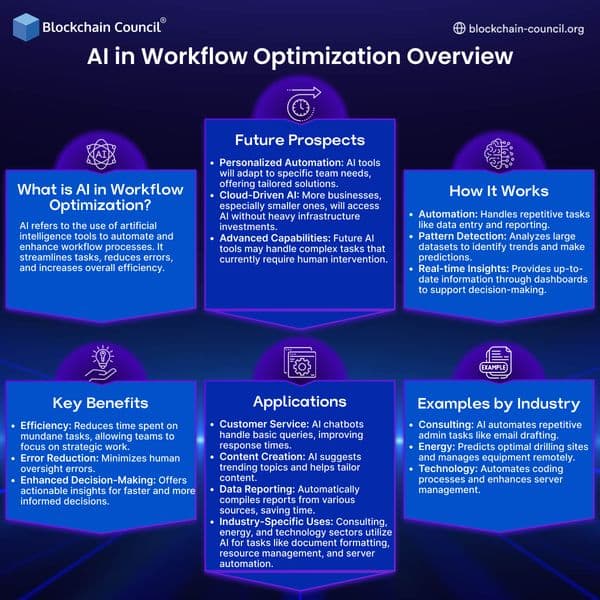
AI and Workflow Optimization Overview
AI in workflow optimization streamlines processes, reduces manual work, and improves efficiency across business operations.
Infographics
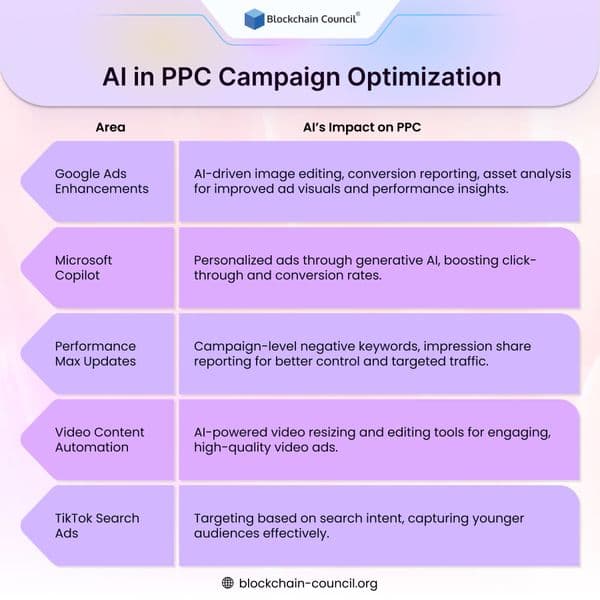
AI in PPC Campaign Optimization
AI in PPC campaign optimization helps automate bidding, targeting, and ad performance analysis to improve ROI and efficiency.
Trending Articles
AWS Career Roadmap
A step-by-step guide to building a successful career in Amazon Web Services cloud computing.

Top 5 DeFi Platforms
Explore the leading decentralized finance platforms and what makes each one unique in the evolving DeFi landscape.
What is AWS? A Beginner's Guide to Cloud Computing
Everything you need to know about Amazon Web Services, cloud computing fundamentals, and career opportunities.