

Jobs in Recordskeeper
 Toshendra Kumar Sharma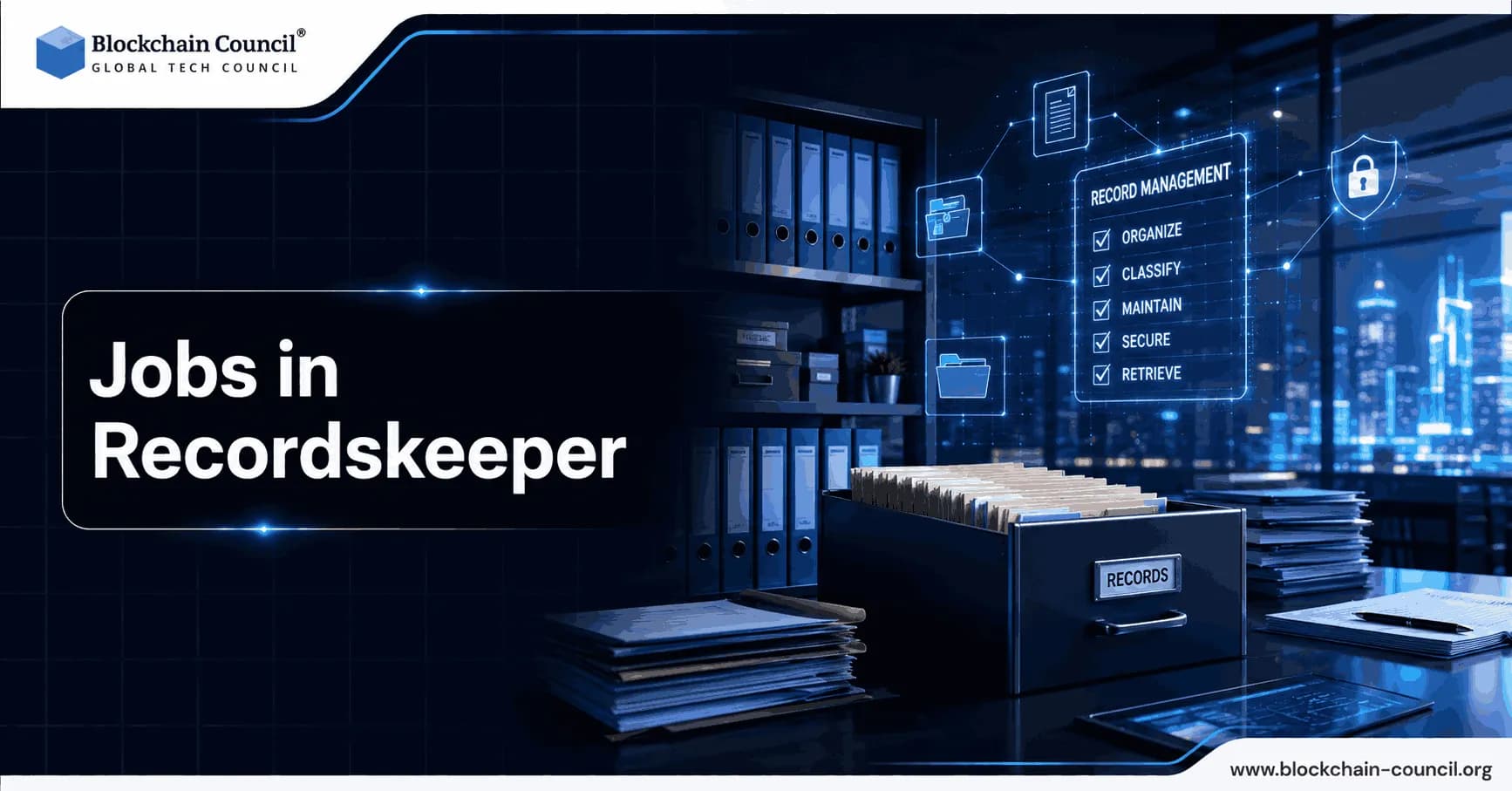
Recordkeeping has quietly become one of the more technical professions in modern business, shifting from filing cabinets and spreadsheets toward blockchain based systems, automated verification, and AI assisted data management. A Recordskeeper today is expected to understand compliance, data integrity, and increasingly, the technology stack behind how records are stored, secured, and verified. As industries such as finance, healthcare, supply chain, and government adopt blockchain based record systems, the demand for professionals who understand both traditional record management and emerging technology has grown steadily. This shift mirrors the same evolution seen in fields supported by a Certified Artificial Intelligence (AI) Expert credential, where professionals learn to apply intelligent automation to information heavy roles that once relied entirely on manual processes.
What Does a Recordskeeper Actually Do?
A Recordskeeper is responsible for maintaining accurate, secure, and accessible records for an organization, whether that involves financial documentation, employee files, academic credentials, supply chain data, or regulatory filings. The role has expanded well beyond simple data entry and now typically includes:

Data integrity management, ensuring records remain accurate, complete, and tamper resistant.
Compliance documentation, keeping records aligned with industry and legal requirements.
Access control, managing who can view, edit, or retrieve specific records.
Audit support, providing verifiable documentation when organizations undergo reviews.
System maintenance, working with the software or blockchain infrastructure that stores the records.
As more organizations move sensitive records onto decentralized or blockchain based systems, understanding how these platforms actually function has become part of the job rather than a specialized add on skill.
Students interested in technology can explore the World Tech Olympiad, a global Tech Olympiad covering AI, coding, robotics, cybersecurity, and computational thinking.
Why Blockchain Is Reshaping Recordskeeper Jobs
Blockchain technology offers something traditional record systems cannot easily replicate, an immutable, verifiable history of every change made to a record. Once information is written to a properly configured blockchain, it becomes extremely difficult to alter or delete without leaving a visible trace, which is exactly why industries handling sensitive records, such as healthcare credentials, academic certifications, and supply chain documentation, have started adopting these systems.
This shift has created new demand within the recordkeeping profession for people who understand:
How distributed ledgers store and verify data.
The difference between public and private blockchain systems.
How to manage permissions within a permissioned blockchain environment.
How smart contracts can automate parts of the record verification process.
Professionals building expertise in this area often pursue a Certified Blockchain Expert credential, which covers the underlying architecture, security models, and practical applications of blockchain systems, giving recordkeeping professionals a genuine technical foundation rather than a surface level understanding of the technology.
Common Career Paths Within Recordskeeper Roles
The recordkeeping field has grown into several distinct career paths, each requiring a slightly different mix of administrative and technical skill.
Records Management Specialist
This role focuses on organizing, categorizing, and maintaining an organization's records according to internal policy and external regulatory requirements. It requires strong attention to detail and a solid understanding of compliance frameworks relevant to the industry.
Blockchain Records Administrator
This more technical role involves managing blockchain based recordkeeping systems directly, handling permissions, monitoring data integrity, and troubleshooting issues within the ledger infrastructure. It sits at the intersection of traditional records management and blockchain system administration.
Compliance and Audit Coordinator
This position works closely with recordkeeping systems to ensure an organization can produce accurate documentation during audits or regulatory reviews. Verifiable, tamper resistant records make this role considerably easier when blockchain based systems are already in place.
Data Integrity Analyst
This role focuses specifically on monitoring the accuracy and consistency of records across systems, often using automated tools and AI driven anomaly detection to flag inconsistencies before they become larger problems.
Across all of these paths, the skill sets required are shifting steadily toward technology fluency, even for professionals who entered the field through a traditional administrative background.
Skills That Matter Most for Recordskeeper Jobs in 2026
Employers hiring for recordkeeping roles increasingly look for a combination of foundational and technical skills, including:
Strong organizational and documentation habits.
Familiarity with data privacy and compliance regulations.
Basic understanding of database or blockchain based storage systems.
Attention to detail when reviewing or auditing records.
Comfort working with automated tools and reporting software.
Clear written communication for documentation and reporting purposes.
Employers are also placing more weight on candidates who can bridge the gap between traditional recordkeeping and modern technology, rather than treating these as entirely separate skill sets.
Future-Ready Skills
As technology becomes increasingly important across industries, students need opportunities to develop future-ready skills early in their education. A Tech Olympiad can introduce students to areas such as artificial intelligence, coding, cybersecurity, robotics, and computational thinking while encouraging curiosity and continuous learning. This kind of early exposure builds exactly the foundation that today's recordkeeping professionals are expected to have, since the field increasingly rewards people who are comfortable learning new technical systems rather than relying solely on administrative experience.
How to Prepare for a Career in Recordskeeper Roles
Entering or advancing within recordkeeping careers today generally involves building skills across a few key areas:
Learn the compliance and regulatory frameworks relevant to your target industry.
Build a working understanding of database and blockchain based record systems.
Practice using data verification and audit tools commonly used in the field.
Develop familiarity with access control and permissions management.
Stay current on how automation and AI are changing recordkeeping workflows.
Professionals who want to formalize this technical growth often pursue structured learning paths. A broad Tech Certification can help recordkeeping professionals validate their technical competency across the tools and platforms increasingly used in the field, giving them a credential that speaks directly to employers evaluating candidates for more technical recordkeeping positions.
Recordskeeper Careers Beyond the Technical Side
While much of the recent evolution in recordkeeping has centered on technology, the profession still requires strong communication and organizational skills, particularly for professionals who need to explain complex compliance or data systems to non technical stakeholders. Recordkeeping teams often work closely with legal, operations, and leadership departments, translating technical documentation into clear, actionable information.
For professionals moving into recordkeeping roles that intersect with public facing communication, such as explaining blockchain based verification systems to clients or partners, a Marketing Certification can be a genuinely useful addition, helping bridge the gap between technical accuracy and clear, persuasive communication when a recordkeeping system needs to be explained or promoted to stakeholders outside the immediate team.
Recordkeeping has evolved from a purely administrative function into a role that increasingly blends compliance knowledge, data integrity, and technical fluency in systems like blockchain and automated verification tools. Professionals who invest in building both sides of this skill set, the organizational fundamentals and the emerging technology, are positioning themselves well for a field that shows no signs of slowing its shift toward more secure, verifiable, and technically sophisticated recordkeeping systems.
FAQs
1. What Is a RecordsKeeper Job?
A Records Keeper is responsible for organizing, maintaining, updating, and retrieving an organization's physical or digital records. The role requires accuracy, organization, confidentiality, and the ability to keep information easily accessible when needed.
2. What Does a RecordsKeeper Do?
A Records Keeper typically files, indexes, updates, retrieves, and safeguards documents and records. Depending on the industry, the position may also involve preparing reports, maintaining databases, supporting audits, and following record retention procedures.
3. Where Do RecordsKeepers Work?
Records Keepers can work in government agencies, healthcare organizations, legal offices, construction companies, financial institutions, educational organizations, and private businesses. The exact responsibilities vary depending on the type of records being managed.
4. What Are the Main Responsibilities of a RecordsKeeper?
Common responsibilities include maintaining organized records, filing and retrieving documents, updating databases, checking information for accuracy, protecting confidential information, and supporting document retention procedures. Some roles also require preparing reports and assisting with audits.
5. What Skills Are Needed for a RecordsKeeper Job?
Important skills include organization, attention to detail, data accuracy, communication, time management, confidentiality, and basic computer proficiency. Familiarity with databases, electronic records management systems, Microsoft Office, and document-management software can also be valuable.
6. What Qualifications Are Required to Become a RecordsKeeper?
Requirements vary by employer and industry. Some entry-level positions may accept a high school qualification and basic computer skills, while specialized roles may require relevant education, experience, or training in records management, administration, healthcare, accounting, or another related field.
7. Is Computer Knowledge Important for RecordsKeeper Jobs?
Yes. Modern Records Keepers often manage electronic records in addition to physical documents. Knowledge of spreadsheets, databases, document-management platforms, scanning systems, and electronic records management can improve efficiency and accuracy.
8. Do RecordsKeepers Manage Digital Records?
Yes. Many organizations now rely heavily on electronic records, requiring Records Keepers to organize, classify, retrieve, update, and protect digital information. Some positions also involve helping organizations digitize paper records and maintain electronic record systems.
9. How Important Is Accuracy in a RecordsKeeper Job?
Accuracy is essential because incorrect or missing records can create operational, financial, legal, or compliance problems. Records Keepers need to carefully verify information, maintain consistent filing systems, and update records promptly.
10. Do RecordsKeepers Handle Confidential Information?
Many Records Keeper positions involve confidential or sensitive information. Employees may therefore need to follow organizational privacy policies, access controls, retention requirements, and industry-specific regulations when handling records.
11. What Is the Difference Between a RecordsKeeper and a Data Entry Clerk?
A Data Entry Clerk primarily focuses on entering information accurately into computer systems, while a Records Keeper has broader responsibility for organizing, maintaining, retrieving, and safeguarding records. Some Records Keeper positions may include data entry as one part of the overall role.
12. Can a RecordsKeeper Work in Healthcare?
Yes. Healthcare organizations employ records professionals to maintain patient documentation and health information systems. Medical Records Keepers may handle filing, scanning, retrieving, auditing, and maintaining records according to applicable privacy and regulatory requirements.
13. Can a RecordsKeeper Work in the Legal Industry?
Yes. Legal Records Keepers may organize case files, contracts, correspondence, and other legal documents. They may also help track document versions, maintain secure storage, and support retention and document-management procedures.
14. Is RecordsKeeping a Good Career Option?
Records keeping can be a good career option for people who enjoy organized, detail-oriented administrative and information-management work. Experience with digital records, databases, document management, and industry-specific systems can create opportunities to move into broader information-management roles.
15. Can a RecordsKeeper Career Lead to Other Jobs?
Yes. With experience and additional training, Records Keepers may progress toward roles such as Records Manager, Document Controller, Information Management Specialist, Archivist, Data Administrator, or Records Coordinator. Career progression depends on education, industry experience, and technical skills.
16. What Software Should a RecordsKeeper Know?
Useful software skills may include Microsoft Word, Excel, database applications, document-management systems, electronic records management systems, and industry-specific platforms. Specialized construction records roles, for example, may require systems such as ProjectWise or AASHTOWare.
17. Are Records Keeper Jobs Available for Beginners?
Some entry-level records and administrative positions are available to candidates with limited experience, particularly where employers provide training. However, specialized Records Keeper roles may require several years of experience or industry-specific knowledge, so requirements should be checked carefully for each vacancy.
18. How Much Can a RecordsKeeper Earn?
Records Keeper salaries vary significantly by country, industry, experience, specialization, and employer. Specialized positions involving healthcare, construction, finance, government, or legal records may have different compensation requirements than general administrative records roles.
19. How Can You Find RecordsKeeper Jobs?
You can search job boards using terms such as Records Keeper, Records Coordinator, Records Clerk, Document Controller, Records Management Assistant, Medical Records Clerk, and Information Management Assistant. Expanding your search to related job titles can reveal more opportunities because employers do not always use the exact title "Records Keeper."
20. How Can You Build a Career as a RecordsKeeper?
Start by developing strong organizational, documentation, computer, data-management, and communication skills. Gaining experience with electronic records management, databases, document-management systems, privacy practices, and industry-specific requirements can help you qualify for more specialized and higher-level records management positions.
Related Articles
View All
Info
Part And Time Jobs
Part-time jobs provide flexibility and work-life balance for students, professionals, and anyone seeking additional income. Explore a variety of part-time employment options today.
Info
Front Desk Jobs Near Me
Front desk jobs offer excellent opportunities in hospitality, healthcare, corporate offices, and more. Discover local receptionist and front office positions near you and apply today.
Info
Daycare Jobs Near Me
Looking for daycare jobs near you? Discover opportunities for daycare teachers, childcare assistants, preschool staff, and early childhood educators. Learn where to find local openings and start a rewarding career in childcare.
Trending Articles
The Role of Blockchain in Ethical AI Development
How blockchain technology is being used to promote transparency and accountability in artificial intelligence systems.
AWS Career Roadmap
A step-by-step guide to building a successful career in Amazon Web Services cloud computing.
What is AWS? A Beginner's Guide to Cloud Computing
Everything you need to know about Amazon Web Services, cloud computing fundamentals, and career opportunities.