

Blockchain Jobs for Freshers
 Toshendra Kumar Sharma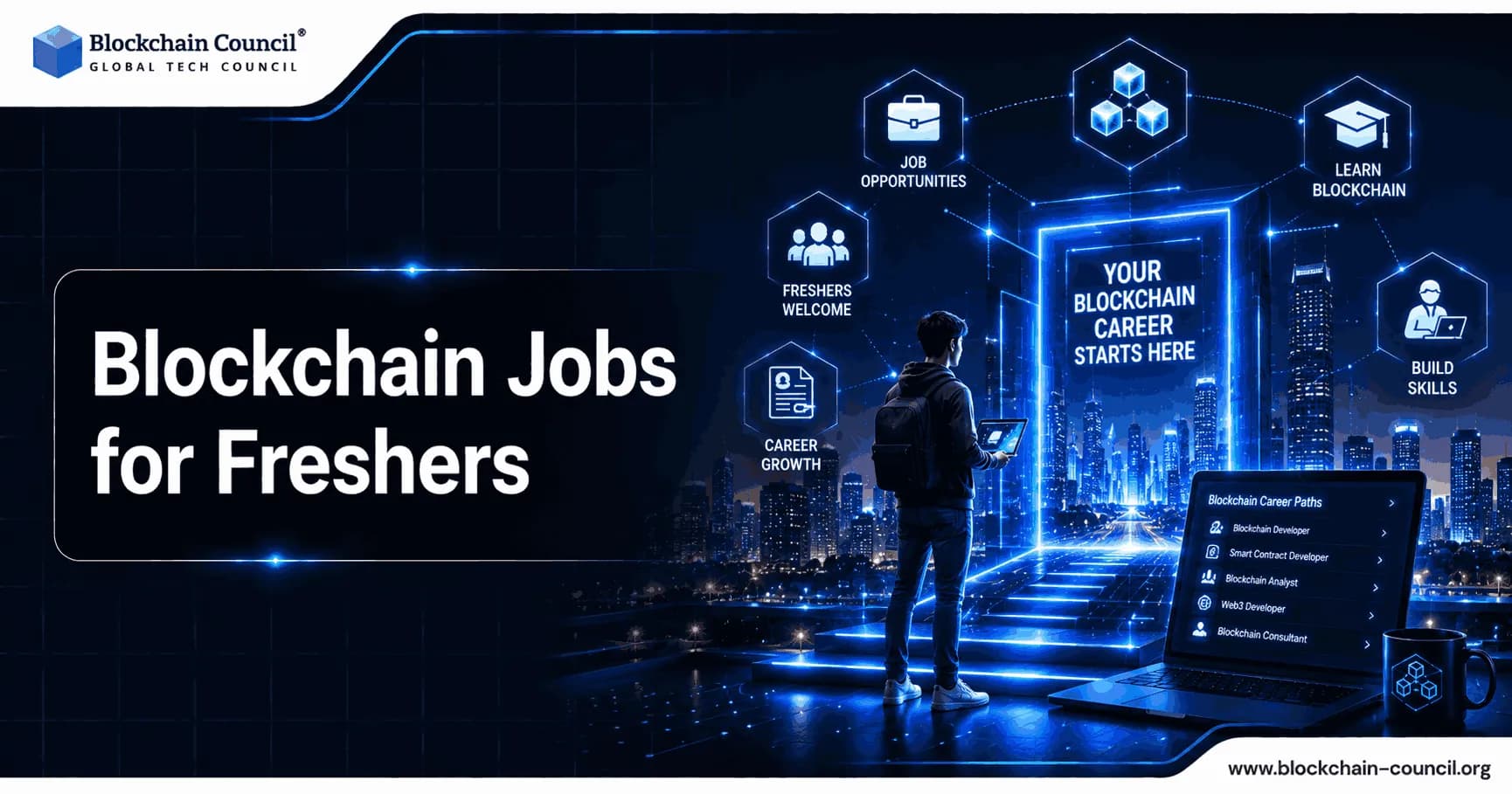
Blockchain has moved beyond its early association with cryptocurrency and is now being explored across fintech, banking, supply chain management, cybersecurity, digital identity, gaming, and Web3 applications. This expansion is creating opportunities for graduates and entry-level candidates who want to build careers in emerging technology.
Freshers do not necessarily need years of blockchain experience to enter the industry. A combination of programming knowledge, blockchain fundamentals, practical projects, and communication skills can help candidates compete for entry-level opportunities. For learners looking for structured blockchain education, a Certified Blockchain Expert program can help develop an understanding of blockchain concepts, applications, and industry use cases.

Why Blockchain Jobs Are Suitable for Freshers
Blockchain is a multidisciplinary technology, which means entry-level opportunities are not limited to software developers. Companies may need professionals for development, testing, research, operations, marketing, business analysis, cybersecurity, compliance, and customer support.
For fresh graduates, this creates multiple ways to enter the industry based on their existing education and interests.
A computer science graduate might pursue blockchain development, while a business graduate could explore blockchain operations, product management, or business analysis. Candidates with communication skills may find opportunities in content, community management, and marketing.
The important step is to identify a career path and develop skills that match the requirements of that role.
Most Popular Blockchain Jobs for Freshers
Junior Blockchain Developer
Junior blockchain developers assist with building and maintaining blockchain applications. Their responsibilities can include writing code, testing smart contracts, debugging applications, working with APIs, and supporting senior developers.
Basic knowledge of programming languages such as JavaScript, Python, or Solidity can provide a useful foundation.
Freshers can improve their chances by creating small blockchain projects and publishing them in a professional portfolio.
Smart Contract Developer
Smart contract developers create programs that automatically execute predefined conditions on blockchain networks.
Freshers interested in this career should learn Solidity and understand smart contract architecture, testing, deployment, and security.
Because smart contracts can interact with digital assets, secure coding practices are particularly important.
Blockchain QA Tester
Blockchain projects require extensive testing because applications can involve transactions, smart contracts, wallets, and decentralised infrastructure.
A blockchain QA tester may check application functionality, transaction behaviour, smart contract interactions, user interfaces, and potential vulnerabilities.
This can be an accessible entry point for graduates with software testing knowledge who are transitioning into blockchain.
Blockchain Business Analyst
Blockchain business analysts study business requirements and evaluate how distributed ledger technology could solve particular problems.
This role can be suitable for graduates with backgrounds in business administration, finance, economics, management, or information systems.
Strong analytical and communication skills are important because business analysts often work between technical and non-technical teams.
Blockchain Research Analyst
Research analysts investigate blockchain projects, technologies, market developments, use cases, and industry trends.
Their work may involve researching blockchain networks, tokenisation, decentralised finance, Web3 applications, and emerging technologies.
Strong research, writing, analytical, and data interpretation skills can help freshers enter this area.
Blockchain Support Specialist
Blockchain companies also require customer and technical support professionals who can help users understand wallets, transactions, accounts, applications, and platform functionality.
This can be a suitable starting point for graduates who have strong communication skills and an interest in technology but do not yet have advanced programming knowledge.
Web3 Community Associate
Web3 companies often build online communities around their products and platforms. Community associates may manage social channels, communicate with users, organise online events, collect feedback, and support community growth.
This role can be particularly suitable for freshers with strong communication and social media skills.
Blockchain Marketing Executive
Marketing is another potential entry point into the blockchain industry.
Marketing professionals can work on content creation, search engine optimisation, social media, email campaigns, community engagement, partnerships, and brand communication.
The ability to explain complex blockchain concepts in simple language can be particularly useful.
Skills Freshers Need for Blockchain Jobs
The skills required depend on the position, but several capabilities can improve employability across blockchain roles.
Blockchain Fundamentals
Freshers should understand the basic principles behind blockchain technology, including:
Distributed ledgers
Blocks and transactions
Consensus mechanisms
Cryptographic hashing
Public and private keys
Digital wallets
Smart contracts
Tokens
Decentralised applications
Blockchain networks
Understanding these concepts helps candidates communicate effectively during interviews and technical discussions.
Programming Skills
Candidates targeting development positions should build a strong programming foundation.
Useful languages include:
Solidity
JavaScript
TypeScript
Python
Java
Go
Rust
Freshers do not necessarily need to master every language. It is generally more effective to become proficient in one or two relevant technologies and understand how they apply to blockchain development.
Cybersecurity Awareness
Security is important throughout blockchain development.
Candidates should learn about common smart contract vulnerabilities, secure coding, wallet security, authentication, access control, cryptography, and basic threat modelling.
Security knowledge can also benefit candidates applying for non-development roles because blockchain applications may involve valuable digital assets and sensitive information.
Analytical Thinking
Blockchain professionals frequently need to investigate technical problems, understand transaction behaviour, evaluate business processes, or interpret market developments.
Strong analytical thinking can therefore be useful regardless of whether a candidate chooses a technical or business-focused career.
Communication Skills
Freshers often underestimate the importance of communication.
Blockchain teams may include developers, designers, financial professionals, compliance specialists, marketers, and business managers. Being able to explain technical concepts clearly can help professionals collaborate effectively.
How Freshers Can Build Blockchain Experience
One of the biggest challenges for fresh graduates is the requirement for experience in job descriptions.
Candidates can begin building relevant experience before obtaining their first full-time position.
Build Personal Projects
A small project can demonstrate practical ability.
Freshers can create:
A simple decentralised application
A token project
A basic smart contract
A blockchain voting application
A digital certificate system
A blockchain-based record system
A simple Web3 application
The objective is not to create a complicated product. A well-documented project can demonstrate that a candidate understands how blockchain technology works.
Create a GitHub Portfolio
A professional GitHub profile can help developers showcase their work.
Each project should ideally include clear documentation explaining its purpose, technologies used, development process, and challenges encountered.
Participate in Hackathons
Blockchain and Web3 hackathons can provide opportunities to solve practical problems while working with other developers and technology professionals.
Hackathons can also give freshers experience that they can discuss during interviews.
Contribute to Open Source
Contributing to open-source projects can help candidates gain experience with collaborative development, code review, documentation, and version control.
Even small contributions can demonstrate initiative and willingness to learn.
Blockchain Certifications for Freshers
A certification cannot replace practical ability, but it can provide a structured learning path and help candidates organise their knowledge.
For freshers interested in development, a Certified Blockchain Developer program can complement programming knowledge by providing focused exposure to blockchain development concepts.
Candidates should combine certification with practical projects, coding practice, and a portfolio rather than relying on a credential alone.
Blockchain Career Opportunities Across Industries
Blockchain jobs are appearing across several industries, creating opportunities for freshers with different educational backgrounds.
Banking and Fintech
Financial institutions and fintech companies can explore blockchain for payments, settlement, digital assets, tokenisation, and financial infrastructure.
Freshers with backgrounds in finance, economics, computer science, or information technology can explore different roles within this sector.
Supply Chain
Blockchain can be used to create transparent and traceable records across supply chains.
Graduates interested in logistics, operations, technology, or business analysis may find opportunities where blockchain intersects with supply chain systems.
Healthcare
Blockchain technology has been explored for applications involving data sharing, identity, record management, and interoperability.
This creates potential opportunities for professionals who understand both technology and healthcare processes.
Gaming and Web3
Blockchain-based gaming and Web3 applications have created roles in development, design, community management, marketing, and product operations.
Freshers with gaming, programming, design, or digital marketing interests can explore this growing area.
Consulting
Consulting firms can require professionals who understand emerging technologies and can help businesses evaluate potential blockchain applications.
Business graduates with technology knowledge can consider this route.
Future-Ready Skills
As technology becomes increasingly important across industries, students need opportunities to develop future-ready skills early in their education. A Tech Olympiad can introduce students to areas such as artificial intelligence, coding, cybersecurity, robotics, and computational thinking while encouraging curiosity and continuous learning.
Early exposure to emerging technologies can help students develop logical reasoning, creativity, problem-solving, and technical awareness. These skills can provide a foundation for future careers in blockchain, software development, cybersecurity, artificial intelligence, fintech, and other technology-driven fields.
How to Prepare for a Blockchain Job Interview
Preparing for a blockchain interview requires both technical and conceptual knowledge.
Freshers should be prepared to explain basic concepts such as how blockchain transactions work, what smart contracts are, how consensus mechanisms operate, and how public and private keys are used.
Technical candidates may also receive programming or problem-solving exercises.
Business-focused candidates should understand real-world blockchain applications and be able to explain why a company might choose blockchain instead of a conventional database.
Candidates should also research the company before an interview. Understanding its products, customers, blockchain technology, and business model can help demonstrate genuine interest.
Entry-Level Blockchain Career Growth
A fresher's first blockchain position does not necessarily determine their entire career.
A junior blockchain developer can progress toward senior engineering, blockchain architecture, protocol development, or technical leadership.
A business analyst can move toward product management or blockchain consulting.
A marketing professional can progress into Web3 growth, communications, brand strategy, or community leadership.
A support professional can move toward technical support management, product operations, or customer success.
The industry therefore provides multiple paths for long-term development.
Building Broader Technology Skills
Blockchain is increasingly connected with other technology areas, including artificial intelligence, cloud computing, cybersecurity, data analytics, and software engineering.
Freshers who develop skills across several related technologies can make themselves more adaptable to changing employment requirements.
A relevant Tech Certification can be considered as part of a broader professional learning strategy, particularly for candidates who want to complement blockchain knowledge with wider technology capabilities.
How to Find Blockchain Jobs as a Fresher
Freshers can use several approaches when searching for entry-level blockchain positions.
Search for titles such as:
Junior Blockchain Developer
Blockchain Developer Intern
Web3 Developer
Smart Contract Intern
Blockchain QA Tester
Blockchain Research Analyst
Blockchain Business Analyst
Web3 Community Associate
Blockchain Marketing Executive
Blockchain Support Specialist
Candidates should also search broader technology roles where blockchain is listed as a preferred skill rather than the main job title.
Networking can be valuable as well. Technology events, developer communities, hackathons, online groups, and professional platforms can help freshers learn about opportunities that may not appear on conventional job boards.
Common Mistakes Freshers Should Avoid
Freshers entering blockchain sometimes focus too heavily on cryptocurrency prices instead of technology and business applications.
Other common mistakes include:
Listing blockchain skills without practical projects
Trying to learn too many technologies simultaneously
Ignoring cybersecurity
Having an incomplete portfolio
Not understanding basic blockchain concepts
Applying only for jobs containing the word "blockchain"
Failing to research employers
Neglecting communication skills
A focused learning strategy is generally more effective than trying to become an expert in every part of Web3.
Blockchain Jobs for Freshers: Career Outlook
Blockchain can provide fresh graduates with opportunities across development, finance, cybersecurity, research, business analysis, marketing, operations, and customer support.
The most valuable candidates are likely to be those who understand how blockchain solves practical problems rather than viewing it solely as a cryptocurrency technology.
Freshers can improve their prospects by combining foundational blockchain knowledge with programming or business skills, practical projects, professional networking, and continuous learning.
Conclusion
Blockchain Jobs for Freshers can provide an entry point into one of the broader areas of emerging technology. Developers, testers, business analysts, researchers, support specialists, marketers, and community professionals can all contribute to blockchain and Web3 projects.
A successful career does not require mastering every blockchain technology. Instead, freshers should select a suitable career path, develop relevant skills, gain hands-on experience, create a strong portfolio, and continue learning.
As blockchain continues to intersect with fintech, cybersecurity, artificial intelligence, cloud computing, and other technologies, graduates who build adaptable and future-focused skills can prepare themselves for a variety of career opportunities.
Blockchain and Business Career Opportunities
Blockchain companies need more than engineers. As the industry matures, professionals who understand marketing, customer acquisition, communications, partnerships, and business strategy can also play important roles.
Freshers interested in these areas can develop technology knowledge alongside business skills. A Marketing Certification can complement blockchain knowledge for candidates interested in digital marketing, Web3 communications, community growth, technology branding, and business development.
For freshers, the most important step is to start building relevant skills and evidence of practical ability today. A combination of technical understanding, creativity, communication, and continuous learning can create a strong foundation for a career in the blockchain industry.
FAQs
1. What are blockchain jobs for freshers?
Blockchain jobs for freshers are entry-level opportunities for candidates with little or no professional experience in blockchain. These can include Blockchain Developer, Junior Blockchain Developer, Web3 Developer, Smart Contract Intern, Blockchain QA Tester, Blockchain Analyst, Research Associate, and Web3 Support roles. Current job listings show dedicated fresher blockchain-developer positions in India.
2. Can freshers get blockchain jobs without experience?
Yes. Freshers can enter blockchain through internships, trainee programs, junior development roles, and blockchain-adjacent technology positions. Some current listings specifically state that trained freshers are preferred for entry-level blockchain developer positions.
3. What qualifications are needed for a blockchain job as a fresher?
A degree or diploma in Computer Science, Information Technology, Software Engineering, or a related field can be helpful for technical positions. However, practical blockchain knowledge and demonstrable projects can also strengthen a candidate's profile. One current fresher blockchain developer listing accepts BSc IT/CS, engineering, or a relevant diploma.
4. Which blockchain jobs are best for freshers?
Good entry-level options include:
Junior Blockchain Developer
Blockchain Developer Intern
Smart Contract Intern
Web3 Developer Intern
Blockchain QA Tester
Blockchain Analyst
Crypto Research Intern
Blockchain Support Associate
Web3 Community Associate
Blockchain Marketing Associate
Freshers do not necessarily need to start with a highly specialized protocol-engineering position.
5. What skills should a fresher learn for blockchain jobs?
Start with blockchain fundamentals, cryptocurrency concepts, wallets, transactions, consensus mechanisms, Ethereum, smart contracts, Solidity, JavaScript or TypeScript, Git, APIs, and basic cybersecurity.
For developers, practical projects are particularly valuable because they demonstrate that you can apply what you have learned.
6. Is Solidity necessary for freshers?
Solidity is highly useful if you want to become a smart contract or Ethereum developer, but it is not mandatory for every blockchain career. Candidates interested in blockchain analysis, marketing, compliance, product, research, or operations may need a different skill set.
7. Can a fresher become a blockchain developer?
Yes. A practical path is to learn JavaScript/TypeScript and blockchain fundamentals, then Ethereum and Solidity, followed by smart-contract development and testing. Build several projects and publish them on GitHub before applying for junior roles.
8. What blockchain projects should freshers build?
Good portfolio projects include:
ERC-20 token
NFT marketplace
Simple decentralized application
Crypto wallet interface
Token vesting application
DAO voting system
Crowdfunding smart contract
RWA tokenization prototype
DeFi lending prototype
Blockchain transaction explorer
A project should explain what problem it solves, how the blockchain is used, and what technologies you implemented.
9. Do freshers need blockchain certifications to get jobs?
A certification is not a substitute for practical skills, but it can help demonstrate structured knowledge. Freshers should ideally combine certification with hands-on projects, GitHub work, internships, and technical fundamentals.
10. Can non-technical freshers get blockchain jobs?
Yes. Blockchain companies also need professionals in marketing, content, sales, community management, research, compliance, operations, customer success, and business development.
A non-technical candidate can build blockchain knowledge without becoming a Solidity developer.
11. Are blockchain internships available for freshers?
Yes. Internships are one of the most accessible entry points into the industry. Current job platforms show internship and entry-level blockchain opportunities, while broader blockchain-development listings also include entry-level positions.
12. What is the salary for blockchain freshers?
Salary depends heavily on location, company, technical skills, and role. For example, a current Indian fresher blockchain developer listing advertises ₹4 lakh-₹5 lakh per year, although this should be viewed as an individual vacancy rather than a standard fresher salary.
13. Can freshers get remote blockchain jobs?
Yes. Web3 has a significant remote-work component, and current job boards include remote and distributed blockchain opportunities. However, candidates should carefully check employment eligibility, location restrictions, time-zone requirements, and compensation arrangements before applying.
14. Where can freshers find blockchain jobs?
Freshers can search:
LinkedIn
Indeed
Wellfound
CryptoJobsList
Company career pages
University career portals
Blockchain communities
Developer communities
LinkedIn currently shows thousands of blockchain-developer listings in India, including hundreds categorized as entry-level.
15. Which programming languages should blockchain freshers learn?
For smart-contract development, Solidity is an important starting point. For broader blockchain development, candidates can learn JavaScript/TypeScript, Python, Go, Rust, or Java, depending on their target role.
There is no need to learn every blockchain programming language at once.
16. Is Web3 a good career option for freshers?
Web3 can be a promising career path for candidates who enjoy software development, financial technology, decentralized applications, cryptography, and emerging technologies. However, the market can be volatile, so freshers should build transferable software and technology skills alongside blockchain expertise.
17. Can freshers get blockchain jobs in finance and banking?
Yes. Blockchain is increasingly being applied to digital assets, tokenization, payments, custody, settlement, and financial infrastructure. This creates opportunities for candidates with a combination of blockchain and finance knowledge.
Current Canadian listings, for example, include institutional roles involving tokenized deposits and blockchain applications, demonstrating the broader direction of blockchain employment beyond cryptocurrency.
18. What should a fresher put on a blockchain resume?
A blockchain fresher's resume should emphasize:
Technical skills: Solidity, Ethereum, JavaScript/TypeScript, Git, APIs, smart contracts
Projects: 2-4 practical blockchain projects
Experience: Internships, hackathons, freelance projects, open-source contributions
Education: Relevant degree, diploma, or coursework
Certifications: Relevant blockchain certifications
Portfolio: GitHub, deployed projects, technical documentation, or personal website
Projects can be particularly useful when the candidate has limited professional experience.
19. How can freshers stand out when applying for blockchain jobs?
Instead of listing only blockchain courses, demonstrate what you can build. Create a GitHub portfolio, deploy smart contracts on a testnet, document your projects, participate in hackathons, contribute to open-source projects, and understand the fundamentals behind the technologies you use.
Practical project work is also emphasized by blockchain-development education programs that use real-world projects and portfolios to prepare learners for developer and smart-contract roles.
20. What is the future of blockchain jobs for freshers?
The blockchain job market is expanding beyond traditional cryptocurrency development toward Web3 infrastructure, digital assets, RWA tokenization, DeFi, smart-contract security, stablecoins, institutional blockchain, and blockchain applications.
For freshers, the strongest long-term strategy is to combine strong software or business fundamentals with specialized blockchain knowledge rather than relying only on cryptocurrency-related skills.
Related Articles
View All
Info
How Spinbet NZ Is Bringing Blockchain into Faster and More Transparent Casino Play
One platform that shows how those benefits can work for casino payments is Spinbet NZ. Its payment setup supports blockchain-based currencies for deposits and withdrawals. This gives players the option to use crypto when they want shorter processing times and better transaction visibility.
Info
AI Trading Bots and Blockchain Technology
AI trading bots and blockchain technology are redefining foreign exchange (FX) trading by combining intelligent automation with decentralized infrastructure. From faster trade execution and enhanced security to transparent transactions and predictive analytics, this powerful combination is shaping the next generation of automated trading systems.

Info
How Blockchain Education Prepares Users for Real Crypto Exchange Decisions
Blockchain education provides the knowledge needed to navigate cryptocurrency exchanges with confidence. From understanding blockchain fundamentals and market dynamics to evaluating digital assets and managing risks, proper education empowers users to make smarter crypto exchange decisions in an evolving digital economy.
Trending Articles
The Role of Blockchain in Ethical AI Development
How blockchain technology is being used to promote transparency and accountability in artificial intelligence systems.
AWS Career Roadmap
A step-by-step guide to building a successful career in Amazon Web Services cloud computing.
How Blockchain Secures AI Data
Understand how blockchain technology is being applied to protect the integrity and security of AI training data.