
Suyash Raizada
CBDC Distributed Ledger Technology Explained for Finance Professionals
CBDC distributed ledger technology explained for finance professionals, covering wholesale settlement, retail use cases, risks, governance, and skills to build.


Browse the latest digital assets articles, tutorials, and research from Blockchain Council.(225 articles)
CBDC distributed ledger technology explained for finance professionals, covering wholesale settlement, retail use cases, risks, governance, and skills to build.

CBDC blockchain technology can improve settlement, inclusion, and programmability, but privacy, cybersecurity, bank funding, and governance define its real limits.

CBDC technology can use centralized databases, permissioned DLT, blockchain, or hybrid stacks. Learn how central banks choose the right model.

CBDCs are state-issued digital fiat, while Ethereum is a public smart contract blockchain. Learn how they differ in governance, programmability, and use cases.
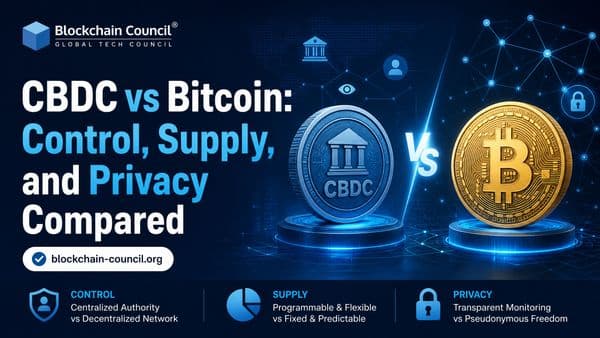
CBDC vs Bitcoin explained through control, supply, privacy, programmability, censorship, and real-world use cases for digital asset professionals.

Learn how CBDC money is created, issued through central bank ledgers, distributed via banks or wallets, and redeemed back into cash or deposits.

Wholesale CBDC is central bank digital money for banks and regulated institutions, built for interbank, securities, FX, and tokenized asset settlement.

Learn what a retail CBDC is, how it differs from bank money and stablecoins, and what real deployments reveal about adoption, privacy, and payments.

Retail CBDC vs wholesale CBDC explained through real use cases, design choices, pilots, adoption trends, and what professionals should learn next.
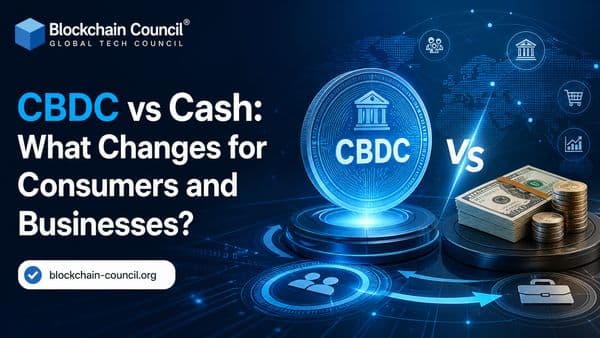
CBDC vs cash changes privacy, offline access, merchant acceptance, liquidity, and compliance. Learn what consumers and businesses should expect.

CBDC is safer than bank deposits at the instrument level, but design choices decide whether it improves access or increases banking system risk.

CBDC vs Traditional Money explained through legal tender, cash, bank deposits, stablecoins, risks, pilots, and the likely hybrid future of money.