

Blockchain to help armed forces.
 Toshendra Kumar Sharma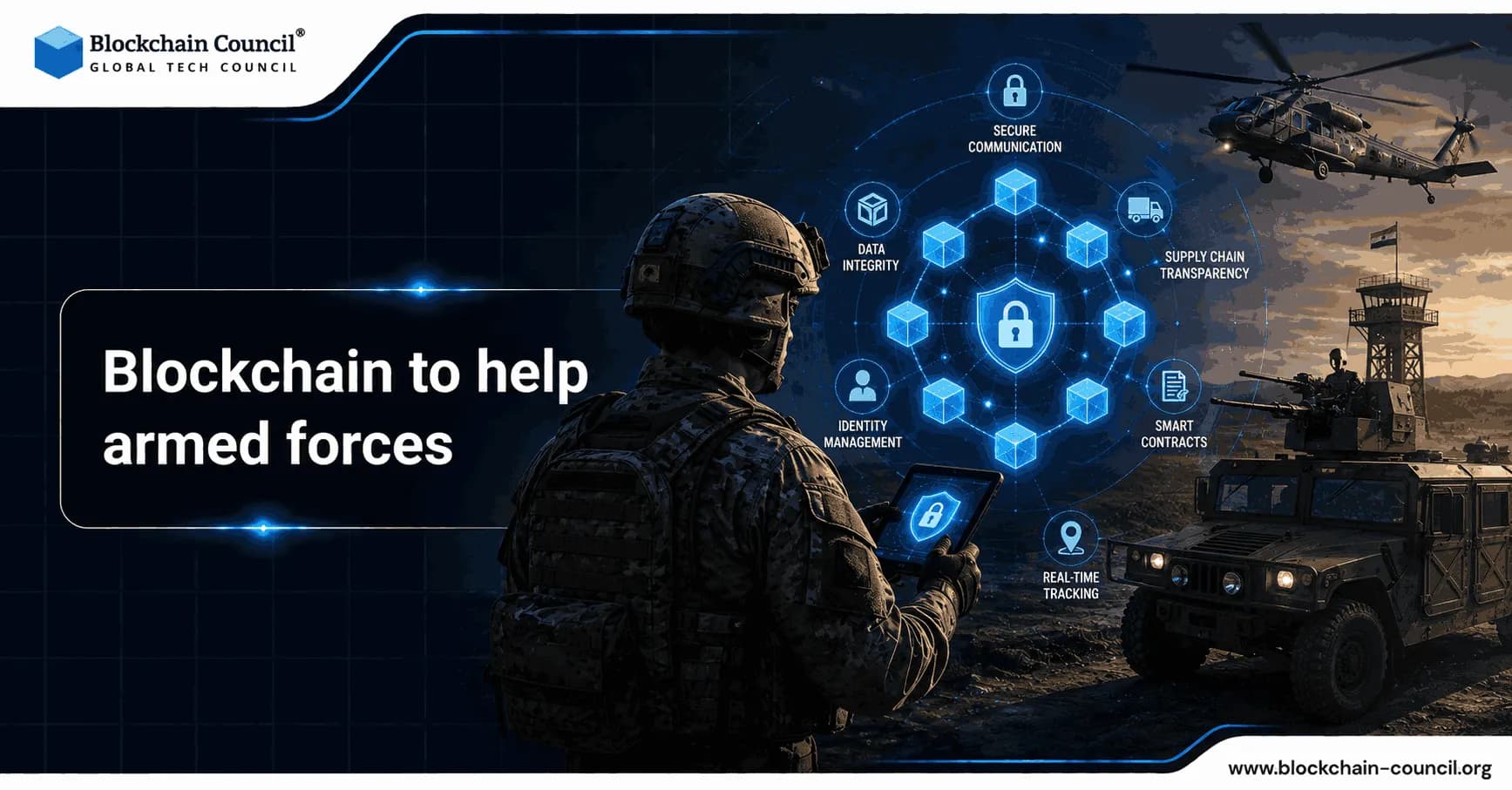
Military organizations run on some of the most complex logistics and data verification challenges of any institution, moving equipment and personnel across secure supply chains, managing sensitive records across multiple agencies, and coordinating with allied forces who all need to trust the same information without exposing it to unnecessary risk. Blockchain technology is increasingly being explored by defense agencies specifically because it addresses these challenges directly, offering tamper proof record keeping and decentralized verification in environments where a single point of failure can carry genuinely serious consequences. As defense and logistics professionals explore these applications, more people are pursuing a Certified Blockchain Expert credential to understand exactly how the technology applies to military grade requirements for security and reliability.
In this article, we will look at the specific ways blockchain can help armed forces, how each application actually addresses genuine military operational needs, and the challenges defense organizations still need to work through before wider adoption.

Why Defense Organizations Are Exploring Blockchain
Military logistics and data management face requirements that go well beyond typical enterprise use cases. Equipment and supply chains need to be verifiably authentic, since counterfeit or compromised parts entering military hardware can pose genuine safety and operational risks. Personnel and equipment records need to remain accurate and tamper proof across multiple agencies and command structures. And communications and data sharing between allied forces need to happen securely, without relying on a single centralized system that becomes an attractive target for adversaries.
Blockchain's core properties, decentralization, immutability, and cryptographic verification, map directly onto these requirements in ways that centralized, single point systems structurally cannot match. Because military applications demand an exceptionally high standard of security beyond typical commercial use cases, professionals working in this space are increasingly pursuing a Certified Cybersecurity Expert credential, building the specialized expertise needed to evaluate and implement blockchain systems that can genuinely withstand the kind of sophisticated threats defense organizations actually face.
Quick Answer
Blockchain can help armed forces by securing supply chain verification against counterfeit parts, maintaining tamper proof personnel and equipment records, enabling secure data sharing between allied forces without a single centralized point of failure, supporting secure and resilient communications infrastructure, and improving logistics tracking across complex, multi agency military operations. These applications address genuine operational and security requirements that traditional, centralized systems have historically struggled to fully meet.
Key Ways Blockchain Can Help Armed Forces
1. Supply Chain and Parts Authentication
Military hardware depends on components sourced from extensive, multi tier supplier networks, creating real risk that counterfeit or substandard parts could enter critical systems undetected. Blockchain allows every step of a part's journey, from manufacturer to installation, to be recorded and independently verified, making it significantly harder for counterfeit components to pass through the supply chain without detection.
2. Tamper Proof Personnel and Service Records
Military personnel records, service history, training certifications, and security clearances need to remain accurate and verifiable across multiple agencies and command structures over the course of an entire career. Blockchain based record keeping creates an immutable history that cannot be secretly altered, reducing the risk of falsified credentials or lost records that traditional, fragmented database systems have historically struggled to fully prevent.
Building systems capable of meeting military grade security and reliability standards requires an exceptionally high level of technical rigor, well beyond typical commercial software development. This is why development teams working on defense sector blockchain applications increasingly pursue a formal Tech Certification to validate the specialized engineering skills needed to build systems that can be trusted with genuinely high stakes military applications.
3. Secure Data Sharing Between Allied Forces
Coalition operations often require multiple allied nations to share sensitive logistics, intelligence, or coordination data without relying on any single country's centralized system to hold and control that information. Blockchain based systems can enable this kind of multi party data sharing through decentralized verification, reducing the risk that comes with a single centralized point that could be compromised or that no single allied nation may fully trust to control on its own.
4. Resilient, Decentralized Communications Infrastructure
Centralized communication systems represent an attractive single point of failure for adversaries seeking to disrupt military coordination. Blockchain based approaches to secure messaging and data verification can add resilience by removing that single point of failure, distributing trust and verification across a decentralized network rather than depending entirely on one system remaining operational and uncompromised.
5. Logistics Tracking Across Complex Operations
Military logistics often involve enormous volumes of equipment, supplies, and personnel moving simultaneously across multiple locations and command structures. Blockchain based tracking gives commanders and logistics teams a shared, real time, verifiable record of where equipment and supplies actually are, reducing the coordination failures and lost accountability that complex, multi agency logistics operations have historically struggled with.
6. Contract and Procurement Transparency
Military procurement processes involve significant public spending and require rigorous accountability. Smart contracts can automate and verify procurement conditions, creating a transparent, auditable record of contract terms and fulfillment that supports the kind of oversight and accountability that large scale government defense spending genuinely requires.
Genuine Challenges Defense Organizations Still Face
Blockchain adoption in defense contexts comes with real, serious considerations. Data classification and security clearance requirements mean not all military information can simply live on a shared ledger, even a private or permissioned one, without extremely careful architecture. Interoperability between allied nations' differing security standards and existing systems presents genuine coordination challenges. And the pace of military procurement and security certification processes tends to move considerably slower than commercial technology adoption, meaning defense specific blockchain applications typically require extensive testing and validation before deployment in operationally sensitive environments.
Final Thoughts
Blockchain offers armed forces a genuinely credible way to address longstanding challenges around supply chain integrity, record keeping, secure multi party coordination, and logistics tracking, all areas where centralized, single point systems carry real operational and security risk. From verifying military hardware components to enabling secure coalition data sharing, the technology's core properties align closely with what defense organizations already require, verifiable trust without a single point of failure.
As defense agencies continue exploring these applications, they need to do more than build technically sound systems. They need to clearly communicate these capabilities to personnel, allied partners, and oversight bodies who need to understand exactly what blockchain based systems can and cannot guarantee in genuinely high stakes environments. That is why organizations working on defense sector blockchain initiatives are increasingly pairing their technical work with a Marketing Certification to communicate these capabilities clearly and build the kind of institutional trust and understanding that military grade technology adoption genuinely requires.
Blockchain in defense contexts is still an emerging application, but the direction is clear. More verifiable supply chains, more resilient coordination, and record keeping systems built specifically for environments where trust and accuracy carry consequences far beyond typical commercial use cases.
FAQs
1. How can blockchain help armed forces?
Blockchain can help armed forces by improving the integrity, traceability, and verification of selected military records and transactions. Potential applications include defence supply chains, equipment maintenance, procurement, personnel credentials, logistics, cybersecurity audit trails, and communications authentication. Permissioned blockchain networks could allow authorized military units, government agencies, contractors, and suppliers to share trusted records while restricting access to sensitive information.
2. Why is blockchain useful for the defence sector?
Defence operations depend on large networks of military organizations, manufacturers, contractors, logistics providers, maintenance facilities, and government agencies. These participants frequently need to verify the same equipment, documents, certifications, and transactions. Blockchain can provide a tamper-evident shared record, potentially reducing reconciliation while making unauthorized changes easier to detect. Its value is strongest where several trusted organizations need coordinated but tightly controlled access to information.
3. How can blockchain improve military supply chains?
Military supply chains involve weapons systems, vehicles, aircraft components, electronics, medical supplies, fuel, food, and countless replacement parts. Blockchain can record selected manufacturing, inspection, shipment, receipt, and maintenance events. This can improve provenance and help defence organizations determine where critical components originated, who handled them, and whether required certifications were completed.
4. Can blockchain help prevent counterfeit military components?
Blockchain can support component authentication by linking parts with digitally verifiable manufacturing and supply-chain records. Defence organizations could check whether a component came from an authorized manufacturer and review selected custody or certification information. Blockchain cannot physically determine whether a component is genuine, so secure identifiers, inspections, cryptographic hardware, and trusted data-entry processes remain necessary.
5. How can blockchain improve military equipment maintenance?
Aircraft, ships, vehicles, communications equipment, and other defence assets require extensive maintenance histories. Blockchain can create tamper-evident records of inspections, repairs, component replacements, certifications, and servicing. Authorized maintenance teams could verify an asset's history across bases and contractors, helping reduce fragmented records and improving confidence that required maintenance has been completed.
6. How can blockchain improve defence procurement?
Defence procurement involves contracts, suppliers, approvals, inspections, invoices, and compliance requirements. A permissioned blockchain could provide authorized organizations with a shared history of selected procurement events. Smart contracts could automate routine approvals or payments when predefined conditions are satisfied. Human oversight would remain essential for strategic procurement decisions, exceptions, classified contracts, and disputes.
7. Can blockchain improve military logistics?
Blockchain can provide verifiable records as supplies and equipment move between manufacturers, warehouses, transport providers, military bases, and operational units. Combined with logistics software and IoT devices, it can improve visibility into inventory and chain of custody. Sensitive information such as troop locations or operational movements would require strict controls and should not be exposed on publicly accessible ledgers.
8. How can blockchain support military identity management?
Blockchain-related identity systems can support Verifiable Credentials for personnel, contractors, suppliers, and devices. Authorized organizations could issue digitally signed credentials confirming roles, qualifications, security-related permissions, or technical certifications. Systems could verify these credentials cryptographically while limiting disclosure to information required for a particular interaction.
9. Can blockchain improve cybersecurity for armed forces?
Blockchain can improve selected cybersecurity functions by providing tamper-evident audit logs, decentralized verification, software provenance, and digital identity. It can make unauthorized changes to protected records easier to identify. However, blockchain cannot replace endpoint security, encryption, network monitoring, secure hardware, access controls, threat intelligence, or incident response. A compromised computer remains compromised regardless of how impressive the ledger attached to it may be.
10. Can blockchain secure military communications?
Blockchain can support identity verification, key-management workflows, and authentication records around communications systems. It may help verify that devices or participants possess valid credentials before accessing selected services. The actual confidentiality of military communications still requires strong end-to-end encryption and specialized secure communications infrastructure. Blockchain is better viewed as a supporting trust mechanism than as a replacement for encrypted communications.
11. How can blockchain improve defence data integrity?
Military decisions depend on reliable information. Blockchain can create cryptographic hashes and timestamps that allow organizations to verify whether important files, reports, software packages, or records have been altered. The original data can remain in secure defence systems while its cryptographic proof is stored on a controlled ledger. This can provide additional evidence of provenance and integrity without exposing classified information.
12. Can blockchain help track military assets?
Blockchain can support asset-management systems by maintaining verifiable histories of ownership, custody, deployment, servicing, and transfer. Vehicles, equipment, components, and other assets can be associated with secure digital identities. Authorized personnel could then confirm an asset's status across organizational boundaries. Real-time physical tracking would still depend on GPS, RFID, IoT, or other sensor technologies rather than blockchain itself.
13. How can smart contracts be used in defence?
Smart contracts can automate predefined administrative and commercial processes such as supplier payments, inventory replenishment, maintenance approvals, or compliance checks. For example, an authorized payment could be initiated when verified systems confirm that contracted equipment was delivered and inspected. Smart contracts are more appropriate for predictable rules than for operational decisions requiring military judgment.
14. Can blockchain improve defence contractor management?
Defence departments work with large networks of manufacturers, technology companies, engineering firms, and service providers. Blockchain-based credentials can help verify supplier certifications, personnel qualifications, inspections, and contractual milestones. A shared permissioned network could reduce repetitive verification while preserving an auditable history of selected contractor interactions.
15. How can blockchain improve military medical supply chains?
Military healthcare systems require reliable supplies of medicines, blood products, vaccines, medical devices, and other critical materials. Blockchain can support provenance and chain-of-custody records, while IoT sensors monitor temperature and other storage conditions. This combination can help identify counterfeit products and improve traceability when medical supplies move through complicated logistics networks.
16. How can blockchain and IoT work together in defence?
IoT devices can collect information from vehicles, equipment, warehouses, sensors, and infrastructure. Blockchain can preserve cryptographic evidence associated with selected device events and transactions. Devices could also use digitally verifiable identities when communicating with authorized systems. High-volume operational data would generally remain off-chain because conventional secure data platforms are better suited to processing enormous sensor streams.
17. How can AI and blockchain work together in defence systems?
AI can analyze intelligence, logistics information, equipment performance, cybersecurity threats, and operational data. Blockchain can complement AI by providing data provenance, identity, access records, and evidence that selected datasets have not been altered. This can be particularly valuable when organizations need to establish which data or model version contributed to an AI-supported decision. Human accountability and appropriate controls remain essential in consequential military decisions.
18. What are the risks of using blockchain in military systems?
Risks include software vulnerabilities, compromised cryptographic keys, scalability limitations, metadata exposure, governance failures, integration problems, insider threats, and dependence on technology suppliers. Immutability can also become problematic when incorrect or sensitive information is recorded. Defence implementations therefore require permissioned architectures, strong encryption, compartmentalization, secure hardware, and carefully designed mechanisms for correcting records.
19. Should classified military information be stored on blockchain?
Highly classified operational information generally should not be placed directly on public blockchains. Even encrypted information can create long-term risks if cryptography is later weakened, while transaction metadata may reveal sensitive patterns. Defence blockchain architectures are more likely to store limited proofs, identifiers, credentials, or carefully controlled records while classified data remains within specialized secure systems.
20. What is the future of blockchain technology in armed forces?
Blockchain's most realistic military future is as a supporting trust and verification layer, not as a replacement for defence networks or command systems.
A military supply chain could use secure identifiers to authenticate aircraft components. IoT systems could monitor equipment condition. AI could predict maintenance requirements. Existing defence platforms could manage operational information, while a permissioned blockchain preserves selected provenance, inspection, and maintenance records shared among authorized organizations.
Similar architectures could support personnel credentials, contractor verification, procurement, medical logistics, software provenance, and cybersecurity audit trails.
The critical requirement is controlled access. Military blockchain systems cannot adopt the radical transparency associated with public cryptocurrency networks because operational security, classification, and compartmentalization are fundamental defence requirements.
Blockchain therefore becomes useful when it answers a narrow but important question: Can authorized parties independently verify that a critical record, component, credential, or transaction is authentic and has not been improperly altered?
If it can answer that question more securely and efficiently than existing systems, blockchain has genuine defence value.
The future is not an army “running on blockchain.” It is defence organizations selectively using distributed-ledger and cryptographic technologies where provenance, integrity, and multi-party verification matter.
Armies have spent centuries worrying about whether supplies arrive at the correct place in the correct condition. Blockchain's contribution may be less cinematic than autonomous weapons, but reliably knowing where the spare parts came from is considerably more useful than most technology headlines admit.
Related Articles
View All
Blockchain
How Certification Can Help You Become a Blockchain Product Manager
Learn how certification builds blockchain knowledge, credibility, and practical product skills for aspiring blockchain product managers.

Blockchain
Beyond Cryptocurrency: How Blockchain Is Transforming Real-World Industries
Explore how blockchain works beyond cryptocurrency in banking, supply chains, healthcare, tokenisation, CBDCs, and government, plus key challenges and career paths.
Blockchain
Smart Contracts & dApps: How Blockchain Becomes Programmable
Learn how smart contracts and dApps make blockchain programmable, from Ethereum and tokens to DeFi, NFTs, real use cases, benefits, and key risks.
Trending Articles
How Blockchain Secures AI Data
Understand how blockchain technology is being applied to protect the integrity and security of AI training data.
What is AWS? A Beginner's Guide to Cloud Computing
Everything you need to know about Amazon Web Services, cloud computing fundamentals, and career opportunities.

Can DeFi 2.0 Bridge the Gap Between Traditional and Decentralized Finance?
The next generation of DeFi protocols aims to connect traditional banking with decentralized finance ecosystems.