

How is Blockchain different from Database?
 Toshendra Kumar Sharma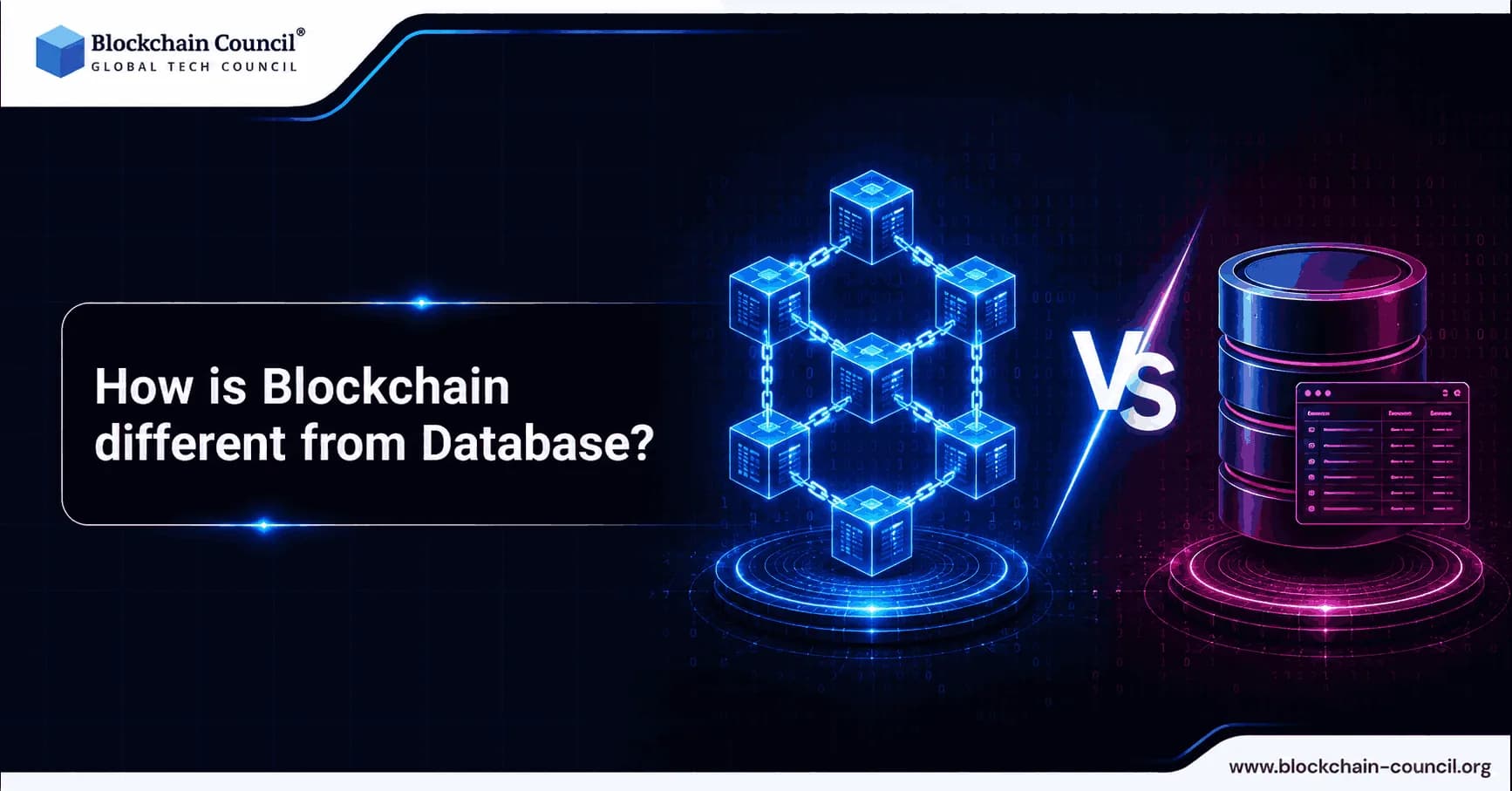
As businesses continue embracing digital transformation, two technologies frequently appear in discussions about data management: traditional databases and blockchain. Although both technologies are designed to store and manage information, they serve very different purposes and operate using entirely different architectures. Many people mistakenly assume that blockchain is simply another type of database, but in reality, blockchain introduces a fundamentally different approach to recording, securing, and sharing information across multiple participants.
Traditional databases have powered business applications for decades by storing structured information in centralized systems controlled by a single organization. Blockchain, on the other hand, uses decentralized distributed ledger technology that enables multiple participants to share, verify, and protect data without relying on a central authority. As blockchain adoption continues growing across industries such as finance, healthcare, logistics, government, and cybersecurity, understanding these differences has become increasingly important. Many professionals build this foundational knowledge through the Certified Blockchain Expert certification from Blockchain Council, which explores blockchain architecture, consensus mechanisms, smart contracts, enterprise applications, and decentralized technologies.

In this article, we'll compare blockchain and traditional databases, explain how each technology works, explore their strengths and limitations, and help you understand when each solution is most appropriate.
What Is the Difference Between Blockchain and a Database?
A traditional database is a centralized system used to store, organize, retrieve, and update information efficiently. It is typically managed by a single organization or administrator who has permission to modify, delete, or update records whenever necessary. Relational databases such as MySQL, PostgreSQL, Oracle Database, and Microsoft SQL Server are widely used across businesses because they provide high performance, flexible querying, and efficient data management.
Blockchain also stores data, but it does so using a decentralized distributed ledger rather than a centralized database. Information is grouped into blocks that are cryptographically linked together in chronological order. Once data has been verified and added to the blockchain, modifying or deleting previous records becomes extremely difficult without network consensus.
Instead of trusting a single administrator, blockchain establishes trust through cryptographic security, consensus mechanisms, and distributed verification across multiple network participants. This makes blockchain especially valuable for environments where multiple organizations need to share trusted information without relying entirely on one central authority.
Developing blockchain applications requires understanding distributed systems, cryptography, decentralized architecture, and smart contract programming. Professionals seeking practical expertise in these areas often strengthen their technical skills through the Certified Blockchain Developer certification, which focuses on blockchain programming, decentralized application development, smart contracts, blockchain integration, and enterprise deployment.
Quick Answer
A database is a centralized system where authorized administrators can modify, update, or delete stored information. Blockchain is a decentralized distributed ledger where data is verified by network participants, secured through cryptography, and designed to become highly resistant to modification after it has been recorded.
How Traditional Databases Work
Traditional databases are designed to manage large volumes of structured information efficiently.
Organizations use databases to store customer information, financial records, inventory data, employee information, healthcare records, and business transactions. Database administrators control permissions, manage backups, optimize performance, and maintain data integrity.
Whenever information changes, authorized users can update existing records directly. Databases support rapid transactions, flexible searches, complex queries, and real-time modifications, making them highly suitable for everyday business operations.
Centralized management simplifies administration while enabling organizations to maintain complete control over stored information. However, this centralized architecture also creates a single point of failure. If the central database experiences technical issues, cyberattacks, or unauthorized modifications, the entire system may be affected.
How Blockchain Works
Blockchain approaches data management differently.
Instead of storing information on a single centralized server, blockchain distributes identical copies of its ledger across multiple computers called nodes. Every participant maintains the same verified transaction history.
When a new transaction occurs, it must first be validated according to the blockchain's consensus mechanism. Once approved, the transaction is grouped into a block and permanently linked to previous blocks using cryptographic hashes.
Rather than replacing previous records, blockchain continuously adds new information while preserving the complete historical record. This creates an immutable audit trail that provides transparency and significantly reduces the risk of unauthorized modifications.
Because identical records exist across multiple network participants, blockchain also improves resilience by eliminating dependence on a single centralized authority.
Key Differences Between Blockchain and Databases
One of the most significant differences involves data ownership.
Traditional databases are controlled by individual organizations, while blockchain distributes control across multiple participants who collectively verify transactions.
Data modification also differs substantially. Database administrators can modify or delete existing records whenever necessary. Blockchain generally preserves previous records permanently, adding new transactions instead of altering historical information.
Security models also vary. Traditional databases rely primarily on access controls, authentication systems, and centralized cybersecurity measures. Blockchain combines cryptographic security, distributed validation, and consensus mechanisms to protect information.
Transparency represents another important distinction. Organizations typically restrict database access according to internal business requirements. Blockchain networks often provide shared visibility among authorized participants while maintaining strong cryptographic security.
Performance characteristics also differ. Traditional databases excel at processing high transaction volumes with rapid updates and complex queries. Blockchain prioritizes trust, transparency, and data integrity over maximum processing speed.
These architectural differences make each technology suitable for different business scenarios rather than positioning one as a replacement for the other.
When Should Businesses Use Blockchain?
Blockchain is particularly valuable when multiple organizations need to share trusted information without relying entirely on a single central authority.
Supply chain management benefits from blockchain because manufacturers, logistics providers, distributors, retailers, and regulators can all access verified product histories.
Financial institutions use blockchain to improve cross-border payments, trade finance, digital asset management, and settlement processes.
Healthcare organizations explore blockchain for secure patient record sharing, while governments evaluate blockchain for digital identity systems, land registries, and public record management.
Whenever transparency, auditability, decentralization, and tamper-resistant records are essential, blockchain often provides advantages over traditional centralized databases.
When Are Traditional Databases Better?
Traditional databases remain the preferred choice for many business applications.
Customer relationship management systems, inventory management platforms, payroll systems, e-commerce websites, banking applications, enterprise resource planning software, and internal business operations often require frequent updates, high-speed transactions, and flexible querying capabilities.
Since these systems are usually managed by a single trusted organization, decentralization provides limited additional value while potentially increasing complexity.
For many operational workloads, centralized databases remain the most practical and efficient solution.
Can Blockchain and Databases Work Together?
Rather than replacing databases, blockchain often complements them.
Many enterprise blockchain solutions combine blockchain with traditional databases to leverage the strengths of both technologies. Sensitive operational data may remain within centralized databases while important transactions, audit records, or compliance information are simultaneously recorded on blockchain for transparency and verification.
This hybrid architecture allows organizations to maintain operational efficiency while benefiting from blockchain's security and trust-enhancing capabilities.
Building these enterprise systems requires expertise across distributed systems, blockchain development, cybersecurity, cloud computing, APIs, software engineering, and enterprise architecture. Professionals seeking broader technical capabilities often strengthen their multidisciplinary expertise through a Tech Certification, helping them develop practical skills needed to support digital transformation across modern organizations.
The Future of Data Management
As digital transformation accelerates, blockchain and traditional databases are expected to become increasingly integrated.
Artificial intelligence, cloud computing, blockchain, Internet of Things (IoT), digital identity systems, and advanced analytics will work together to create more intelligent and secure business platforms.
Organizations will continue selecting the most appropriate technology based on their specific operational requirements rather than viewing blockchain and databases as competing alternatives.
The future of enterprise technology lies in combining these complementary solutions to create secure, scalable, and efficient digital ecosystems.
Final Thoughts
Blockchain and traditional databases both play essential roles in modern information management, but they solve different business challenges. Traditional databases provide speed, flexibility, and centralized control for everyday business operations, while blockchain delivers decentralization, transparency, immutability, and trusted collaboration across multiple organizations.
Understanding these differences allows businesses to choose the right technology for each application instead of assuming blockchain should replace existing database systems. As blockchain adoption continues expanding across finance, healthcare, supply chains, government services, and enterprise software, organizations also need professionals who can effectively explain these technologies, communicate their business value, and guide successful implementation strategies.
Developing these communication and strategic capabilities alongside technical expertise has become increasingly valuable, which is why many professionals complement their blockchain knowledge with a Marketing Certification to strengthen their understanding of digital strategy, customer engagement, and technology adoption.
Rather than competing technologies, blockchain and databases represent complementary tools that together are shaping the future of secure, transparent, and intelligent digital infrastructure.
FAQs
1. What is the difference between blockchain and a database?
A traditional database is typically managed by a central authority that can create, update, or delete records. A blockchain is a distributed ledger shared across multiple participants where transactions are validated through a consensus mechanism and, once confirmed, are designed to be extremely difficult to alter. The key difference lies in decentralization, immutability, and trust management.
2. What is a traditional database?
A traditional database is a structured system for storing, organizing, retrieving, and managing information. Databases are commonly used in banking, e-commerce, healthcare, enterprise software, and websites to support fast and efficient data management.
3. What is a blockchain?
A blockchain is a distributed digital ledger that records transactions across multiple computers (nodes). Each group of verified transactions is stored in a block, and these blocks are cryptographically linked together to form a chain.
4. Who controls a database versus a blockchain?
Traditional databases are usually controlled by a single organization or administrator. Public blockchains are maintained by decentralized networks of participants, while permissioned blockchains may be governed by a consortium or selected organizations.
5. How is data stored in a database?
Databases store information in tables, rows, columns, documents, graphs, or other structured formats depending on the database type. Authorized administrators can typically create, modify, or delete records as required.
6. How is data stored on a blockchain?
Blockchain stores verified transactions in sequential blocks that are linked using cryptographic hashes. Once a block is confirmed and added to the chain, changing its contents is intentionally difficult without network consensus.
7. Can blockchain replace traditional databases?
Not always. Blockchain and traditional databases solve different problems. Databases are generally better for high-speed applications requiring frequent updates and centralized control, while blockchain is valuable when multiple parties need a shared, tamper-evident record without relying entirely on a central authority.
8. Which is faster: blockchain or a database?
Traditional databases are generally much faster because they operate under centralized control and do not require decentralized consensus for every update. Blockchain prioritizes security, transparency, and distributed trust over maximum transaction speed.
9. Why is blockchain considered more transparent?
On many blockchain networks, authorized participants can independently verify transactions recorded on the ledger. This shared visibility improves transparency and reduces the need for reconciliation between multiple organizations.
10. How does blockchain improve security?
Blockchain combines cryptographic hashing, digital signatures, consensus mechanisms, and decentralized storage to protect data integrity. While highly secure by design, blockchain applications still require secure software development and proper key management.
11. Can records be changed on a blockchain?
Confirmed blockchain records are generally designed to be extremely difficult to modify. In contrast, traditional database records can usually be updated or deleted by authorized administrators as part of normal operations.
12. Which industries use blockchain instead of traditional databases?
Blockchain is commonly explored in finance, supply chain management, healthcare, digital identity, real estate, government services, insurance, logistics, energy, gaming, and trade finance where transparency and shared trust are valuable.
13. What are the advantages of blockchain over databases?
Key advantages include decentralization, tamper-evident records, improved transparency, enhanced traceability, secure digital ownership, automation through smart contracts, reduced reconciliation efforts, and greater trust among multiple organizations.
14. What are the advantages of traditional databases?
Traditional databases offer high performance, low latency, efficient querying, flexible updates, mature management tools, lower operational complexity for many applications, and strong support for centralized business systems.
15. What are the limitations of blockchain compared to databases?
Blockchain may have lower transaction throughput, higher storage requirements, greater implementation complexity, governance challenges, scalability limitations, and higher operational costs for certain use cases. It is not the best solution for every application.
16. What common misconceptions exist about blockchain and databases?
A common misconception is that blockchain is simply a better database. In reality, blockchain is a specialized type of distributed ledger designed for situations requiring decentralized trust and immutable records. Many business applications continue to be better served by conventional databases.
17. What are best practices when choosing between blockchain and a database?
Choose a traditional database when centralized control, high performance, and frequent updates are the priority. Consider blockchain when multiple independent parties need a shared, verifiable, and tamper-evident record. Always evaluate business requirements before selecting either technology.
18. Can blockchain and databases work together?
Yes. Many enterprise solutions combine blockchain with traditional databases. Sensitive or high-volume operational data is often stored in databases, while blockchain records hashes, transaction proofs, audit logs, or ownership information for verification and transparency.
19. What trends are shaping blockchain and database technology in 2025-2026?
Major trends include hybrid blockchain architectures, AI-powered database optimization, decentralized identity (DID), zero-knowledge proofs (ZKPs), tokenization of real-world assets (RWAs), blockchain-integrated cloud databases, confidential computing, multi-cloud deployments, and enterprise blockchain adoption.
20. What is the future of blockchain and databases?
Blockchain and traditional databases are expected to coexist because they address different technological needs. Databases will remain the foundation of most enterprise applications, while blockchain will continue expanding into areas that require transparency, decentralized trust, digital ownership, and tamper-evident records. The future lies not in replacing one with the other but in combining their strengths to build more secure, scalable, and efficient systems. After all, choosing between a blockchain and a database is a bit like choosing between a safe and a filing cabinet. Both store important information, but they are designed for very different jobs.
Related Articles
View All
Blockchain
Blockchain Certification Programs You Can Join Online
Discover the best blockchain certification programs you can join online. Learn blockchain fundamentals, smart contracts, enterprise blockchain, and career opportunities with globally recognized certifications.

Blockchain
Agile for Blockchain Teams: Managing Sprints, Smart Contracts, and Decentralized Roadmaps
Learn how agile for blockchain teams works when sprints, smart contracts, audits, governance, and decentralized roadmaps are planned around risk.

Blockchain
How to Write a PRD for Blockchain Products: Key Sections, Examples, and Best Practices
Learn how to write a PRD for blockchain products with key sections, practical examples, tokenomics, security, governance, and success metrics.
Trending Articles
AWS Career Roadmap
A step-by-step guide to building a successful career in Amazon Web Services cloud computing.
How Blockchain Secures AI Data
Understand how blockchain technology is being applied to protect the integrity and security of AI training data.
Claude AI Tools for Productivity
Discover Claude AI tools for productivity to streamline tasks, manage workflows, and improve efficiency.