

What to Do If Your Card Is Stolen

Losing your debit or credit card is stressful. Having it stolen is worse. In a world where digital payments are instant and fraud can happen within minutes, knowing what to do immediately can make the difference between minor inconvenience and serious financial loss.
Card theft is becoming more common due to increased digital transactions and sophisticated fraud techniques. Whether your card is physically stolen or compromised online, quick action is essential.
This guide explains exactly what to do if your card is stolen, how to protect your finances, and how to prevent future incidents.
Understanding the Risks of a Stolen Card
When a card is stolen, the risk is not limited to unauthorized purchases. Fraudsters may use your card details for online transactions, clone your card, or even attempt identity theft.
Modern criminals often act quickly. Within minutes of theft, they may attempt multiple transactions. This is why immediate action is critical.
Banks and financial institutions have improved security systems, but user awareness remains the first line of defense.

Immediate Steps to Take If Your Card Is Stolen
1. Call Your Bank Immediately
The first and most important step is to contact your bank. Most banks have 24/7 helplines for reporting lost or stolen cards.
Request an immediate block on your card. This prevents further unauthorized transactions.
Many banks also offer mobile apps where you can freeze your card instantly. Acting fast can save you from significant financial loss.
2. Freeze or Lock Your Account
If your bank provides a temporary freeze option, use it immediately. This stops all transactions until you verify your identity.
Freezing your account is especially useful if you are unsure whether the card is lost or stolen.
Once confirmed, you can proceed with permanent blocking and replacement.
3. Check Recent Transactions
Review your account activity carefully. Look for any unauthorized charges.
If you find suspicious transactions, report them immediately. Banks often have a limited time window for disputing fraudulent charges.
Keeping track of your transactions regularly can help detect fraud early.
4. File a Police Report
Filing a police report may seem excessive, but it is important for documentation.
This report can be useful if you need to dispute charges or file insurance claims.
It also helps authorities track fraud patterns and prevent future crimes.
5. Set Up Fraud Alerts
Contact your bank or credit bureau to set up fraud alerts. These alerts notify you of suspicious activity in real time.
Some banks also allow you to set transaction limits or require additional authentication for large purchases.
These measures add an extra layer of security.
What to Do Within the First 24 Hours
Monitor Your Account Closely
After reporting the theft, continue monitoring your account for unusual activity.
Fraudsters may attempt multiple transactions over time. Staying vigilant is essential.
Request a Replacement Card
Ask your bank to issue a new card. Most banks provide expedited delivery for stolen cards.
Ensure that your new card has updated security features such as chip technology and contactless protection.
Update Linked Accounts
If your card is linked to subscriptions or online services, update your payment details.
This prevents service interruptions and reduces the risk of unauthorized access.
Long-Term Actions to Protect Yourself
Change Passwords and PINs
Change your banking passwords and PIN immediately.
Avoid using easily guessable combinations. Strong passwords reduce the risk of further breaches.
Monitor Your Credit Report
Regularly check your credit report for unusual activity.
This helps detect identity theft early. Many financial institutions offer free credit monitoring services.
Enable Two-Factor Authentication
Two-factor authentication adds an extra layer of security.
Even if someone has your card details, they cannot complete transactions without verification.
Real-World Examples
Case 1: Quick Action Prevented Loss
A customer noticed their wallet was missing and immediately blocked their card. Within minutes, fraudsters attempted transactions, but all were declined.
This shows how fast response can prevent losses.
Case 2: Delayed Response Led to Fraud
Another individual delayed reporting their stolen card. By the time they contacted the bank, multiple unauthorized transactions had already been processed.
This highlights the importance of immediate action.
Role of Technology in Preventing Card Fraud
Technology is playing a major role in reducing card theft risks. AI-powered fraud detection systems analyze transaction patterns and flag suspicious activity.
Professionals interested in understanding such systems often explore programs like the AI expert certification, which covers AI applications in security and finance.
Advanced systems, including autonomous monitoring tools, are also gaining popularity. These are explored in programs like the Agentic ai expert certification.
These technologies help detect fraud faster and improve overall security.
How Businesses Handle Card Theft
Businesses also face risks from stolen cards. They use AI systems to detect fraudulent transactions and prevent losses.
Developers working on such systems often enhance their skills through programs like the AI Powered coding expert Course.
Similarly, marketers ensure secure payment systems while managing customer data, often supported by knowledge from the AI powered digital marketing course.
These measures help create safer financial ecosystems.
Common Mistakes to Avoid
One common mistake is delaying reporting the theft. Time is critical in preventing fraud.
Another mistake is ignoring small unauthorized transactions. Fraudsters often test cards with small purchases before making larger ones.
Sharing card details carelessly is also a major risk. Always keep your information secure.
Tips to Prevent Card Theft
Be Cautious in Public Places
Avoid exposing your card details in crowded areas.
Use secure payment methods whenever possible.
Use Secure ATMs
Choose ATMs in well-lit and secure locations.
Check for suspicious devices attached to the machine.
Avoid Sharing Card Details
Never share your card number, CVV, or PIN with anyone.
Legitimate institutions will never ask for this information.
Enable Notifications
Turn on transaction alerts for real-time updates.
This helps you detect unauthorized activity instantly.
Future Trends in Card Security
The future of card security includes biometric authentication, tokenization, and AI-driven fraud detection.
Biometric systems use fingerprints or facial recognition to verify transactions.
Tokenization replaces card details with unique codes, reducing the risk of theft.
These innovations aim to make financial transactions safer and more secure.
Conclusion
Having your card stolen can be a stressful experience, but knowing what to do can significantly reduce the impact.
Immediate action, such as blocking your card and monitoring transactions, is crucial.
Long-term measures like enabling security features and staying informed help prevent future incidents.
With advancements in technology and increased awareness, individuals can better protect their finances.
Ultimately, staying alert and proactive is the best defense against card theft.
FAQs
1. What should I do immediately after my card is stolen?
You should contact your bank immediately and request a block on your card. This prevents unauthorized transactions. Next, check your recent transactions for suspicious activity. Report any fraudulent charges to your bank. You should also consider freezing your account temporarily. Acting quickly minimizes financial loss.
2. Can I get my money back after card fraud?
Most banks offer fraud protection and may refund unauthorized transactions. However, this depends on how quickly you report the issue. Delayed reporting may reduce your chances of recovery. Always keep records of your communication with the bank. Filing a police report can also help support your claim.
3. How long does it take to get a replacement card?
Replacement cards are usually issued within a few days. Some banks offer expedited delivery for urgent cases. You may receive a temporary digital card for immediate use. Delivery time depends on your location and bank policies. Always confirm with your bank.
4. Should I file a police report?
Yes, filing a police report is recommended. It provides official documentation of the theft. This can be useful for disputes and insurance claims. It also helps authorities track criminal activity. While not always mandatory, it is beneficial.
5. Can someone use my card without a PIN?
Yes, many online transactions do not require a PIN. Contactless payments also have limits that may not require authentication. This is why blocking your card quickly is important. Always enable additional security features. Monitoring transactions helps detect misuse.
6. What is a fraud alert?
A fraud alert is a notification system that warns you of suspicious activity. It helps you respond quickly to unauthorized transactions. Banks and credit bureaus offer this service. It adds an extra layer of security. Setting it up is highly recommended.
7. How can I prevent card theft?
You can prevent card theft by keeping your card secure and avoiding sharing details. Use secure ATMs and enable transaction alerts. Regularly monitor your account activity. Be cautious in public places. These steps reduce the risk.
8. What happens if I don’t report the theft?
If you do not report the theft, fraudsters may continue using your card. This can lead to significant financial loss. Banks may also deny claims if reporting is delayed. Prompt action is essential. Always report immediately.
9. Are contactless cards safe?
Contactless cards are generally safe but have some risks. They allow quick payments without a PIN for small amounts. This can be exploited if the card is stolen. Setting limits and alerts can improve security. Awareness is important.
10. Can stolen cards be tracked?
Cards themselves cannot always be tracked. However, transactions can be monitored to identify fraud patterns. Banks use AI systems to detect suspicious activity. This helps in preventing further misuse. Reporting theft helps in tracking.
11. What should I do if I find my card after blocking it?
If you find your card after blocking it, you should not use it. Contact your bank for guidance. Most banks will issue a new card. The old card remains inactive. This ensures security.
12. Is online fraud more common than physical theft?
Yes, online fraud is becoming more common. Digital transactions provide opportunities for cybercriminals. However, physical theft still occurs. Both require awareness and precautions. Staying informed helps reduce risks.
13. How do banks detect fraud?
Banks use advanced algorithms and AI systems to detect unusual patterns. They analyze transaction behavior and flag suspicious activity. This allows quick intervention. These systems are continuously improving. They play a key role in security.
14. Can I insure my card against theft?
Some financial institutions offer insurance for card theft. This covers unauthorized transactions under certain conditions. Check with your bank for available options. Insurance provides additional protection. It is worth considering.
15. What is identity theft?
Identity theft occurs when someone uses your personal information without permission. This can include using your card details or personal data. It can lead to financial loss and legal issues. Monitoring your accounts helps detect it. Prevention is key.
16. Should I change my bank account after theft?
Changing your account may not always be necessary. Blocking your card and securing your account is usually sufficient. However, if multiple breaches occur, consider it. Consult your bank for advice. Security should be your priority.
17. How often should I check my transactions?
You should check your transactions regularly, ideally daily. Frequent monitoring helps detect fraud early. It allows quick action. Many apps provide real-time updates. Staying vigilant is important.
18. Can fraud happen even if my card is with me?
Yes, fraud can occur through data breaches or skimming. Your physical card does not need to be stolen. This is why online security is important. Use secure websites and avoid sharing details. Awareness reduces risk.
19. What is card skimming?
Card skimming involves copying card details using a device. This often happens at ATMs or payment terminals. The stolen data is used for fraudulent transactions. Checking machines for tampering can help prevent it. Awareness is crucial.
20. Is it safe to store card details online?
Storing card details online can be convenient but carries risks. Use trusted platforms with strong security measures. Avoid saving details on unknown websites. Enable two-factor authentication. This improves safety.
Related Articles
View All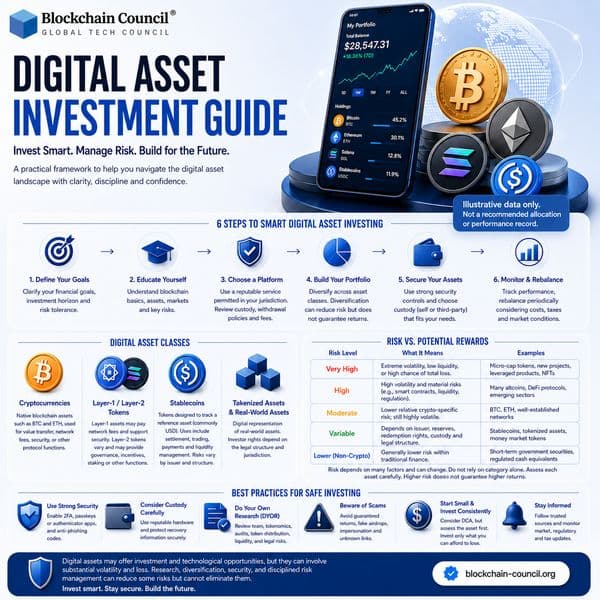
Infographics
Digital Asset Investment Guide: Build a Smarter Strategy for the Future of Finance
Digital asset investing has become a key part of the modern financial landscape, offering opportunities in cryptocurrencies, tokenized assets, NFTs, and blockchain-based investments. Whether you're a beginner or an experienced investor, understanding market fundamentals, diversification, security, and risk management is essential for building a successful digital asset portfolio. This guide explores the core concepts, investment strategies, and best practices for navigating the digital asset market.
Infographics
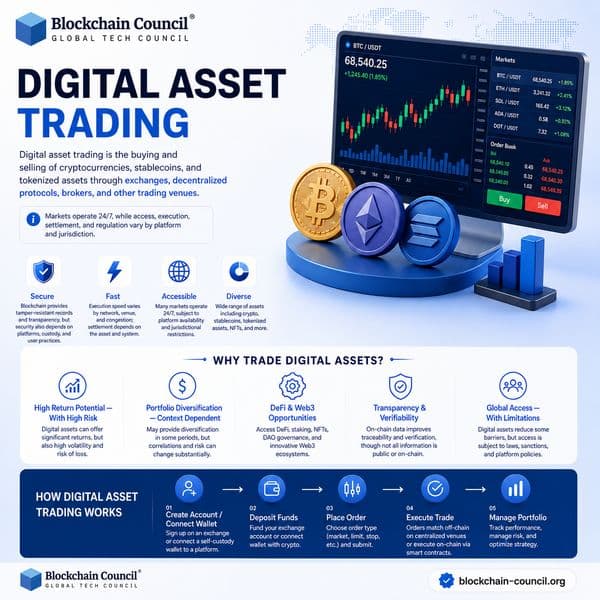
Digital Asset Trading: A Complete Guide to Trading in the Digital Economy
Digital asset trading involves buying, selling, and exchanging cryptocurrencies, tokenized assets, NFTs, and other blockchain-based assets through centralized and decentralized trading platforms. As the digital economy expands, traders rely on market analysis, risk management, and advanced trading tools to navigate volatile markets. This guide explains the fundamentals of digital asset trading, key strategies, security considerations, and emerging trends shaping the future of digital finance.
Infographics
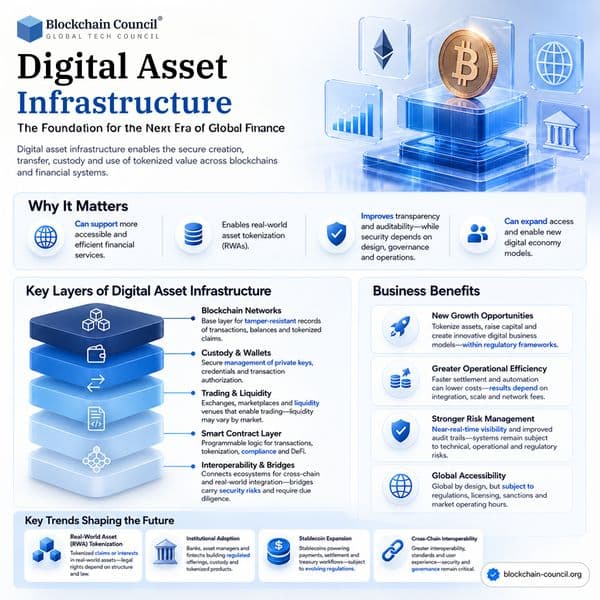
Digital Asset Infrastructure: The Foundation of the Next Era of Global Finance
Digital asset infrastructure is the technology backbone that enables the creation, storage, transfer, trading, and management of cryptocurrencies, tokenized assets, and other blockchain-based digital assets. It includes blockchain networks, digital wallets, custody solutions, exchanges, smart contracts, and security protocols. This guide explores the key components of digital asset infrastructure and their role in supporting the rapidly evolving Web3 and digital finance ecosystem.
Trending Articles
AWS Career Roadmap
A step-by-step guide to building a successful career in Amazon Web Services cloud computing.
What is AWS? A Beginner's Guide to Cloud Computing
Everything you need to know about Amazon Web Services, cloud computing fundamentals, and career opportunities.

Can DeFi 2.0 Bridge the Gap Between Traditional and Decentralized Finance?
The next generation of DeFi protocols aims to connect traditional banking with decentralized finance ecosystems.