

Best ChatGPT Prompts for Critical Thinking
 Suyash Raizada
Critical thinking is no longer just an academic skill. It has become essential in business, technology, and everyday decision-making. With the rise of advanced AI tools like ChatGPT, individuals now have a powerful assistant that can enhance reasoning, challenge assumptions, and explore complex ideas.
However, the quality of output from ChatGPT depends heavily on the quality of input. This is where prompt engineering plays a crucial role. The right prompts can transform ChatGPT from a simple answering tool into a critical thinking partner.
Professionals looking to master these skills often begin with programs like the ChatGPT Expert certification, which focuses on prompt engineering and real-world AI applications.
What is Critical Thinking in the Context of AI?
Critical thinking involves analyzing information objectively, evaluating different perspectives, and making reasoned decisions. When applied to AI tools like ChatGPT, it means using prompts that encourage deeper analysis rather than surface-level responses.
Instead of asking simple questions, users can guide ChatGPT to evaluate arguments, identify biases, compare alternatives, and predict outcomes. This transforms AI into a collaborative thinking tool rather than just a content generator.

Why Prompts Matter in ChatGPT
ChatGPT operates based on patterns and instructions. A vague prompt leads to generic answers, while a well-structured prompt produces insightful and nuanced responses.
For example, a weak prompt might ask for a simple explanation, while a stronger prompt asks for analysis, comparison, and evidence-based reasoning. The second approach drives deeper thinking.
Types of ChatGPT Prompts for Critical Thinking
Daily Thinking Practice Prompts
These prompts help build a habit of analytical thinking.
Example: “Provide a daily real-world scenario and ask me to analyze it critically, including identifying assumptions and possible outcomes.”
This type of prompt strengthens reasoning skills over time and improves decision-making abilities.
Debate and Role-Play Prompts
Role-playing encourages users to explore opposing viewpoints.
Example: “Argue against the idea that remote work is beneficial, even if evidence suggests otherwise.”
This approach helps users understand different perspectives and reduces confirmation bias.
Opposing Viewpoints Prompts
These prompts are designed to challenge existing beliefs.
Example: “Present arguments both for and against universal basic income, and evaluate which side is stronger.”
Such prompts encourage balanced thinking and deeper analysis.
Problem-Solving Prompts
These prompts focus on real-world challenges.
Example: “Provide a complex business problem and guide me through a structured solution process.”
Professionals often combine these techniques with training programs like the AI Powered coding expert Course to enhance problem-solving in technical environments.
Ethical Dilemma Prompts
Ethical reasoning is a core part of critical thinking.
Example: “Present a moral dilemma involving business ethics and analyze the consequences of each decision.”
These prompts help users evaluate decisions beyond simple right-or-wrong answers.
Data Interpretation Prompts
These prompts improve analytical reasoning.
Example: “Provide a dataset scenario and ask what insights can be drawn from it.”
This is particularly useful in fields like marketing, where professionals apply such skills through programs like the AI powered digital marketing course.
Philosophical Question Prompts
These prompts encourage deep thinking.
Example: “Is free will real? Present arguments from multiple philosophical perspectives.”
They help users explore abstract ideas and develop reasoning skills.
Scenario Planning Prompts
These prompts focus on future-oriented thinking.
Example: “Create a future scenario involving technological disruption and analyze its impact on society.”
This type of thinking is valuable for strategic planning.
Thought Experiment Prompts
Thought experiments push the boundaries of imagination.
Example: “What if humans lived for 200 years? Analyze the social and economic consequences.”
They encourage creativity and critical evaluation.
Role-Based Challenge Prompts
These prompts simulate real-world responsibilities.
Example: “As a policymaker, how would you handle rising inflation?”
They help users apply critical thinking in practical contexts.
Real-World Applications of Critical Thinking Prompts
Business Decision-Making
Executives use structured prompts to evaluate risks, analyze competitors, and plan strategies. AI-assisted critical thinking improves decision accuracy and efficiency.
Education and Learning
Students use prompts to explore subjects deeply rather than memorizing information. This enhances understanding and retention.
Software Development
Developers use prompts to debug code, evaluate solutions, and optimize systems. These skills align with certifications such as the AI expert certification, which focuses on practical AI expertise.
Content Creation and Marketing
Marketers use critical thinking prompts to analyze audience behavior and create effective campaigns. AI-driven insights improve engagement and results.
Recent Developments in Prompt Engineering
Modern prompt engineering involves multi-step instructions, context layering, and iterative refinement.
ChatGPT is now integrated into various platforms, making prompt-based critical thinking more accessible.
There is also a growing emphasis on explainability, helping users understand how AI generates conclusions.
Importance of AI Certifications
As AI becomes more integrated into professional workflows, certifications play a crucial role in validating skills.
Programs like the ChatGPT Expert certification help individuals master prompt engineering and AI applications.
Similarly, broader programs such as the AI expert certification provide comprehensive knowledge of AI technologies.
These certifications enhance credibility and open new career opportunities.
Benefits of Using ChatGPT for Critical Thinking
Using ChatGPT effectively can significantly improve cognitive skills.
It encourages structured thinking and helps users analyze complex problems. It also provides instant feedback, allowing users to refine their reasoning. Additionally, it exposes users to diverse perspectives, which enhances understanding.
Over time, this leads to better decision-making and problem-solving abilities.
Challenges and Limitations
Despite its advantages, ChatGPT has limitations.
It may generate biased or incomplete information. Users must critically evaluate outputs rather than accepting them blindly. Additionally, over-reliance on AI can reduce independent thinking if not used properly.
Future of Critical Thinking with AI
The future of AI-assisted critical thinking looks promising.
AI tools will become more advanced and personalized. They will provide deeper insights and more accurate analysis. Integration with emerging technologies will further enhance their capabilities.
Conclusion
ChatGPT is more than just a conversational AI tool. When used with the right prompts, it becomes a powerful partner for critical thinking. From analyzing complex problems to exploring philosophical questions, the possibilities are vast.
By mastering prompt engineering and leveraging professional certifications, individuals can unlock the full potential of AI. In a world driven by data and technology, critical thinking remains one of the most valuable skills.
FAQs
1. What are ChatGPT prompts for critical thinking?
ChatGPT prompts for critical thinking are structured inputs designed to encourage deeper analysis and reasoning. They guide the AI to evaluate information, compare perspectives, and provide logical conclusions. These prompts go beyond simple questions and focus on complex problem-solving. They help users develop analytical skills by engaging with AI in a meaningful way. Over time, they improve decision-making and reasoning abilities.
2. Why is prompt engineering important?
Prompt engineering is important because it determines the quality of AI responses. A well-crafted prompt leads to detailed and insightful answers. It helps users control the direction and depth of the conversation. Without proper prompts, AI outputs may be generic or incomplete. Therefore, mastering prompt engineering is essential for effective AI usage.
3. Can ChatGPT improve critical thinking skills?
Yes, ChatGPT can enhance critical thinking when used correctly. It encourages users to analyze information and explore different viewpoints. By interacting with structured prompts, users develop reasoning skills. However, it should be used as a tool rather than a substitute for thinking. Active engagement is necessary for improvement.
4. What types of prompts are best for critical thinking?
Prompts that involve analysis, comparison, and evaluation are most effective. Examples include debate prompts, ethical dilemmas, and problem-solving scenarios. These prompts challenge users to think deeply and consider multiple perspectives. They also encourage logical reasoning. This makes them ideal for critical thinking.
5. Are critical thinking prompts useful in business?
Yes, they are highly useful in business environments. They help professionals analyze risks and make informed decisions. AI-assisted prompts improve strategic planning and problem-solving. They also enhance communication and collaboration. This makes them valuable tools in modern workplaces.
6. How do prompts help in education?
Prompts encourage active learning by engaging students in analysis and discussion. They help students understand concepts deeply rather than memorizing information. This improves retention and comprehension. It also develops independent thinking skills. As a result, education becomes more effective.
7. Can beginners use critical thinking prompts?
Yes, beginners can easily use these prompts. They do not require advanced technical knowledge. Simple prompts can gradually lead to more complex ones. This makes them accessible to everyone. With practice, users can improve their skills.
8. What is an example of a critical thinking prompt?
An example is: “Analyze the pros and cons of remote work and determine its long-term impact.” This type of prompt encourages evaluation and reasoning. It requires users to consider multiple perspectives. It also leads to more detailed responses. Such prompts are effective for critical thinking.
9. How do AI certifications help?
AI certifications provide structured learning and validation of skills. They help individuals understand AI tools and techniques. Certifications improve credibility and career opportunities. They also ensure practical knowledge. This makes them valuable for professionals.
10. What industries benefit from critical thinking prompts?
Industries such as technology, healthcare, finance, and marketing benefit greatly. These prompts help professionals analyze data and make decisions. They also support innovation and problem-solving. As a result, they are widely used. Their importance continues to grow.
11. Are there limitations to using ChatGPT?
Yes, ChatGPT has limitations such as potential bias and inaccuracies. Users must verify information and think critically. It should not be relied upon completely. Human judgment remains essential. Awareness of limitations is important.
12. Can prompts be customized?
Yes, prompts can be customized based on specific needs. Users can adjust them to focus on particular topics or goals. This flexibility makes them highly effective. Customized prompts produce better results. They enhance the overall experience.
13. How often should prompts be used?
Prompts can be used regularly as part of learning or work routines. Daily practice improves critical thinking skills. Consistency is key to progress. Over time, users become more proficient. This leads to better outcomes.
14. Do prompts improve creativity?
Yes, prompts encourage creative thinking by exploring new ideas. They push users to think beyond conventional boundaries. This enhances innovation. Creativity and critical thinking often work together. Prompts support both.
15. Can prompts help in decision-making?
Prompts help in decision-making by providing structured analysis. They allow users to evaluate options and outcomes. This leads to more informed choices. They also reduce bias. This makes decisions more effective.
16. What is the future of prompt engineering?
The future of prompt engineering involves more advanced techniques and tools. It will become a key skill in AI usage. As AI evolves, prompts will become more sophisticated. This will improve AI interactions. It is an emerging field.
17. Are prompts useful for developers?
Yes, developers use prompts for debugging and optimization. They help in solving complex coding problems. This improves efficiency. Prompts also support learning new concepts. They are valuable tools for developers.
18. Can prompts be used for marketing?
Yes, marketers use prompts to analyze trends and create strategies. They help in understanding audience behavior. This improves campaign effectiveness. AI-driven insights are highly valuable. Prompts play a key role.
19. Do prompts replace human thinking?
No, prompts do not replace human thinking. They enhance and support it. Users must still analyze and evaluate outputs. Critical thinking remains essential. AI is just a tool.
20. How can I get better at writing prompts?
Improving prompt writing requires practice and experimentation. Users should test different structures and approaches. Learning from examples is helpful. Certifications and courses can also improve skills. Over time, proficiency increases.
Related Articles
View All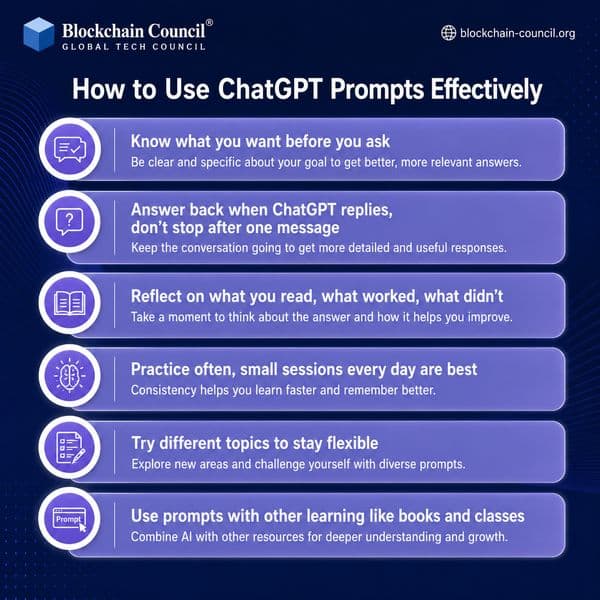
Infographics
How to Use ChatGPT Prompts Effectively
Learn how to use ChatGPT prompts effectively with practical techniques, prompt structures, and examples to improve AI-generated responses and productivity.
Infographics
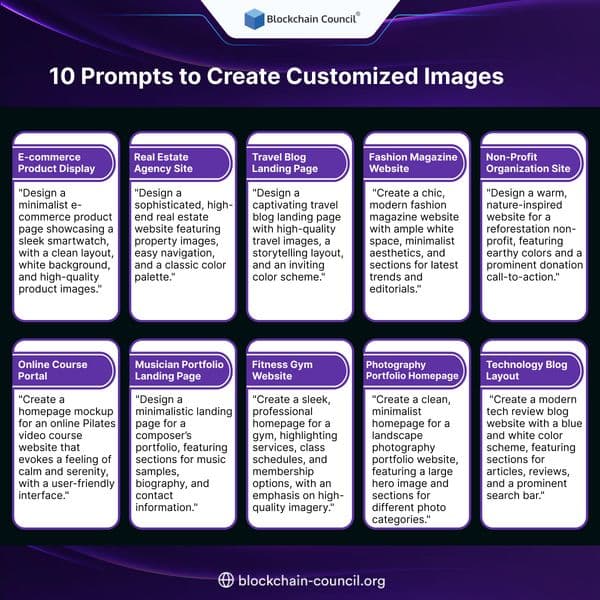
10 Prompts to Create Customized Images
These 10 AI image prompts help you create customized, high-quality visuals for social media, branding, and creative projects.
Infographics
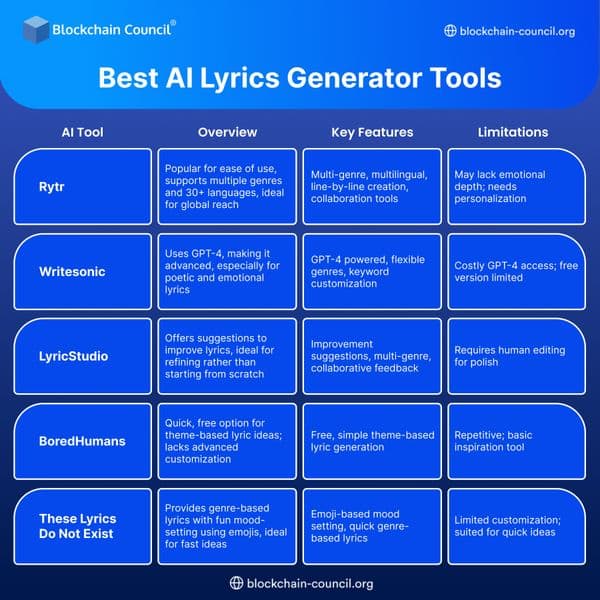
Best Lyrics Generator Tools
AI lyrics generator tools help musicians and creators write songs quickly by generating creative and structured lyrics.
Trending Articles

Top 5 DeFi Platforms
Explore the leading decentralized finance platforms and what makes each one unique in the evolving DeFi landscape.
How to Install Claude Code
Learn how to install Claude Code on macOS, Linux, and Windows using the native installer, plus verification, authentication, and troubleshooting tips.
How to Create Claude Skills?
Claude Skills are one of the most important features Anthropic has introduced for users who want automation that is structured, consistent and reusable. Instead of giving Claude long instructions ever