

GPT-4o vs GPT-4.5 Comparison

Artificial Intelligence is evolving at a pace that makes last year’s breakthroughs feel like ancient history. Among the most talked-about advancements are OpenAI’s GPT-4o and GPT-4.5 models. These models represent significant improvements in reasoning, creativity, and real-world usability.
Understanding the differences between GPT-4o and GPT-4.5 is essential for developers, businesses, and professionals who rely on AI tools. Those looking to master these technologies often begin with structured learning paths such as the ChatGPT Expert certification, which focuses on practical AI usage and prompt engineering.
This article provides a detailed comparison of GPT-4o and GPT-4.5, covering features, performance, use cases, and future implications.
Overview of GPT-4o
GPT-4o is designed as a multimodal AI model capable of handling text, images, and audio. It emphasizes speed, efficiency, and real-time interaction.
One of its defining features is its ability to process multiple data types seamlessly. This makes it highly suitable for applications such as chatbots, voice assistants, and interactive platforms.
GPT-4o is also known for its responsiveness. It delivers quick outputs, making it ideal for scenarios where speed is critical.

Overview of GPT-4.5
GPT-4.5 represents an evolution focused on deeper reasoning and more refined outputs. While it may not prioritize speed to the same extent as GPT-4o, it excels in accuracy and contextual understanding.
This model is particularly effective in tasks requiring complex analysis, such as legal research, financial modeling, and advanced content creation.
GPT-4.5 also demonstrates improved context retention, allowing it to maintain coherence over longer conversations.
Key Differences Between GPT-4o and GPT-4.5
Reasoning Capabilities
GPT-4o offers solid reasoning abilities but is slightly behind GPT-4.5. It performs well in general tasks but may struggle with highly complex logic.
GPT-4.5, on the other hand, delivers stronger problem-solving and logical analysis. It can handle nuanced scenarios with greater precision, making it suitable for advanced applications.
Creativity and Writing Quality
GPT-4o provides fast and direct responses, which are useful for quick content generation.
GPT-4.5 produces more human-like and engaging writing. Its outputs are often more detailed and refined, making it a better choice for storytelling and professional content.
Data Type Support
One of GPT-4o’s strengths is its ability to process text, images, and audio. This multimodal capability makes it versatile.
GPT-4.5 primarily focuses on text, but it compensates with higher-quality analysis and interpretation.
Speed and Performance
GPT-4o is optimized for speed. It is ideal for real-time applications where quick responses are necessary.
GPT-4.5 is slower but more precise. It prioritizes quality over speed, which is beneficial for complex tasks.
Benchmark Results
GPT-4o performs well in general benchmarks but may show weaker context retention over extended interactions.
GPT-4.5 achieves higher scores in logic-based tasks and maintains context for longer conversations.
Cost Considerations
GPT-4o is more cost-effective, making it suitable for large-scale applications.
GPT-4.5 is more expensive due to its advanced capabilities, but the investment is justified for high-value tasks.
Real-World Applications
Business and Customer Support
GPT-4o is widely used in customer service due to its speed and efficiency. It can handle high volumes of queries in real time.
GPT-4.5 is better suited for complex customer interactions that require detailed explanations and personalized responses.
Software Development
Developers use GPT-4o for quick debugging and code suggestions. Its speed enhances productivity.
GPT-4.5 is ideal for complex coding challenges and architectural planning. Professionals often enhance their skills through programs like the AI Powered coding expert Course.
Marketing and Content Creation
GPT-4o is effective for generating quick marketing copy and social media posts.
GPT-4.5 excels in creating high-quality, engaging content. It is particularly useful for long-form writing and strategic planning.
Marketers can further refine their skills through the AI powered digital marketing course.
Data Analysis and Research
GPT-4o can process data quickly and provide general insights.
GPT-4.5 offers deeper analysis and more accurate interpretations, making it suitable for research-intensive tasks.
Recent Developments in AI Models
The transition from GPT-4o to GPT-4.5 highlights the growing emphasis on quality and reasoning in AI development.
Modern AI models are moving beyond speed to focus on accuracy, context retention, and explainability.
This shift reflects the increasing demand for AI systems that can support complex decision-making processes.
Role of AI Certifications in Adopting New Models
As AI technologies evolve, certifications have become essential for staying competitive.
Programs like the AI expert certification provide comprehensive knowledge of AI systems and their applications.
Similarly, the ChatGPT Expert certification helps professionals master prompt engineering and model optimization.
These certifications ensure that individuals can effectively utilize advanced models like GPT-4o and GPT-4.5.
Benefits of GPT-4o and GPT-4.5
GPT-4o Advantages
GPT-4o offers speed, cost efficiency, and multimodal capabilities. It is ideal for real-time applications and large-scale deployments.
Its ability to handle different data types makes it highly versatile.
GPT-4.5 Advantages
GPT-4.5 provides superior reasoning, better context retention, and higher-quality outputs.
It is well-suited for tasks that require depth and precision.
Limitations of Both Models
Despite their advancements, both models have limitations.
GPT-4o may struggle with complex reasoning tasks.
GPT-4.5, while powerful, is slower and more expensive.
Users must choose the model that best fits their specific needs.
Future of AI Models
The future of AI lies in balancing speed and intelligence.
Future models are expected to combine the strengths of GPT-4o and GPT-4.5, offering both efficiency and advanced reasoning.
Integration with emerging technologies will further enhance their capabilities.
Conclusion
The comparison between GPT-4o and GPT-4.5 highlights the trade-offs between speed and precision. GPT-4o excels in real-time applications and cost efficiency, while GPT-4.5 stands out in reasoning and content quality.
Choosing the right model depends on the specific requirements of the task. For quick interactions and scalability, GPT-4o is ideal. For complex analysis and high-quality output, GPT-4.5 is the better choice.
As AI continues to evolve, understanding these differences will be crucial for leveraging technology effectively.
FAQs
1. What is the main difference between GPT-4o and GPT-4.5?
The main difference lies in their focus areas. GPT-4o prioritizes speed and multimodal capabilities, making it suitable for real-time applications. GPT-4.5 emphasizes reasoning and accuracy, providing more refined outputs. This makes GPT-4.5 better for complex tasks. Both models serve different purposes depending on user needs. Understanding this distinction helps in choosing the right model.
2. Which model is better for beginners?
GPT-4o is generally better for beginners because of its speed and ease of use. It provides quick responses and supports multiple data types. This makes it more accessible for new users. GPT-4.5 may be more complex due to its focus on detailed analysis. Beginners can start with GPT-4o and gradually explore GPT-4.5.
3. Is GPT-4.5 more accurate than GPT-4o?
Yes, GPT-4.5 is generally more accurate than GPT-4o. It has improved reasoning capabilities and better context retention. This allows it to produce more reliable outputs. However, accuracy also depends on how the model is used. Proper prompts can improve results in both models.
4. Can GPT-4o handle images and audio?
Yes, GPT-4o supports multimodal inputs, including images and audio. This makes it versatile for various applications. It can analyze visual data and respond to voice inputs. This feature is not as prominent in GPT-4.5. Multimodal support is one of GPT-4o’s key strengths.
5. Which model is faster?
GPT-4o is faster than GPT-4.5. It is optimized for real-time performance and quick responses. This makes it ideal for applications like chatbots. GPT-4.5 sacrifices speed for accuracy. The choice depends on whether speed or precision is more important.
6. Is GPT-4.5 worth the higher cost?
GPT-4.5 is worth the cost for tasks requiring high accuracy and detailed analysis. It provides better reasoning and more refined outputs. This makes it valuable for professional use. However, for simpler tasks, GPT-4o may be more cost-effective. Users should evaluate their needs before choosing.
7. How do these models impact businesses?
Both models significantly impact businesses by improving efficiency and decision-making. GPT-4o helps handle large volumes of customer interactions. GPT-4.5 supports strategic planning and complex analysis. Together, they enhance productivity. Businesses can choose based on their requirements.
8. Can developers use both models?
Yes, developers can use both models depending on their needs. GPT-4o is useful for quick coding assistance. GPT-4.5 is better for complex problem-solving. Using both can provide a balanced approach. This improves overall development efficiency.
9. What industries benefit from these models?
Industries such as healthcare, finance, marketing, and technology benefit from these models. They help in automation and data analysis. They also improve customer engagement. Their applications are واسعة across sectors. This makes them highly valuable.
10. Do these models replace human intelligence?
No, these models do not replace human intelligence. They are tools that assist in decision-making. Human judgment is still essential. AI enhances productivity but does not replace creativity. Collaboration between humans and AI is key.
11. How do certifications help in using these models?
Certifications provide structured learning and practical skills. They help users understand AI tools better. This improves efficiency and accuracy. Certifications also enhance career opportunities. They are valuable for professionals.
12. Can GPT-4.5 generate better content?
Yes, GPT-4.5 can generate higher-quality content. It produces more engaging and refined text. This makes it suitable for professional writing. It also maintains better coherence. Content quality is one of its strengths.
13. Is GPT-4o suitable for startups?
Yes, GPT-4o is suitable for startups due to its cost efficiency and speed. It helps in scaling operations quickly. It also supports multiple applications. This makes it ideal for growing businesses. Startups can benefit greatly from it.
14. What are the limitations of GPT-4.5?
GPT-4.5 is slower and more expensive than GPT-4o. It may not be ideal for real-time applications. It also focuses mainly on text. Despite these limitations, it offers high-quality outputs. Users should consider their needs.
15. How do these models handle long conversations?
GPT-4.5 handles long conversations better due to improved context retention. It maintains coherence over multiple interactions. GPT-4o may lose context after several turns. This makes GPT-4.5 more reliable for extended discussions. Context handling is a key difference.
16. Are these models secure?
Both models follow security protocols to protect user data. However, users should avoid sharing sensitive information. Data privacy depends on implementation. It is important to follow best practices. Security awareness is essential.
17. Can these models be integrated into apps?
Yes, both models can be integrated into applications through APIs. This allows developers to build AI-powered solutions. Integration enhances functionality. It also improves user experience. Many businesses use this approach.
18. Which model is better for research?
GPT-4.5 is better for research due to its analytical capabilities. It provides deeper insights and accurate interpretations. This makes it suitable for complex studies. GPT-4o can assist with general research tasks. The choice depends on complexity.
19. How will future models improve?
Future models will combine speed and intelligence. They will offer better accuracy and efficiency. Integration with new technologies will enhance capabilities. These improvements will expand AI applications. The future looks promising.
20. Should I learn both models?
Yes, learning both models is beneficial. Each has unique strengths. Understanding both improves flexibility. It also enhances professional skills. This makes users more competitive.
Related Articles
View All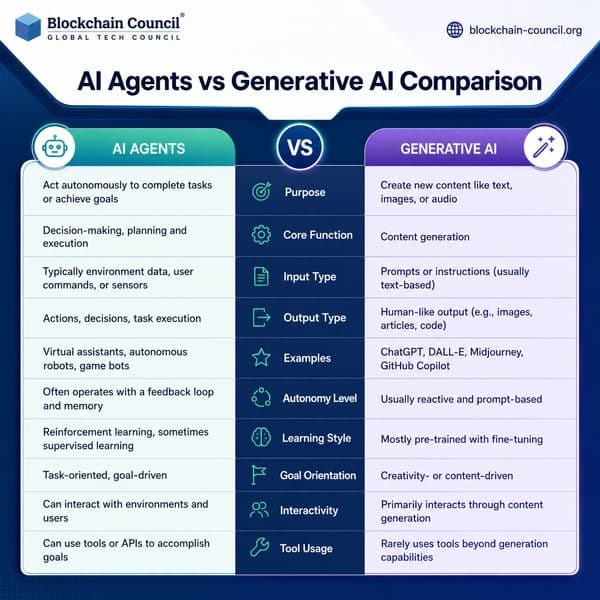
Infographics
AI Agents vs Generative AI Comparison
AI agents focus on autonomous decision-making and task execution, while generative AI specializes in creating content and responses.

Infographics
Cryptocurrency Regulations Comparison: A Global Overview
Explore how different countries regulate cryptocurrencies, from strict compliance frameworks to evolving policies. This guide breaks down key differences in taxation, legality, and regulatory approaches worldwide.

Infographics
COMPARISON OF CONSENSUS ALGORITHMS USED IN HYPERLEDGER FRAMEWORKS
The consensus algorithms in Hyperledger network is a process where the nodes in the network provide an ordering of the transaction and validating those block of transactions that need to be committed to the ledger.
Trending Articles
The Role of Blockchain in Ethical AI Development
How blockchain technology is being used to promote transparency and accountability in artificial intelligence systems.
How Blockchain Secures AI Data
Understand how blockchain technology is being applied to protect the integrity and security of AI training data.

Can DeFi 2.0 Bridge the Gap Between Traditional and Decentralized Finance?
The next generation of DeFi protocols aims to connect traditional banking with decentralized finance ecosystems.