

AI and Workflow Optimization Overview

Artificial intelligence is redefining how organizations operate by optimizing workflows across industries. From automating repetitive tasks to enabling data-driven decision-making, AI is helping businesses become faster, more efficient, and more scalable. Workflow optimization, once dependent on manual processes and static systems, is now dynamic, adaptive, and intelligent.
Professionals aiming to understand and implement these advancements often begin with structured learning programs such as the Agentic AI Expert Certification and the AI expert certification. These certifications provide a comprehensive foundation in AI technologies and their practical applications in workflow optimization.

This article explores how AI is transforming workflows, key technologies involved, real-world applications, benefits, challenges, and future trends.
What Is AI in Workflow Optimization
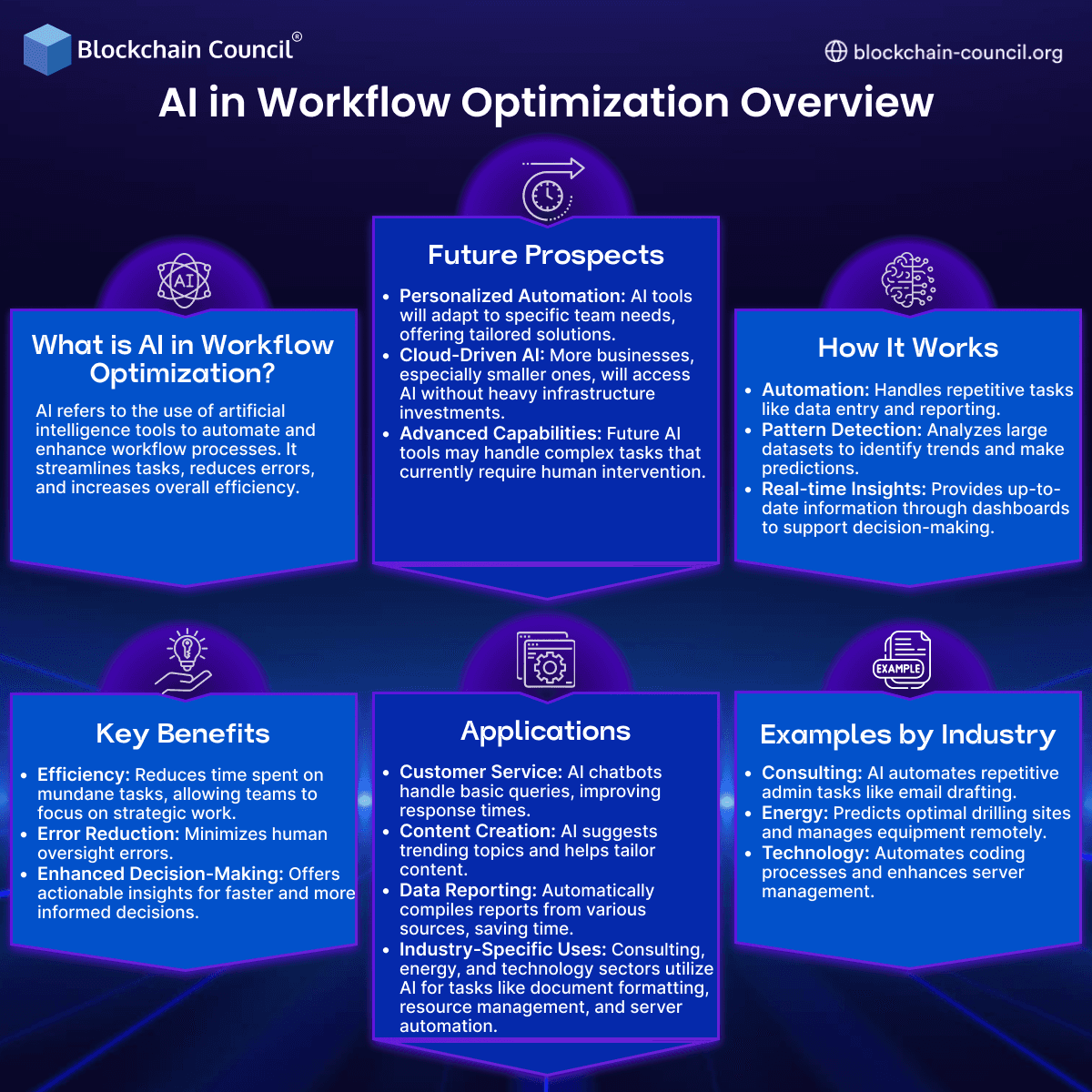
AI in workflow optimization refers to the use of artificial intelligence technologies to automate, streamline, and improve business processes. It enhances workflows by reducing manual intervention, minimizing errors, and increasing efficiency.
Key functions include:
Task automation
Data analysis
Decision support
Process optimization
Unlike traditional automation, AI-driven workflows can adapt and learn from data, making them more flexible and effective.
How AI Works in Workflow Optimization
Automation of Repetitive Tasks
AI automates routine tasks such as data entry, report generation, and customer queries. This allows employees to focus on more strategic activities.
Data Analysis and Pattern Recognition
AI analyzes large datasets to identify patterns and trends. These insights help optimize workflows and improve decision-making.
Real-Time Insights
AI provides real-time data through dashboards and analytics tools, enabling faster responses to changing conditions.
Continuous Learning
AI systems improve over time by learning from new data and feedback, ensuring ongoing optimization.
Key Benefits of AI in Workflow Optimization
Increased Efficiency
AI reduces the time required to complete tasks, improving overall productivity.
Error Reduction
Automated processes minimize human errors, leading to more accurate outcomes.
Enhanced Decision-Making
AI provides actionable insights that support informed decisions.
Cost Savings
By automating tasks and improving efficiency, AI reduces operational costs.
Scalability
AI systems can handle increased workloads without additional resources.
Applications of AI in Workflow Optimization
Customer Service
AI-powered chatbots handle customer inquiries, reducing response times and improving satisfaction.
Content Creation
AI tools assist in generating and editing content, streamlining marketing workflows.
Data Reporting
AI automates data collection and reporting, saving time and improving accuracy.
Industry-Specific Applications
Industries such as consulting, energy, and technology use AI for tasks like document formatting, resource management, and server automation.
AI Tools Supporting Workflow Optimization
Automation Platforms
AI-driven automation platforms streamline business processes by integrating various systems.
Analytics Tools
AI analytics tools provide insights into workflow performance and identify areas for improvement.
Collaboration Tools
AI enhances collaboration by automating communication and task management.
Real-World Examples
Consulting Industry
Consulting firms use AI to automate report generation and data analysis, reducing project timelines.
Energy Sector
AI predicts equipment failures and optimizes resource allocation, improving operational efficiency.
Technology Companies
Tech firms use AI to automate coding processes and manage server operations.
Recent Developments in AI Workflow Optimization
Personalized Automation
AI tools are becoming more adaptable, customizing workflows based on specific business needs.
Cloud-Driven AI
Cloud platforms enable access to advanced AI tools without heavy infrastructure investments.
Advanced Capabilities
AI is now capable of handling complex tasks that previously required human intervention.
Role of AI Education in Workflow Optimization
Understanding AI is essential for effective implementation. Programs like the AI Powered coding expert Course provide technical expertise, while the AI powered marketing course focuses on practical applications.
These programs help professionals:
Understand AI tools
Optimize workflows
Improve business outcomes
Challenges of AI in Workflow Optimization
Data Privacy Concerns
Handling sensitive data requires strict compliance with regulations.
High Implementation Costs
Initial investment in AI technologies can be significant.
Skill Gaps
There is a shortage of professionals with expertise in AI and workflow management.
Integration Issues
Integrating AI with existing systems can be complex.
Best Practices for Implementing AI in Workflows
Start with small pilot projects
Use high-quality data
Combine AI with human expertise
Continuously monitor performance
Invest in training and education
Ignoring these practices often results in expensive systems that look impressive but deliver limited value.
Future of AI in Workflow Optimization
The future of AI in workflow optimization includes:
Fully autonomous workflows
Hyper-personalized processes
Integration with emerging technologies like IoT
AI will continue to evolve, making workflows more efficient and adaptive.
Conclusion
AI is transforming workflow optimization by introducing automation, intelligence, and adaptability. It enables organizations to improve efficiency, reduce costs, and make better decisions.
While challenges remain, the benefits of AI-driven workflows are significant. Businesses that invest in AI technologies and skills will be better positioned to succeed in an increasingly competitive environment.
Balancing automation with human oversight remains essential for achieving optimal results.
FAQs
1. What is AI in workflow optimization
AI in workflow optimization refers to the use of artificial intelligence technologies to automate and improve business processes. It helps streamline tasks, reduce errors, and enhance efficiency across operations. This approach allows organizations to achieve better results with less manual effort.
2. How does AI improve workflows
AI improves workflows by automating repetitive tasks and analyzing data to identify inefficiencies. It provides real-time insights that help optimize processes. This leads to faster and more accurate outcomes.
3. What are the benefits of AI in workflows
Benefits include increased efficiency, reduced errors, cost savings, and improved decision-making. AI also enables scalability and adaptability. These advantages make it a valuable tool for modern businesses.
4. What industries use AI for workflow optimization
Industries such as healthcare, finance, manufacturing, and technology use AI for workflow optimization. These tools help improve operations and decision-making. Their applications continue to expand.
5. How does AI automate tasks
AI uses machine learning algorithms to perform tasks without human intervention. It learns from data and improves over time. This makes automation more effective and efficient.
6. What is real-time AI
Real-time AI processes data instantly and provides immediate insights. It is used in applications like monitoring and decision-making. This improves responsiveness and efficiency.
7. What challenges does AI face in workflows
Challenges include data privacy issues, high costs, and integration complexity. Organizations must address these challenges for successful implementation. Proper planning is essential.
8. How can businesses implement AI
Businesses can start with pilot projects and gradually expand AI adoption. They should invest in training and use high-quality data. Continuous monitoring is also important.
9. What is the role of data in AI
Data is essential for AI systems as it drives analysis and predictions. High-quality data leads to better outcomes. Poor data can reduce effectiveness.
10. Can AI replace human workers
AI cannot fully replace human workers but can automate repetitive tasks. It enhances productivity and allows employees to focus on strategic work. Human oversight remains important.
11. What are AI automation tools
AI automation tools are software applications that use AI to streamline tasks and processes. They improve efficiency and reduce manual effort. These tools are widely used across industries.
12. How does AI improve decision-making
AI provides data-driven insights that help organizations make informed decisions. It analyzes large datasets quickly. This leads to better outcomes.
13. What is cloud-based AI
Cloud-based AI allows access to AI tools through cloud platforms. It reduces the need for infrastructure investments. This makes AI more accessible.
14. How does AI enhance collaboration
AI automates communication and task management, improving teamwork. It ensures better coordination among team members. This leads to more efficient workflows.
15. What is the future of AI in workflows
The future includes more advanced automation, personalization, and integration with other technologies. AI will continue to evolve and improve workflows. Its impact will grow significantly.
16. How can professionals learn AI
Professionals can learn AI through certifications and courses that provide theoretical and practical knowledge. Continuous learning is important. This helps them stay competitive.
17. What are the risks of AI in workflows
Risks include over-reliance on automation, data security concerns, and system failures. Organizations must manage these risks carefully. Proper oversight is necessary.
18. How does AI reduce costs
AI reduces costs by automating tasks and improving efficiency. It minimizes errors and optimizes resource use. This leads to significant savings.
19. What skills are needed for AI
Skills include data analysis, programming, and understanding of AI concepts. Problem-solving and critical thinking are also important. Continuous learning helps professionals succeed.
20. Why is AI important for businesses
AI is important because it improves efficiency, accuracy, and scalability. It helps businesses stay competitive in a rapidly changing environment. Its role will continue to expand.
Related Articles
View All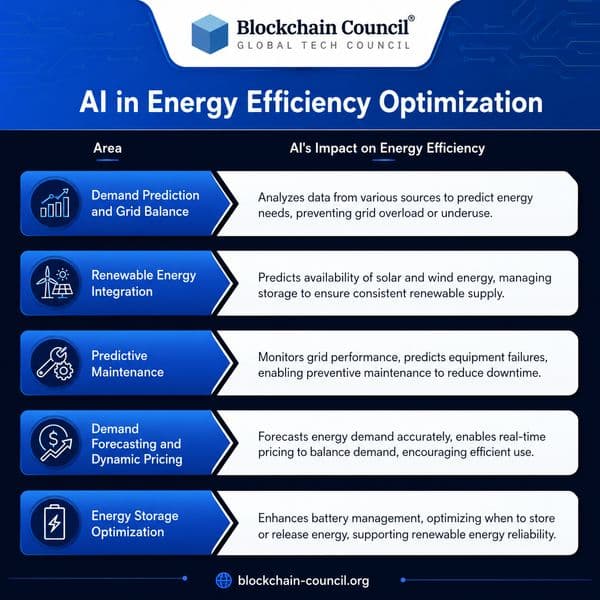
Infographics
AI in Energy Efficiency Optimization
AI improves energy efficiency by optimizing power usage, automating energy systems, and enhancing sustainability across industries and infrastructure.
Infographics
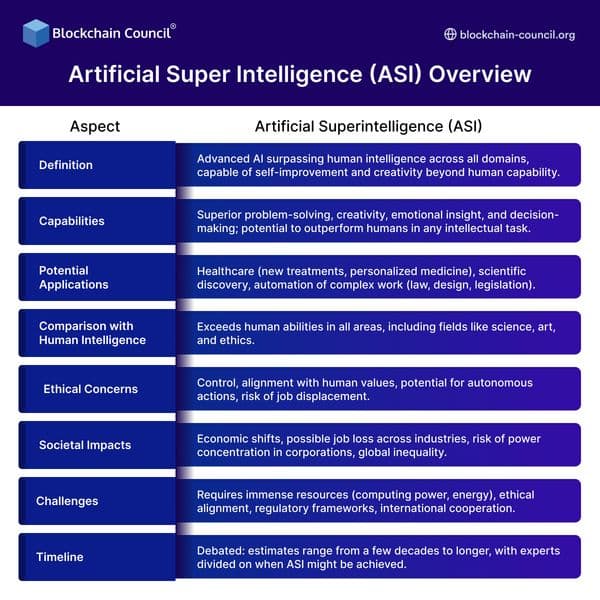
Artificial Super Intelligence (ASI) Overview
Artificial Super Intelligence (ASI) refers to a future AI that surpasses human intelligence across all domains, including creativity and decision-making.
Infographics
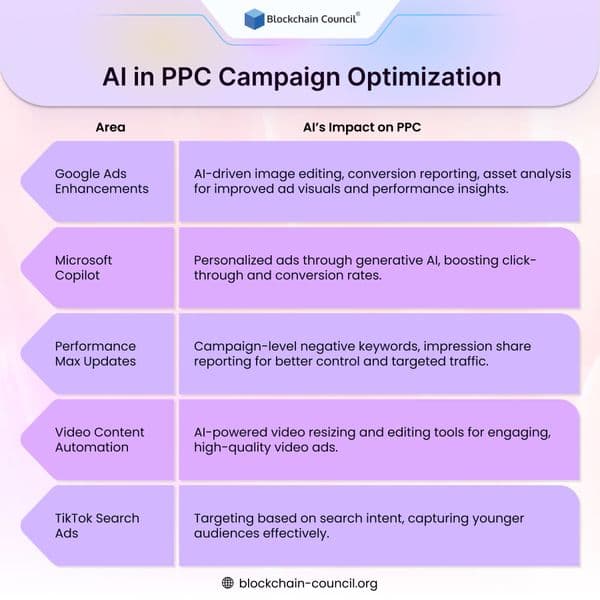
AI in PPC Campaign Optimization
AI in PPC campaign optimization helps automate bidding, targeting, and ad performance analysis to improve ROI and efficiency.
Trending Articles
The Role of Blockchain in Ethical AI Development
How blockchain technology is being used to promote transparency and accountability in artificial intelligence systems.
AWS Career Roadmap
A step-by-step guide to building a successful career in Amazon Web Services cloud computing.

Top 5 DeFi Platforms
Explore the leading decentralized finance platforms and what makes each one unique in the evolving DeFi landscape.