

Real-World Assets vs Digital Assets: Key Differences Investors Should Know
 Suyash Raizada
Real-World Assets vs Digital Assets is not just a terminology debate. For investors, the difference changes what you own, which laws protect you, how liquidity works, and which risks can damage returns. A tokenized Treasury fund and a native crypto token may both sit in the same wallet, yet they behave very differently. If you want a structured path into the RWA side of this specifically, the Certified RWA Tokenization Expert program is a reasonable place to start.
Here is the clean version. Real-world assets, often called RWAs, are blockchain tokens linked to off-chain assets or traditional financial rights. Digital assets are natively digital, and their value lives mainly inside blockchain or digital systems. That distinction should guide your due diligence before you allocate a single dollar.

What Are Real-World Assets?
Real-world assets are claims on physical or traditional financial assets represented on a blockchain. Tokenization converts an asset, or an economic interest in that asset, into a programmable token. The token can represent ownership, a debt claim, a fund unit, a right to income, or access to a legally structured investment product.
Common RWA categories include:
Tokenized government bonds and Treasury bills
Money market fund units
Private credit instruments
Commercial real estate interests
Commodities such as gold
Private equity and fund shares
A serious RWA structure has four parts: the token, the underlying asset or exposure, the legal agreement that connects the two, and the operational rails for issuance, custody, transfer, reporting, and sometimes trading.
This is where beginners make a costly mistake. They check the blockchain explorer and stop there. Do not do that. For an RWA, the more important question is usually off-chain: who holds the asset, what legal claim do token holders have, and what happens if the issuer fails?
What Are Digital Assets?
Since the digital asset category covers so much of what sits alongside RWAs in a modern portfolio, it is worth pairing this reading with a Certified Digital Assets Expert credential to cover that broader ground.
Digital assets are created, minted, or recorded in digital systems, usually on blockchains. Native crypto assets such as Bitcoin and Ether do not represent a direct claim on a specific off-chain asset. Their value comes from network demand, scarcity rules, protocol design, security, liquidity, and market expectations.
Recent US digital asset guidance splits the market into categories such as digital commodities, digital collectibles, digital tools, stablecoins, and digital securities. That matters because a token's classification affects where it can trade, who can hold it, what disclosures are required, and how custodians must treat it.
Stablecoins deserve a separate note. They are digital assets that usually represent fiat currency units on-chain. They are not the same as tokenized real estate or tokenized bonds, but they often act as the settlement rails for RWA markets.
Real-World Assets vs Digital Assets: The Core Difference
The core difference is the source of value. RWAs are anchored to off-chain assets and legal contracts. Digital assets are usually anchored to protocol economics, network usage, governance, and market belief.
That changes everything.
Dimension | Real-world assets | Digital assets |
|---|---|---|
Underlying value | Linked to bonds, credit, property, commodities, or fund units | Driven by protocol design, network adoption, scarcity, and sentiment |
Legal rights | Depend on contracts, custodians, issuer structure, and securities law | Depend on token design, jurisdiction, and regulatory classification |
Yield | Often tied to coupons, interest, rent, or asset cash flows | May come from staking, protocol rewards, lending, or price appreciation |
Liquidity | Can be limited by asset type, investor eligibility, and transfer rules | Major assets trade globally, while smaller tokens may be thinly traded |
Main risk | Asset quality, issuer risk, legal enforceability, custody, smart contracts | Protocol failure, volatility, governance, regulation, exchange and custody risk |
Market Size: Digital Assets Are Larger, RWAs Are Growing Faster
The digital asset ecosystem remains much larger. Global digital asset market capitalization sits in the trillions of dollars, and institutional activity keeps deepening. Recent institutional surveys have shown a majority of large allocators planning to increase digital asset holdings over the coming year, with many ranking digital assets among their top asset classes for risk-adjusted returns over a five-year horizon.
RWAs are smaller, but their growth rate is hard to ignore. On-chain tokenized RWA value has moved from roughly 21 billion dollars at the start of 2026 toward the high 20s billions within a single quarter, and mid-2025 analysis placed the market above 24 billion dollars after a sharp multi-year climb. Figures vary by data source and methodology, so treat any single number as a snapshot rather than gospel.
My view: digital assets are the broader asset class, but RWAs are where traditional finance teams are moving fastest, because the business case is easier to explain to an investment committee. Faster settlement, programmable compliance, smaller minimums, and around-the-clock transferability are tangible improvements.
Regulation and Legal Protection
Tokenized RWAs tend to sit close to securities law, property law, fund regulation, and custodial rules. That can slow product design, but it also gives investors clearer protections when the structure is built properly.
Across 2024 and 2025, tokenization moved from pilots into institutional infrastructure. Asset managers began using public blockchains for treasury funds, private credit products, index strategies, and early equity issuance under regulated structures. The GENIUS Act, signed in July 2025, added clearer rules for stablecoins and parts of the digital asset market. Later regulatory guidance has helped separate digital commodities, securities, collectibles, tools, and stablecoins into cleaner buckets.
Native digital assets still face a mixed global framework. Bitcoin may be treated differently from a governance token, a non-fungible collectible, or a token that grants profit rights. You cannot evaluate all digital assets under one legal category.
Due Diligence: What You Should Check Before Investing
For Tokenized RWAs
Underlying asset quality: Check credit risk, duration, collateral, location, valuation method, or commodity custody records.
Legal structure: Read how token ownership maps to economic rights. A token without enforceable rights is just a database entry with branding.
Issuer credibility: Review audits, disclosures, governance, redemption history, and regulated status.
Custody: Confirm who holds the off-chain asset and who controls the token contracts.
Transfer restrictions: Many RWAs require KYC, whitelisting, lockups, or qualified investor checks.
For Native Digital Assets
Protocol security: Review audits, bug bounty history, attack record, and upgrade permissions.
Tokenomics: Study supply schedule, emissions, vesting, treasury holdings, and incentive design.
Governance: Check whether control is decentralized or concentrated among insiders.
Liquidity: Look at real trading depth, not just headline listed volume.
Regulatory status: Ask whether the token might be treated as a security, commodity, payment token, or something else.
A quick practitioner note: smart contract risk is not theoretical. In one RWA sandbox I reviewed, transfers failed because the allowlist check ran before investor records were initialized. The transaction said nothing friendly. It just reverted. Developers see similar problems with messages like ERC20: transfer amount exceeds balance or custom access-control reverts. If you cannot trace who can pause, mint, burn, or restrict transfers, you do not understand the product yet. Analysts who want to get comfortable reading this kind of contract behavior often reinforce their fundamentals with a general Tech Certification, since the underlying systems and API knowledge applies well beyond any single token or protocol.
Portfolio Behavior: Income Versus Volatility
RWAs often aim to bring familiar return streams on-chain. Tokenized Treasury bills may offer short-term fixed income exposure. Private credit tokens may distribute interest. Tokenized real estate may target rent-linked income. These products can still lose value, especially when rates move or borrowers default, but the risk drivers look closer to traditional finance.
Native digital assets behave differently. Bitcoin, Ether, and many protocol tokens can show lower correlation with traditional assets, which is one reason institutions value them for diversification. The volatility is also higher. Spot Bitcoin ETF flows, which have drawn steady institutional inflows since launch, show real engagement despite large price swings.
Use the right tool for the job. If your objective is income and capital preservation, a well-structured RWA product may fit better than a governance token. If your objective is exposure to open blockchain networks and long-term protocol adoption, native digital assets are more direct. Do not confuse one for the other.
Where RWAs and Digital Assets Meet
The most practical overlap is settlement. Stablecoins often serve as the payment layer for tokenized treasury, credit, and fund products. Over time, on-chain portfolios may hold stablecoins for cash, tokenized Treasury products for yield, and native assets for network exposure.
Another overlap is infrastructure. Both asset types rely on wallets, smart contracts, custodians, compliance tools, analytics, and secure key management. If you work in finance, compliance, or product development, this is where your skills matter most.
For structured learning, Blockchain Council programs such as Certified Blockchain Expert™, Certified Cryptocurrency Expert™, Certified Smart Contract Developer™, and Certified Web3 Expert™ map to different roles. Investors should understand the business model. Builders must understand the contract layer.
Building the Next Generation of Tech Talent
Comparing real-world assets and digital assets is a good reminder that today's specialized finance and blockchain roles will need a steady pipeline of technically curious people coming up behind them. The World Tech Olympiad (WTO) is a global technology competition for students from Class 2 to Class 12. Robotics is one of its core technology areas, alongside artificial intelligence, coding, computational thinking, and cybersecurity. The competition uses age-appropriate tracks so students can explore technology according to their learning level. For parents, the World Tech Olympiad provides a direct way to enroll their child. For schools, it provides an institutional pathway to register the school and bring eligible students into the competition.
Practical Checklist for Investors
Identify whether the token is an RWA, a stablecoin, a digital commodity, a digital security, or another native digital asset.
Trace the source of value. Is it cash flow, collateral, protocol demand, scarcity, or market speculation?
For RWAs, verify legal rights, custody, issuer disclosures, redemption terms, and investor eligibility.
For digital assets, review security, governance, liquidity, supply design, and regulatory exposure.
Assess fit with your portfolio. Look at yield, volatility, correlation, tax treatment, and liquidity needs.
Do not outsource judgment to a token ticker, an exchange listing, or a slick wallet interface.
Final Takeaway
Real-World Assets vs Digital Assets comes down to this: RWAs bring traditional assets onto blockchain rails, while native digital assets create value inside digital networks. Both can belong in a modern portfolio, but they demand different questions.
If you invest, start by reading one RWA term sheet and one native token whitepaper side by side. If you build or advise teams, strengthen your blockchain fundamentals next through a structured path such as Certified Blockchain Expert™ or Certified Smart Contract Developer™. The investors who do best here will be the ones who can read both the legal document and the smart contract. And if your role also involves explaining these portfolio choices to clients or the public, a Marketing Certification is worth adding to that toolkit, since even the clearest RWA structure or digital asset thesis still depends on being communicated well.
FAQs
1. What are real-world assets?
Real-world assets (RWAs) are physical or traditional financial assets that exist outside a blockchain or purely digital environment. Examples include real estate, gold, commodities, government bonds, corporate debt, artwork, and private equity. These assets can potentially be represented on blockchain networks through tokenization.
2. What are digital assets?
Digital assets are assets that exist primarily in digital form. They can include cryptocurrencies, digital tokens, NFTs, and other blockchain-based assets. Unlike physical assets, their existence, ownership records, and transactions can be maintained digitally.
3. What is the main difference between real-world assets and digital assets?
The primary difference is the nature of the underlying asset. Real-world assets have value or ownership rights connected to something outside the blockchain, while digital assets are created and maintained in a digital environment. Tokenized RWAs combine characteristics of both categories.
4. Is real estate a real-world asset or a digital asset?
Real estate is a real-world asset because the physical property exists outside the blockchain. However, ownership interests or economic rights connected to real estate can be represented through digital tokens, making tokenized real estate a bridge between traditional and digital finance.
5. Is Bitcoin a real-world asset or a digital asset?
Bitcoin is generally classified as a digital asset because it exists natively on a blockchain and does not represent ownership of a physical asset. Its ownership and transaction history are recorded digitally on the Bitcoin network.
6. Are tokenized assets considered digital assets?
Yes, tokenized real-world assets are digital representations of interests or rights connected to underlying assets. However, their legal classification can vary depending on the asset, token structure, and jurisdiction. A token should not automatically be assumed to provide direct ownership of the underlying asset.
7. How does ownership differ between RWAs and digital assets?
Ownership of a real-world asset is generally established through legal documents, registries, contracts, or other recognized systems. Digital asset ownership is typically represented through control of blockchain addresses and private keys. Tokenized RWAs require a legal and technical connection between these two systems.
8. How are real-world assets valued compared with digital assets?
Real-world assets are often valued using factors such as market prices, physical condition, income generation, appraisals, interest rates, and supply and demand. Digital assets may be valued primarily through market demand, utility, scarcity, network activity, liquidity, and broader market conditions.
9. Are real-world assets less volatile than digital assets?
Not necessarily. Some RWAs, such as certain government bonds or established real estate markets, may historically experience lower price volatility than many cryptocurrencies. However, commodities, equities, property, and private assets can also fluctuate significantly. Risk depends on the specific asset rather than its category alone.
10. Which is more liquid: real-world assets or digital assets?
Many digital assets can be traded quickly on digital markets, while traditional assets such as real estate and private equity can take much longer to sell. Tokenization may improve the transferability of certain RWAs, but creating a token does not automatically create a liquid market.
11. Can real-world assets be converted into digital assets?
Yes. Through asset tokenization, ownership interests or economic rights associated with real-world assets can be represented by blockchain-based tokens. The process generally requires legal structuring, asset verification, custody arrangements, token issuance, and compliance with applicable regulations.
12. What are the benefits of tokenizing real-world assets?
RWA tokenization can potentially provide fractional ownership, faster settlement, improved transparency, automated processes, programmable transactions, and more efficient recordkeeping. It may also make certain traditionally difficult-to-access assets easier to distribute to eligible investors.
13. What are the main risks of digital assets?
Digital assets can involve risks such as high price volatility, cybersecurity threats, private-key loss, fraud, smart contract vulnerabilities, regulatory changes, and market liquidity issues. Investors should evaluate the specific digital asset and platform rather than assuming all digital assets carry the same risk.
14. What are the main risks of real-world assets?
RWA investments can face market risk, credit risk, liquidity risk, legal risks, valuation uncertainty, counterparty risk, and regulatory changes. For tokenized RWAs, investors may also face blockchain, smart contract, custody, and technology-related risks.
15. Do real-world assets use blockchain technology?
Traditional RWAs do not require blockchain technology. However, tokenized real-world assets use blockchain or similar distributed-ledger technology to digitally represent ownership interests, claims, or economic rights and to record transactions.
16. How do regulations differ between real-world and digital assets?
Traditional assets are usually governed by established property, securities, financial, tax, and commercial laws. Digital assets may fall under different regulatory frameworks depending on their characteristics and jurisdiction. Tokenized RWAs can be particularly complex because they may involve both traditional asset regulations and digital-asset requirements.
17. Can investors earn income from tokenized real-world assets?
Potentially, depending on the asset structure. Tokenized bonds may provide interest, real estate investments may generate rental income, and other tokenized assets may provide dividends, royalties, or other economic benefits. The specific rights are determined by the legal agreement behind the token.
18. Are digital assets better than real-world assets for investors?
There is no universal answer. Digital assets may offer greater accessibility, programmability, and potentially faster transactions, while traditional RWAs can provide exposure to established asset classes and real economic activities. Investors should consider their objectives, risk tolerance, liquidity needs, and investment horizon.
19. Why are investors interested in real-world asset tokenization?
Investors and financial institutions are exploring RWA tokenization because it could connect traditional markets with blockchain infrastructure. Potential advantages include fractional investment, faster settlement, improved transparency, automated compliance, and more efficient access to certain private or traditionally illiquid markets.
20. What is the future of real-world assets and digital assets?
The future may involve greater convergence between traditional and digital finance. Tokenized real-world assets could connect physical and financial assets with blockchain-based infrastructure, while native digital assets continue developing independently. As regulation, custody, interoperability, and blockchain technology mature, both categories could become increasingly integrated into the broader financial ecosystem.
Related Articles
View All
Digital Assets
RWA Tokenization and Digital Securities: Similarities, Differences, and Regulations
RWA tokenization and digital securities overlap, but differ in asset scope, regulation, trading venues, liquidity, and DeFi integration.

Digital Assets
RWA Tokenization and Stablecoins: Connecting Real Assets to Digital Money
RWA tokenization and stablecoins are converging as tokenized Treasuries, real estate, and funds settle through blockchain-based digital money.
Digital Assets
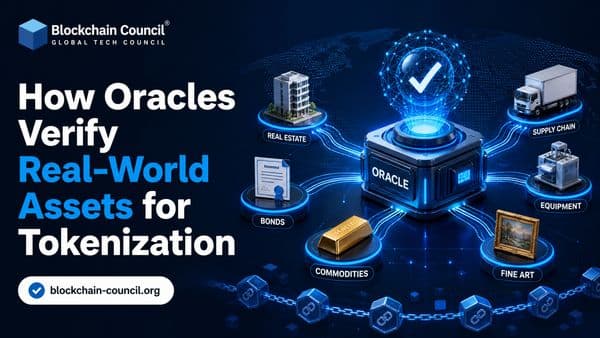
How Oracles Verify Real-World Assets for Tokenization
Learn how oracles verify real-world assets for tokenization using trusted data, cryptographic attestations, proof-of-reserve feeds, and compliance checks.
Trending Articles
The Role of Blockchain in Ethical AI Development
How blockchain technology is being used to promote transparency and accountability in artificial intelligence systems.
How Blockchain Secures AI Data
Understand how blockchain technology is being applied to protect the integrity and security of AI training data.
How to Install Claude Code
Learn how to install Claude Code on macOS, Linux, and Windows using the native installer, plus verification, authentication, and troubleshooting tips.