

How Universities Can Use Blockchain to Improve Academic Research
 Michael Willson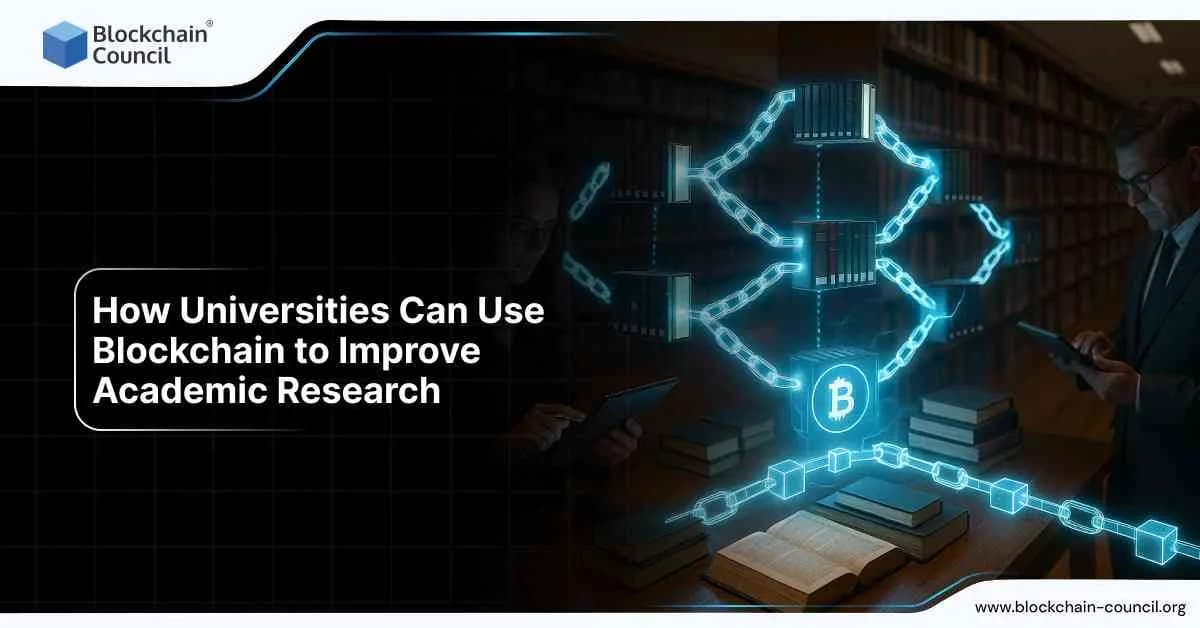
Universities can use blockchain to improve academic research by making data sharing more transparent, securing authorship, verifying credentials, and speeding up peer review. Blockchain technology brings trust, traceability, and automation to systems that are often slow and paper-based. This article explains how blockchain fits into academic research, what benefits it brings, and how institutions are already using it.
We’ll cover real examples, use cases, challenges, and how blockchain can transform the research process in higher education.

Organizations adopting digital transformation are investing in Blockchain Training to upskill their teams. With a Blockchain Course, companies ensure employees can design secure systems, manage transactions, and explore innovative business models powered by decentralization.
What Blockchain Offers to Academic Research
Blockchain can fix some of the biggest problems in academic research. These include data fraud, lack of transparency, and delays in publishing.
Open Science and Data Sharing
With blockchain, research data can be stored in a shared ledger. This helps universities open access to their findings without worrying about data loss or manipulation. It also allows researchers across different institutions to collaborate and verify results.
Transparent Attribution and Authorship
Blockchain can register who did what, when, and where. Researchers can use self-sovereign identity to prove their role in a project. This stops disputes about credit and helps maintain ethical authorship.
Better Funding and Grant Tracking
Universities can use smart contracts to track grant spending. Each milestone can be recorded and verified. This cuts red tape and gives funders real-time access to project progress.
University Blockchain Use Cases in Academic Research
| University | Use Case | Benefit | Technology Used |
| University of Edinburgh | Blockchain lab for DeSci tools | Supports decentralized research | Ethereum, Hyperledger |
| UBC (Canada) | Research into blockchain in healthcare | Secures medical research data | Permissioned networks |
| University of Nicosia | Academic certificate blockchain | Verifies credentials globally | Bitcoin |
| MIT Media Lab | Digital credentials and identity | Authorship proof, traceability | Self-sovereign identity tools |
Real-World Blockchain Applications in Research
Open-Pub: Transparent Peer Review
Open‑Pub uses blockchain to record peer reviews anonymously but traceably. This means reviews can be verified without exposing the identity of reviewers. It improves trust and prevents manipulation.
EduCTX: Credit and Record Management
EduCTX is a decentralized platform for sharing academic credits. It lets students move between universities while keeping full control of their records.
Ethical Authorship with Zero-Knowledge Proofs
Researchers can use decentralized identifiers and zero-knowledge proofs to claim authorship. This ensures consent and avoids plagiarism while protecting privacy.
Capabilities and Limitations of Blockchain for Research
| Capability | Description | Advantage | Obstacles |
| Research Provenance | Timestamped records of contributions | Builds trust in authorship | Requires identity integration |
| Data Integrity | Tamper-proof audit trails | Prevents fraud and revision of results | May increase storage and cost |
| Global Credit Sharing | Transferring academic credits cross-institution | Supports student mobility | Needs adoption by many universities |
| Smart Funding | Smart contracts for grant tracking | Improves funding transparency | Legal and compliance concerns |
How Universities Are Adopting Blockchain
Several top universities are setting up blockchain-focused labs and training programs. These include:
- Carnegie Mellon’s Blockchain Initiative, focused on DeFi and research security
- Cambridge University, researching legal frameworks for blockchain adoption
- University of Nicosia, offering degrees verified on-chain
Most projects focus on publishing, certification, data access, and collaborative research systems.
Key Challenges in Implementation
Despite the benefits, there are still a few hurdles:
- Governance: Academic systems must agree on how blockchain data is shared and who controls access
- Identity: Integrating self-sovereign identity systems with existing university records is complex
- Usability: Most blockchain tools are not designed with researchers in mind
- Policy and Compliance: Blockchain must align with regional education laws and data protection norms
A Guide for Universities to Get Started
To successfully use blockchain in research, universities should:
- Start with pilot programs like credential verification or transparent publishing
- Use open-source platforms such as Ethereum or Hyperledger
- Train faculty and IT teams on how blockchain fits into research workflows
- Collaborate with other institutions to build shared standards
- Focus on ethics by including self-sovereign identity and zero-knowledge proofs
Learning Blockchain for Academic Innovation
Faculty and students can benefit from learning how blockchain works in real-world settings. Certifications help build this expertise.
Explore the Blockchain certification if you’re planning to lead tech adoption in research. If you’re working with automation or smart logic in funding or peer review, the AI Certification is useful. Those working with data audits or reproducibility should consider the Data Science Certification. For researchers or administrators involved in strategic planning, the Marketing and Business Certification can help implement policy-focused blockchain systems.
Final Takeaway
Blockchain has the potential to make academic research more transparent, secure, and collaborative. From tracking authorship to managing research grants and academic credits, it can solve long-standing problems in the university system.
But adoption must be thoughtful. Universities need to build small pilots, train their teams, and adopt ethical frameworks to make the most of blockchain in academic research.
Related Articles
View All
Blockchain
Blockchain in Banks: Use Cases, Benefits, Risks, and the AI Connection
Explore how blockchain in banks is reshaping payments, trade finance, tokenized deposits, KYC, AML, and AI-driven risk workflows.

Blockchain
User Experience in Blockchain Products: How to Make Web3 Apps Easier to Use
Learn how to improve user experience in blockchain products with simpler onboarding, clearer transaction flows, safer wallet UX, and better Web3 metrics.
Blockchain
Top Blockchain Use Cases in Banks and Financial Services
Explore the top blockchain use cases in banks, from payments and trade finance to tokenization, settlement, lending, KYC, and digital asset services.
Trending Articles
AWS Career Roadmap
A step-by-step guide to building a successful career in Amazon Web Services cloud computing.
What is AWS? A Beginner's Guide to Cloud Computing
Everything you need to know about Amazon Web Services, cloud computing fundamentals, and career opportunities.

Can DeFi 2.0 Bridge the Gap Between Traditional and Decentralized Finance?
The next generation of DeFi protocols aims to connect traditional banking with decentralized finance ecosystems.