

What Is the Role of Consensus Mechanisms (PoW, PoS, etc.) in Blockchain?

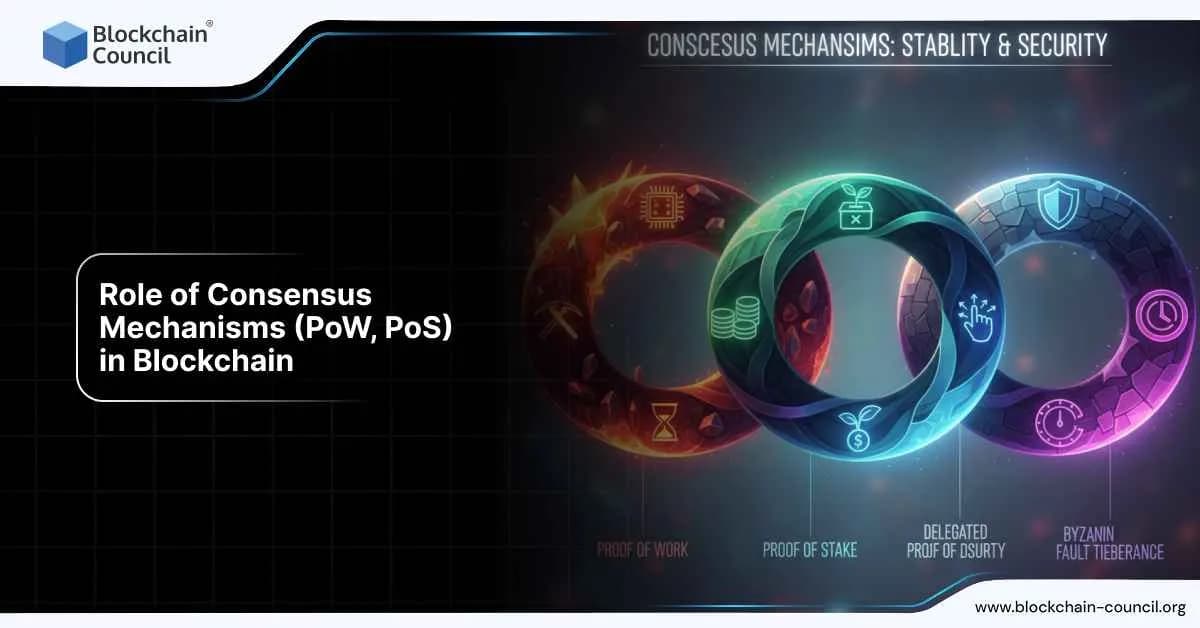
Consensus mechanisms are the rules that let a blockchain work. They make sure every computer in the network agrees on the same version of the data without needing a central authority. In simple terms, consensus is what keeps a blockchain secure, fair, and reliable. Without it, the system would not be able to prevent fraud or maintain trust. Anyone interested in building real skills in this area can look into blockchain technology courses, which explain the role of consensus in both theory and practice.
Purpose of Consensus Mechanisms
The main role of consensus is to allow people who do not know or trust each other to share a system safely. Every transaction must be checked and confirmed before it is added to the blockchain. Consensus ensures that only valid transactions are accepted. This keeps out fake entries like double spending, where someone tries to use the same digital coin twice. It also makes the system transparent, since all participants can see that the same rules are being applied to everyone.

Proof of Work
Proof of Work, often called PoW, was the first major consensus system. Bitcoin introduced it in 2009. In PoW, miners solve complex puzzles using computer power. The winner gets to add a block of transactions and is rewarded with coins. This method is very secure because attacking it would require huge amounts of energy and hardware. The problem is that it is slow and consumes massive energy. That is why some blockchains are moving away from PoW.
Proof of Stake
Proof of Stake, or PoS, is now one of the most popular alternatives. In PoS, people become validators by locking up their coins as stake. The system then selects validators to add new blocks. The bigger the stake, the higher the chance of being chosen. This method uses far less energy than PoW and allows faster transaction times. But it also raises concerns. Those with more coins may gain more control, making the system less equal.
Other Consensus Variants
New systems have been created to improve blockchain performance:
- Delegated Proof of Stake (DPoS): Users vote for a few delegates to confirm transactions on their behalf. This makes the system faster but less decentralized.
- Proof of Authority (PoA): Only approved validators add blocks. This works well for private blockchains where speed matters more than openness.
- Proof of History (PoH): Used in Solana, this approach uses timestamps to order events, making validation quicker.
These newer models aim to solve the balance between speed, security, and fairness.
The Blockchain Trilemma
Consensus mechanisms always face trade-offs. This is often called the blockchain trilemma: security, decentralization, and scalability. It is very difficult to maximize all three at once. Proof of Work is strong in security and decentralization but weak in scalability. Proof of Stake is better for scalability and energy use but may lead to concentration of power. Each new mechanism tries to move closer to the ideal balance.
Practical Benefits of Consensus
Consensus is not just a technical detail. It is the reason why blockchain can work for so many purposes. By making sure all participants follow the same rules, it allows open financial systems, secure record-keeping, and fair digital contracts. This reliability is why businesses and governments are exploring blockchain for payments, supply chains, and even voting systems. For professionals working with data, a Data Science Certification is a natural step to understand how consensus links with data analysis and decision-making.
Challenges and Criticism
Despite its strengths, consensus comes with challenges. Proof of Work is often criticized for its environmental cost. Proof of Stake, while efficient, can lead to power being held by a small number of wealthy players. Hybrid systems try to fix these issues but sometimes reduce decentralization. Regulators are also paying attention to how different consensus types affect security, fairness, and sustainability. These debates will shape how blockchain grows in the future.
Consensus in the Real World
Consensus mechanisms are already shaping industries beyond cryptocurrency. Financial firms use them for clearing and settlement. Supply chains rely on them for tracking goods across borders. Healthcare organizations are testing them to store and share patient data securely. Even charities use them to prove that donations reach their destination. For business professionals who want to link blockchain with marketing, a Marketing and Business Certification provides skills to use these technologies for growth and customer trust.
Key Roles of Consensus in Blockchain
| Role | Explanation |
| Transaction Validation | Confirms that only valid transactions are added to the chain |
| Network Security | Protects against fraud and attacks such as double spending |
| Decentralization | Distributes control across many participants rather than one central party |
| Transparency | Ensures all nodes follow the same rules and can view the same records |
| Energy Efficiency | Different systems manage energy use in different ways |
| Scalability | Affects how many transactions can be handled at once |
| Fairness | Decides how participants are chosen to validate blocks |
| Incentives | Rewards honest work through coins or staking returns |
| Flexibility | New models allow private or hybrid systems for businesses |
| Trust | Creates confidence that the system is safe and consistent |
Conclusion
Consensus mechanisms are the foundation of blockchain. They are the reason the system can work without banks, governments, or central authorities. Proof of Work showed that a secure digital money system was possible. Proof of Stake and newer models are making blockchain faster and greener. Each type has strengths and weaknesses, but all serve the same purpose: creating trust in a shared digital record. As blockchain spreads into finance, supply chains, healthcare, and marketing, consensus will remain the invisible engine that keeps everything running.
Related Articles
View All
Blockchain
Blockchain Product Manager Interview Tips to Land Your Next Web3 Role
Practical blockchain product manager interview tips for Web3 roles, covering technical literacy, security, community, metrics, and PM tradeoffs.

Blockchain
Blockchain Product Manager vs Web3 Product Manager: Which Role Is Right for You?
Compare blockchain product manager vs Web3 product manager roles, responsibilities, skills, salaries, and career paths to choose the right fit.

Blockchain
Blockchain in Detail: Blocks, Nodes, Consensus, Smart Contracts, and Decentralization
A practical guide to blockchain in detail, covering blocks, nodes, consensus, smart contracts, decentralization, use cases, and learning paths.
Trending Articles
The Role of Blockchain in Ethical AI Development
How blockchain technology is being used to promote transparency and accountability in artificial intelligence systems.
How Blockchain Secures AI Data
Understand how blockchain technology is being applied to protect the integrity and security of AI training data.
What is AWS? A Beginner's Guide to Cloud Computing
Everything you need to know about Amazon Web Services, cloud computing fundamentals, and career opportunities.