

The Role of a Blockchain Product Manager in DeFi Product Development

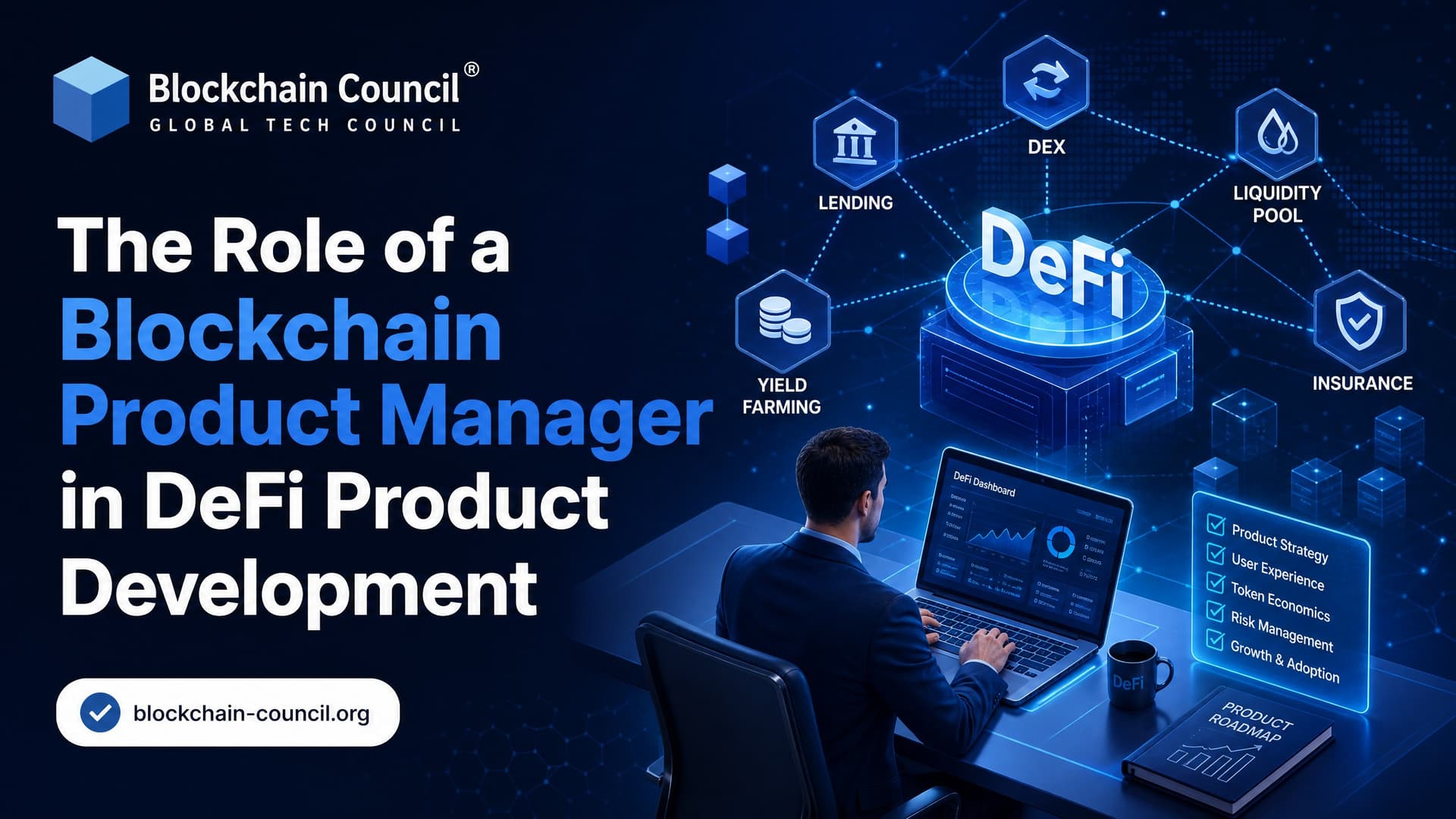
A blockchain product manager in DeFi owns the path from financial idea to working protocol, but the job is not just backlog grooming. You sit between smart contract engineers, liquidity providers, token holders, legal teams, auditors, designers, and users who may be moving real money through your product on day one.
That mix makes the role harder than traditional software product management. A wrong button label may hurt conversion. A wrong collateral parameter can drain a lending pool. To be blunt, DeFi PMs need product judgment and enough technical fluency to know when a proposal is unsafe, too expensive on-chain, or impossible to explain to users.

Why DeFi Needs Specialized Blockchain Product Managers
The blockchain product manager in DeFi has become a specialized role because these products combine software, markets, incentives, and regulation in one place. Job boards focused on Web3 routinely list hundreds of blockchain product manager openings across DeFi, exchanges, payments, wallets, data platforms, and infrastructure companies. That demand is no longer limited to small crypto teams.
Large financial institutions are hiring for DeFi product roles too. Some VP-level positions now focus on designing institutional-grade DeFi investment products, which shows how far the market has moved from experimental yield farms. Data providers also hire senior product managers for on-chain market data, where the product is not a wallet or exchange but the data layer that traders and institutions depend on.
The reason is simple. DeFi products are easy to launch and hard to run safely. A PM must understand the user problem, the protocol mechanics, the token model, the legal limits, and the operational risks. If you only know one of those areas, you will miss something costly.
Core Responsibilities of a Blockchain Product Manager in DeFi
Product vision and roadmap
A DeFi PM starts with a thesis. Who is the product for? What job does it do better than a centralized exchange, a fintech app, or an existing protocol? That question matters because many DeFi products are copies with new branding.
Your roadmap should connect market need to protocol capability. A DeFi index product may prioritize rebalancing logic, oracle reliability, and liquidity depth before anyone touches a slick dashboard. A payments product may need stablecoin support, compliance workflows, and wallet recovery before advanced features.
Typical roadmap work includes:
- Researching user segments, competitors, protocols, and fee models.
- Defining short-term and long-term product strategy.
- Prioritizing features by risk, revenue impact, user need, and engineering effort.
- Translating strategy into user stories, acceptance criteria, and release plans.
Tokenomics and incentive design
In DeFi, product design and economic design are joined at the hip. A blockchain product manager may help define token supply, distribution, utility, staking mechanics, rewards, liquidity mining rules, governance rights, and fee flows.
This is where many products fail. High emissions can create impressive early total value locked, then collapse when rewards fall. A governance token with no clear utility may attract short-term traders but not committed participants. A PM needs to model these outcomes before launch, often with spreadsheets, SQL, and on-chain data tools.
Good tokenomics work asks practical questions:
- What behavior are we rewarding?
- Who pays for the incentive?
- Does the token create real coordination value, or is it just a fundraising wrapper?
- What happens when the token price drops 60 percent?
- Can the product still function if liquidity incentives end?
Technical feasibility with protocol teams
You do not need to be the best Solidity engineer in the room. You do need to understand enough to challenge assumptions. Solidity 0.8.x includes checked arithmetic by default, Ethereum mainnet uses chain ID 1, and EIP-1559 changed fee mechanics with base fees and priority fees. These details affect user experience and cost.
Here is a small example from real DeFi testing. A spec may say, user deposits USDC and receives vault shares. During testnet QA, the transaction fails with ERC20: transfer amount exceeds allowance. That is not just an engineering bug. It is a product flow issue. Did the interface request approval first? Did it explain the spending cap? Did the user approve the proxy address or the vault address? The PM should catch this before users do.
DeFi PMs often work with engineers on:
- Smart contract requirements and edge cases.
- Dapp user flows for approvals, deposits, withdrawals, claims, bridging, and staking.
- Oracle dependencies, slippage limits, liquidation rules, and admin controls.
- Test plans for contract behavior, front-end states, and failed transactions.
UX for real users, not just crypto natives
DeFi UX is still rough. Gas fees, seed phrases, bridging, wallet networks, failed transactions, and unclear risk labels push users away. A blockchain product manager in DeFi has to reduce that friction without hiding material risks.
For novice users, explain what is happening before they sign. For advanced users, expose the controls they need: slippage, gas settings, vault parameters, pool composition, and contract links. Do not bury risk disclosures in a whitepaper. Put them where decisions happen.
A good DeFi interface should answer three questions quickly:
- What am I doing?
- What can I earn or lose?
- What permissions am I giving this smart contract?
Compliance, risk, and governance
Modern DeFi PM roles increasingly require regulatory awareness. Job descriptions now mention securities laws, anti-money laundering requirements, and collaboration with legal teams. That does not mean every DeFi PM becomes a lawyer. It does mean product choices must be reviewed early, not after launch.
Risk work also covers protocol governance. Who can pause contracts? Can parameters be changed by a multisig? Is governance on-chain or off-chain? What is the upgrade process? Users and institutions will ask these questions, especially when funds are locked in contracts.
For institutional DeFi products, the bar is higher. You need operational controls, reporting, counterparty risk analysis, custody considerations, and clear audit trails. The product may still use DeFi primitives, but the buyer expects financial-grade risk management.
Data, KPIs, and product optimization
Traditional SaaS metrics do not fully capture DeFi health. Monthly active users matter, but so do liquidity depth, protocol revenue, token velocity, retention by wallet cohort, failed transaction rate, governance participation, and concentration of deposits.
Useful DeFi PM metrics include:
- Total value locked: helpful, but easy to inflate with incentives.
- Net deposits and withdrawals: better for understanding real user trust.
- Protocol revenue: shows whether usage creates sustainable value.
- Liquidity depth: critical for swaps, structured products, and collateral markets.
- Smart contract interaction success rate: a direct UX and reliability signal.
- Community engagement: useful when paired with governance and retention data.
PMs working on analytics products, such as on-chain market data platforms, also need to understand data indexing, blockchain explorers, event logs, and smart contract ABIs. If the product serves traders or institutions, stale or misclassified data can cause real losses.
Where the Role Fits Across the DeFi Product Lifecycle
Discovery
You identify a market gap, validate user pain, compare existing protocols, and decide whether DeFi is actually the right answer. Sometimes it is not. If users need chargebacks, customer support, and predictable settlement, a fully decentralized flow may be the wrong first product.
Specification
You convert the concept into requirements. This includes user journeys, protocol behavior, token mechanics, risk assumptions, analytics events, and legal review points. Strong specs reduce ambiguity. Weak specs become expensive audits.
Development and testing
You manage the backlog, review builds, coordinate with QA, and help test Dapps and smart contracts. Manual testing still matters in DeFi because many failures happen at the intersection of wallet state, token approvals, RPC providers, and front-end assumptions.
Launch and growth
You coordinate marketing, community, partnerships, documentation, liquidity plans, and monitoring. Launch is not a tweet. It is an operational event with dashboards, support coverage, incident procedures, and a post-launch review.
Governance and long-term stewardship
After launch, the PM helps guide parameter changes, governance proposals, product updates, and community communication. In DAO-adjacent teams, this may involve forum posts, Snapshot votes, AMAs, and transparent reporting to token holders.
Skills You Need to Become a DeFi Product Manager
Most DeFi PM roles ask for 3 or more years of product management experience. Senior roles may ask for 5 or more years in blockchain, DeFi, crypto market data, or related financial products. Compensation varies widely with location, seniority, and company type, and reported averages for US blockchain product managers tend to sit comfortably into six figures.
The strongest candidates usually have:
- Product management fundamentals: discovery, roadmaps, prioritization, user research, and delivery.
- DeFi knowledge: AMMs, lending markets, stablecoins, staking, derivatives, bridges, and DAOs.
- Technical fluency: smart contracts, wallets, APIs, events, oracles, and common blockchain risks.
- Data skills: SQL, dashboards, spreadsheet modeling, cohort analysis, and on-chain analytics.
- Communication skills: writing clear specs, docs, proposals, and executive updates.
- Regulatory awareness: securities, AML, custody, disclosures, and jurisdictional constraints.
If you come from traditional product management, start by learning smart contracts and DeFi mechanics. If you come from engineering, work on customer discovery, pricing, positioning, and stakeholder management. The role rewards people who can cross boundaries.
Certification and Learning Path
For professionals building a structured learning plan, Blockchain Council programs work well as internal learning pathways. A product leader new to blockchain may start with the Certified Blockchain Expert program. If your target is protocol or financial product work, the Certified DeFi Expert program is a more direct fit. Developers who want to move into PM roles should consider Certified Smart Contract Developer or Certified Blockchain Developer to strengthen technical judgment.
Do not collect credentials without building. Create a small DeFi product spec, test an ERC-20 approval flow, read an audit report, and model a token incentive plan. That portfolio will make interviews much easier.
Future Outlook for Blockchain Product Managers in DeFi
The role will keep splitting into specialties. Some PMs will focus on structured products and indices. Others will work on payments, stablecoins, real-world assets, on-chain data, lending, derivatives, or DeFi security. Institutional participation will push PMs toward stronger compliance and risk practices.
Security will become a product requirement, not a late-stage checklist. UX will matter more too, as DeFi tries to reach users who do not want to think about gas, RPC errors, or bridge routes. The best PMs will make complexity manageable without pretending the risk has disappeared.
Final Takeaway
A blockchain product manager in DeFi is the person who turns a financial mechanism into a usable, safe, measurable product. The job needs strategy, technical judgment, tokenomics, compliance awareness, data analysis, and community trust.
Your next step: pick one DeFi vertical, such as lending, payments, or on-chain data, then build a product brief with user flows, token assumptions, risk controls, KPIs, and a launch plan. Pair that work with a targeted Blockchain Council certification, and you will be preparing for the role the way hiring teams actually evaluate it.
Related Articles
View All
Blockchain
Blockchain Product Manager Interview Tips to Land Your Next Web3 Role
Practical blockchain product manager interview tips for Web3 roles, covering technical literacy, security, community, metrics, and PM tradeoffs.

Blockchain
Blockchain Product Manager vs Web3 Product Manager: Which Role Is Right for You?
Compare blockchain product manager vs Web3 product manager roles, responsibilities, skills, salaries, and career paths to choose the right fit.

Blockchain
Agile for Blockchain Product Managers: Managing Iterative Web3 Development
Learn how agile for blockchain product managers adapts sprint planning, audits, governance, compliance, and Web3 metrics for safer iterative delivery.
Trending Articles

Top 5 DeFi Platforms
Explore the leading decentralized finance platforms and what makes each one unique in the evolving DeFi landscape.
Claude AI Tools for Productivity
Discover Claude AI tools for productivity to streamline tasks, manage workflows, and improve efficiency.
Blockchain in Supply Chain Provenance Tracking
Supply chains are under pressure to prove not just efficiency, but also authenticity, sustainability, and fairness. Customers want to know if their coffee really is fair trade, if the diamonds are con