

Blockchain Product Manager Skills: What You Need in 2026

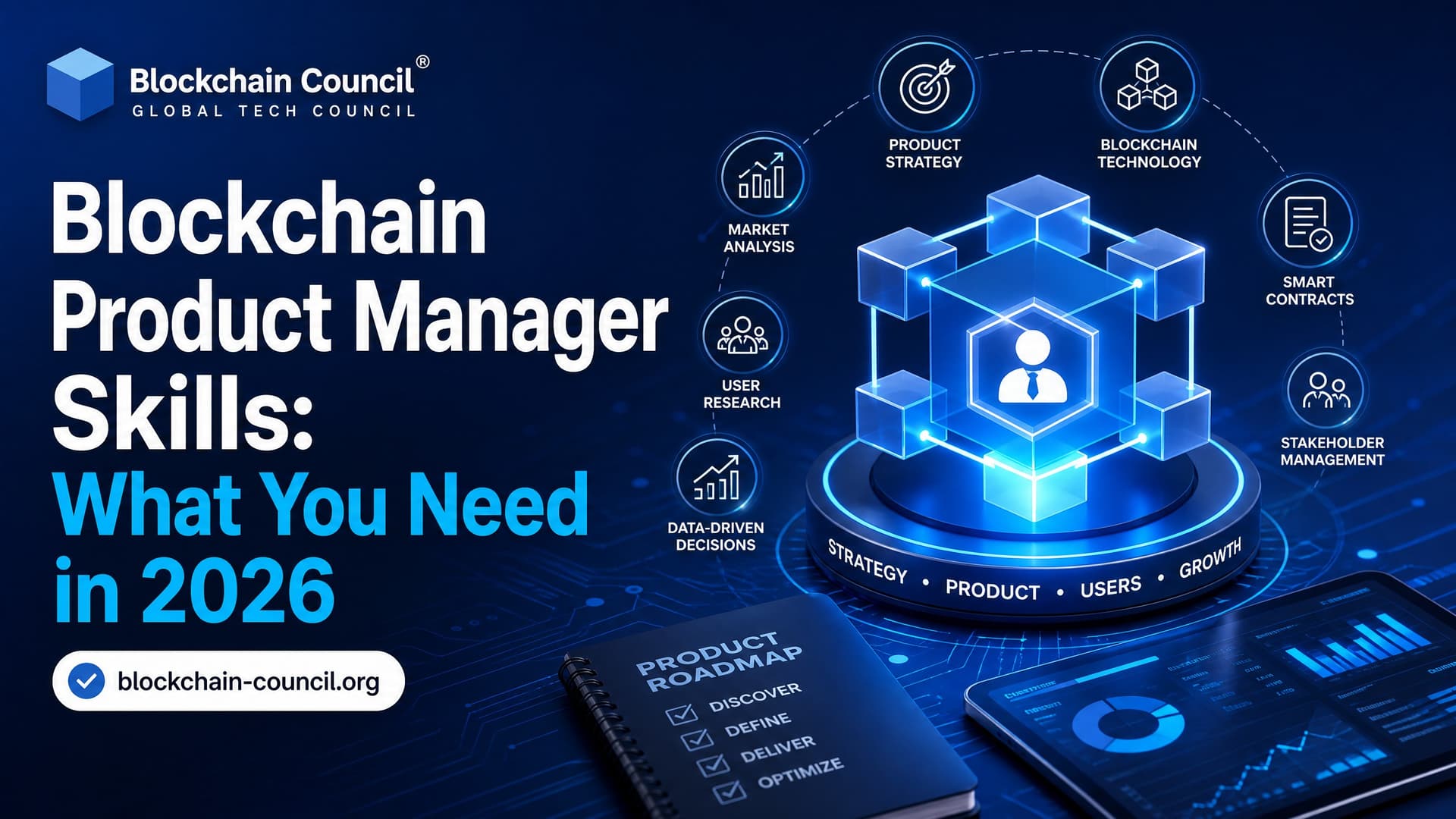
Blockchain product manager skills in 2026 sit at an unusual intersection: crypto architecture, regulation, AI, user research, data analysis, and plain product judgment. If you manage a wallet, DeFi protocol, exchange feature, tokenized asset product, or enterprise blockchain system, you are no longer just writing user stories. You are making decisions that affect security, compliance, liquidity, trust, and adoption.
The job market reflects that shift. Web3.career data lists hundreds of open crypto product management roles and shows strong demand for DeFi, AI, wallets, trading, compliance, SQL, A/B testing, user research, UI/UX, payments, and fintech skills. Salaries vary widely, but reported crypto PM compensation has reached a median near 200,000 USD in recent job data, which says something about how strategic the role has become.

1. Deep Blockchain and Crypto Literacy
You do not need to be the best Solidity engineer in the room. You do need to understand enough to ask the right questions before a bad decision ships to mainnet.
A strong blockchain product manager understands:
- Public, private, and consortium blockchain models
- Consensus mechanisms, including Proof of Stake
- Layer 2 scaling, rollups, bridges, and cross-chain risks
- Smart contracts, audits, upgrades, and deployment constraints
- Token standards such as ERC-20 and ERC-721
- Wallets, private keys, seed phrases, MPC, and hardware wallet flows
- DeFi basics: AMMs, lending pools, stablecoins, derivatives, collateral, liquidations, and slippage
Here is a practical detail. When a tester sees the MetaMask error insufficient funds for gas * price + value, the issue is not always that the user lacks the token they want to transfer. Often they lack the native gas token on the selected network. A PM who knows this will not write a vague ticket called "fix transfer error." They will ask for clearer gas messaging, network detection, and a top-up path.
If you want a structured technical foundation, Blockchain Council's Certified Blockchain Expert™, Certified Blockchain Developer™, and Certified Smart Contract Developer™ are natural learning paths to explore.
2. Regulatory, Compliance, and Risk Awareness
Compliance is not a legal footnote anymore. It shapes product scope, launch regions, onboarding, transaction limits, token design, and partner selection.
By 2026, blockchain product managers should be comfortable discussing:
- AML and KYC requirements
- Sanctions screening and transaction monitoring
- Travel rule obligations for virtual asset transfers
- EU Markets in Crypto-Assets regulation, commonly known as MiCA
- Stablecoin rules and exchange licensing requirements
- Data privacy and jurisdictional restrictions
Take a position early. If your product touches custody, payments, securities-like assets, or yield, bring legal and compliance into discovery, not into the launch review. Late compliance work usually means rework. Sometimes it means killing the feature.
3. Product Strategy and Ruthless Prioritization
Blockchain teams drown in possibilities. Multi-chain support. New token incentives. Fiat on-ramps. Governance dashboards. AI support bots. Institutional reporting. Not all of it matters now.
The best PMs say no clearly. Better yet, they explain the trade-off.
A practical roadmap should connect features to outcomes such as:
- Higher wallet activation
- Lower failed transaction rates
- Improved KYC completion
- Deeper liquidity
- Reduced support tickets
- Lower smart contract or operational risk
- Greater retention among target user segments
Launching on five chains may sound attractive. But if your support team cannot handle bridge failures and network confusion, two well-supported networks may beat five shallow integrations. Boring? Maybe. Better product management? Yes.
4. Data Literacy and Experimentation
Data skill is now one of the core blockchain product manager skills. Job postings regularly mention SQL and A/B testing, and that tracks with the work. You need to read dashboards, challenge metrics, and know when on-chain data tells only half the story.
Useful metrics include:
- Wallet connection to first transaction conversion
- KYC start to approval completion
- Failed transaction rate by chain and wallet type
- Gas-related abandonment
- Liquidity depth and utilization in DeFi products
- Cohort retention by acquisition source
- Support tickets per active user
Do not worship vanity metrics. A spike in connected wallets means little if users never sign a transaction or fund an account. A PM who can query events, compare cohorts, and combine user interviews with product analytics will make better calls than one who relies on Telegram sentiment alone.
5. AI Fluency for Web3 Products
AI is now a top hiring signal in crypto product roles. That does not mean every blockchain PM must become a machine learning engineer. It means you should know where AI helps, where it fails, and how to work with data and engineering teams responsibly.
Strong use cases include:
- Fraud and anomaly detection on transaction patterns
- Compliance triage for suspicious activity
- Personalized education in wallets and exchanges
- Support automation for common transaction issues
- Risk modeling for DeFi positions
- Internal drafting of PRDs, test cases, and release notes
Be careful with AI-generated user guidance. If a chatbot tells a user to reveal a seed phrase, you have created a security incident. Human review, policy boundaries, retrieval quality, and audit logs matter. For PMs building AI-heavy products, Blockchain Council's Certified AI Expert™ can pair well with blockchain certifications.
6. Tokenomics and Business Model Design
Tokenomics is not a spreadsheet decoration. It changes user behavior.
You should understand token supply, emissions, staking, governance, fee flows, liquidity incentives, and how incentives can attract the wrong users. A liquidity mining program can grow deposits quickly, then collapse when rewards drop. A governance token can encourage participation, or it can become a speculative distraction from product value.
For DeFi and trading products, learn financial concepts such as collateral ratios, liquidation thresholds, market depth, spreads, funding rates, and risk-adjusted returns. If you manage tokenized real-world assets, you also need to understand custody, disclosure, settlement, and investor eligibility constraints.
Blockchain Council's Certified DeFi Expert™ fits PMs focused on protocols, exchanges, lending, or on-chain markets.
7. UX, User Research, and Adoption Engineering
Crypto UX has improved, but it is still too confusing for many users. Network selection, gas, bridging, seed phrase storage, transaction signing, and failed swaps create anxiety. Good PMs treat this as product risk, not user weakness.
Run usability tests where you watch users complete real flows. Do not guide them. You will learn fast. People misread approval transactions. They confuse testnet and mainnet. They copy the wrong address. They click "confirm" without understanding that a smart contract permission may remain active afterward.
Adoption engineering means defining usage before launch. For example:
- What percentage of new users should complete onboarding?
- How many should make a first successful transaction within 24 hours?
- What is an acceptable failed transaction rate?
- Which support issues are blockers, not noise?
Ship only when you know how success will be measured. Then keep the work open until users actually adopt it.
8. Security and Privacy Thinking
Security cannot be delegated entirely to auditors. PMs shape security through defaults, flows, warnings, limits, recovery paths, and release timing.
You should understand common risks:
- Smart contract exploits
- Phishing and fake wallet prompts
- Private key theft
- Bridge failures
- Oracle manipulation
- Excessive token approvals
- Data leakage in analytics or support tools
One Solidity-specific example: since Solidity 0.8.0, arithmetic overflow and underflow checks are built in by default. That changed how many older SafeMath patterns are used. You do not need to write the contract yourself, but knowing this helps you follow engineering and audit conversations without getting lost.
9. Stakeholder Communication and Executive Translation
A blockchain PM spends a lot of time translating. Engineers discuss RPC latency, indexer delays, chain IDs, and contract upgrade patterns. Legal talks jurisdictional risk. Executives ask about revenue, adoption, and downside exposure. Users just want the transfer to work.
Your job is to compress complexity into decisions. Replace long summaries with clear recommendations:
- What did we learn?
- What are the options?
- What is the risk?
- What do you recommend?
- What decision is needed today?
This matters most when discussing token launches, custody choices, bridge integrations, or regulated market entry. Confusing communication creates slow decisions. Slow decisions can become expensive.
10. Ecosystem Awareness and Continuous Learning
Blockchain changes quickly, but not every new protocol deserves your roadmap. Track the ecosystem with a filter: does this improve security, adoption, cost, compliance, liquidity, or developer speed?
Follow standards, tooling, wallet behavior, regulatory updates, and infrastructure changes. Build small demos. Join developer and governance communities. Read audit reports when major exploits happen. They are painful, but useful.
Which Blockchain PM Path Fits You?
DeFi Product Manager
Focus on smart contracts, liquidity, tokenomics, risk, analytics, and governance. This is the right path if you enjoy markets and mechanism design.
Wallet and Payments Product Manager
Focus on onboarding, security UX, KYC, fiat rails, multi-chain support, and transaction reliability. This is ideal if you care about mainstream adoption.
Enterprise Blockchain Product Manager
Focus on stakeholder alignment, integration with legacy systems, data privacy, identity, supply chain, and compliance. Choose this path if you like complex B2B environments.
Next Step
Pick one path and build evidence of skill. Write a wallet onboarding teardown. Analyze a DeFi protocol's risk parameters. Map a compliance-aware product flow. Then close the gaps with formal study through Blockchain Council certifications such as Certified Blockchain Expert™, Certified Smart Contract Developer™, Certified DeFi Expert™, or Certified AI Expert™. The strongest blockchain product managers in 2026 will be the ones who can connect technical truth, user behavior, regulation, and business outcomes in one clear roadmap.
Related Articles
View All
Blockchain
Top Blockchain Product Manager Skills You Need in 2026
Learn the top blockchain product manager skills for 2026, from strategy and on-chain analytics to tokenomics, UX, security, compliance, AI, and leadership.

Blockchain
Blockchain Product Manager Skills Checklist for Beginners and Professionals
A practical blockchain product manager skills checklist covering product strategy, blockchain basics, tokenomics, security, compliance, analytics, and leadership.

Blockchain
What Does a Blockchain Product Manager Do? Roles, Skills, and Career Outlook
Learn what a blockchain product manager does, the skills needed, typical responsibilities, career outlook, and how to start building the right expertise.
Trending Articles

Top 5 DeFi Platforms
Explore the leading decentralized finance platforms and what makes each one unique in the evolving DeFi landscape.
How to Install Claude Code
Learn how to install Claude Code on macOS, Linux, and Windows using the native installer, plus verification, authentication, and troubleshooting tips.
How to Create Claude Skills?
Claude Skills are one of the most important features Anthropic has introduced for users who want automation that is structured, consistent and reusable. Instead of giving Claude long instructions ever