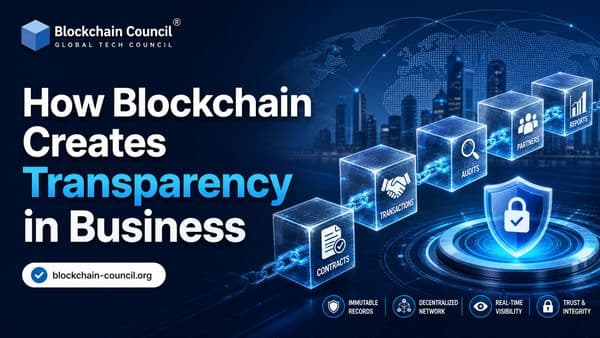
How Blockchain Creates Transparency in Business
Learn how blockchain creates transparency in business through shared ledgers, immutability, traceability, smart contracts, and verifiable audit trails.



2503 articles published
Learn how blockchain creates transparency in business through shared ledgers, immutability, traceability, smart contracts, and verifiable audit trails.
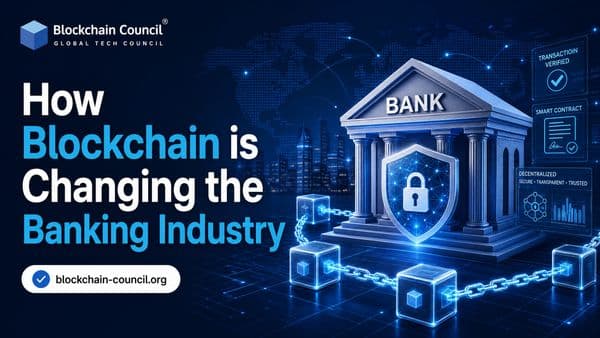
Explore how blockchain is changing the banking industry through faster payments, tokenization, smart contracts, compliance, security, and shared ledgers.

Explore how blockchain in online shopping enables safer and smarter transactions through secure payments, smart contracts, traceable supply chains, and better data control.

Explore how blockchain prevents counterfeit products by linking physical goods to immutable provenance records, unique digital identities, smart tags, and real-time verification.

Explore how blockchain improves food safety with end-to-end traceability, faster recalls, fraud reduction, and stronger consumer trust.
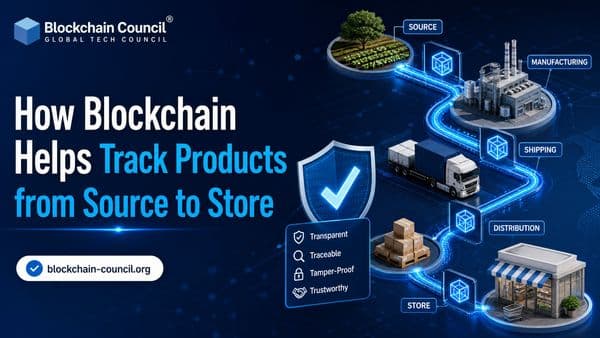
Learn how blockchain tracks products from source to store with secure ledgers, real time visibility, fraud reduction, recalls, and compliance support.

Explore how blockchain in healthcare improves patient care through secure records, consent-based data sharing, supply chains, research, and smarter operations.

Explore the legal and ethical challenges of AI smart contracts, including liability, bias, privacy, compliance, governance, and human oversight.

Learn how blockchain protects personal data through tamper-resistant records, decentralization, encryption, zero-knowledge proofs, and privacy-by-design.

Learn how smart contract automation with AI agents helps Web3 developers build adaptive dApps using on-chain rules, off-chain intelligence, oracles, and secure controls.

A practical guide to blockchain and digital identity, explaining DIDs, verifiable credentials, benefits, risks, and real-world use cases for professionals.

Explore how AI oracles for smart contracts deliver intelligent real-world data on-chain, enabling adaptive automation, risk scoring, and Web3 innovation.