

How Blockchain Helps Track Products from Source to Store

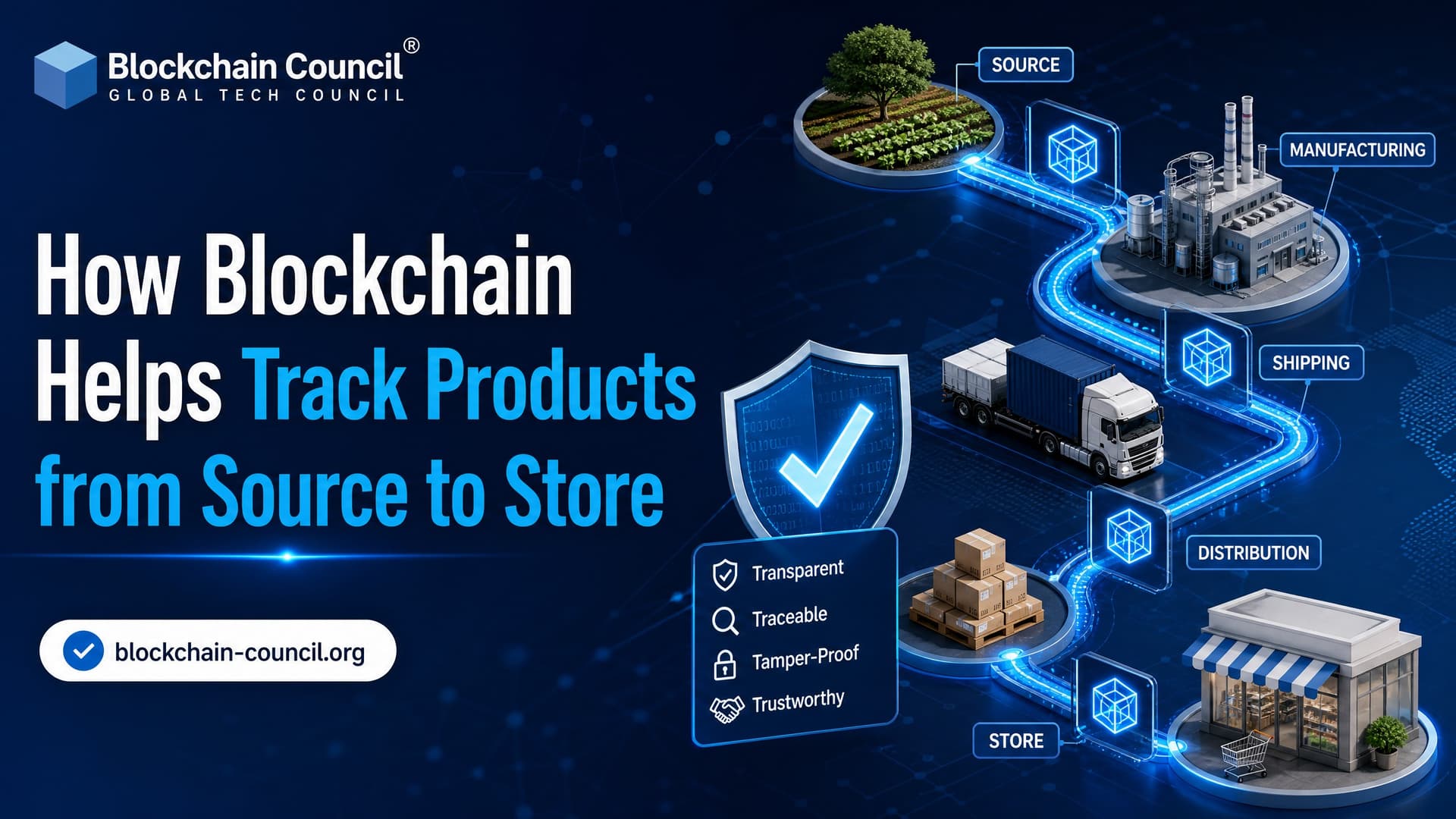
How Blockchain Helps Track Products from Source to Store is becoming a critical question for businesses that need reliable visibility across complex supply chains. From food and pharmaceuticals to luxury goods and industrial components, organizations must prove where products came from, how they were handled, and whether records can be trusted. Blockchain addresses this challenge by creating a shared, tamper resistant ledger where every handoff, inspection, transformation, and shipment event can be recorded in near real time.
Unlike traditional databases that are often controlled by one company, blockchain allows authorized supply chain participants to work from the same synchronized source of truth. This improves traceability, reduces fraud, speeds recalls, and supports compliance with safety, sourcing, and sustainability requirements.

Why Product Traceability Is Difficult Today
Modern supply chains are global, multi-party, and highly fragmented. A single product may pass through farmers, raw material suppliers, manufacturers, freight forwarders, customs agencies, warehouses, distributors, and retailers before reaching a store shelf.
Traditional tracking methods often depend on disconnected databases, spreadsheets, paper records, and manual data entry. This creates several issues:
- Fragmented information: Each participant maintains its own records, often in systems that do not communicate easily.
- Limited end-to-end visibility: Retailers and consumers may not be able to verify origin, manufacturing conditions, or transport history.
- Fraud and counterfeits: Records can be altered, duplicated, or hidden when audit trails are weak.
- Slow recalls: Identifying the source of a contaminated or defective product can take days if records are incomplete.
- Compliance pressure: Regulators and customers increasingly expect proof of ethical sourcing, safety, and environmental responsibility.
These limitations make it difficult to answer a simple but important question: where has this product been?
How Blockchain Helps Track Products from Source to Store
Blockchain is a decentralized ledger that stores records in blocks linked by cryptography. Once data is written to the chain, it is extremely difficult to alter without detection. In a supply chain context, this means each product event can become part of a permanent and verifiable history.
For example, a batch of coffee beans can be registered at a farm with a unique QR code or RFID tag. Each later step, such as processing, export, shipping, roasting, packaging, warehousing, and retail delivery, can be recorded as a new transaction. The result is a digital chain of custody that follows the product from source to store.
Key Blockchain Features That Enable Traceability
- Distributed ledger: Multiple authorized participants share the same ledger, reducing reliance on one central database.
- Immutability: Once an event is recorded, it cannot be quietly changed or deleted.
- Cryptographic security: Digital signatures and hashing protect data integrity and authenticity.
- Permissioned access: Enterprises can control which parties see sensitive commercial data.
- Smart contracts: Automated rules can trigger payments, alerts, approvals, or compliance checks when conditions are met.
- IoT integration: Sensors, RFID devices, GPS trackers, and temperature monitors can feed data directly into the ledger.
Enterprise analyses from organizations such as Deloitte and AWS suggest that the strongest blockchain supply chain use cases often combine a trusted ledger with IoT, cloud systems, and existing enterprise software such as ERP, warehouse management, and transport management platforms.
What Source-to-Store Tracking Looks Like in Practice
A blockchain based traceability system usually follows a structured product journey.
- Source registration: A farm, mine, factory, or supplier registers a product or batch on blockchain with a unique identifier.
- Initial data capture: Origin, production date, certification details, inspection results, and quality data are recorded.
- Processing and transformation: When raw materials are mixed, cut, assembled, refined, or packaged, each transformation is logged.
- Logistics and warehousing: Handoffs between carriers, customs clearances, warehouse receipts, and delivery events are added to the ledger.
- Retail arrival: The final store, distribution center, or e-commerce fulfillment point records receipt of the product.
- Consumer or regulator verification: In some models, a customer can scan a QR code to view selected provenance details.
This creates a product genealogy, showing which inputs became which finished goods. For industries such as food and pharmaceuticals, this can be essential for safety investigations and targeted recalls.
Real World Use Cases of Blockchain Traceability
Food Safety and Agriculture
Food supply chains are among the most active areas for blockchain traceability. The World Economic Forum has highlighted blockchain as a tool for improving transparency and coordination across food systems. A widely discussed Walmart and IBM project found that tracing a food item back to its origin could be reduced from days to seconds using blockchain based records.
In a contamination event, faster traceability can help companies identify affected batches more precisely. This reduces the need for broad recalls and helps protect consumers.
Pharmaceuticals and High Value Goods
Counterfeit medicines and luxury goods are major global concerns. Blockchain can help verify whether a product followed an approved distribution path. Each shipment, transfer, and inspection becomes part of a permanent audit trail, making it harder for counterfeit products to enter undetected.
Logistics and IoT Enabled Tracking
For cold chain shipments such as vaccines, seafood, dairy, or biologics, IoT sensors can record temperature, humidity, location, and handling conditions. When this information is anchored to blockchain, buyers and regulators gain stronger confidence that products were stored and transported correctly.
Ethical Sourcing and ESG Reporting
Companies face growing scrutiny over labor practices, environmental impact, and responsible sourcing. Blockchain can support product passports that document origin, certifications, and handling events. This is especially useful in agriculture, fashion, mining, and consumer goods where provenance claims must be verifiable.
Benefits for Businesses, Regulators, and Consumers
The value of blockchain in supply chain tracking comes from improved trust in shared data. Key benefits include:
- Faster investigations: Teams can trace a product's path quickly instead of manually reconciling records across partners.
- Reduced fraud: Permanent records make unauthorized changes and suspicious gaps easier to detect.
- Better recall management: Companies can isolate affected batches and reduce unnecessary product withdrawals.
- Improved compliance: Auditors and regulators can access verified records with appropriate permissions.
- Operational efficiency: Shared data can reduce paperwork, reconciliation, and duplicate verification steps.
- Consumer trust: Customers can receive clearer information about origin, authenticity, and handling.
These benefits explain why blockchain is gaining attention across retail, logistics, manufacturing, healthcare, and food systems.
Challenges and Limitations
Blockchain is powerful, but it does not solve every traceability problem by itself. The most important limitation is data quality. If incorrect data is entered at the source, blockchain will preserve that incorrect record. This is often called the garbage in, garbage out problem.
Other challenges include:
- Integration complexity: Blockchain must connect with existing ERP, logistics, warehouse, and partner systems.
- Scalability: Global supply chains generate large volumes of events, requiring careful architecture choices.
- Governance: Participants must agree on data standards, access rules, responsibilities, and dispute processes.
- Privacy: Companies need transparency without exposing sensitive supplier, pricing, or customer information.
- Adoption barriers: Blockchain delivers the most value when many ecosystem partners participate.
For this reason, many organizations begin with focused pilots, such as tracing one product category, region, or high risk supply chain, before scaling.
Skills Needed to Implement Blockchain in Supply Chains
Professionals working on blockchain traceability need a mix of technical and business skills. They should understand distributed ledgers, smart contracts, cryptography, enterprise architecture, data governance, and supply chain operations.
For readers building expertise, relevant Blockchain Council learning paths can include blockchain fundamentals, smart contract development, blockchain architecture, and Web3 or enterprise blockchain programs. These topics support professionals designing traceability systems, evaluating vendor platforms, or leading digital transformation initiatives.
The Future of Blockchain Based Product Tracking
The future of product traceability is likely to combine blockchain with IoT, AI, digital product passports, and industry specific data standards. IoT devices will capture real world conditions, AI will detect risks and anomalies, and blockchain will provide the trusted record that supports verification.
As regulations around food safety, sustainability, and responsible sourcing continue to evolve, verifiable supply chain data will become more important. Blockchain can serve as the trust layer that connects suppliers, manufacturers, logistics providers, retailers, regulators, and consumers.
Conclusion
How Blockchain Helps Track Products from Source to Store comes down to trust, visibility, and accountability. By recording every key event on a shared and tamper resistant ledger, blockchain gives supply chain participants a clearer view of product origin, movement, condition, and authenticity.
It can accelerate recalls, reduce fraud, support compliance, and strengthen consumer confidence. Successful adoption, however, requires accurate data, system integration, partner alignment, and skilled professionals. For enterprises and technology teams, blockchain based traceability is not just a digital recordkeeping upgrade. It is an important step toward more transparent, resilient, and accountable supply chains.
Related Articles
View All
Blockchain
How to Write a PRD for Blockchain Products: Key Sections, Examples, and Best Practices
Learn how to write a PRD for blockchain products with key sections, practical examples, tokenomics, security, governance, and success metrics.

Blockchain
Product Discovery for Blockchain Products: A Step-by-Step Guide for Web3 Product Managers
A practical Web3 product discovery guide covering wallet behavior, token validation, governance, security, metrics, and testnet pilots.

Blockchain
Go-to-Market Strategy for Blockchain Products in Competitive Web3 Markets
Learn how to build a go-to-market strategy for blockchain products with value-first positioning, token design, community, security, and Web3 metrics.
Trending Articles
The Role of Blockchain in Ethical AI Development
How blockchain technology is being used to promote transparency and accountability in artificial intelligence systems.
What is AWS? A Beginner's Guide to Cloud Computing
Everything you need to know about Amazon Web Services, cloud computing fundamentals, and career opportunities.

Can DeFi 2.0 Bridge the Gap Between Traditional and Decentralized Finance?
The next generation of DeFi protocols aims to connect traditional banking with decentralized finance ecosystems.