

Blockchain in Healthcare: Improving Patient Care and Trust

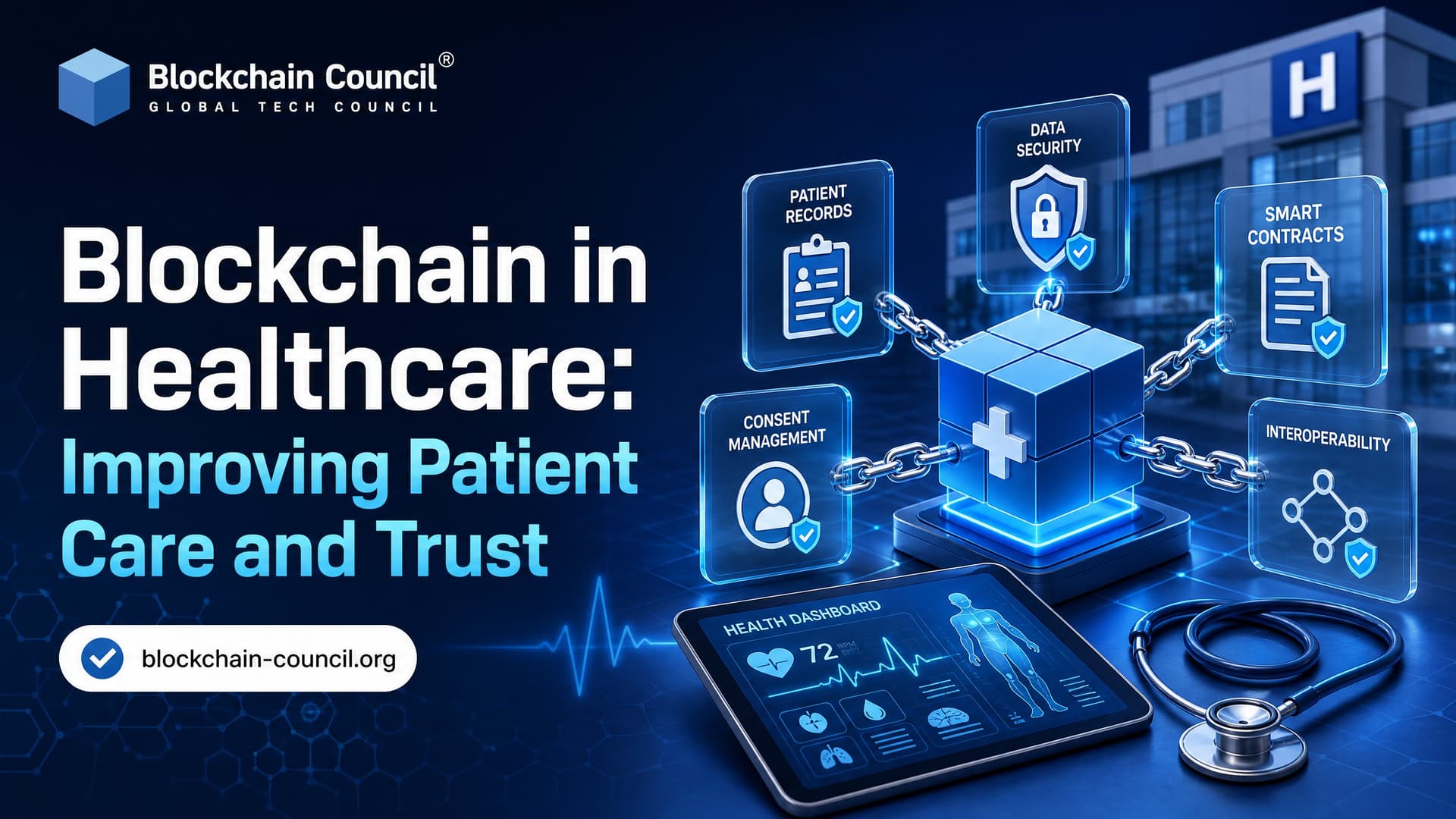
Blockchain in Healthcare: Improving Patient Care is no longer only a research topic. Healthcare organizations, technology vendors, public agencies, and clinical networks are exploring blockchain to secure data, improve interoperability, strengthen supply chains, and support patient-centric care. While adoption remains uneven, real-world deployments and market forecasts show that blockchain is becoming an important part of digital healthcare infrastructure.
At its core, blockchain is a distributed ledger that records transactions across a network of participants. In healthcare, those transactions may represent consent permissions, clinical data access events, insurance claims, drug provenance records, or research data updates. Because records are cryptographically secured, time-stamped, and difficult to alter, blockchain can help create trusted data environments across organizations that do not always share the same systems.

What Blockchain Means for Healthcare
Blockchain in healthcare refers to using distributed ledger technology to store, verify, and share health-related data across providers, payers, patients, pharmaceutical companies, researchers, and regulators. It is not always used to store full medical files directly on-chain. In many cases, the blockchain stores hashes, permissions, indexes, or audit trails, while sensitive files remain in secure off-chain databases.
Several characteristics make blockchain useful for healthcare:
- Decentralization: Data verification is shared across trusted network participants rather than controlled by one central authority.
- Immutability: Once validated, records are difficult to change without detection, which supports auditability.
- Cryptographic security: Encryption, digital signatures, and key-based access controls help protect sensitive data.
- Smart contracts: Automated rules can support consent, claims processing, eligibility checks, and supply chain verification.
For professionals seeking deeper technical knowledge, Blockchain Council programs such as the Certified Blockchain Expert and Certified Blockchain Developer offer relevant learning paths. Healthcare teams working with secure data, AI, or connected devices may also benefit from exploring cybersecurity and AI-focused certifications.
How Blockchain in Healthcare Improves Patient Care
More Secure and Interoperable Health Records
Fragmented health records remain a major barrier to high-quality care. Patients often receive treatment across hospitals, clinics, laboratories, pharmacies, insurers, and telehealth providers, yet these systems may not communicate efficiently. Blockchain can act as a trusted layer for indexing records, validating updates, and controlling access across organizations.
A systematic review in JMIR Medical Informatics found that blockchain has already been deployed in real healthcare environments, especially for electronic medical record management, biomedical research, and IoT-based health data. Industry analysis also notes that blockchain is being used to secure patient data and support clinical research workflows.
The patient care impact is significant. When authorized clinicians can access complete and current records, they can reduce duplicate tests, avoid medication conflicts, and make faster decisions during emergencies. Better data availability can also improve chronic disease management by giving care teams a longitudinal view of a patient's health history.
Stronger Patient Control Over Health Data
Healthcare is moving toward more patient-centric data models. Blockchain supports this shift by allowing patients to authorize who can access their information, when it can be used, and for what purpose. Rather than relying only on a central broker, patients can use consent mechanisms linked to digital identity and cryptographic authorization.
Research from Indiana University highlights how blockchain can help manage sensitive health data while protecting privacy. In one reported use case involving sexually transmitted disease data, blockchain-based architectures were explored to handle highly sensitive information securely. This matters because patients are more likely to seek treatment and share data when they trust that privacy is protected.
Consent-based data sharing can also support personalized care and clinical trials. Patients may allow researchers to use selected data without exposing unnecessary personal details. This can improve recruitment, accelerate research, and make trial participation more transparent.
Better Cybersecurity and Data Integrity
Healthcare is a high-value target for cyberattacks because medical records contain identity, financial, and clinical information. Blockchain cannot eliminate cybersecurity risk, but it can improve data integrity and resilience when designed correctly.
Elevance Health has described blockchain as a way to maintain an incorruptible, decentralized, and transparent data log while keeping patient identities private. The U.S. Department of Health and Human Services has also recognized blockchain's potential for secure identity authentication, transaction logging, and data provenance across healthcare stakeholders.
For patient care, data integrity is more than an IT concern. If a medication history, allergy record, lab result, or diagnosis is inaccurate, clinical decisions can be affected. A tamper-evident audit trail helps providers verify where data came from, when it was updated, and whether it can be trusted.
Safer Pharmaceutical and Medical Device Supply Chains
Counterfeit, diverted, or improperly stored drugs create direct risks for patients. Blockchain can track drugs, vaccines, devices, and medical supplies from manufacturer to distributor, pharmacy, hospital, and patient. Each handoff can be recorded in a shared ledger, making provenance easier to verify.
Industry research has highlighted blockchain's role in pharmaceutical supply chain management. HHS has also identified asset tracking and transaction validation as important potential applications. By improving traceability, blockchain can help detect counterfeit products, reduce fraud, and provide faster response during recalls.
Supply chain transparency also helps with continuity of care. Real-time inventory visibility can reduce shortages, support better demand planning, and ensure that patients receive needed medicines without avoidable delays.
More Reliable Clinical Trials and Research
Clinical research depends on trust in data. Blockchain can create tamper-evident records for patient consent, trial enrollment, protocol updates, data collection, and audit trails. This reduces the risk of manipulation and improves confidence in research outputs.
Yan Zhuang, Assistant Professor of Health Informatics at Indiana University, has emphasized blockchain's potential to improve clinical trial recruitment and management through decentralized, patient-authorized data sharing. If eligible patients can be matched more efficiently with appropriate studies, access to innovative therapies may improve.
For healthcare organizations building research platforms, blockchain can also support data provenance. Researchers can verify that information came from approved sources, such as hospitals, laboratories, or patient-generated devices, without exposing unnecessary identifying details.
Remote Monitoring, IoT, AI, and Telehealth
Connected health devices generate continuous streams of data, including heart rate, glucose levels, oxygen saturation, sleep patterns, and activity metrics. Blockchain can help validate and secure this data, especially when it is shared among patients, providers, insurers, and AI systems.
Elevance Health has discussed blockchain-enabled remote monitoring for high-risk patients, including systems that securely share vital signs and trigger alerts. Industry analysts have also noted growing integration between blockchain, AI, IoT, and telehealth. In this model, blockchain can serve as a trusted data layer, while AI analyzes verified data for early warnings, risk prediction, and clinical decision support.
This is especially important for chronic care, elder care, post-surgical recovery, and population health management. Verified data streams can help clinicians detect deterioration earlier and intervene before a condition becomes acute.
Administrative Efficiency and Patient Experience
Administrative complexity is one of healthcare's most persistent problems. Claims processing, eligibility verification, prior authorization, billing disputes, and provider directory updates can consume time that could otherwise support patient care.
Blockchain-based smart contracts can automate rules for claims, benefits, and contract terms, which can reduce paperwork and administrative burden. HHS has similarly described blockchain as a potential tool for claims adjudication, identity authentication, and contract logging.
For patients, this can mean fewer billing disputes, faster approvals, and less confusion about coverage. For providers, it can reduce manual work and allow staff to focus more on clinical service delivery.
Real-World Developments and Market Outlook
Blockchain adoption in healthcare is progressing through pilots, consortia, and targeted production systems. Elevance Health cites Avaneer Health as an example of a collaborative network designed to reduce barriers, eliminate redundancies, and optimize care delivery through improved data exchange. In China, hospitals have piloted blockchain-based medical billing platforms as part of broader national interest in healthcare blockchain applications.
Market projections vary, but they consistently point to strong growth. Elevance Health reports that the blockchain healthcare market was valued at approximately 1.2 billion USD in 2021 and could reach 126 billion USD by 2030. Other forecasts project the global healthcare blockchain market at around 193 billion USD by 2034. These figures use different methodologies, but both suggest increasing enterprise investment.
Challenges Healthcare Leaders Must Address
Despite its promise, blockchain is not a quick fix. Healthcare leaders must address several barriers before large-scale adoption becomes routine:
- Regulatory compliance: Systems must align with privacy laws such as HIPAA and other regional data protection rules.
- Legacy integration: Blockchain networks must connect with existing EHR, billing, pharmacy, and laboratory systems.
- Governance: Multi-party networks require clear rules for participation, validation, access, and dispute resolution.
- Cybersecurity: Smart contracts, wallets, keys, and APIs still require strong security design and monitoring.
- Cost and scalability: Organizations must evaluate infrastructure costs, performance, and long-term maintenance.
Private and permissioned blockchains are gaining attention because they can better support healthcare privacy, governance, and compliance requirements. However, standards and interoperability will remain critical for broad adoption.
Conclusion
Blockchain in Healthcare: Improving Patient Care is best understood as an infrastructure shift toward trusted, consent-based, and auditable data exchange. Its strongest near-term value lies in secure health records, patient-controlled consent, pharmaceutical traceability, clinical research integrity, remote monitoring, and administrative automation.
The technology is not a replacement for EHRs, cybersecurity programs, data governance, or clinical expertise. Instead, blockchain can enhance these systems by creating a shared trust layer across organizations. As healthcare continues to digitize, professionals who understand blockchain architecture, data privacy, smart contracts, AI integration, and cybersecurity will be well positioned to contribute to safer, more efficient, and more patient-centered care.
Related Articles
View All
Blockchain
Why Blockchain Is the Future of Digital Trust, Finance, and Data Security
Blockchain is becoming core infrastructure for digital trust, finance, and data security through shared ledgers, stablecoins, smart contracts, and verifiable records.

Blockchain
Blockchain Shared Security Protocols: How Shared Trust Secures Modular Chains
Blockchain Shared Security Protocols let chains, rollups, and services share validators, stake, or proofs instead of building security alone.

Blockchain
Blockchain Certification Programs You Can Join Online
Discover the best blockchain certification programs you can join online. Learn blockchain fundamentals, smart contracts, enterprise blockchain, and career opportunities with globally recognized certifications.
Trending Articles

Top 5 DeFi Platforms
Explore the leading decentralized finance platforms and what makes each one unique in the evolving DeFi landscape.
How Blockchain Secures AI Data
Understand how blockchain technology is being applied to protect the integrity and security of AI training data.
How to Create Claude Skills?
Claude Skills are one of the most important features Anthropic has introduced for users who want automation that is structured, consistent and reusable. Instead of giving Claude long instructions ever