
Personalized Payment Experiences in Web3 Using Artificial Intelligence
Learn how AI is shaping personalized payment experiences in Web3 through smart wallets, stablecoin routing, agent payments, fraud scoring, and adaptive UX.



2321 articles published
Learn how AI is shaping personalized payment experiences in Web3 through smart wallets, stablecoin routing, agent payments, fraud scoring, and adaptive UX.

Blockchain wallets manage keys, sign transactions, and secure digital assets. Learn wallet types, risks, best practices, and how to choose the right setup.

AI tokens link crypto assets with AI compute, model access, data markets, and agents. Learn the opportunities, risks, trends, and evaluation steps.

Explore how AI in cryptocurrency exchanges improves trading, fraud detection, risk control, liquidity, compliance, and portfolio management.

AI and DeFi are converging through agents, risk models, lending automation, and portfolio tools, but smart controls remain essential.
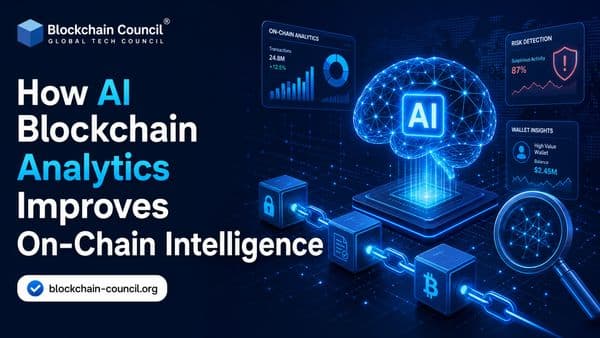
AI blockchain analytics turns raw on-chain data into real-time intelligence for compliance, security, investigations, and DeFi market insight.

AI crypto bots can automate trading, improve execution, and monitor markets 24/7, but traders must manage model risk, security, and compliance.

AI helps detect crypto fraud, scams, and money laundering through transaction monitoring, anomaly detection, graph analysis, and explainable risk scoring.

Learn how crypto portfolio rebalancing helps manage volatility, control concentration risk, and set practical rules for adjusting digital asset holdings.

AI-powered crypto market prediction can support short-term Bitcoin forecasts, but evidence shows it works best as a probabilistic tool, not a price oracle.

Learn how to structure crypto portfolio allocation by market cycle, risk tolerance, and investment goal using BTC, ETH, altcoins, stablecoins, and rebalancing rules.

Learn how AI cryptocurrency trading works, including predictive models, bots, arbitrage, risk controls, governance, and the skills professionals need.