

Career in Crypto Asset Recovery: Skills, Roles, and Opportunities

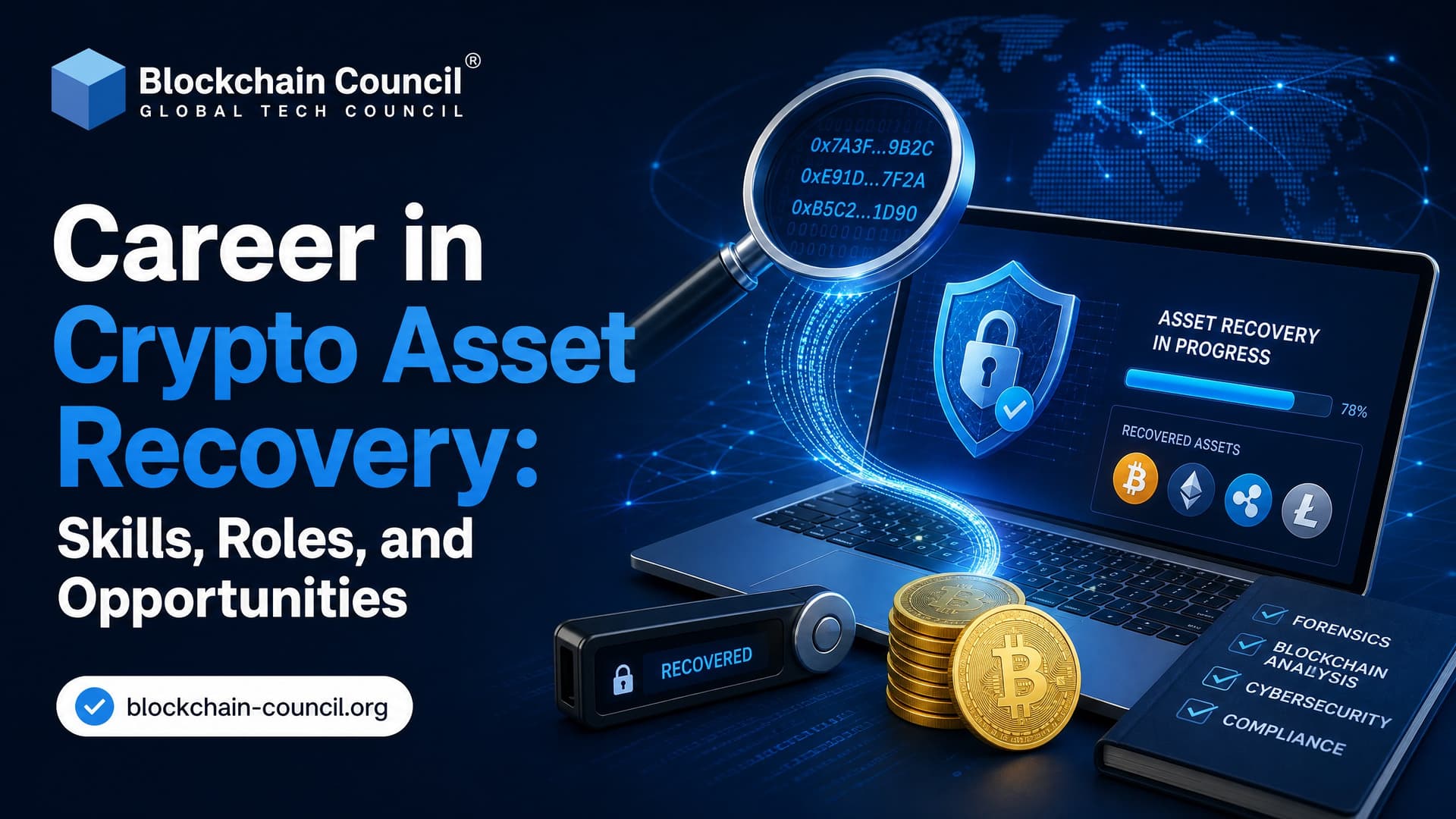
Crypto asset recovery is becoming a serious career path for people who can trace blockchain transactions, understand cyber incidents, write evidence-grade reports, and work with exchanges or law enforcement. It is not a single job yet. You will usually see it inside titles such as blockchain investigator, digital asset compliance analyst, fraud investigator, cybercrime specialist, or crypto litigation support analyst.
The field is young, but the work is real. Scams, exchange hacks, wallet compromises, ransomware payments, bridge exploits, and misdirected transfers create demand for people who can move fast without damaging evidence. To be blunt, this is not a job for someone who only knows how to check a wallet balance on a block explorer. You need technical judgment, regulatory awareness, and calm communication with victims who may have lost life-changing sums.

What Is Crypto Asset Recovery?
Crypto asset recovery is the professional work of tracing, documenting, freezing, and sometimes helping return lost or stolen digital assets. Recovery is rarely as simple as reversing a payment. Public blockchains are transparent, but most transfers are final once confirmed.
A recovery specialist may:
- Trace stolen funds across Bitcoin, Ethereum, Tron, BNB Chain, Solana, or other networks
- Identify whether funds moved to a known exchange, mixer, bridge, or scam cluster
- Preserve transaction evidence for a police report, civil claim, insurer, or regulator
- Prepare freeze requests for exchanges or custodians
- Help compliance teams investigate suspicious deposits
- Advise victims on realistic recovery options and next steps
The best professionals know the limits. If a scammer self-custodies funds and never touches a regulated exchange, recovery may be impossible without law enforcement action or key seizure. Good investigators do not promise miracles.
Why Demand Is Growing
Demand for crypto asset recovery tracks two bigger shifts. Digital assets are moving into mainstream finance, and crypto-related crime remains a major operational risk.
Fidelity has publicly documented its digital asset work dating back to bitcoin mining and blockchain research in 2014, followed by institutional custody and trading services in 2018. BlackRock and other large financial institutions now hire for digital asset, legal, compliance, and financial crime roles. Crypto compliance has become its own professional track, with dedicated job boards built entirely around digital asset roles.
General job boards show the wider market too. You will find hundreds of remote asset recovery listings, many in traditional IT and cyber recovery rather than crypto specifically. Not all of them are crypto roles, but the overlap matters. Wallet breaches, custody failures, and exchange incidents demand the same discipline found in cyber recovery: containment, logs, backups, access review, and clean evidence handling.
Core Skills You Need for Crypto Asset Recovery
Blockchain Forensics
You must be able to read the chain. That means more than copying an address into Etherscan.
For Bitcoin, learn the UTXO model, change addresses, coin selection, and transaction graphs. Beginners often mislabel a Bitcoin change output as a second victim payment. That single error can ruin a case narrative.
For Ethereum and EVM chains, understand account-based transfers, ERC-20 logs, internal transactions, contract calls, bridges, and failed transactions. Here is a common mistake: someone sees a failed Ethereum transaction with gas spent and assumes the token was stolen. On Etherscan the status may show Fail, while the ERC-20 transfer never happened at all. The evidence sits in the Logs tab, not just the top-line transaction page.
Useful tools include block explorers, SQL-based public data platforms, graph tools, and commercial forensic platforms. You should also know where tool output can be wrong or incomplete.
Programming and Data Analysis
Python and SQL are the practical choices. You do not need to be a full blockchain engineer to start, but you should be able to query transactions, parse JSON from APIs, clean messy wallet data, and build repeatable workflows.
For technical tracks, learn:
- Python scripting for address monitoring and API calls
- SQL for querying blockchain datasets
- Basic graph analysis for fund flows
- Smart contract basics, especially ERC-20 and ERC-721 events
- Ethereum gas mechanics, including EIP-1559 fee fields
If you want stronger technical credibility, Blockchain Council's Certified Blockchain Developer™ suits readers who plan to work close to smart contracts and chain data.
Cybersecurity and Incident Response
Many recovery cases begin with a compromise: phishing, malware, SIM swap, a leaked seed phrase, a malicious token approval, or private key theft. You need to understand how the loss happened, not just where the funds went.
Learn the basics of:
- Phishing kits and wallet-drainer approvals
- Endpoint compromise and browser extension risk
- Key management and hardware wallet practices
- Access logs, cloud infrastructure, and backup integrity
- Evidence preservation and chain of custody
Enterprise cyber recovery roles often require AWS, Azure, network security, backup, and infrastructure experience. That same knowledge applies in crypto custody environments, where key systems, transaction signing, and operational approvals all need protection.
AML, Sanctions, and Financial Crime
Crypto asset recovery often sits inside compliance teams. You may review alerts, investigate suspicious deposits, prepare case notes, and support suspicious activity reporting.
Key areas include:
- Customer due diligence and enhanced due diligence
- Sanctions screening, including OFAC-related risk
- FATF travel rule expectations
- Typologies for romance scams, investment fraud, ransomware, and mixing services
- Clear documentation for auditors, regulators, and law enforcement
For a compliance-oriented path, Blockchain Council's Certified Cryptocurrency Expert™ and Certified Blockchain Expert™ help you build market and blockchain fundamentals before moving into investigations.
Legal and Communication Skills
You do not have to be a lawyer unless you want counsel roles. Still, you must understand how legal process works. Asset freezes, subpoenas, production orders, civil claims, and cross-border cooperation shape most recovery outcomes.
Just as important: write clearly. Your report may be read by a detective, a judge, an exchange compliance officer, or a board member. Drop the jargon unless it is needed. Explain why an address is linked to a scam, what evidence supports that link, and what should happen next.
Common Crypto Asset Recovery Roles
Blockchain Investigator or Forensic Analyst
This is the clearest match. You trace funds, identify wallet clusters, map transactions, prepare exhibits, and support exchange freeze requests. Employers include analytics firms, exchanges, custodians, cyber consultancies, and law enforcement units.
Digital Asset Compliance Analyst
This role focuses on transaction monitoring, alert review, AML escalation, sanctions screening, and financial crime reporting. You may handle scam deposits, mule accounts, ransomware-linked funds, and hacked exchange flows.
Cyber Recovery or Secure Infrastructure Specialist
In crypto companies, these professionals secure wallet infrastructure, cloud systems, backups, signing workflows, and disaster recovery plans. They spend less time tracing funds and more time stopping the next loss.
Crypto Litigation Support or Legal Counsel
Legal teams work with forensic analysts to build recovery claims, obtain freezing orders, coordinate disclosure, and present blockchain evidence in court. This path suits lawyers who are willing to learn technical evidence rather than outsource every detail.
Victim Advisory and Case Triage
Some teams specialize in intake. They collect transaction hashes, wallet addresses, screenshots, exchange records, and communications from victims. This role needs empathy and honesty. If the case is unrecoverable, say so early.
Salary Outlook and Market Signals
Public salary data for the exact phrase crypto asset recovery is thin. Broader crypto roles give useful benchmarks. Coursera reports US average salaries around USD 189,000 for blockchain architects, USD 139,000 for blockchain developers, USD 94,000 for Solidity developers, USD 107,000 for crypto-related financial analysts, and USD 103,000 for technical writers in crypto contexts.
Recovery specialists can land across that range depending on seniority, region, employer, and whether the role is technical, compliance-led, or legal. A junior compliance analyst will not earn what a senior forensic lead supporting law enforcement and institutional clients earns. Still, the skill mix is valuable because few people understand both blockchain data and regulated financial crime workflows.
How to Start a Career in Crypto Asset Recovery
- Pick your track. Choose investigations, compliance, cyber recovery, or legal support. Do not try to master all four at once.
- Learn chain fundamentals. Study Bitcoin transactions, Ethereum accounts, ERC-20 events, bridges, stablecoins, and custodial exchange flows.
- Practice on public cases. Use known scam reports or public incident write-ups. Document what happened, where funds moved, and what you can prove.
- Build a small portfolio. Publish sanitized case studies, SQL queries, address-flow diagrams, or explainers on scam typologies. Keep it ethical. Never expose victim data.
- Add compliance language. Learn AML, sanctions, suspicious activity reporting, and evidence documentation. This makes you employable beyond crypto-native firms.
- Get certified where it fills a gap. Use Certified Cryptocurrency Expert™ for crypto market foundations, Certified Blockchain Expert™ for broader blockchain fluency, and Certified Blockchain Developer™ if you need deeper technical credibility.
Future Opportunities in Crypto Asset Recovery
Expect more specialized titles over the next few years: Crypto Asset Recovery Lead, Digital Asset Forensics Engineer, DeFi Exploit Response Specialist, Cross-chain Recovery Analyst, and Crypto Financial Crime Investigator. The titles are not standardized yet, but the responsibilities already exist.
AI-assisted analytics will speed up clustering, risk scoring, and alert triage. It will not replace judgment. A model can flag a suspicious hop through a bridge, but it cannot decide whether evidence meets a legal threshold or whether contacting an exchange will tip off a suspect.
The strongest candidates combine hands-on tracing with disciplined reporting. Start with one chain, one toolset, and one case study. If you are building your foundation, begin with Blockchain Council's Certified Cryptocurrency Expert™, then add blockchain forensics practice and AML training. Your first goal is simple: produce a transaction report that another investigator, compliance officer, or lawyer can trust.
Related Articles
View All
Cryptocurrency
How to Become a Certified Crypto Asset Recovery Expert
Learn how to become a certified crypto asset recovery expert through blockchain forensics, AML training, seizure skills, and real case experience.

Cryptocurrency
Crypto Compliance and Asset Recovery: Why KYC, AML, and Forensics Matter
KYC, AML, and blockchain forensics now drive crypto compliance and asset recovery by linking wallets, monitoring risk, and supporting investigations.

Cryptocurrency
AI in Crypto Asset Recovery: How Machine Learning Detects Fraud Patterns
Learn how AI in crypto asset recovery uses machine learning, anomaly detection, graph analysis, and NLP to trace fraud and prioritize recovery leads.
Trending Articles
AWS Career Roadmap
A step-by-step guide to building a successful career in Amazon Web Services cloud computing.
What is AWS? A Beginner's Guide to Cloud Computing
Everything you need to know about Amazon Web Services, cloud computing fundamentals, and career opportunities.

Can DeFi 2.0 Bridge the Gap Between Traditional and Decentralized Finance?
The next generation of DeFi protocols aims to connect traditional banking with decentralized finance ecosystems.