

Trump AI Video

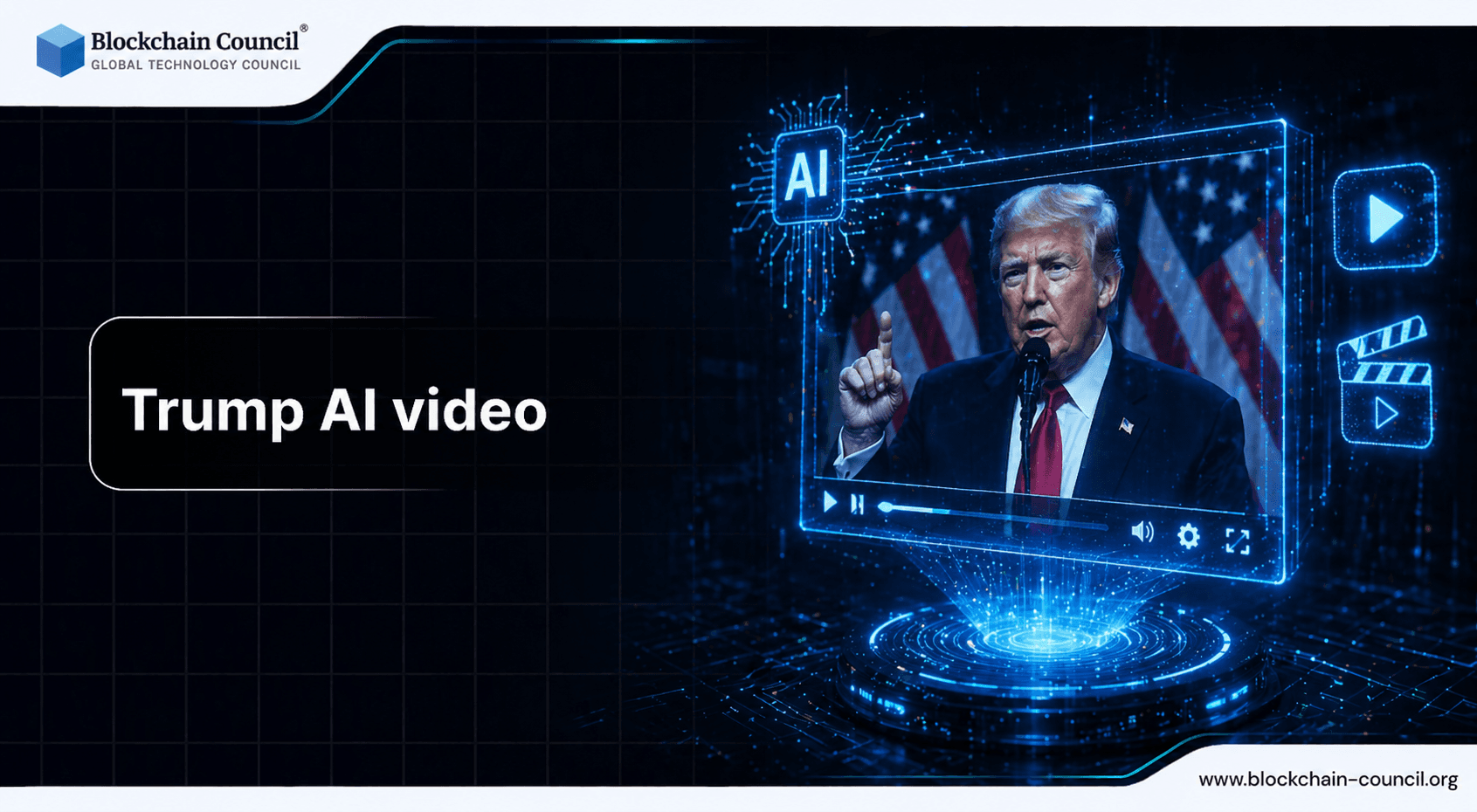
Artificial Intelligence has transformed how content is created, shared, and consumed. One of the most talked-about developments in recent years is the rise of AI-generated videos featuring public figures. Among these, “Trump AI videos” have gained significant attention across social media platforms, raising important questions about authenticity, misinformation, and the future of digital media.
These videos, often created using deepfake or generative AI technologies, can simulate realistic speech, facial expressions, and body language. While some are created for entertainment or satire, others blur the line between reality and fabrication, making it increasingly difficult for viewers to distinguish truth from manipulation.

As AI tools become more accessible, understanding how these videos are created and their implications is essential for individuals, businesses, and policymakers.
What Are Trump AI Videos?
Trump AI videos are artificially generated or manipulated videos that depict former U.S. President Donald Trump speaking or acting in ways that may not have actually occurred. These videos are typically created using advanced AI models, including deep learning and generative adversarial networks (GANs).
Some videos are clearly labeled as parody or satire, while others are designed to appear authentic. This variation in intent makes it challenging to evaluate content without careful analysis.
The technology behind these videos has improved rapidly, making outputs more realistic and harder to detect. As a result, even experienced viewers may struggle to identify whether a video is genuine or AI-generated.
How AI Generates Realistic Political Videos
AI-generated videos rely on several advanced technologies working together. Deep learning models analyze large datasets of images, videos, and audio recordings of a person. These datasets allow the system to learn facial movements, voice patterns, and speaking styles.
Once trained, the AI can generate new content that mimics the individual. For example, it can create a video where Trump appears to deliver a speech that he never actually gave.
Modern tools also include voice cloning, which replicates tone, pitch, and speech patterns with high accuracy. Combined with facial animation, this creates highly convincing results.
The increasing sophistication of these tools is why AI-generated political videos are becoming more common and more difficult to detect.
Real-World Examples of Trump AI Videos
Trump AI videos have appeared across platforms such as YouTube, TikTok, and X (formerly Twitter). Some examples include:
Satirical videos showing exaggerated speeches or humorous scenarios
Deepfake clips portraying fabricated statements or interviews
AI-generated campaign-style messages that never occurred
In some cases, these videos are clearly labeled as parody. However, others circulate without context, leading viewers to believe they are real.
This creates a risk of misinformation, particularly during election cycles or major political events.
The Impact on Media and Public Perception
The rise of AI-generated political videos has significant implications for media and public trust. Traditionally, video content has been considered strong evidence of truth. However, AI challenges this assumption.
When viewers cannot trust what they see, it creates uncertainty and skepticism. This phenomenon is often referred to as the “liar’s dividend,” where even real footage can be dismissed as fake.
For political figures like Donald Trump, this creates both opportunities and risks. Supporters may use AI content for engagement, while critics may use it for misinformation or satire.
The broader concern is how these videos influence public opinion and decision-making.
Ethical Concerns and Misinformation Risks
AI-generated videos raise several ethical issues, including:
The potential spread of false information
Manipulation of public opinion
Damage to reputations
Lack of accountability for creators
When AI videos are used without clear labeling, they can mislead viewers. This is particularly concerning in political contexts, where information accuracy is critical.
Governments and organizations are exploring ways to regulate AI-generated content, including watermarking and disclosure requirements.
Detection and Prevention of AI Videos
Detecting AI-generated videos requires a combination of technology and critical thinking. Some methods include:
Analyzing inconsistencies in facial movements or lighting
Checking audio synchronization and tone
Verifying sources and cross-referencing with trusted media
AI detection tools are also being developed to identify deepfakes. However, as generation technology improves, detection becomes more challenging.
Education and awareness remain key in helping users identify potentially misleading content.
The Role of AI Education and Certifications
As AI continues to evolve, understanding its capabilities and limitations becomes increasingly important. Structured learning can help individuals navigate complex topics such as deepfakes and AI-generated media.
Programs like the AI Expert Certification provide foundational knowledge in artificial intelligence, including how generative models work. Similarly, the ChatGPT Expert Certification helps professionals understand conversational AI and content generation.
For those interested in working with alternative AI systems, the Claude AI Certification offers insights into different AI architectures and applications.
Technical professionals can enhance their skills through the AI Powered Coding Expert Course, which focuses on integrating AI into development workflows. Meanwhile, marketers can explore the AI Powered Digital Marketing Course to understand how AI impacts content creation and audience engagement.
The Future of AI-Generated Political Content
The future of AI-generated videos is both promising and challenging. On one hand, technology enables creative expression, entertainment, and innovation. On the other hand, it introduces risks related to misinformation and trust.
Advancements in AI will likely make videos even more realistic. At the same time, detection tools and regulations will continue to evolve.
Balancing innovation with responsibility will be essential. This includes developing ethical guidelines, improving transparency, and promoting digital literacy.
Conclusion
Trump AI videos represent a broader trend in the evolution of digital content. They highlight both the capabilities of modern AI and the challenges it introduces.
While these videos can be entertaining or informative, they also carry risks that must be managed carefully. Understanding how they are created, how they can be misused, and how to identify them is essential in today’s digital landscape.
As AI continues to shape media and communication, the ability to critically evaluate content will become increasingly important. Those who invest in learning and awareness will be better prepared to navigate this rapidly changing environment.
Frequently Asked Questions (FAQs)
1. What is a Trump AI video?
A Trump AI video is a digitally generated or manipulated video that uses artificial intelligence to replicate the appearance and voice of Donald Trump. These videos can be created for entertainment, satire, or misinformation purposes. They often use deepfake technology to produce realistic results. Some are clearly labeled, while others are not. This makes it important to verify their authenticity.
2. Are Trump AI videos real?
Most Trump AI videos are not real in the sense that they do not depict actual events. They are created using AI tools that simulate speech and visuals. Some are meant as parody, while others can be misleading. The realism of these videos can make them difficult to identify. Verification is always necessary.
3. How are AI videos created?
AI videos are created using machine learning models trained on large datasets of images, videos, and audio. These models learn patterns in facial expressions and speech. They can then generate new content that mimics a real person. Advanced tools combine video and voice synthesis. This results in highly realistic outputs.
4. What is deepfake technology?
Deepfake technology is a type of AI that creates realistic but fake media content. It uses neural networks to manipulate or generate images, videos, and audio. Deepfakes can replicate a person’s appearance and voice. They are often used in entertainment but can also be misused. This raises ethical concerns.
5. Why are Trump AI videos popular?
Trump AI videos are popular because of his global recognition and media presence. His distinctive speaking style makes him an interesting subject for AI content. These videos often go viral due to their novelty. Social media platforms amplify their reach. This increases their visibility and impact.
6. Are AI-generated videos legal?
The legality of AI-generated videos depends on how they are used. Parody and satire are generally protected in many jurisdictions. However, misleading or harmful content may violate laws. Regulations are still evolving. Legal frameworks are adapting to new technologies.
7. Can AI videos spread misinformation?
Yes, AI videos can spread misinformation if they are presented as real. This is especially concerning in political contexts. Misleading videos can influence public opinion. They can also damage reputations. Responsible use is essential.
8. How can I detect AI-generated videos?
Detecting AI videos involves checking for inconsistencies in visuals and audio. Look for unnatural facial movements or mismatched lip-syncing. Verify the source of the video. Cross-check with trusted media outlets. Awareness is key.
9. What is voice cloning in AI?
Voice cloning is a technology that replicates a person’s voice using AI. It analyzes speech patterns, tone, and pitch. The AI can then generate new audio that sounds like the original person. This is often used in AI videos. It adds realism to the content.
10. Are there tools to detect deepfakes?
Yes, several tools are being developed to detect deepfakes. These tools analyze patterns and inconsistencies in media. However, detection is not always perfect. As AI improves, detection becomes more challenging. Continuous development is needed.
11. Why are AI certifications important?
AI certifications help individuals understand complex technologies. They provide structured learning and practical skills. This knowledge is valuable in professional environments. Certifications also improve career opportunities. They help users apply AI responsibly.
12. Can AI videos be used positively?
Yes, AI videos can be used for education, entertainment, and creative projects. They can enhance storytelling and communication. Responsible use can provide value. Ethical guidelines are important. Positive applications continue to grow.
13. What industries use AI video technology?
AI video technology is used in entertainment, marketing, education, and media. It helps create content efficiently. Businesses use it for advertising and training. It also supports virtual communication. Its applications are expanding rapidly.
14. How does AI impact digital marketing?
AI improves content creation, personalization, and audience targeting. It helps marketers analyze data and optimize campaigns. AI-generated videos can enhance engagement. However, authenticity remains important. Ethical use is critical.
15. What are the risks of deepfake videos?
Deepfake videos can mislead audiences and spread false information. They can harm individuals and organizations. They may also undermine trust in media. Addressing these risks is important. Awareness and regulation are key.
16. Can AI replace human video creators?
AI can assist video creation but cannot fully replace human creativity. It can automate certain tasks. However, human input is still essential. Creativity and judgment remain important. AI is a tool, not a replacement.
17. How can businesses use AI videos safely?
Businesses should use AI videos transparently and ethically. They should clearly label AI-generated content. Verification processes should be in place. Responsible use builds trust. This reduces risks.
18. What is the future of AI video technology?
AI video technology will continue to improve in realism and accessibility. It will become more widely used across industries. At the same time, regulations will increase. Balancing innovation and responsibility will be important. The future will be shaped by both.
19. Are AI videos regulated?
Regulation of AI videos is still developing. Some regions have introduced guidelines. These focus on transparency and accountability. More regulations are expected. Governments are working on policies.
20. Why is digital literacy important in the AI era?
Digital literacy helps individuals understand and evaluate online content. It enables them to identify misinformation. This is especially important with AI-generated media. Education improves awareness. It helps users make informed decisions.
Related Articles
View All
AI & ML
AI Video Generator vs AI Production Platform
AI video generators create videos from prompts, scripts, images, and other inputs, while AI production platforms support broader end-to-end video workflows. Explore the key differences between AI video generators and AI production platforms, including features, use cases, automation, scalability, and video production workflows.
AI & ML
AI Video Generator: The Future of Video Production
### Excerpt AI video generators are transforming video production by enabling creators and businesses to generate high-quality videos from text, images, scripts, and prompts. Explore how AI video generation is shaping the future of content creation, filmmaking, marketing, and automated video production.

AI & ML
Built to Catch AI Cheating: Rethinking Pre-Employment Assessments with HireValid
Explore how HireValid is rethinking pre-employment assessments with AI-resistant test design, integrity signals, candidate evidence, and human review to address AI-assisted cheating.
Trending Articles
AWS Career Roadmap
A step-by-step guide to building a successful career in Amazon Web Services cloud computing.
How Blockchain Secures AI Data
Understand how blockchain technology is being applied to protect the integrity and security of AI training data.
Blockchain in Supply Chain Provenance Tracking
Supply chains are under pressure to prove not just efficiency, but also authenticity, sustainability, and fairness. Customers want to know if their coffee really is fair trade, if the diamonds are con