

AI Video Generator: The Future of Video Production
 Michael Willson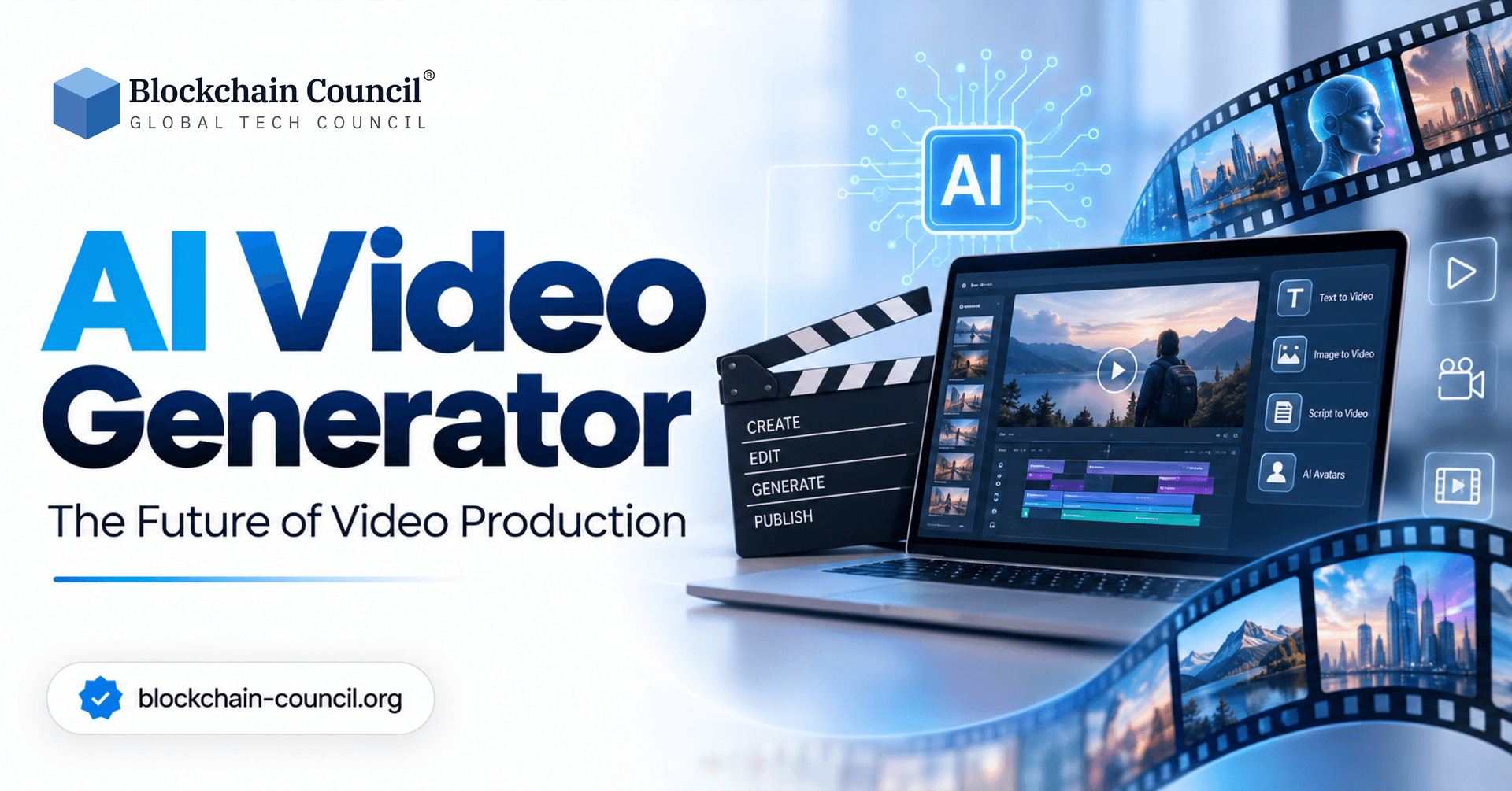
Video production is changing quickly. What once required a camera crew, editing team, production studio and long post-production cycle can now begin with a script, an idea, an image or a simple text prompt.
At the center of this shift is the AI video generator.

An AI video generator uses artificial intelligence to create or transform video content from inputs such as text, images, scripts, reference material or existing footage. These systems can help generate scenes, characters, motion, visual concepts and other video elements in significantly less time than traditional production workflows.
But AI video generation is only one part of the larger transformation.
As organizations produce more AI-generated video, a new challenge is emerging: how do teams manage stories, characters, creative consistency, human approvals, rights, languages and final delivery across an increasing volume of content?
This is where AI video creation is moving beyond simple generation and towards structured AI-native production. As this ecosystem evolves, professionals can also explore programming certifications, business certifications, and deep tech certifications to build practical expertise across emerging technologies, digital business and advanced technical domains.
What Is an AI Video Generator?
An AI video generator is an artificial intelligence-powered system that creates video content based on a user's instructions or source material.
Depending on the platform, users may be able to generate videos from:
Text prompts
Scripts
Images
Storyboards
Existing videos
Product information
Creative references
Audio or voice inputs
Traditional video production often follows a linear process. A concept is developed, a script is written, scenes are planned, footage is captured, the video is edited and the final version is delivered.
AI video generation can shorten several of these stages.
For example, a marketing team could provide a product description and creative direction and use an AI video generator to develop an initial visual concept. A content team could transform a written story into a sequence of visual scenes. An entertainment company could explore different character designs, locations or story treatments before committing to a complete production.
The important change is not simply that AI can generate video.
The bigger change is that video production can become more iterative, scalable and software-driven.
How Does AI Video Generation Work?
Most AI video generation systems combine machine learning models with different types of creative inputs.
A simplified workflow looks like this:
Prompt or source material → AI interpretation → Scene generation → Video output → Human review → Editing and refinement
For text-to-video generation, the system interprets a written description and attempts to translate it into visual sequences.
For image-to-video generation, a static image can become the starting point for movement, camera motion or scene development.
Some AI video generator tools also support character references, visual styles, audio, voice, subtitles and other production elements.
The technology is particularly useful during the early stages of production because teams can test multiple creative directions quickly.
Instead of spending days developing one visual treatment, a production team may be able to explore several concepts and identify the strongest direction before moving further into production.
Why Are AI Video Generators Becoming Important?
The demand for video content is increasing across entertainment, advertising, education, social media and digital publishing.
Brands need more creative variations. Entertainment companies need more content. Marketing teams need videos for different platforms and audiences. Global companies need the same story adapted into multiple languages.
Traditional production processes can become expensive and difficult to scale when content requirements increase.
AI video generation introduces another production model.
A team can create an initial concept, generate multiple variations, review them, refine the strongest version and adapt the content for different audiences.
This can make AI video creation useful not only for individual creators, but also for professional production teams.
AI Video Creation Is More Than Generating a Video
A common misconception is that an AI video generator represents the entire production process.
In practice, generating a video is only one stage.
Imagine a company producing a serialized entertainment project with dozens of episodes.
The team needs to maintain:
Character identity
Story continuity
Visual consistency
Brand guidelines
Creative references
Approval processes
Usage rights
Multiple languages
Production versions
Final delivery requirements
Generating one scene is relatively straightforward compared with managing these requirements across hundreds or thousands of assets.
This creates the need for a broader AI video production workflow.
The future of AI video creation is therefore likely to involve both generation technology and systems that coordinate everything around generation.
From AI Video Generator to AI-Native Production
AI-native production treats artificial intelligence as part of the production infrastructure rather than as a standalone creative tool.
This means the workflow can connect creative development, generation, human decision-making, rights management, localization and delivery.
For example:
Greenlight → Creative development → AI generation → Human approval → Rights verification → Localization → Performance measurement → Buyer-ready delivery
This approach becomes particularly important when AI-generated video is used commercially.
A professional production team cannot simply ask whether a video can be generated.
It also needs to ask:
Who approved it?
Which creative references were used?
Can the content be adapted for another market?
Are the relevant rights documented?
Can the same character or story remain consistent across episodes?
Which version was finally approved?
These questions turn AI video generation into a production management challenge.
The Role of Creative Canon
Creative consistency becomes especially important when AI-generated video is used for stories and serialized entertainment.
A character may appear in multiple episodes, locations may change and storylines may develop over time. Without a defined creative reference system, AI-generated outputs can become inconsistent.
A creative canon provides a structured source of truth for the production.
It can include information about:
Characters
Storylines
Visual identity
World-building
Locations
Brand elements
Character relationships
Tone and style
Production rules
This helps production teams maintain consistency while experimenting with AI-generated content.
For a serialized story, the objective is not simply to generate another visually attractive scene. The scene needs to belong to the same story world.
That distinction is important for professional AI video production.
Human Approval Still Matters
AI can generate content quickly, but speed does not eliminate the need for human decision-making.
Human teams remain responsible for deciding whether content meets creative, commercial and brand requirements.
A modern AI video workflow can therefore include approval stages.
For example:
Generate → Review → Request changes → Approve → Localise → Deliver
This creates a human-in-the-loop production model.
Instead of replacing the creative team, AI can reduce repetitive production work while people remain involved in important creative and commercial decisions.
For brands, this can help maintain control over how their identity appears in AI-generated content.
For entertainment companies, it can provide a structured process for reviewing scenes, characters and story developments.
AI Video Generators and Multilingual Production
Language is another major opportunity for AI video creation.
A single piece of content may need to reach audiences across different regions and languages. Traditional localization can require additional translation, voice recording, editing and production work.
AI can help make multilingual production more scalable.
For example, a video created for one audience could potentially be adapted into different languages while preserving the underlying story and creative direction.
This becomes particularly relevant for Indian-language entertainment, where audiences speak a wide range of languages.
A structured AI-native production workflow can connect the original creative concept with multilingual versions instead of treating every language as a completely separate production.
The result is a more connected approach to multilingual AI video production.
AI Video Generator for Brands
Brands are among the biggest potential users of AI video generation.
Marketing teams constantly need new creative assets for campaigns, product launches, social platforms and advertising.
An AI video generator can support use cases such as:
Product videos
Social media videos
Advertising concepts
Brand storytelling
Explainer videos
Campaign variations
Localised advertisements
Short-form content
However, brand production requires more than visual generation.
The content must remain aligned with brand guidelines, approved messaging and usage requirements.
This is why an AI production workflow can become valuable as content volume increases.
Instead of managing disconnected AI video generator tools, creative teams can work within a governed process that connects generation with review, rights and delivery.
AI Video Generator Tools: What Should Teams Look For?
There are many AI video generator tools available, but the right choice depends on the production requirements.
When evaluating an AI video platform, teams should consider more than output quality.
Important capabilities include:
1. Creative control
Can users control characters, scenes, styles and references?
2. Consistency
Can the platform help maintain continuity across multiple videos or episodes?
3. Collaboration
Can creative, marketing and production teams review and approve content?
4. Rights management
Can teams track the rights and usage requirements associated with production assets?
5. Multilingual production
Can content be adapted for different languages and audiences?
6. Workflow management
Can the platform support the complete journey from creative concept to final delivery?
7. Performance measurement
Can teams understand how produced content performs after publication?
These factors become increasingly important as AI video moves from experimentation into professional production.
What Is the Future of AI Video Production?
The future of AI video production is unlikely to be defined by generation alone.
Generation models will continue to improve, but professional content production will also require systems that organize the growing number of creative outputs.
The production environment may increasingly look like an operating system where different stages are connected.
A production team could move from an approved story to generated scenes, review those scenes, manage creative references, handle rights, create multilingual versions and prepare final assets for distribution.
This is the direction of AI-native media production.
The goal is not simply to produce more videos.
The goal is to create a repeatable system for producing the right content, maintaining creative control and moving approved content from an initial idea to buyer-ready delivery.
Tosheo and AI-Native Video Production
An AI video generator can make content creation faster, but producing a finished piece of content involves more than generating visuals. Tosheo focuses on the production workflow surrounding AI video generation, bringing the different stages of production into one governed system.
Here’s what makes Tosheo stand out from the rest:
Creative consistency: Maintain a defined creative canon across characters, products, visual references, voices, and other approved elements.
Human oversight: Build approval points into the workflow so key creative and production decisions remain with the right people.
Rights management: Keep permissions for stories, brand assets, likenesses, voices, and music connected to the production process.
Multilingual production: Adapt content for different audiences with localized dialogue, pronunciation and captions.
Targeted repairs: Correct specific elements without necessarily regenerating work that has already been approved.
Performance measurement: Use results from released content to inform future creative and production decisions.
This makes Tosheo different from relying on standalone AI video generator tools. Rather than treating AI video creation as the end goal, it connects what happens before, during and after generation, taking projects from greenlight through production and review to buyer-ready delivery.
This broader approach reflects Tosheo’s vision for AI-native media production, beginning with Indian-language serialized entertainment and branded stories. For content that needs to be produced consistently, reviewed carefully, localized, and delivered at scale, managing the workflow around generation can be just as important as generating the video itself.
Frequently Asked Questions
What is an AI video generator?
An AI video generator is an AI-powered tool that creates or transforms video content using inputs such as text prompts, images, scripts or other creative references.
How does an AI video generator work?
An AI video generator uses artificial intelligence models to interpret creative inputs and generate visual sequences, motion and other video elements based on those inputs.
What is AI video generation used for?
AI video generation can be used for marketing videos, advertising, entertainment, social media content, storytelling, product videos, educational content and multilingual media.
What is the difference between AI video generation and AI video production?
AI video generation focuses on creating video assets. AI video production covers the broader workflow, including creative development, generation, approvals, rights, localization, performance and final delivery.
Can AI video generators create multilingual content?
AI can support multilingual video production through translation, localization, voice and other adaptation technologies. Professional workflows still need appropriate human review and rights management.
Are AI video generators useful for businesses?
Yes. Businesses can use AI video creation for marketing, advertising, product communication, social media and other content requirements. The appropriate workflow depends on the organization's creative, brand and production needs.
What should I look for in AI video generator tools?
Look beyond generation quality. Consider creative control, consistency, collaboration, approvals, rights management, multilingual capabilities, workflow management and performance measurement.
Conclusion
The AI video generator is changing how video content can be imagined, created and scaled.
But the next stage of AI video is bigger than generation.
As companies produce more AI-generated content, they will need structured systems for managing creative consistency, human approvals, rights, multilingual production and delivery.
This is the shift from individual AI video creation tools towards AI-native production workflows.
For creators, brands and entertainment companies, the opportunity is not simply to generate more videos. It is to build a production system that can take an approved idea from greenlight to buyer-ready delivery while maintaining creative control throughout the process.
That is the direction in which AI video production is evolving.
Related Articles
View All
AI & ML
AI Video Generator vs AI Production Platform
AI video generators create videos from prompts, scripts, images, and other inputs, while AI production platforms support broader end-to-end video workflows. Explore the key differences between AI video generators and AI production platforms, including features, use cases, automation, scalability, and video production workflows.
AI & ML
Recursive Self-Improvement and the Future of AI
Recursive self-improvement is shifting from AGI theory to bounded AI engineering loops involving agents, evaluation, code, prompts, and governance.

AI & ML
The Future of AI-Powered Programming: What Developers Should Know About Kimi K2.7 Code
Kimi K2.7 Code shows how AI-powered programming is shifting from autocomplete to long-context, tool-using coding agents for real software workflows.
Trending Articles

Top 5 DeFi Platforms
Explore the leading decentralized finance platforms and what makes each one unique in the evolving DeFi landscape.
How Blockchain Secures AI Data
Understand how blockchain technology is being applied to protect the integrity and security of AI training data.
How to Install Claude Code
Learn how to install Claude Code on macOS, Linux, and Windows using the native installer, plus verification, authentication, and troubleshooting tips.