

Top Tools and Tech Stack for Forward Deployed Engineers in 2025-2026


Top tools and tech stack for forward deployed engineers looks different in 2025-2026 than it did two years ago. Forward deployed engineers (FDEs) increasingly own end-to-end delivery in customer environments, spanning DevOps, cloud infrastructure, data pipelines, observability, and AI-enabled product features. Their stack choices reflect three measurable shifts: widespread Kubernetes adoption reported in CNCF surveys, rapid uptake of AI coding assistants documented in GitHub's 2024 developer survey, and the rise of platform engineering and internal developer platforms referenced across Gartner and CNCF-aligned reporting.
This guide breaks down a practical, modern FDE toolchain and explains why these tools appear repeatedly across real deployments.

What Forward Deployed Engineers Do in 2025-2026
FDEs sit between product teams, customer stakeholders, and internal platform teams. In most organizations, they:
- Build and operate customer-facing solutions on top of internal APIs and platforms
- Own the full lifecycle: design, coding, CI/CD, infrastructure as code, observability, and incident response
- Integrate data and AI into real workflows, including retrieval-augmented generation (RAG), automation, and analytics
Because FDEs are accountable for outcomes in production-like customer contexts, their stacks emphasize repeatability, policy enforcement, and fast diagnosis over one-off scripting.
DevOps Toolchain: CI/CD, GitOps, and Platform Workflows
CI Pipelines That Scale Across Customer Environments
Most FDE teams standardize on mainstream CI systems because ecosystem support matters more than novelty:
- GitHub Actions, GitLab CI, or Bitbucket Pipelines for tests, artifact builds, and security checks
- Release orchestration and multi-environment promotion using tools like Octopus Deploy, particularly in enterprise settings
These systems typically integrate with container registries, IaC scanning, and Kubernetes deploy workflows. GitHub Actions benefits from a large marketplace of reusable Actions, which reduces glue code in customer-specific pipelines.
GitOps as the Deployment Default for Kubernetes
For Kubernetes deployments, GitOps reduces configuration drift and makes change history auditable. Two common choices:
- Argo CD for GitOps continuous delivery with strong ecosystem adoption
- Flux for a lightweight, Kubernetes-native GitOps approach
Many FDE teams pair GitOps with progressive delivery strategies such as canaries and blue-green deployments, along with policy gates. This is critical when deploying into customer environments with strict change windows.
Measuring Delivery with DORA and Flow Metrics
Tooling is increasingly evaluated by whether it supports measurement. Platforms such as Axify focus on lead time, throughput, change failure rate, and MTTR, aligning with DORA-style performance indicators and SPACE-style productivity frameworks. For FDEs, these metrics help justify platform investments and isolate bottlenecks across customer deployments.
Teams building standardized CI/CD and GitOps workflows often pair that work with formal training in DevOps, Kubernetes, and Cloud certifications to align practices across distributed delivery teams.
Cloud and Infrastructure Stack: Kubernetes, IaC, and Policy
Cloud Substrate: Managed Kubernetes Plus Selective Serverless
FDE stacks commonly run on AWS, Azure, or Google Cloud. Typical building blocks include:
- Managed Kubernetes: EKS, AKS, or GKE for microservices and data workloads
- Serverless: AWS Lambda, Azure Functions, or Cloud Functions for spiky workloads and integration jobs
- Managed data services: RDS, BigQuery, Databricks, or Snowflake depending on analytics and governance requirements
- Managed ML platforms: SageMaker, Vertex AI, or Azure Machine Learning for model training and hosting when a managed path is preferred
CNCF survey data continues to show Kubernetes as a near-universal default across organizations, which aligns with FDE reality: customer deployments regularly expect container orchestration, workload isolation, and repeatable rollouts.
Infrastructure as Code: Terraform Plus Cloud-Native Alternatives
For IaC, FDEs typically optimize for modularity and reuse:
- Terraform remains the de facto standard due to its module ecosystem and multi-cloud reach
- Pulumi for teams that prefer general-purpose programming languages
- AWS CDK and Bicep where cloud-native templates fit organizational standards
- Crossplane when teams want Kubernetes to act as a control plane for cloud resources
Policy as Code for Security and Multi-Tenant Reliability
FDEs regularly deploy into regulated or security-sensitive contexts. Policy-as-code enforces consistent guardrails across those environments:
- Open Policy Agent (OPA) with Rego for general policy enforcement
- Kyverno for Kubernetes-native policy definitions and enforcement
Policies commonly cover allowed container registries, network restrictions, Pod Security settings, required labels, and resource constraints.
Data and Observability Stack: Pipelines, Telemetry, and APM
Data Stack: Warehouse, Lakehouse, and Streaming
FDEs increasingly ship data workflows alongside application features, particularly for AI. Common components include:
- Snowflake, BigQuery, and Databricks for analytics and lakehouse patterns
- Kafka (or managed equivalents) for event streaming and integration
- Stream processing with Flink, Spark, or Beam where near-real-time transformation is required
- Operational databases such as Postgres and MySQL for transactional workloads
Observability: OpenTelemetry Plus Metrics, Logs, and Traces
Because FDEs often own SLOs for customer deployments, observability is designed in from the start rather than added later. A typical baseline includes:
- Prometheus and Grafana for Kubernetes metrics and dashboards
- OpenTelemetry for standardized instrumentation across services
- Logging stacks such as ELK or OpenSearch, or cloud-native alternatives like Loki
- Unified platforms like Splunk or Datadog when teams need integrated logs, metrics, traces, and security analytics
AI-enhanced observability is becoming mainstream. Tools such as Dynatrace and Splunk AI apply anomaly detection and baselining to reduce alert noise and accelerate triage, which directly affects on-call load.
AI Workflows: Coding, AIOps, and Customer-Facing Features
AI for Coding and Code Review
GitHub's 2024 developer survey reported that most developers use AI coding assistants, with many using them for a majority of their work. For FDEs, this matters because delivery speed and context-switching costs are high.
- GitHub Copilot for code completion, test generation, and refactoring assistance
- Cursor for IDE-centric agent workflows
- Claude Code for terminal-centric agent workflows
- CodeRabbit for AI-assisted code review and standards enforcement, including MCP-aligned integrations
- Tabnine and DeepCode AI for multi-language completion and code quality or security suggestions
AIOps for Incident Detection and Faster Root Cause Analysis
AIOps is no longer limited to large SRE teams. FDEs use it to handle production variability across customer environments:
- IBM Watson AIOps for correlating logs, metrics, topology, and alerts to reduce manual investigation
- Dynatrace for ML-driven anomaly detection, dependency mapping, and KPI-aware alerting
- Harness for AI-assisted continuous delivery and anomaly-aware rollbacks
A typical AIOps loop works as follows: detect an anomaly, correlate it with recent deployments or configuration changes, identify likely culprit services, and trigger a rollback via GitOps tooling when risk thresholds are exceeded.
AI in Products: RAG, Vector Databases, and Model-Agnostic Agents
FDEs are frequently asked to deliver AI assistants and semantic search over internal knowledge bases:
- Vector databases such as Qdrant for RAG retrieval, with alternatives including Pinecone, Weaviate, and pgvector
- Vercel AI SDK for building model-agnostic agent layers that can swap LLM providers over time
- Hosted LLM APIs for faster time to production, with self-hosted models reserved for privacy, latency, or cost constraints
For model lifecycle management, FDEs commonly integrate MLflow, cloud ML platforms, or enterprise tools such as DataRobot MLOps for deployment, monitoring, and drift detection.
For teams operationalizing AI features, relevant certification pathways cover AI, Machine Learning, MLOps, and Data Science, along with Cloud and Cybersecurity tracks for production hardening.
Cross-Cutting Practices: Security, Compliance, and Collaboration
DevSecOps Integrated into the Pipeline
High-performing teams integrate security checks early without stalling delivery. Common tools include:
- Snyk (Snyk Code and Snyk AI) for SAST, SCA, container, and IaC scanning
- Trivy, Aqua, and Anchore for container image scanning and policy checks
- GitHub Advanced Security or GitLab Secure for repository-native security workflows
- Kyverno or OPA for runtime policy enforcement on Kubernetes
As AI features become common, security scope expands to include prompt injection resilience, data leakage prevention, and audit logging for AI-driven actions.
Collaboration: Portals, ChatOps, and Searchable Knowledge
- Backstage-based developer portals to centralize service catalogs, templates, documentation, and runbooks
- ChatOps integrations with Slack or Microsoft Teams for deploy notifications and incident workflows
- AI-enabled knowledge search over runbooks and incident history using vector search combined with LLMs
A Practical Reference Stack for Forward Deployed Engineers
If you need a baseline to standardize across customer deployments, the following is a common, proven configuration:
- Dev environment: GitHub or GitLab, Copilot or Cursor, CodeRabbit, scripting with Nushell where structured data handling helps
- CI/CD and platform: GitHub Actions or GitLab CI, Argo CD or Flux, Backstage portal, Crossplane and Terraform, policy enforcement with Kyverno or OPA, local-remote bridging with mirrord
- Runtime: EKS, AKS, or GKE, selective serverless, optional service mesh (Istio or Linkerd), event streaming with Kafka or managed equivalents
- Data and observability: Snowflake, BigQuery, or Databricks; Prometheus and Grafana; OpenTelemetry; ELK, OpenSearch, or Splunk; plus APM where needed
- AI and MLOps: Vercel AI SDK, Qdrant, MLflow or DataRobot MLOps, and managed ML services when appropriate
- Security: Snyk, Trivy, GitHub or GitLab security tooling, Kyverno or OPA enforcement
Conclusion: The FDE Stack Is Converging on Platforms Plus AI
The tools and tech stack for forward deployed engineers are converging around a few core principles: Kubernetes or serverless as the execution layer, GitOps and IaC for repeatability, OpenTelemetry-based observability for fast diagnosis, and AI tooling embedded across coding, security, and operations. Platform engineering patterns reduce reinvention and let FDEs focus on customer outcomes rather than infrastructure plumbing.
For professionals building these capabilities, the most durable advantage is not any single tool. It is the ability to combine DevOps, cloud architecture, data engineering, and AI delivery into a measurable, secure workflow that can be replicated across customers with minimal friction.
Related Articles
View All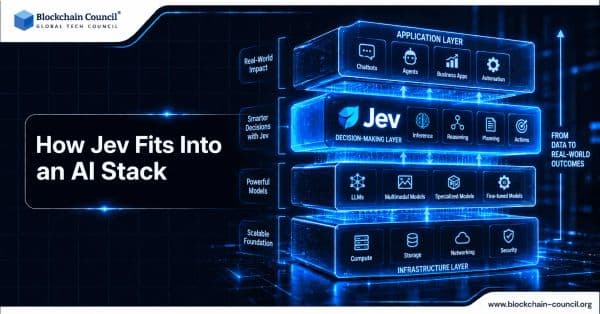
AI & ML
How Jev Fits Into an AI Stack
Learn how Jev fits into an AI stack as a fast decision layer that connects application state, structured questions, probabilistic outputs, and software automation workflows.

AI & ML
Built to Catch AI Cheating: Rethinking Pre-Employment Assessments with HireValid
Explore how HireValid is rethinking pre-employment assessments with AI-resistant test design, integrity signals, candidate evidence, and human review to address AI-assisted cheating.
AI & ML
AI-Era Hiring Needs AI-Proof Tests: How HireValid Is Redefining Talent Assessment
Explore how HireValid is rethinking talent assessment for the AI era with job-relevant tests, anti-cheating design, integrity signals, and human-reviewed evidence of candidate ability.
Trending Articles
The Role of Blockchain in Ethical AI Development
How blockchain technology is being used to promote transparency and accountability in artificial intelligence systems.
AWS Career Roadmap
A step-by-step guide to building a successful career in Amazon Web Services cloud computing.

Top 5 DeFi Platforms
Explore the leading decentralized finance platforms and what makes each one unique in the evolving DeFi landscape.