

AI in Healthcare and Education: The Next Frontier
 Suyash Raizada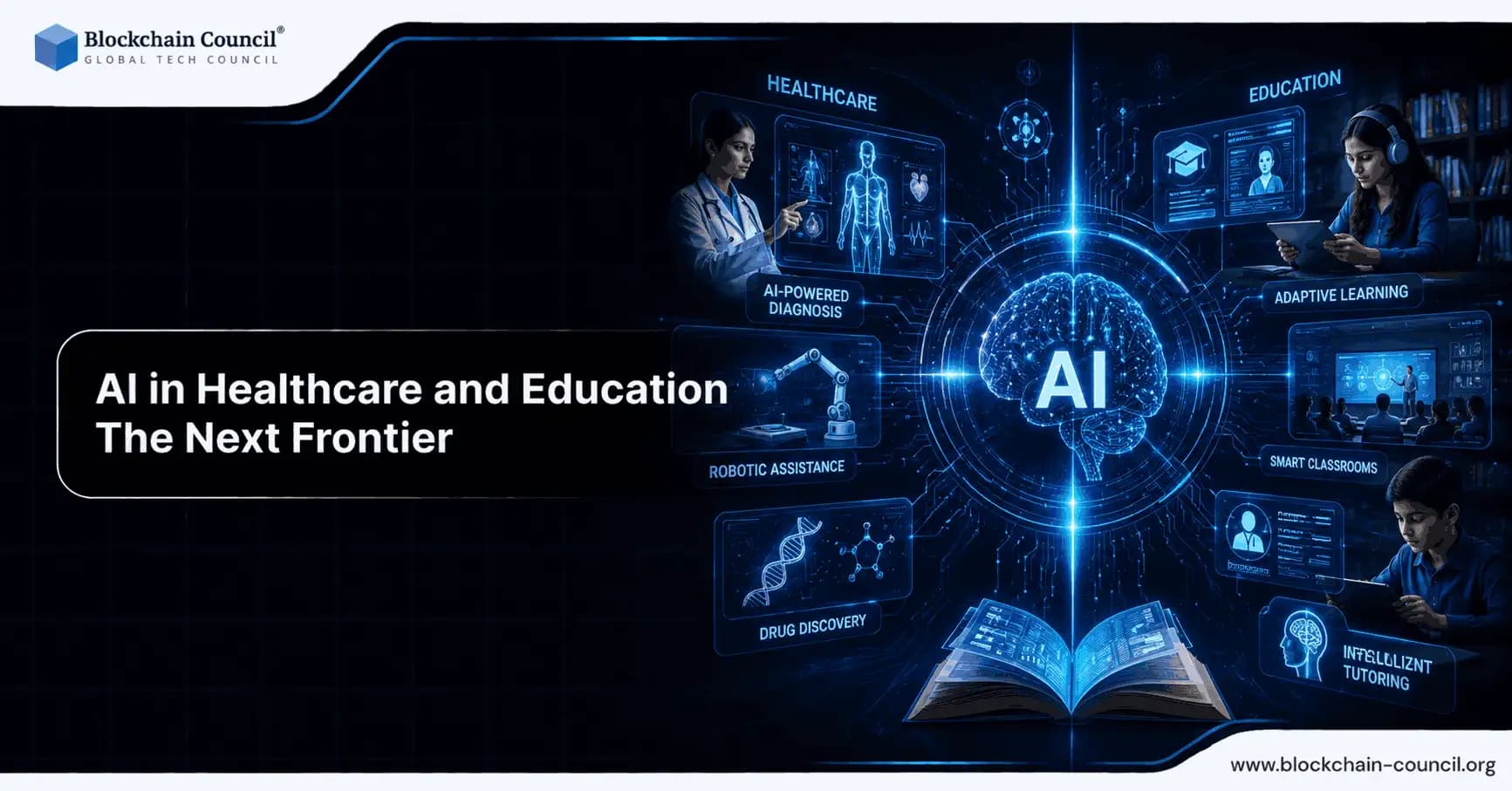
Artificial intelligence is rapidly transforming industries around the world, but two sectors are experiencing especially profound change: healthcare and education. Both industries impact billions of people daily and serve as foundations for economic growth, social development, and quality of life. As AI technologies continue evolving, healthcare systems and educational institutions are increasingly adopting intelligent tools to improve efficiency, personalization, accessibility, and decision-making.
What once seemed experimental is now becoming mainstream. Hospitals use AI to support diagnostics and patient care, while educational institutions use intelligent systems to personalize learning experiences and automate administrative tasks. Governments, enterprises, and institutions are investing heavily in AI-driven innovation because they recognize its potential to solve long-standing operational and scalability challenges.

In 2026, AI in healthcare and education is no longer viewed as a future trend. It is becoming a central component of digital transformation strategies worldwide. At the same time, these sectors also face important concerns related to ethics, privacy, workforce adaptation, and responsible implementation. Humanity finally created technologies capable of assisting doctors and teachers simultaneously, which is impressive considering people still struggle to reset their office printers without emotional collapse.
Why AI Is Expanding Rapidly in Healthcare and Education
Several factors are driving AI adoption across healthcare and education.
Growth of Digital Data
Healthcare systems and educational institutions generate enormous amounts of data every day.
Examples include:
Medical records
Diagnostic imaging
Student performance data
Attendance systems
Learning analytics
Research databases
AI systems can analyze these large datasets faster and more accurately than traditional manual processes.
Need for Scalability
Both sectors face rising demand and limited resources.
Healthcare providers struggle with staffing shortages and increasing patient volumes, while educational institutions manage growing student populations and evolving digital learning expectations.
AI helps organizations scale services more efficiently.
Advances in Cloud Computing and Automation
Improved cloud infrastructure and automation technologies have made AI systems more accessible and affordable for institutions of all sizes.
How AI Is Transforming Healthcare
Healthcare is one of the fastest-growing sectors for AI adoption.
Hospitals, clinics, pharmaceutical companies, and health technology providers increasingly use AI for:
Diagnostics
Medical imaging
Predictive analytics
Patient monitoring
Administrative automation
Drug discovery
Personalized treatment planning
AI in Diagnostics
AI-powered diagnostic systems can analyze medical data quickly and identify patterns that may help doctors detect diseases earlier.
For example, AI tools assist with identifying:
Cancer markers
Heart disease risks
Neurological conditions
Lung abnormalities
Diabetic complications
These systems improve accuracy while reducing diagnostic delays.
Predictive Healthcare
AI helps healthcare providers predict patient outcomes and identify potential health risks before conditions worsen.
Hospitals increasingly use predictive analytics for:
Emergency room management
Disease outbreak monitoring
Readmission prevention
Resource allocation
This improves efficiency and patient care quality.
AI-Powered Virtual Healthcare
Virtual healthcare platforms use AI chatbots and intelligent systems to support:
Appointment scheduling
Symptom assessment
Patient communication
Mental health support
Medication reminders
These tools improve accessibility, especially in underserved regions.
AI Is Changing Medical Research
Pharmaceutical companies and research institutions use AI to accelerate drug discovery and clinical research.
AI systems help researchers:
Analyze genetic data
Predict treatment responses
Identify drug interactions
Optimize clinical trials
This reduces research timelines and improves innovation efficiency.
The Rise of AI in Education
Educational institutions are also rapidly integrating AI technologies into learning systems and academic operations.
Schools, universities, and online learning platforms increasingly use AI for:
Personalized learning
Student assessment
Administrative automation
Academic analytics
Intelligent tutoring systems
Personalized Learning Experiences
One of AI’s biggest advantages in education is personalization.
AI systems can adapt learning content based on:
Student performance
Learning speed
Skill gaps
Behavioral patterns
This allows students to learn more effectively according to their individual needs.
Intelligent Tutoring Systems
AI-powered tutoring platforms provide real-time support and feedback to students.
These systems help improve:
Concept understanding
Homework assistance
Language learning
Skill development
Students increasingly access AI-driven educational support outside traditional classroom environments.
Administrative Automation
Educational institutions use AI to automate administrative tasks such as:
Attendance management
Scheduling
Admissions processing
Performance tracking
Student communication
This reduces operational workload for educators and administrators.
Why AI Skills Are Becoming Essential
As AI adoption expands across healthcare and education, workforce skill requirements are changing rapidly.
Professionals increasingly need practical AI knowledge to work effectively with intelligent systems and digital technologies.
Programs such as the AI Expert certification help professionals develop practical AI implementation skills relevant to modern industries.
AI literacy is becoming valuable not only for technical professionals but also for doctors, educators, administrators, researchers, and business leaders.
Deeptech Education Is Supporting AI Growth
The growth of AI in healthcare and education is closely connected to broader deep technology development.
Organizations focused on Deeptech certification programs are helping professionals build expertise in areas such as:
Artificial intelligence
Automation
Cybersecurity
Cloud computing
Blockchain
Data science
These technologies increasingly support digital transformation across healthcare and educational ecosystems.
AI and Autonomous Systems
Autonomous AI systems are becoming more common in both sectors.
Modern AI agents can assist with:
Administrative workflows
Data analysis
Student engagement
Healthcare scheduling
Operational automation
Programs like the Agentic ai expert course help professionals understand intelligent automation and autonomous AI systems relevant to modern enterprise and institutional environments.
AI in Software Development for Healthcare and Education
Software developers increasingly build AI-powered applications supporting healthcare and education systems.
AI-assisted coding improves:
Application development speed
Workflow automation
Debugging efficiency
System scalability
Data integration
The AI Powered coding expert Course helps developers integrate AI into software engineering environments effectively.
This is especially important as digital healthcare and online education platforms continue expanding globally.
Technology Certification Ecosystems Are Expanding
Technology certification ecosystems now play an important role in workforce development.
Organizations such as Global Tech Council help create globally recognized technology learning pathways aligned with enterprise and institutional needs.
These ecosystems provide:
Structured AI education
Industry-recognized certifications
Continuous learning systems
Workforce development frameworks
Scalable online learning opportunities
This improves professional credibility and workforce adaptability.
AI in Marketing for Healthcare and Education Organizations
Healthcare providers and educational institutions increasingly use AI-powered marketing systems for:
Student engagement
Patient outreach
Predictive analytics
Content personalization
Campaign optimization
Professional Marketing certification programs are helping business professionals understand modern digital marketing strategies powered by AI technologies.
Similarly, the AI powered digital marketing course helps marketers build expertise in AI-driven campaign management and digital engagement systems.
Benefits of AI in Healthcare and Education
Improved Accessibility
AI systems help extend healthcare and educational services to underserved regions.
Greater Efficiency
Automation reduces administrative burdens and operational inefficiencies.
Personalized Experiences
AI improves personalization for both patient care and student learning.
Better Decision-Making
Data-driven AI systems support more informed institutional decisions.
Scalability
Organizations can support larger populations more effectively through AI-powered systems.
Ethical Challenges and Concerns
Despite major advantages, AI adoption also raises significant ethical and operational concerns.
Data Privacy
Healthcare and education systems manage highly sensitive personal information.
Bias and Fairness
AI systems may produce biased outcomes if trained on unbalanced datasets.
Overdependence on Automation
Excessive reliance on AI could reduce human oversight and critical thinking.
Workforce Disruption
Some administrative roles may evolve or disappear due to automation.
Transparency
Institutions must explain how AI systems make decisions affecting individuals.
Humanity continues building intelligent systems powerful enough to reshape hospitals and classrooms while simultaneously hoping nobody accidentally trains those systems on flawed data or questionable assumptions. Comforting situation overall.
Why Governments Are Supporting AI Integration
Governments increasingly support AI adoption in healthcare and education because these sectors directly affect economic growth and public welfare.
National AI initiatives often focus on:
Digital learning infrastructure
Smart healthcare systems
Research funding
Workforce modernization
AI literacy programs
Public-private partnerships are accelerating innovation across both industries.
Future Trends in AI for Healthcare and Education
Several trends will shape the future of AI adoption over the next decade.
AI-Powered Personalized Healthcare
Medical treatments will increasingly adapt to individual patient data and genetic profiles.
Adaptive Learning Platforms
Educational systems will continue personalizing learning experiences using behavioral analytics and AI-driven recommendations.
AI-Enhanced Remote Services
Telemedicine and online learning platforms will become more intelligent and interactive.
Continuous Workforce Upskilling
Professionals will increasingly require ongoing AI education and certification.
Responsible AI Governance
Institutions will prioritize transparency, ethics, and regulatory compliance in AI deployment.
Why Human Expertise Still Matters
Despite rapid AI advancements, human expertise remains essential.
Doctors, teachers, researchers, and administrators provide:
Emotional intelligence
Ethical judgment
Critical thinking
Human communication
Complex decision-making
AI works best as a support system rather than a complete replacement for human professionals.
How Institutions Can Prepare for the AI Future
Organizations seeking successful AI integration should focus on several priorities.
Invest in Workforce Training
Employees need practical AI knowledge and digital literacy.
Prioritize Ethical AI Practices
Institutions should establish governance frameworks and transparency standards.
Build Scalable Infrastructure
Cloud-based and secure digital systems support long-term AI adoption.
Encourage Cross-Disciplinary Collaboration
Healthcare, education, and technology professionals should work together closely.
Focus on Human-Centered AI
AI systems should improve human experiences rather than replace meaningful human interaction.
Conclusion
AI is rapidly transforming healthcare and education into more intelligent, scalable, and data-driven systems. From predictive healthcare and personalized medicine to adaptive learning and intelligent tutoring platforms, artificial intelligence is creating new possibilities for improving quality, accessibility, and operational efficiency across both sectors.
At the same time, AI adoption introduces important ethical, regulatory, and workforce challenges that institutions must address carefully. Responsible implementation, workforce training, governance frameworks, and transparency will remain essential for long-term success.
As healthcare systems and educational institutions continue evolving, AI will play an increasingly central role in shaping how people learn, receive care, communicate, and interact with critical services. The next frontier of AI is not simply about creating smarter machines. It is about building systems capable of improving human potential at scale while preserving trust, accountability, and meaningful human involvement.
FAQs
1. How is AI transforming healthcare?
AI is improving diagnostics, predictive analytics, patient monitoring, medical imaging, and administrative automation within healthcare systems. These technologies help hospitals and healthcare providers improve efficiency, reduce errors, and deliver faster patient care across a growing number of medical applications.
2. Why is AI important in education?
AI helps educational institutions personalize learning experiences, automate administrative tasks, and provide intelligent tutoring support for students. It also improves accessibility and allows educators to analyze student performance more effectively using data-driven insights.
3. What are AI-powered diagnostics?
AI-powered diagnostics use machine learning systems to analyze medical data, identify patterns, and support disease detection processes. These tools help doctors improve accuracy, accelerate diagnosis, and detect certain conditions earlier than traditional manual approaches.
4. How does AI support personalized learning?
AI systems analyze student behavior, learning speed, strengths, and weaknesses to customize educational content and recommendations. This allows students to learn more efficiently while helping educators address individual learning gaps more effectively.
5. What role does AI play in telemedicine?
AI improves telemedicine by supporting virtual consultations, symptom analysis, patient communication, appointment scheduling, and remote monitoring systems. These technologies help healthcare providers extend services to patients in remote or underserved locations.
6. Why are AI certifications becoming important?
AI certifications help professionals validate practical skills and demonstrate competency in implementing AI systems responsibly. Employers increasingly prefer certified professionals because certifications provide measurable proof of workforce readiness and technical expertise.
7. What are the biggest ethical concerns related to AI in healthcare?
Major concerns include patient privacy, data security, algorithmic bias, transparency, and accountability in AI-driven medical decisions. Healthcare institutions must ensure AI systems operate fairly and maintain strong ethical oversight standards.
8. How does AI improve administrative efficiency in education?
AI automates repetitive administrative tasks such as scheduling, attendance tracking, admissions processing, and communication management. This allows educators and administrators to focus more on teaching quality and student engagement.
9. Can AI replace teachers and doctors completely?
AI is designed to support professionals rather than fully replace them in most situations. Human expertise, emotional intelligence, ethical judgment, and complex decision-making remain essential in both healthcare and education environments.
10. What are intelligent tutoring systems?
Intelligent tutoring systems are AI-powered educational platforms that provide personalized guidance, assessments, and feedback to students. These systems help learners improve understanding and progress at their own pace through adaptive support.
11. How is AI changing medical research?
AI accelerates medical research by analyzing large datasets, predicting treatment outcomes, optimizing clinical trials, and supporting drug discovery processes. This reduces research timelines and improves healthcare innovation efficiency significantly.
12. Why is data privacy important in AI systems?
Healthcare and educational AI systems often manage highly sensitive personal information and behavioral data. Strong privacy protections are necessary to maintain trust, prevent misuse, and comply with legal and ethical standards.
13. How does AI improve accessibility in education?
AI-powered learning platforms help students access educational content remotely and receive personalized support regardless of location. This improves opportunities for learners in rural, underserved, or differently abled communities.
14. What skills are needed for AI-driven industries?
Professionals increasingly need technical AI knowledge, data literacy, digital communication skills, and understanding of ethical AI practices. Continuous learning and certification programs are becoming essential for workforce adaptability.
15. Why are governments supporting AI adoption in healthcare and education?
Governments view AI as a tool for improving public services, workforce modernization, operational efficiency, and national digital transformation strategies. Investments in AI infrastructure and education also strengthen long-term economic competitiveness.
16. What role does automation play in healthcare and education?
Automation reduces repetitive administrative tasks, improves operational efficiency, and supports faster service delivery. However, institutions still require human oversight to ensure ethical and responsible decision-making processes.
17. How are developers contributing to AI transformation?
Developers build AI-powered applications, healthcare systems, educational platforms, and intelligent automation tools that support digital transformation initiatives. AI-assisted coding systems also help developers improve productivity and software scalability.
18. What challenges do institutions face with AI adoption?
Institutions face challenges such as workforce skill gaps, ethical concerns, infrastructure limitations, data privacy risks, and regulatory compliance requirements. Successful AI adoption requires careful planning and strong governance systems.
19. What future trends will shape AI in healthcare and education?
Future trends include adaptive learning platforms, AI-powered remote healthcare systems, personalized medicine, intelligent automation, and continuous workforce upskilling programs. Institutions will also prioritize responsible AI governance and transparency.
20. Why is AI considered the next frontier for healthcare and education?
AI is considered the next frontier because it has the potential to improve accessibility, efficiency, personalization, and decision-making across two of the world’s most essential sectors. As these technologies continue evolving, AI will increasingly shape how societies deliver healthcare services and educational experiences at large scale.
Related Articles
View All
AI & ML
NVIDIA Cosmos 3 Explained: The Next Generation of Physical AI
Explore NVIDIA Cosmos 3, an open foundation model for Physical AI that combines vision reasoning, world simulation, multimodal generation, and action prediction for robotics and autonomous systems.

AI & ML
Built to Catch AI Cheating: Rethinking Pre-Employment Assessments with HireValid
Explore how HireValid is rethinking pre-employment assessments with AI-resistant test design, integrity signals, candidate evidence, and human review to address AI-assisted cheating.

AI & ML
AI-Era Hiring Needs AI-Proof Tests: How HireValid Is Redefining Talent Assessment
Explore how HireValid is rethinking talent assessment for the AI era with job-relevant tests, anti-cheating design, integrity signals, and human-reviewed evidence of candidate ability.
Trending Articles
AWS Career Roadmap
A step-by-step guide to building a successful career in Amazon Web Services cloud computing.

Top 5 DeFi Platforms
Explore the leading decentralized finance platforms and what makes each one unique in the evolving DeFi landscape.
How Blockchain Secures AI Data
Understand how blockchain technology is being applied to protect the integrity and security of AI training data.