
Tips to Save Bitcoin Transaction Fees

Bitcoin transactions are secure and decentralized, but they come with a cost—transaction fees. These fees fluctuate based on network congestion, transaction size, and timing.
For both beginners and experienced users, understanding how to reduce Bitcoin transaction fees is essential for efficient crypto usage.

In this guide, we explore practical strategies to help you minimize fees while maintaining fast and secure transactions.
Reduce Bitcoin transaction fees by understanding mempool dynamics, timing transactions strategically, and optimizing wallet configurations through insights gained as a Cryptocurrency Expert, strengthening automation and scripting with a Python certification, and expanding fintech adoption strategies via a Digital marketing course.
Why Bitcoin Transaction Fees Vary
Bitcoin fees are not fixed. They depend on:
Network demand
Transaction size (in bytes, not value)
Priority level set by the user
When the network is congested, users compete by offering higher fees to get faster confirmations.
Key Insight
Bitcoin fees are driven by supply and demand within the network, not by transaction amount.
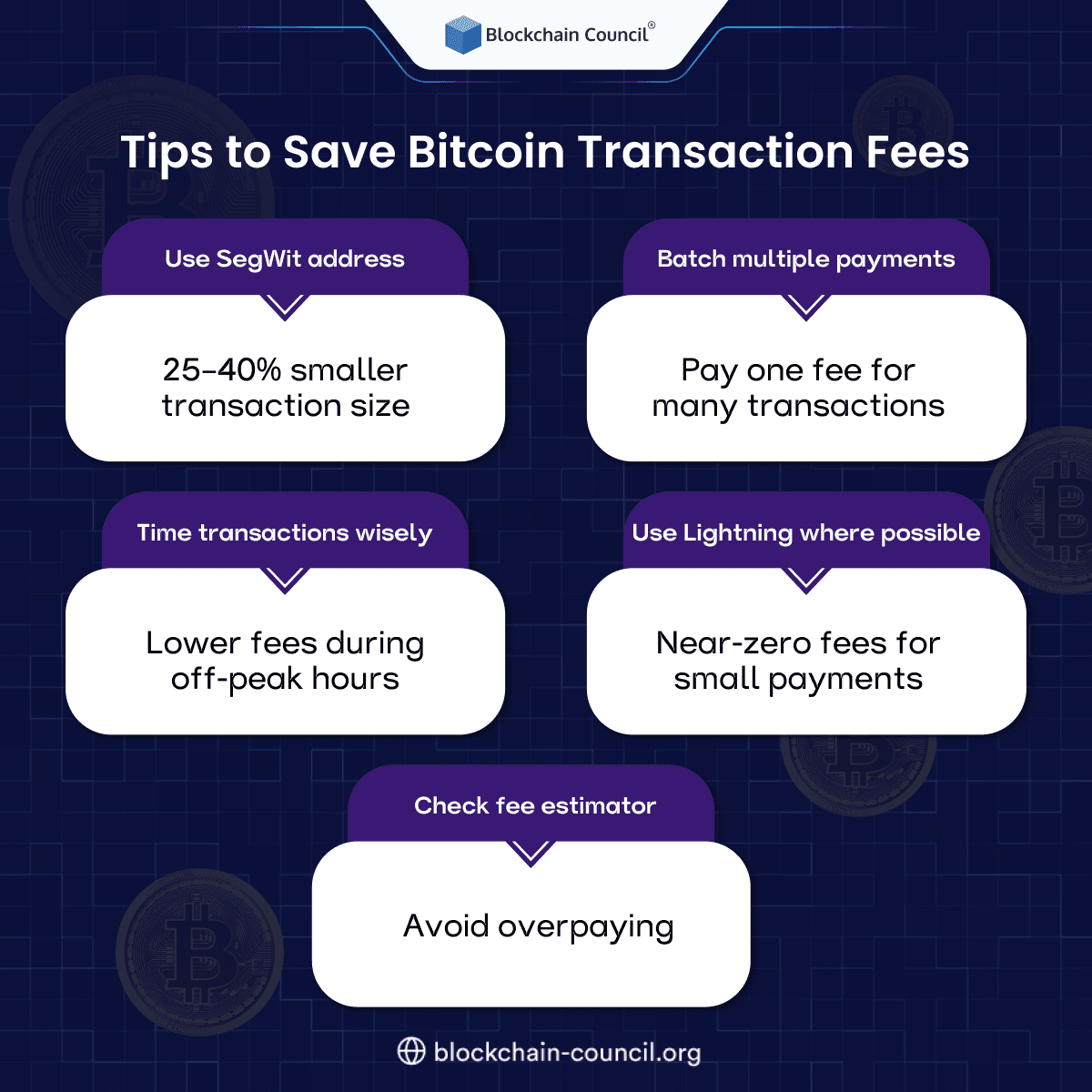
1. Use SegWit Addresses
Segregated Witness (SegWit) is a protocol upgrade that reduces transaction size.
Benefits include:
25–40% smaller transaction size
Lower fees due to reduced data usage
Faster processing
By switching to SegWit-compatible wallets, you can significantly reduce transaction costs. Understanding such protocol-level optimizations is often covered in depth when learning blockchain systems through practical AI and development courses.
Key Insight
Smaller transaction size directly translates to lower fees.
2. Batch Multiple Payments
Instead of sending multiple individual transactions, you can combine them into one.
This allows you to:
Send multiple payments in a single transaction
Pay one fee instead of multiple fees
Batching is particularly useful for businesses and users who perform frequent transfers. It demonstrates how system-level efficiency can reduce operational costs—an important concept in both blockchain and AI-driven automation systems.
Key Insight
Batching is one of the most effective strategies for frequent Bitcoin users.
3. Time Your Transactions Wisely
Bitcoin fees vary throughout the day depending on network activity.
Best practices include:
Avoid peak hours
Monitor network congestion
Send transactions during off-peak times
This simple adjustment can significantly lower fees without requiring any technical changes. Learning how to interpret such network patterns is a valuable skill, especially for those exploring data-driven systems through an AI powered marketing course or analytics-focused training.
Key Insight
Timing your transaction can significantly reduce costs without changing anything else.
4. Use the Lightning Network
The Lightning Network is a second-layer solution designed for faster and cheaper transactions.
Advantages include:
Near-zero transaction fees
Instant payments
Ideal for small transactions
It is particularly effective for micropayments and everyday use cases. The Lightning Network showcases how scalability challenges in blockchain are solved using layered architectures—an important concept for anyone studying modern AI and distributed systems.
Key Insight
Lightning Network is transforming Bitcoin into a low-cost payment system.
5. Check Fee Estimators
Before sending Bitcoin, using a fee estimator can help you determine the optimal fee.
Benefits include:
Avoid overpaying
Choose between speed and cost
Get real-time fee insights
These tools allow users to make informed decisions based on current network conditions. Developing the ability to interpret such real-time data is a key part of working with intelligent systems, whether in blockchain or AI-driven environments.
Key Insight
Fee estimators help you make data-driven decisions.
Common Mistakes to Avoid
Overpaying for urgency when it’s not required
Ignoring transaction size
Using outdated or non-optimized wallets
Sending transactions during peak congestion
Avoiding these mistakes can significantly improve cost efficiency.
Future of Bitcoin Transaction Optimization
As blockchain technology evolves, we can expect:
More Layer-2 solutions
Improved fee prediction models
Better wallet optimization
Increased adoption of low-cost networks
These advancements are closely tied to innovations in AI, data analysis, and decentralized infrastructure, making it increasingly important to understand how these technologies intersect.
Key Insight
The future of Bitcoin is moving toward faster, cheaper, and more scalable transactions.
Optimize blockchain transactions with fee estimation tools, SegWit adoption, and batching techniques by mastering decentralized systems as a Certified Blockchain Expert, enhancing analytical decision-making through a machine learning course, and scaling crypto product reach using an AI powered marketing course.
Final Thoughts
Saving Bitcoin transaction fees is not complicated—it requires awareness and smart usage strategies.
Use SegWit for smaller transactions
Batch payments to reduce costs
Time transactions strategically
Leverage Lightning Network
Always check fee estimators
These strategies not only help you reduce costs but also provide deeper insight into how blockchain systems function efficiently. Gaining such practical understanding is essential for anyone looking to work in crypto, fintech, or AI-driven ecosystems.
FAQs: Bitcoin Transaction Fees
1. What are Bitcoin transaction fees?
They are fees paid to miners to process and confirm transactions on the blockchain.
2. Why do Bitcoin fees change?
Fees depend on network congestion and transaction size.
3. What is SegWit in Bitcoin?
SegWit is a protocol upgrade that reduces transaction size and lowers fees.
4. How does batching transactions save fees?
It combines multiple payments into one transaction, reducing total fees.
5. What is the Lightning Network?
A Layer-2 solution that enables faster and cheaper Bitcoin transactions.
6. When are Bitcoin fees lowest?
During off-peak hours when network demand is low.
7. What is a fee estimator?
A tool that suggests optimal transaction fees based on network conditions.
8. Can I send Bitcoin with zero fees?
Not on the main network, but Lightning Network offers near-zero fees.
9. Does transaction size affect fees?
Yes, fees are based on data size, not transaction value.
10. Are Bitcoin fees expensive?
They vary depending on network activity.
11. How can I reduce Bitcoin fees?
Use SegWit, batching, proper timing, and fee estimators.
12. Is Lightning Network safe?
Yes, it is widely used and secure for small transactions.
13. What wallets support low fees?
SegWit-enabled and Lightning-compatible wallets.
14. Can businesses reduce fees?
Yes, through batching and optimized transaction strategies.
15. What is mempool congestion?
It refers to pending transactions waiting to be confirmed.
16. How long do Bitcoin transactions take?
Typically around 10 minutes, depending on fees.
17. Can I cancel a Bitcoin transaction?
Usually no, once confirmed it cannot be reversed.
18. What happens if I pay low fees?
Your transaction may take longer to confirm.
19. Is Bitcoin good for small payments?
Yes, especially with the Lightning Network.
20. How can I learn blockchain systems?
By exploring structured learning paths like AI, Python, and blockchain-focused courses.
Related Articles
View All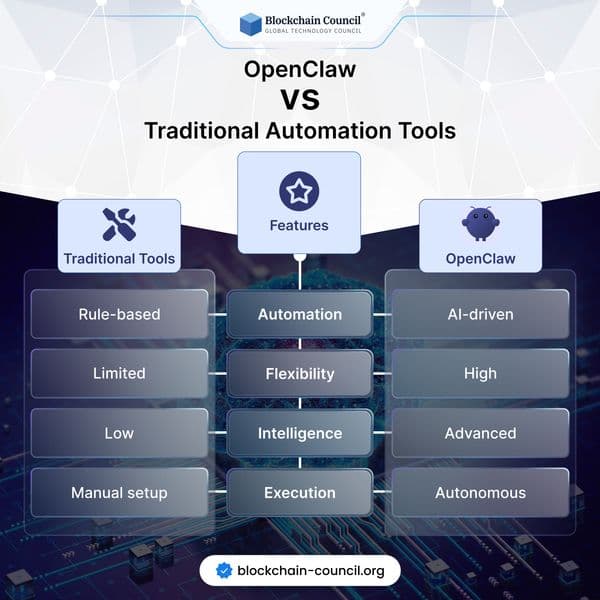
Infographics
OpenClaw vs Traditional Automation Tools
Discover how OpenClaw is redefining automation with AI-driven intelligence and autonomy, compared to traditional rule-based tools. Learn which approach is better for modern workflows and business scalability.
Infographics
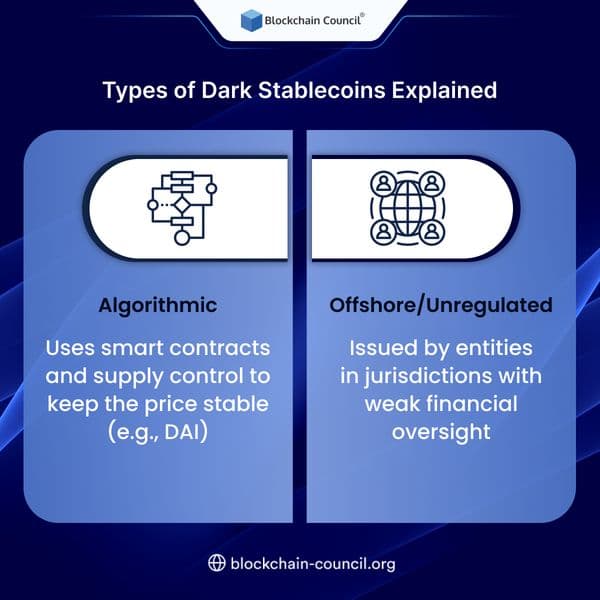
Types of Dark Stablecoins Explained
Dark stablecoins are designed to enhance privacy and decentralization in crypto transactions. This guide explains their types, working mechanisms, and how they compare to traditional stablecoins.

Infographics
Cursor AI vs GitHub Copilot
Cursor AI and GitHub Copilot are leading AI coding tools transforming how developers write and optimize code. This comparison explores their key differences, strengths, and ideal use cases.
Trending Articles

The Role of Blockchain in Ethical AI Development
How blockchain technology is being used to promote transparency and accountability in artificial intelligence systems.

AWS Career Roadmap
A step-by-step guide to building a successful career in Amazon Web Services cloud computing.
Top 5 DeFi Platforms
Explore the leading decentralized finance platforms and what makes each one unique in the evolving DeFi landscape.