

Cursor AI vs GitHub Copilot
 Michael Willson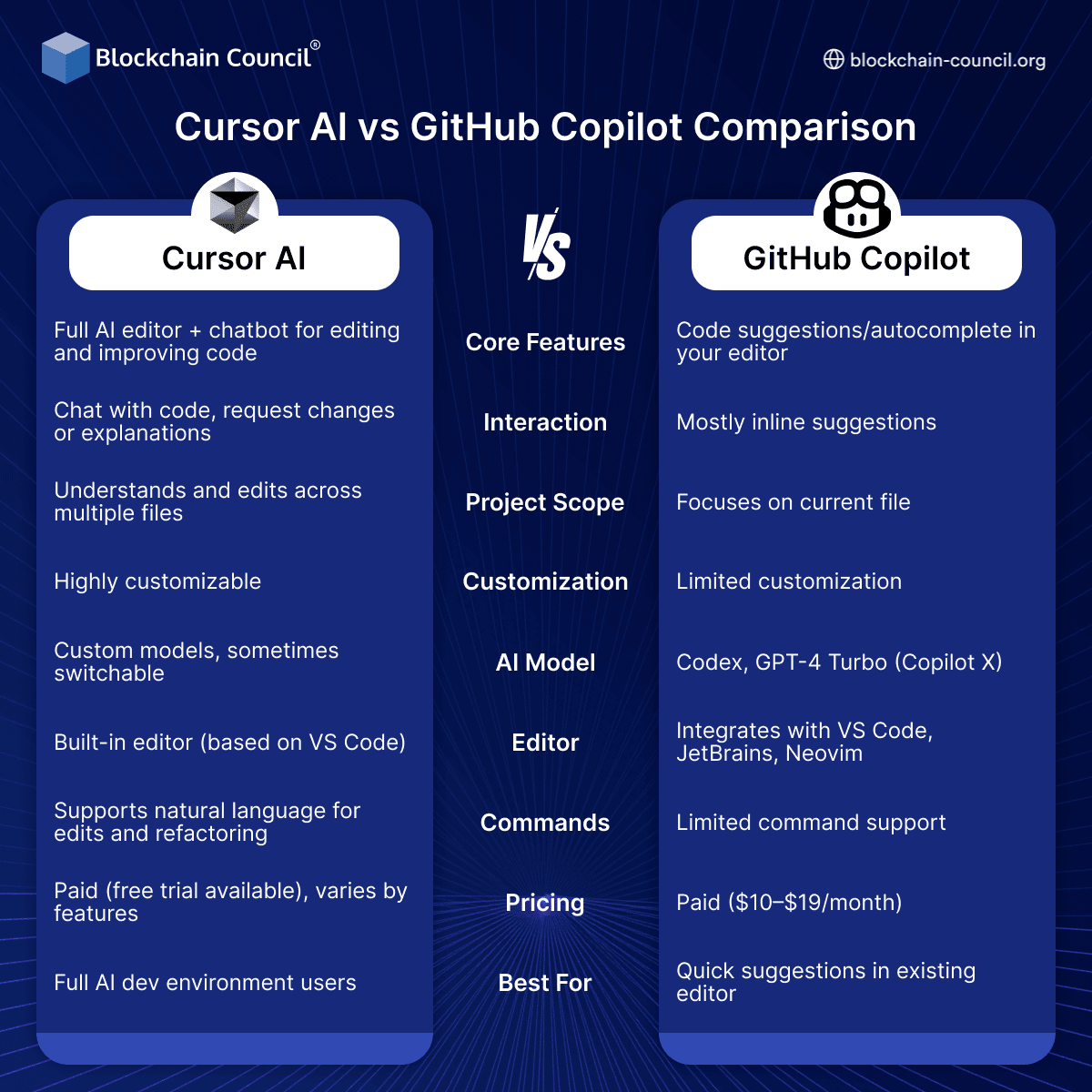
AI coding tools are transforming development workflows. Cursor AI and GitHub Copilot represent two different approaches.
Choosing the right AI coding tool can boost productivity-build your expertise with an Agentic AI Course, strengthen development skills using a Python Course, and explore real-world applications through an AI powered marketing course.
Cursor AI
Full AI editor

Multi-file understanding
Highly customizable
GitHub Copilot
Inline code suggestions
Works within existing editors
Limited customization
Key Differences
Interaction
Cursor: Chat + editing
Copilot: Inline suggestions
Scope
Cursor: Entire project
Copilot: Current file
Customization
Cursor: High
Copilot: Limited
Key Insight
Cursor is a complete AI workspace, while Copilot is an assistant inside your editor.
Final Thoughts
Both tools serve different needs-choose based on workflow.
To stay ahead:
Explore AI tools through an Agentic AI Course
Build development skills with a Python Course
Apply AI in real projects via an AI powered marketing course
FAQs
What is Cursor AI?
An AI-powered coding assistant integrated into an IDE.What is GitHub Copilot?
An AI coding assistant developed by GitHub and OpenAI.Key difference?
Cursor focuses on full-codebase understanding; Copilot focuses on autocomplete.Which is better for beginners?
Copilot is simpler to start with.Which is better for advanced devs?
Cursor offers deeper control.Does Cursor support multi-file context?
Yes, it excels in understanding entire projects.Does Copilot support multiple languages?
Yes, it supports many programming languages.Pricing difference?
Both offer subscription models.Accuracy comparison?
Cursor can be more context-aware.Integration?
Copilot integrates with VS Code and GitHub.Security concerns?
Both may generate insecure code if unchecked.Offline capability?
Limited; both rely on cloud models.Customization?
Cursor allows deeper customization.Speed?
Copilot is generally faster for suggestions.Enterprise usage?
Both offer enterprise plans.Code quality?
Depends on prompt and context.Learning curve?
Cursor is slightly steeper.Best use case for Cursor?
Complex project development.Best use case for Copilot?
Quick coding assistance.Which should you choose?
Depends on workflow and needs.
Related Articles
View All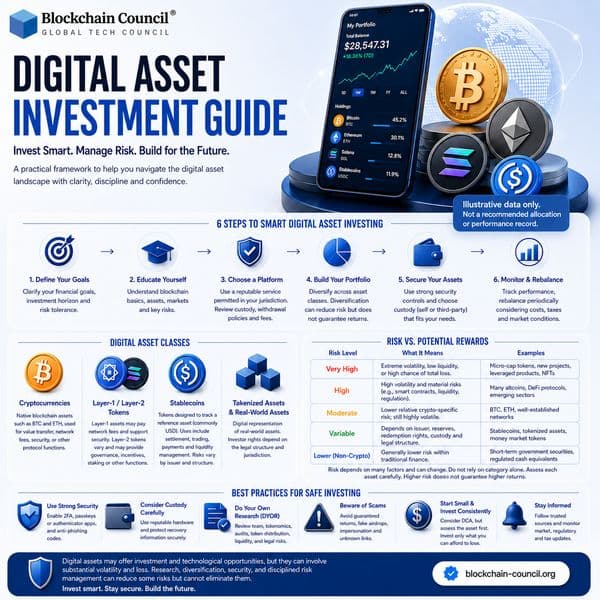
Infographics
Digital Asset Investment Guide: Build a Smarter Strategy for the Future of Finance
Digital asset investing has become a key part of the modern financial landscape, offering opportunities in cryptocurrencies, tokenized assets, NFTs, and blockchain-based investments. Whether you're a beginner or an experienced investor, understanding market fundamentals, diversification, security, and risk management is essential for building a successful digital asset portfolio. This guide explores the core concepts, investment strategies, and best practices for navigating the digital asset market.
Infographics
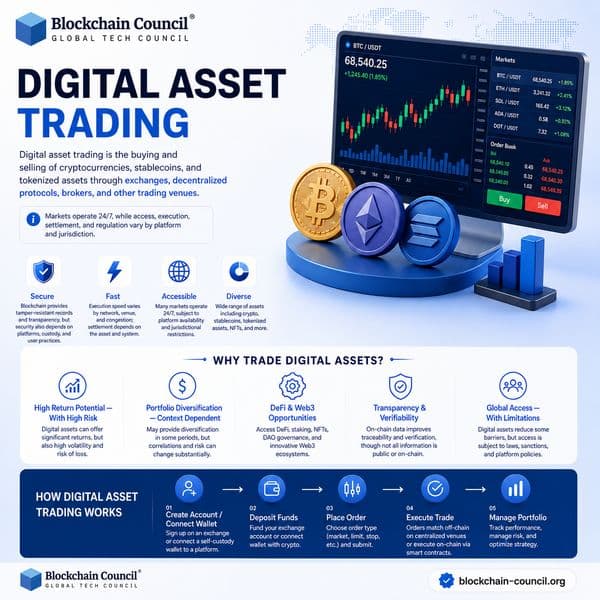
Digital Asset Trading: A Complete Guide to Trading in the Digital Economy
Digital asset trading involves buying, selling, and exchanging cryptocurrencies, tokenized assets, NFTs, and other blockchain-based assets through centralized and decentralized trading platforms. As the digital economy expands, traders rely on market analysis, risk management, and advanced trading tools to navigate volatile markets. This guide explains the fundamentals of digital asset trading, key strategies, security considerations, and emerging trends shaping the future of digital finance.
Infographics
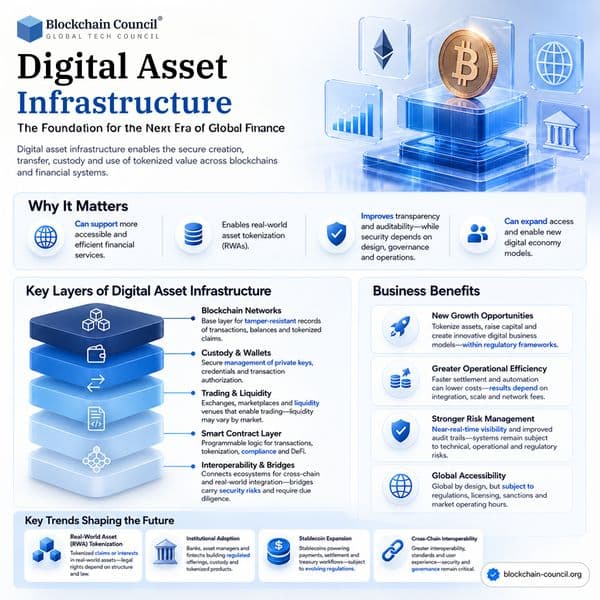
Digital Asset Infrastructure: The Foundation of the Next Era of Global Finance
Digital asset infrastructure is the technology backbone that enables the creation, storage, transfer, trading, and management of cryptocurrencies, tokenized assets, and other blockchain-based digital assets. It includes blockchain networks, digital wallets, custody solutions, exchanges, smart contracts, and security protocols. This guide explores the key components of digital asset infrastructure and their role in supporting the rapidly evolving Web3 and digital finance ecosystem.
Trending Articles
The Role of Blockchain in Ethical AI Development
How blockchain technology is being used to promote transparency and accountability in artificial intelligence systems.
AWS Career Roadmap
A step-by-step guide to building a successful career in Amazon Web Services cloud computing.

Top 5 DeFi Platforms
Explore the leading decentralized finance platforms and what makes each one unique in the evolving DeFi landscape.