

Dark Stablecoins vs Traditional Stablecoins
 Michael Willson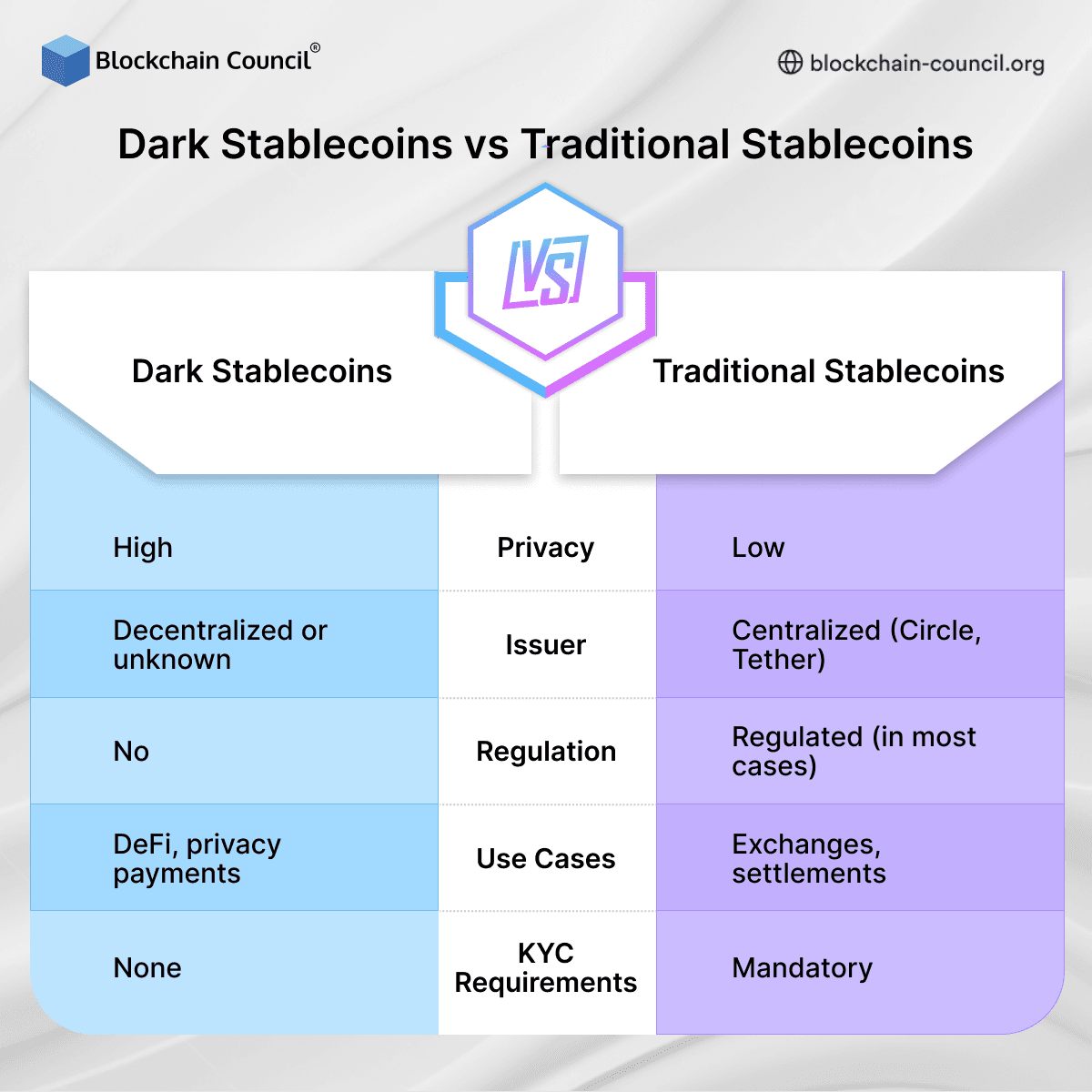
Stablecoins are evolving into two distinct categories: dark stablecoins and traditional stablecoins, each with unique characteristics and use cases.
Understanding the risks and mechanics of stablecoins is critical in today’s crypto landscape-build your expertise with a Cryptocurrency Expert, analyze market behavior using a Python Course, and explore real-world adoption strategies through an AI powered marketing course.

What Are Dark Stablecoins?
High privacy
Decentralized or anonymous issuers
No regulation
No KYC requirements
Used mainly in DeFi and privacy-focused transactions.
What Are Traditional Stablecoins?
Low privacy
Issued by centralized entities like Circle or Tether
Regulated
Mandatory KYC
Used for exchanges, payments, and settlements.
Key Differences
Privacy
Dark: High anonymity
Traditional: Transparent
Regulation
Dark: Unregulated
Traditional: Regulated
Use Cases
Dark: DeFi, private transactions
Traditional: Institutional finance
Key Insight
The difference lies in privacy vs compliance.
Risks and Opportunities
Dark Stablecoins
Higher privacy
Higher regulatory risk
Traditional Stablecoins
Safer and regulated
Less privacy
To navigate emerging risks like dark stablecoins, combine financial insight with technical skills through a Cryptocurrency Expert, deepen analysis using a machine learning course, and understand user trust dynamics via a Digital marketing course.
Final Thoughts
Both types will coexist, serving different needs in the crypto ecosystem.
To stay ahead:
Explore blockchain systems through a Cryptocurrency Expert Course
Strengthen development skills with a Python Course
Understand market trends via an AI-powered marketing course
FAQs
What are traditional stablecoins?
Crypto pegged to fiat like USDT or USDC.What are dark stablecoins?
Privacy-focused stablecoins.Key difference?
Transparency vs privacy.Which is more regulated?
Traditional stablecoins.Which is safer?
Traditional ones due to compliance.Use cases?
Traditional → trading; Dark → private transactions.Are dark stablecoins anonymous?
Yes, to a large extent.Transparency level?
High in traditional, low in dark.Regulatory risk?
Higher for dark stablecoins.Adoption?
Traditional is widely adopted.Technology difference?
Dark uses encryption layers.Liquidity?
Higher in traditional stablecoins.Security?
Both depend on smart contracts.Compliance?
Traditional follows AML/KYC.Future?
Likely coexist with stricter rules.Are they interchangeable?
Not directly.Who prefers dark stablecoins?
Privacy-focused users.Institutional use?
Mostly traditional stablecoins.Risk level?
Higher in dark stablecoins.Investment perspective?
Traditional is more stable.
Related Articles
View All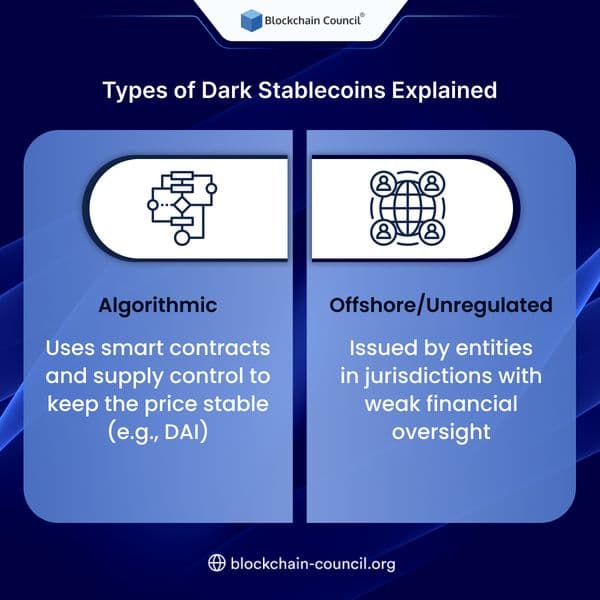
Infographics
Types of Dark Stablecoins Explained
Dark stablecoins are designed to enhance privacy and decentralization in crypto transactions. This guide explains their types, working mechanisms, and how they compare to traditional stablecoins.
Infographics
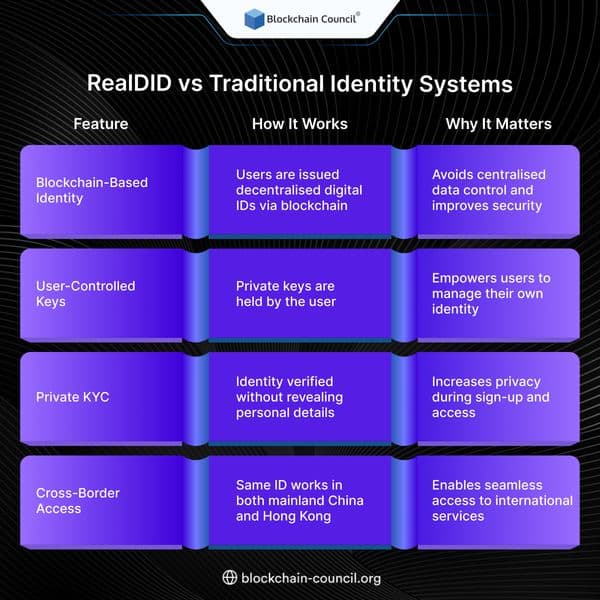
RealDID vs Traditional Identity Systems
Compare RealDID with traditional identity systems to understand key differences in security, privacy, and user control.
Infographics
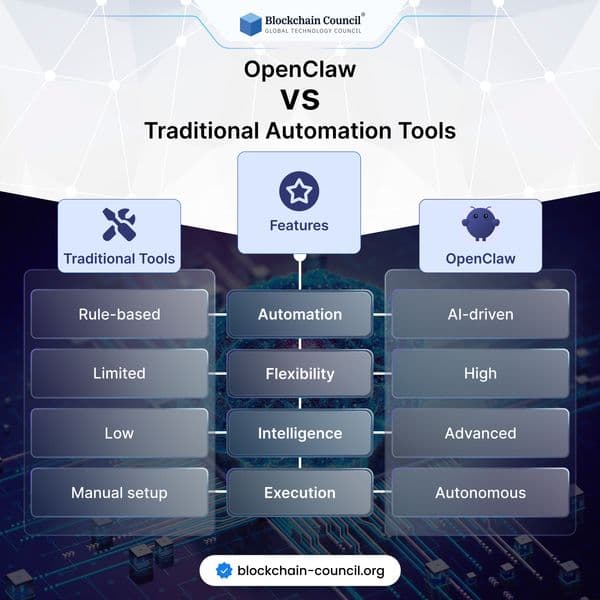
OpenClaw vs Traditional Automation Tools
Discover how OpenClaw is redefining automation with AI-driven intelligence and autonomy, compared to traditional rule-based tools. Learn which approach is better for modern workflows and business scalability.
Trending Articles
The Role of Blockchain in Ethical AI Development
How blockchain technology is being used to promote transparency and accountability in artificial intelligence systems.

Top 5 DeFi Platforms
Explore the leading decentralized finance platforms and what makes each one unique in the evolving DeFi landscape.
Claude AI Tools for Productivity
Discover Claude AI tools for productivity to streamline tasks, manage workflows, and improve efficiency.