
OpenClaw vs Traditional Automation Tools
 Michael Willson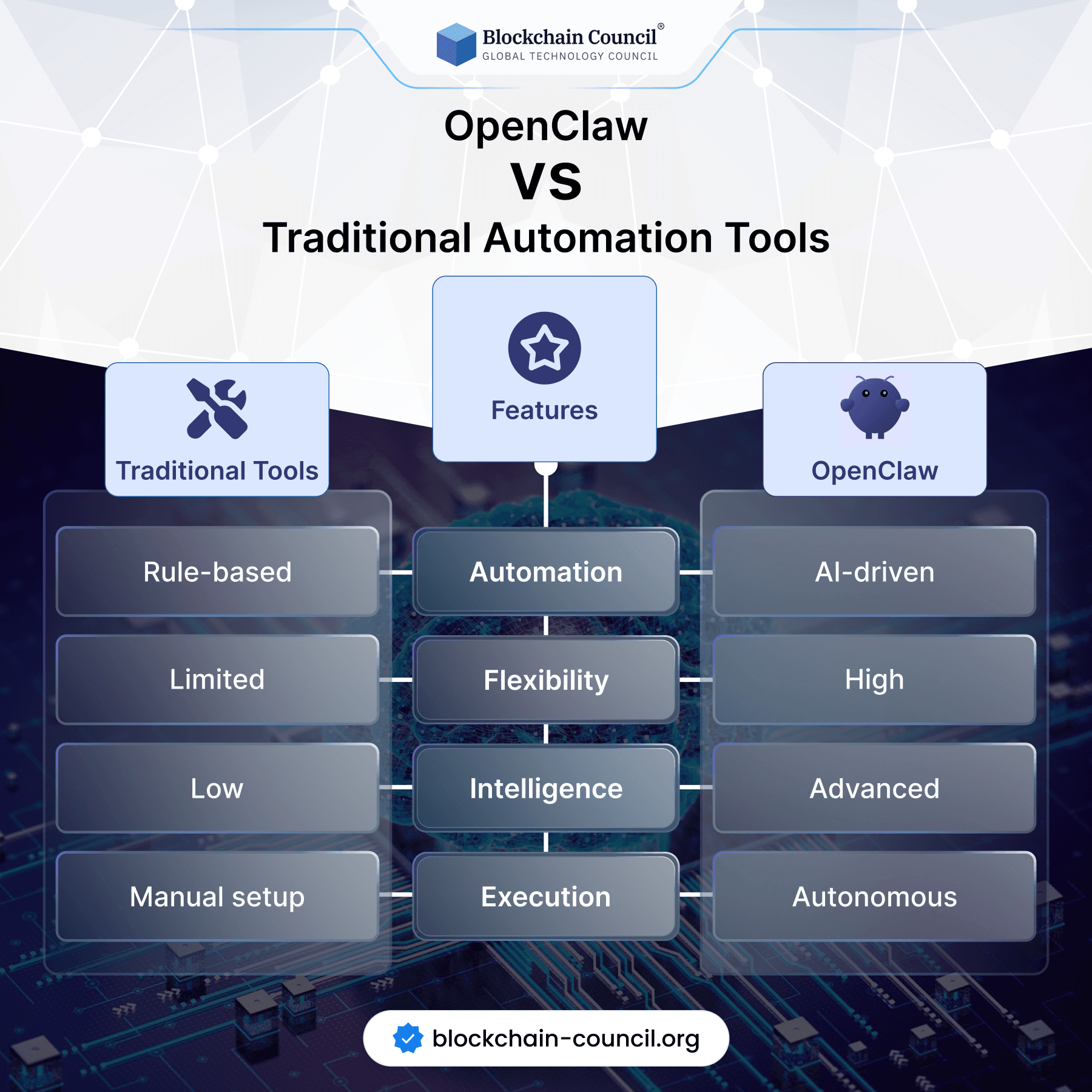
Automation has been a cornerstone of digital transformation for years. However, the evolution from rule-based systems to AI-driven agents is redefining how businesses operate. OpenClaw represents this next phase-bringing intelligence, flexibility, and autonomy to automation.
But how does it compare with traditional automation tools?

This article breaks down the core differences, capabilities, and future impact of OpenClaw vs traditional automation systems.
If you are learning through an Agentic AI Course, Python Course, or an AI powered marketing course, this comparison will help you understand how automation is evolving into intelligent systems.
What Are Traditional Automation Tools?
Traditional automation tools are designed to execute predefined rules and workflows.
Key Characteristics
Rule-based execution
Limited flexibility
Low adaptability
Manual setup and configuration
Example
Workflow automation tools
Script-based processes
Basic task schedulers
Key Insight
Traditional tools are efficient for repetitive tasks-but struggle with dynamic and complex scenarios.
What Is OpenClaw?
OpenClaw is an AI-driven automation platform designed to go beyond static workflows.
Core Capabilities
AI-powered decision-making
Adaptive workflows
Context-aware execution
Autonomous task handling
Key Insight
OpenClaw transforms automation from task execution → intelligent action systems.
Feature-by-Feature Comparison
1. Automation Approach
Traditional Tools: Rule-based
OpenClaw: AI-driven
Traditional systems follow instructions. OpenClaw interprets and decides.
2. Flexibility
Traditional Tools: Limited
OpenClaw: High
OpenClaw adapts to new inputs and changing environments without constant reprogramming.
3. Intelligence
Traditional Tools: Low
OpenClaw: Advanced
AI models enable OpenClaw to learn patterns and improve over time.
4. Execution
Traditional Tools: Manual setup
OpenClaw: Autonomous
OpenClaw can execute multi-step workflows independently.
Key Insight
The core difference lies in intelligence and adaptability.
Why OpenClaw Is a Game Changer
1. Reduced Human Intervention
Automates decision-making
Minimizes manual workflows
2. Improved Efficiency
Faster execution
Real-time adaptability
3. Scalable Automation
Handles complex workflows
Integrates across systems
Learning Perspective
Understanding OpenClaw helps you see how automation is evolving into AI-powered systems.
To build expertise:
Learn agent-based systems through an Agentic AI Course
Strengthen programming foundations with a Python Course
Explore business applications via an AI powered marketing course
These skills are essential for working with next-generation automation platforms.
Challenges to Consider
Traditional Tools
Limited scalability
Requires constant updates
Cannot handle dynamic inputs
OpenClaw
Requires AI understanding
Initial setup complexity
Dependency on data quality
Key Insight
While OpenClaw is powerful, success depends on proper implementation and training.
Future of Automation
The future is moving toward:
AI-driven workflows
Autonomous systems
Self-optimizing processes
Traditional automation will not disappear-but it will be augmented or replaced by intelligent agents.
Final Thoughts
OpenClaw represents the next evolution of automation:
Traditional tools = rule-based execution
OpenClaw = intelligent, adaptive systems
Organizations that adopt AI-driven automation early will gain a significant competitive advantage.
To stay ahead in this transformation:
Explore AI systems through an Agentic AI Course
Build technical expertise with a Python Course
Apply automation strategies via an AI powered marketing course
FAQs
1. What is OpenClaw?
OpenClaw is an AI-driven automation platform that enables intelligent, adaptive, and autonomous workflows.
2. What are traditional automation tools?
Traditional automation tools are rule-based systems that execute predefined tasks without dynamic decision-making.
3. What is the main difference between OpenClaw and traditional tools?
OpenClaw uses AI for decision-making, while traditional tools rely on fixed rules and manual workflows.
4. Is OpenClaw better than traditional automation tools?
OpenClaw is more advanced for complex and dynamic tasks, while traditional tools are better for simple repetitive processes.
5. Does OpenClaw require coding knowledge?
Not always. Many implementations are user-friendly, but technical knowledge can enhance customization.
6. Can OpenClaw replace traditional automation tools?
In many cases, yes-especially for intelligent workflows, but both can coexist in hybrid systems.
7. What industries can benefit from OpenClaw?
Industries like finance, healthcare, marketing, and IT can benefit from AI-driven automation.
8. Are traditional automation tools still relevant?
Yes, they are still useful for simple, repetitive, and predictable tasks.
9. What is AI-driven automation?
AI-driven automation uses machine learning and decision-making models to adapt and optimize workflows.
10. How does OpenClaw improve efficiency?
It reduces manual intervention and automates decision-making, leading to faster and smarter execution.
11. What is autonomous execution in OpenClaw?
It refers to the ability of AI agents to perform tasks independently without human input.
12. Is OpenClaw suitable for beginners?
Yes, but beginners may need guidance to understand AI-based workflows.
13. What are the limitations of traditional automation tools?
They lack flexibility, require manual updates, and cannot handle complex scenarios.
14. Does OpenClaw use machine learning?
Yes, it leverages AI and machine learning for intelligent decision-making.
15. Can OpenClaw integrate with existing systems?
Yes, it can integrate with APIs, tools, and enterprise systems.
16. Is OpenClaw secure?
Security depends on implementation, but enterprise setups include governance and controls.
17. What are the challenges of using OpenClaw?
Initial setup complexity, data dependency, and need for AI understanding.
18. What is the future of automation?
The future lies in AI-driven, autonomous, and self-optimizing systems.
19. Can businesses use both OpenClaw and traditional tools together?
Yes, many organizations adopt a hybrid approach combining both systems.
20. How can I learn AI automation tools like OpenClaw?
You can learn through structured programs like an Agentic AI Course, Python Course, or AI powered marketing course.
Related Articles
View All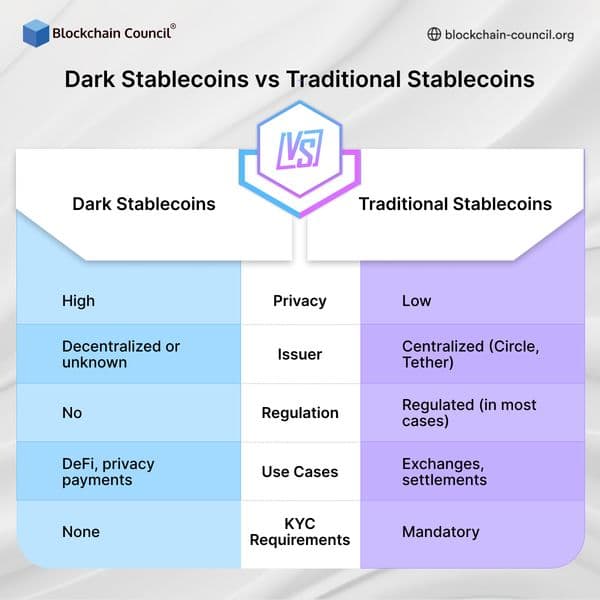
Infographics
Dark Stablecoins vs Traditional Stablecoins
Compare dark stablecoins vs traditional stablecoins, including differences in privacy, regulation, transparency, and use cases. Learn how each type impacts the evolving crypto and DeFi ecosystem.
Infographics
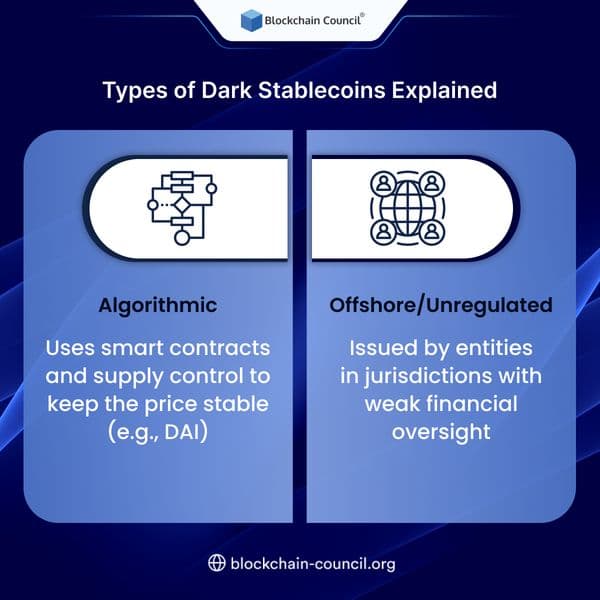
Types of Dark Stablecoins Explained
Dark stablecoins are designed to enhance privacy and decentralization in crypto transactions. This guide explains their types, working mechanisms, and how they compare to traditional stablecoins.
Infographics
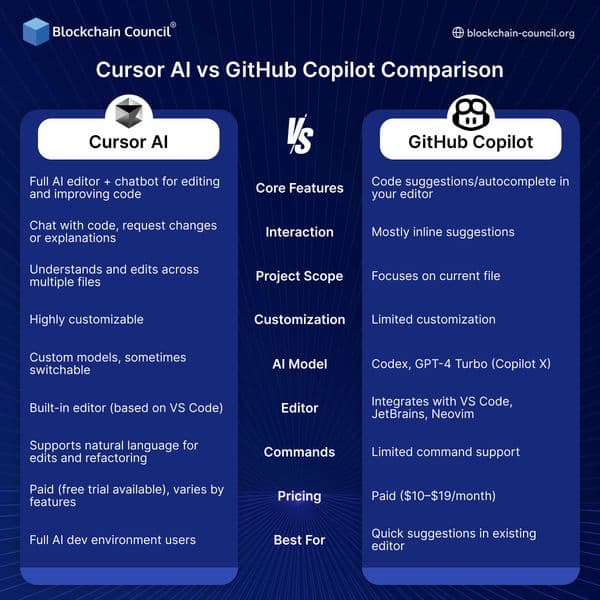
Cursor AI vs GitHub Copilot
Cursor AI and GitHub Copilot are leading AI coding tools transforming how developers write and optimize code. This comparison explores their key differences, strengths, and ideal use cases.
Trending Articles
The Role of Blockchain in Ethical AI Development
How blockchain technology is being used to promote transparency and accountability in artificial intelligence systems.

AWS Career Roadmap
A step-by-step guide to building a successful career in Amazon Web Services cloud computing.

Top 5 DeFi Platforms
Explore the leading decentralized finance platforms and what makes each one unique in the evolving DeFi landscape.