

Digital Asset Security: Protecting Your Assets in the Decentralized World

The rise of blockchain technology has transformed how people store, transfer, and manage value. Cryptocurrencies, NFTs, tokenized assets, and decentralized finance (DeFi) have created exciting opportunities, but they have also introduced new security challenges. Unlike traditional financial systems, blockchain transactions are generally irreversible, meaning that once digital assets are lost or stolen, recovering them can be extremely difficult.
As digital asset adoption continues to grow, understanding digital asset security has become essential for investors, blockchain professionals, businesses, and anyone participating in the Web3 ecosystem.

What Is Digital Asset Security?
Digital asset security refers to the practices, technologies, and strategies used to protect cryptocurrencies, NFTs, tokens, private keys, wallets, and other blockchain-based assets from theft, fraud, unauthorized access, and cyberattacks.
Since ownership of digital assets is determined by private keys rather than physical possession, protecting those credentials is one of the most important responsibilities for every digital asset holder.
Why Digital Asset Security Matters
Digital assets have become valuable targets for cybercriminals due to their growing market value and the irreversible nature of blockchain transactions. Threats continue to evolve as adoption increases across individuals, enterprises, and financial institutions.
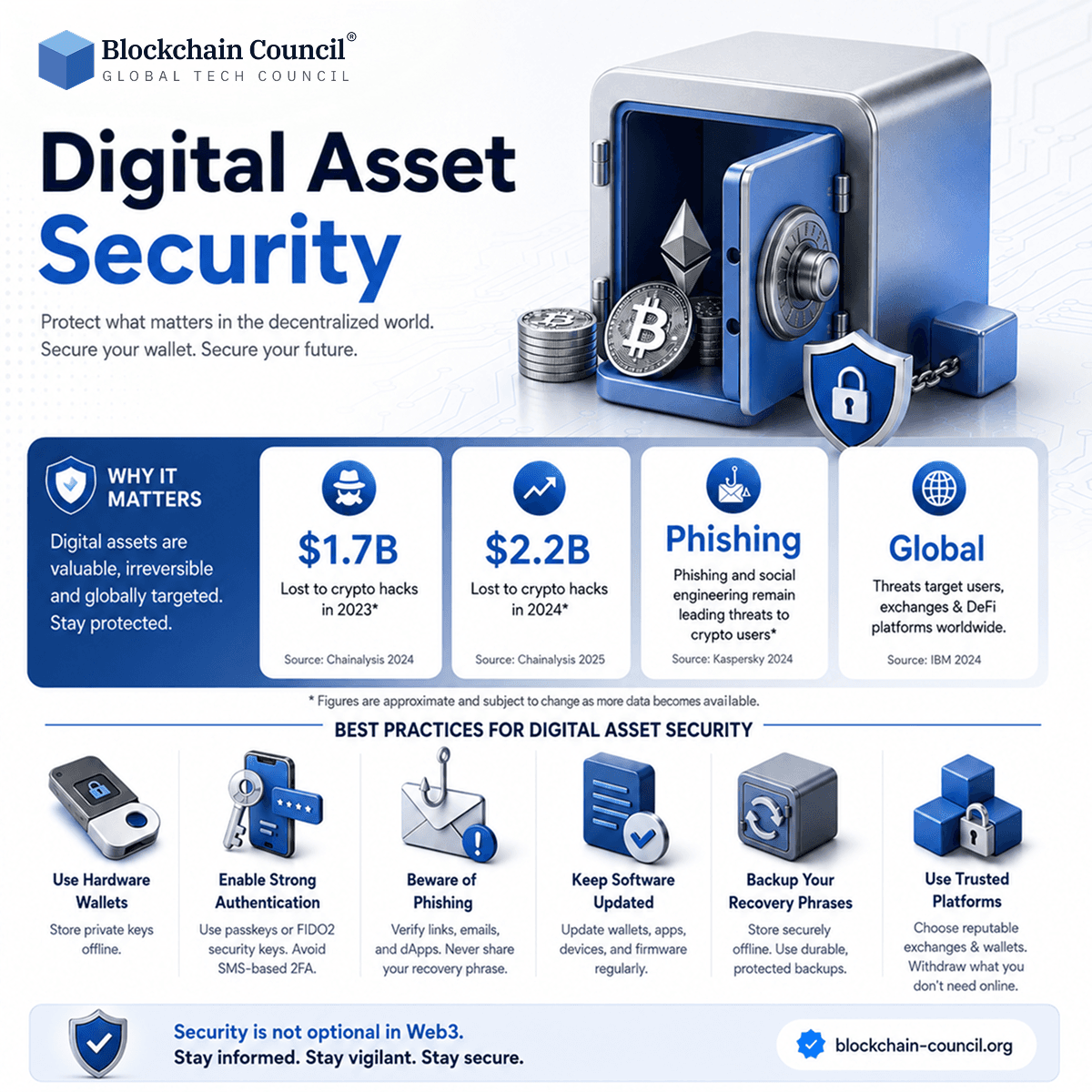
According to industry reports highlighted in the infographic:
Approximately $1.7 billion was lost to cryptocurrency hacks in 2023.
Estimated losses increased to $2.2 billion in 2024.
Phishing and social engineering attacks remain among the leading causes of cryptocurrency theft.
Security threats target users, exchanges, wallets, and decentralized finance (DeFi) platforms across the globe.
These trends demonstrate why security should always be a top priority when managing digital assets.
Common Threats to Digital Assets
Understanding potential risks is the first step toward protecting your investments.
Phishing Attacks
Cybercriminals create fake websites, emails, and applications that appear legitimate to trick users into revealing passwords, private keys, or recovery phrases.
Social Engineering
Rather than attacking technology, social engineering targets people by manipulating them into sharing sensitive information or approving fraudulent transactions.
Malware and Spyware
Malicious software can record keystrokes, steal wallet credentials, monitor devices, or replace wallet addresses during transactions.
Exchange Hacks
Although many exchanges implement strong security measures, centralized platforms can still become targets for sophisticated cyberattacks.
Private Key Exposure
Anyone who gains access to your private keys or recovery phrase gains complete control over your digital assets.
Best Practices for Digital Asset Security
Protecting digital assets requires combining secure technology with good security habits.
Use Hardware Wallets
Hardware wallets store private keys offline, making them significantly more resistant to online attacks and malware than software wallets.
Enable Strong Authentication
Use passkeys, authenticator apps, or FIDO2 security keys instead of relying solely on SMS-based authentication.
Stay Alert to Phishing
Always verify websites, emails, QR codes, and decentralized applications before entering login credentials or approving wallet transactions. Never share your recovery phrase.
Keep Software Updated
Regularly update wallets, browsers, operating systems, and applications to protect against newly discovered vulnerabilities.
Secure Recovery Phrases
Store recovery phrases offline in secure locations. Consider durable backup solutions that protect against fire, water damage, and physical loss.
Use Trusted Platforms
Choose reputable cryptocurrency exchanges, wallets, and decentralized applications with strong security reputations. Avoid unknown platforms and withdraw long-term holdings to self-custody whenever appropriate.
Building Long-Term Security Habits
Digital asset security is not a one-time task but an ongoing process. As blockchain technology evolves, new attack methods continue to emerge. Staying informed about security best practices, regularly reviewing account settings, and maintaining secure backups can significantly reduce the risk of asset loss.
Individuals and organizations should also establish clear security procedures, including regular audits, access controls, multi-signature wallets for high-value holdings, and employee awareness training where applicable.
Strengthen Your Digital Asset Security Expertise
Understanding digital asset security is a critical part of participating safely in the blockchain ecosystem. Beyond protecting wallets and private keys, professionals should also develop a broader understanding of blockchain architecture, digital assets, tokenization, decentralized finance (DeFi), NFTs, exchange security, and Web3 infrastructure.
The Certified Digital Assets Expert™ by Blockchain Council provides a structured learning journey that covers these essential concepts. The program begins with blockchain fundamentals and progresses through digital assets, wallet management, exchange operations, tokenization, DeFi, NFTs, security best practices, and real-world applications. This comprehensive approach helps learners understand not only how digital assets function but also how to protect them effectively.
Learning Journey
Blockchain Fundamentals – Learn how blockchain networks, consensus mechanisms, and smart contracts work.
Digital Assets & Wallet Security – Understand cryptocurrencies, digital wallets, private keys, and recovery phrases.
Digital Asset Exchanges – Explore centralized and decentralized exchanges, trading, custody, and security practices.
Certified Digital Assets Expert™ – Gain practical knowledge of digital assets, tokenization, NFTs, DeFi, blockchain security, and industry applications.
Advanced Web3 Security – Expand your expertise into smart contract security, enterprise blockchain, decentralized identity, and emerging Web3 technologies.
Conclusion
Digital assets are reshaping finance and digital ownership, but with greater opportunity comes greater responsibility. Protecting cryptocurrencies, wallets, and blockchain-based assets requires understanding both the technology and the threats that target it. By following security best practices and continuously expanding your knowledge, you can reduce risks and confidently participate in the decentralized economy.
Whether you're an investor, developer, blockchain professional, or Web3 enthusiast, prioritizing digital asset security is essential for protecting your investments and preparing for the future of blockchain technology.
FAQs
1. What is digital asset security?
Digital asset security refers to the methods, technologies, and best practices used to protect cryptocurrencies, NFTs, tokens, wallets, private keys, and other blockchain-based assets from theft, fraud, unauthorized access, and cyberattacks.
2. Why is digital asset security important?
Because blockchain transactions are generally irreversible, stolen or lost digital assets are often difficult or impossible to recover. Strong security practices help protect investments and reduce exposure to cyber threats.
3. What are the biggest threats to digital assets?
Common threats include phishing attacks, malware, social engineering, exchange hacks, fake wallet applications, compromised private keys, SIM-swapping attacks, and fraudulent smart contracts.
4. What is a hardware wallet?
A hardware wallet is a physical device that stores private keys offline. Since it remains disconnected from the internet most of the time, it offers stronger protection against online attacks than software wallets.
5. What is the difference between a hot wallet and a cold wallet?
Hot wallets are connected to the internet and provide convenient access for frequent transactions, while cold wallets, such as hardware wallets, remain offline and provide greater security for long-term asset storage.
6. Why are private keys so important?
Private keys prove ownership of digital assets on the blockchain. Anyone who obtains your private key can access and transfer your assets, making their protection essential.
7. What is a recovery phrase?
A recovery phrase, also called a seed phrase, is a series of words that can restore access to a digital wallet if the original device is lost or damaged. It should always be stored securely offline.
8. Should I store my recovery phrase digitally?
No. Recovery phrases should never be stored in emails, cloud storage, screenshots, or messaging apps. Offline storage provides much stronger protection.
9. What is phishing in cryptocurrency?
Phishing is a cyberattack in which criminals create fake websites, emails, or messages to trick users into revealing passwords, private keys, or recovery phrases.
10. How can I recognize phishing attacks?
Always verify website URLs, avoid clicking unknown links, confirm wallet addresses carefully, and never share private keys or recovery phrases with anyone.
11. Why is multi-factor authentication important?
Multi-factor authentication (MFA) adds an additional security layer by requiring users to verify their identity using more than just a password before accessing their accounts.
12. Which authentication method is more secure?
Authenticator apps, passkeys, and hardware security keys are generally considered more secure than SMS-based authentication because they are less vulnerable to SIM-swapping attacks.
13. Are cryptocurrency exchanges safe?
Many reputable exchanges implement advanced security measures, but users should still follow personal security best practices and consider transferring long-term holdings to self-custody wallets.
14. What is self-custody?
Self-custody means managing your own private keys instead of relying on a third party. This provides greater control over digital assets but also places full responsibility for security on the owner.
15. How often should wallet software be updated?
Wallets, operating systems, browsers, and security software should be updated regularly to protect against newly discovered vulnerabilities and security threats.
16. What skills are important for digital asset security?
Professionals should understand blockchain fundamentals, wallet management, cryptography, digital identity, exchange security, smart contracts, phishing prevention, tokenization, and decentralized finance (DeFi).
17. How does the Certified Digital Assets Expert™ certification help?
The Certified Digital Assets Expert™ by Blockchain Council provides comprehensive training on blockchain technology, digital assets, wallet management, tokenization, exchanges, NFTs, DeFi, blockchain security, and real-world applications, helping learners develop practical industry-ready expertise.
18. Who should learn digital asset security?
Digital asset security is valuable for blockchain developers, cybersecurity professionals, investors, traders, financial institutions, Web3 entrepreneurs, technology consultants, compliance professionals, and anyone managing digital assets.
19. What career opportunities require digital asset security knowledge?
Professionals with digital asset security expertise can pursue roles such as Blockchain Security Specialist, Cryptocurrency Analyst, Web3 Security Consultant, Blockchain Developer, Digital Asset Risk Analyst, Security Architect, and Enterprise Blockchain Consultant.
20. Why is continuous education important in blockchain security?
Cyber threats evolve constantly alongside blockchain technology. Continuous learning helps professionals stay informed about new attack techniques, security tools, regulatory changes, and industry best practices, enabling them to better protect digital assets and blockchain systems.
Related Articles
View All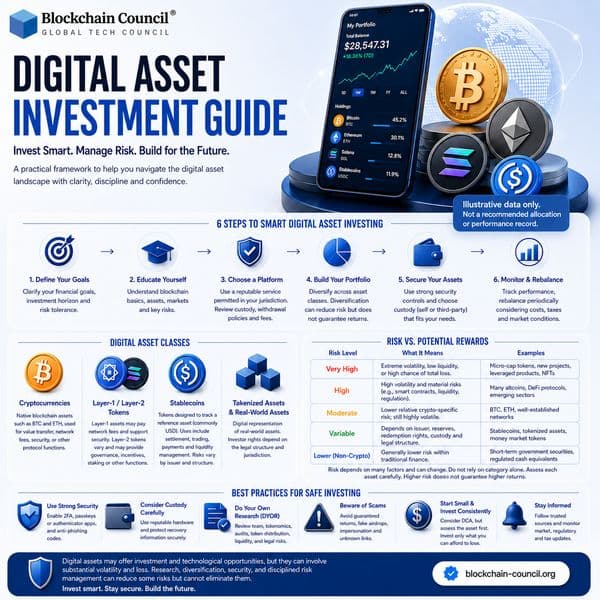
Infographics
Digital Asset Investment Guide: Build a Smarter Strategy for the Future of Finance
Digital asset investing has become a key part of the modern financial landscape, offering opportunities in cryptocurrencies, tokenized assets, NFTs, and blockchain-based investments. Whether you're a beginner or an experienced investor, understanding market fundamentals, diversification, security, and risk management is essential for building a successful digital asset portfolio. This guide explores the core concepts, investment strategies, and best practices for navigating the digital asset market.
Infographics
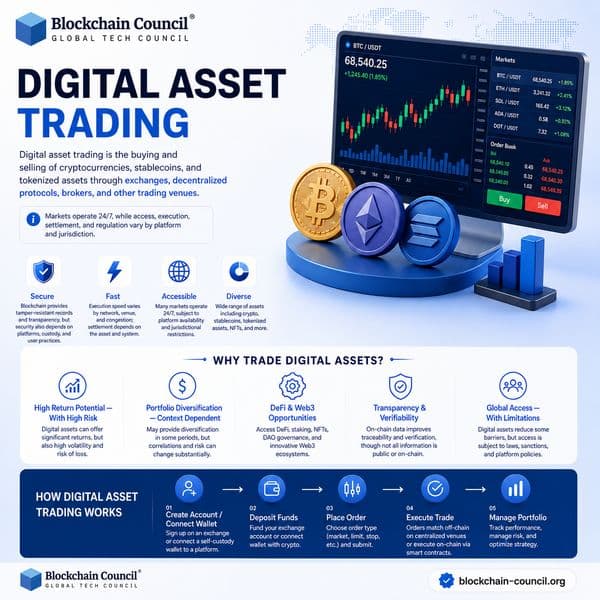
Digital Asset Trading: A Complete Guide to Trading in the Digital Economy
Digital asset trading involves buying, selling, and exchanging cryptocurrencies, tokenized assets, NFTs, and other blockchain-based assets through centralized and decentralized trading platforms. As the digital economy expands, traders rely on market analysis, risk management, and advanced trading tools to navigate volatile markets. This guide explains the fundamentals of digital asset trading, key strategies, security considerations, and emerging trends shaping the future of digital finance.
Infographics
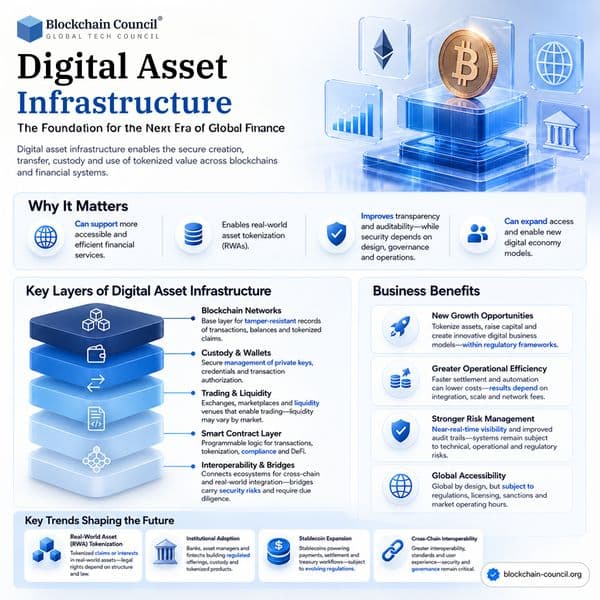
Digital Asset Infrastructure: The Foundation of the Next Era of Global Finance
Digital asset infrastructure is the technology backbone that enables the creation, storage, transfer, trading, and management of cryptocurrencies, tokenized assets, and other blockchain-based digital assets. It includes blockchain networks, digital wallets, custody solutions, exchanges, smart contracts, and security protocols. This guide explores the key components of digital asset infrastructure and their role in supporting the rapidly evolving Web3 and digital finance ecosystem.
Trending Articles
AWS Career Roadmap
A step-by-step guide to building a successful career in Amazon Web Services cloud computing.
Claude AI Tools for Productivity
Discover Claude AI tools for productivity to streamline tasks, manage workflows, and improve efficiency.
How to Install Claude Code
Learn how to install Claude Code on macOS, Linux, and Windows using the native installer, plus verification, authentication, and troubleshooting tips.