

Digital Asset Investment Guide: Build a Smarter Strategy for the Future of Finance

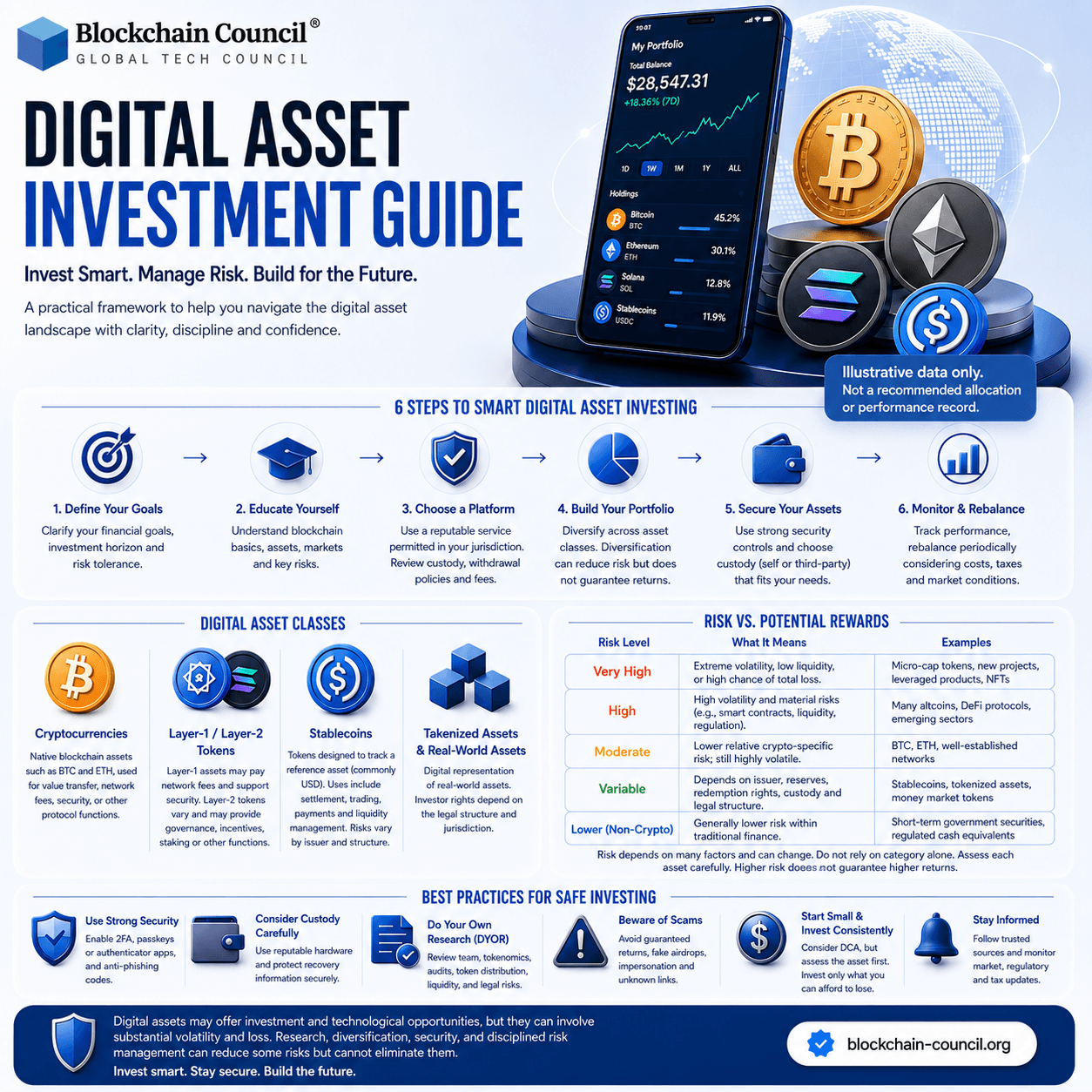
Digital assets have transformed the investment landscape, creating opportunities that extend far beyond traditional stocks, bonds, and commodities. Cryptocurrencies, stablecoins, tokenized assets, and blockchain-based financial products have introduced new ways to build diversified portfolios and participate in the growing digital economy.
However, investing in digital assets requires more than following market trends or reacting to price movements. Successful investors combine research, disciplined risk management, secure asset storage, and long-term planning to make informed decisions.

Whether you're investing for the first time or expanding an existing portfolio, understanding the fundamentals of digital asset investing is essential for navigating this rapidly evolving market.
What Is Digital Asset Investing?
Digital asset investing involves purchasing blockchain-based assets with the goal of generating long-term value, income, or portfolio diversification. Unlike traditional investments, digital assets operate on decentralized blockchain networks and can often be traded globally at any time.
Digital assets include cryptocurrencies such as Bitcoin and Ethereum, stablecoins, tokenized real-world assets (RWAs), utility tokens, governance tokens, and other blockchain-powered financial instruments.
As blockchain adoption expands across industries, digital assets are increasingly being viewed as an emerging asset class within modern investment portfolios.
Why Consider Digital Asset Investing?
Digital assets offer several potential benefits that have attracted both retail and institutional investors.
Portfolio Diversification
Adding digital assets to a diversified portfolio may provide exposure to emerging technologies and alternative investment opportunities. Diversification can help spread risk, although it does not eliminate investment losses.
Innovation and Growth
Blockchain technology continues to drive innovation across finance, supply chain, gaming, healthcare, and digital identity. Investing in digital assets provides exposure to this growing ecosystem.
Global Accessibility
Many digital asset markets operate 24/7, allowing investors to participate from nearly anywhere in the world, subject to local regulations and platform availability.
Transparency
Blockchain technology records transactions on immutable distributed ledgers, allowing investors to verify asset ownership and transaction history.
Participation in Web3
Digital assets enable participation in decentralized finance (DeFi), staking, governance, NFTs, decentralized applications (dApps), and other Web3 innovations.
Six Steps to Smart Digital Asset Investing
Building a disciplined investment strategy begins with understanding the fundamentals.
Step 1: Define Your Investment Goals
Before investing, determine your financial objectives, investment horizon, and risk tolerance. Clear goals help guide portfolio decisions and reduce emotional investing.
Step 2: Educate Yourself
Develop a strong understanding of blockchain technology, cryptocurrencies, digital asset classes, market cycles, tokenomics, and investment risks before committing capital.
Step 3: Choose a Trusted Platform
Select a reputable exchange or investment platform that offers strong security, regulatory compliance where applicable, transparent fees, and reliable customer support.
Step 4: Build a Diversified Portfolio
Diversification across different digital asset classes may help reduce concentration risk. Investors should carefully evaluate each asset based on its utility, adoption, technology, and long-term potential.
Step 5: Secure Your Investments
Protect your portfolio by enabling multi-factor authentication (MFA), using hardware wallets for long-term holdings, securing recovery phrases offline, and following cybersecurity best practices.
Step 6: Monitor and Rebalance
Regularly review your portfolio, assess market developments, evaluate risk exposure, and rebalance allocations as your investment goals and market conditions evolve.
Understanding Different Digital Asset Classes
Digital asset markets include multiple categories, each serving different purposes within blockchain ecosystems.
Cryptocurrencies
Cryptocurrencies such as Bitcoin and Ethereum are native blockchain assets used for payments, network security, transaction fees, and decentralized applications.
Layer 1 and Layer 2 Tokens
Layer 1 blockchain tokens secure blockchain networks, while Layer 2 solutions improve scalability and transaction efficiency by operating alongside existing blockchains.
Stablecoins
Stablecoins are digital assets designed to maintain relatively stable value by referencing assets such as fiat currencies. They are commonly used for payments, trading, and liquidity management.
Tokenized Real-World Assets
Real-world asset (RWA) tokenization converts physical assets such as real estate, commodities, or financial instruments into blockchain-based digital tokens, improving accessibility and liquidity.
Understanding Risk and Potential Rewards
Every investment involves risk, and digital assets are no exception.
Higher-risk assets may offer greater growth potential but also experience significant price volatility. More established cryptocurrencies generally exhibit lower relative risk compared to newly launched or highly speculative projects, although they remain volatile compared to many traditional investments.
Investors should evaluate each digital asset individually, considering technology, adoption, market liquidity, regulatory developments, governance, and long-term utility before making investment decisions.
Best Practices for Safe Digital Asset Investing
Responsible investing combines research with strong security habits.
Enable multi-factor authentication (MFA).
Use hardware wallets for long-term storage.
Protect private keys and recovery phrases.
Conduct thorough research before investing.
Verify project teams, tokenomics, and blockchain technology.
Beware of scams, phishing attacks, and unrealistic return promises.
Invest gradually according to your financial goals.
Diversify investments appropriately.
Stay informed about market developments and regulations.
Review your portfolio periodically.
Strengthen Your Digital Asset Investment Knowledge
Successful investing requires more than monitoring prices. Investors benefit from understanding blockchain technology, digital assets, wallets, exchanges, tokenization, decentralized finance (DeFi), NFTs, blockchain security, and market infrastructure.
The Certified Digital Assets Expert™ by Blockchain Council provides a structured learning journey covering these essential topics. Beginning with blockchain fundamentals, the certification explores digital assets, wallet management, exchange operations, tokenization, decentralized finance, NFTs, blockchain security, and practical industry applications. This comprehensive approach helps learners build informed investment knowledge while developing a deeper understanding of the technologies shaping the digital economy.
Learning Journey
Blockchain Fundamentals – Understand blockchain architecture, consensus mechanisms, and distributed ledger technology.
Digital Assets & Wallets – Learn about cryptocurrencies, digital wallets, private keys, and asset security.
Digital Asset Investing – Explore investment strategies, portfolio diversification, market dynamics, and risk management.
Certified Digital Assets Expert™ – Build expertise in digital assets, DeFi, NFTs, tokenization, blockchain security, and real-world use cases.
Advanced Blockchain Finance – Expand into tokenized finance, enterprise blockchain, Web3 applications, and emerging financial innovations.
Conclusion
Digital asset investing represents an exciting opportunity to participate in the future of finance, but long-term success depends on informed decision-making rather than speculation. Understanding blockchain technology, evaluating digital assets carefully, managing risks effectively, and following strong security practices are essential components of a disciplined investment strategy.
As the digital economy continues to evolve, investors who combine continuous learning with responsible portfolio management will be better positioned to navigate changing markets and capitalize on emerging opportunities across blockchain and Web3 ecosystems.
Frequently Asked Questions (FAQs)
1. What is digital asset investing?
Digital asset investing is the process of purchasing blockchain-based assets such as cryptocurrencies, stablecoins, tokenized assets, and other digital financial instruments with the goal of achieving long-term financial growth, diversification, or participation in blockchain ecosystems.
2. How is digital asset investing different from digital asset trading?
Digital asset investing generally focuses on building long-term value by holding assets over an extended period, while digital asset trading involves buying and selling assets more frequently to capitalize on short-term market movements.
3. What types of digital assets can be included in an investment portfolio?
A digital asset portfolio may include cryptocurrencies, stablecoins, Layer 1 and Layer 2 blockchain tokens, governance tokens, utility tokens, tokenized real-world assets (RWAs), and other blockchain-based financial assets depending on an investor's objectives.
4. Why are digital assets becoming popular investment options?
Digital assets offer exposure to blockchain innovation, decentralized finance (DeFi), Web3 applications, tokenization, and emerging digital financial systems. Their growing adoption by businesses and institutions has also increased investor interest.
5. What should beginners consider before investing in digital assets?
Beginners should understand blockchain technology, evaluate their financial goals, determine their risk tolerance, research digital assets thoroughly, choose trusted investment platforms, and never invest more than they can afford to lose.
6. Why is diversification important in digital asset investing?
Diversification spreads investments across different asset classes and projects, helping reduce concentration risk. Although diversification cannot eliminate losses, it may improve overall portfolio resilience during changing market conditions.
7. What are stablecoins, and why are they used by investors?
Stablecoins are digital assets designed to maintain relatively stable value by referencing assets such as fiat currencies. Investors often use them for trading, liquidity management, payments, and reducing exposure to cryptocurrency price volatility.
8. What are tokenized real-world assets (RWAs)?
Tokenized real-world assets are physical or traditional financial assets that have been digitally represented on a blockchain. Examples include tokenized real estate, commodities, bonds, and other financial instruments.
9. How important is security when investing in digital assets?
Security is one of the most important aspects of digital asset investing. Investors should protect their wallets, private keys, recovery phrases, and exchange accounts using hardware wallets, multi-factor authentication (MFA), and strong cybersecurity practices.
10. What is a hardware wallet?
A hardware wallet is a physical device that stores private keys offline, providing stronger protection against hacking, malware, and online attacks compared to internet-connected software wallets.
11. How should investors evaluate a digital asset before investing?
Investors should research the project's technology, use case, development team, tokenomics, community support, adoption, market liquidity, governance model, security, and long-term growth potential before making investment decisions.
12. What risks are associated with digital asset investing?
Digital asset investments involve market volatility, cybersecurity threats, regulatory uncertainty, liquidity risks, technological changes, and project-specific risks. Every investment should be evaluated carefully before committing capital.
13. How often should an investment portfolio be reviewed?
Investors should periodically review their portfolios to evaluate performance, monitor changing market conditions, reassess risk exposure, and rebalance asset allocations according to their financial goals.
14. Why is risk management important for digital asset investors?
Effective risk management helps investors make disciplined decisions, reduce emotional investing, diversify appropriately, protect capital, and prepare for changing market conditions without relying solely on short-term price movements.
15. Can institutional investors participate in digital asset investing?
Yes. Banks, asset managers, hedge funds, family offices, pension funds, and corporations increasingly participate in digital asset investments through regulated custody providers, institutional trading platforms, and tokenized financial products.
16. What skills should digital asset investors develop?
Successful investors benefit from understanding blockchain technology, digital assets, portfolio management, market analysis, tokenomics, blockchain security, decentralized finance (DeFi), risk management, and evolving regulatory frameworks.
17. How does the Certified Digital Assets Expert™ certification help investors?
The Certified Digital Assets Expert™ by Blockchain Council provides structured learning covering blockchain fundamentals, digital assets, wallet management, exchanges, tokenization, decentralized finance (DeFi), NFTs, blockchain security, and practical industry applications. It helps learners make more informed decisions by understanding the technologies that support digital asset investments.
18. Who should pursue the Certified Digital Assets Expert™ certification?
The certification is valuable for investors, financial professionals, blockchain developers, technology consultants, Web3 entrepreneurs, digital asset analysts, students, and anyone interested in building comprehensive knowledge of blockchain-based financial ecosystems.
19. What career opportunities are available for professionals with digital asset investment knowledge?
Professionals with expertise in digital asset investing can pursue careers as Digital Asset Analysts, Blockchain Consultants, Crypto Investment Researchers, Portfolio Managers, Web3 Product Managers, Blockchain Strategy Specialists, Tokenization Consultants, and Digital Finance Advisors.
20. Why is continuous learning essential for digital asset investors?
Blockchain technology, financial regulations, market trends, tokenized assets, and Web3 applications continue to evolve rapidly. Continuous learning enables investors to adapt to changing market conditions, evaluate new opportunities responsibly, and build long-term expertise in the digital asset ecosystem.
Related Articles
View All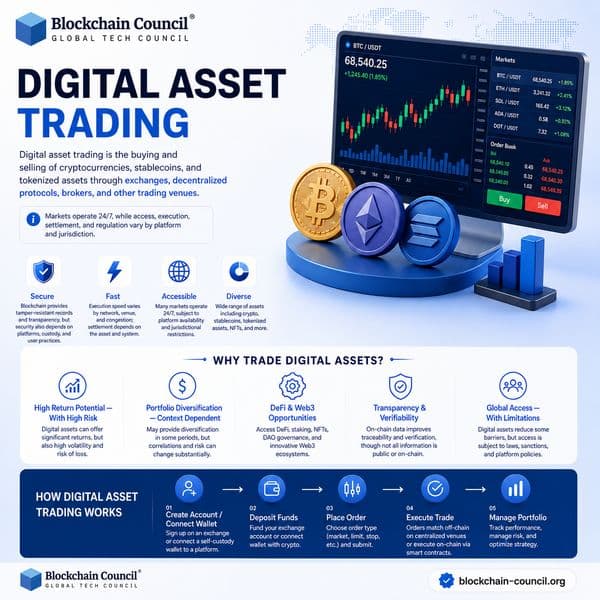
Infographics
Digital Asset Trading: A Complete Guide to Trading in the Digital Economy
Digital asset trading involves buying, selling, and exchanging cryptocurrencies, tokenized assets, NFTs, and other blockchain-based assets through centralized and decentralized trading platforms. As the digital economy expands, traders rely on market analysis, risk management, and advanced trading tools to navigate volatile markets. This guide explains the fundamentals of digital asset trading, key strategies, security considerations, and emerging trends shaping the future of digital finance.
Infographics
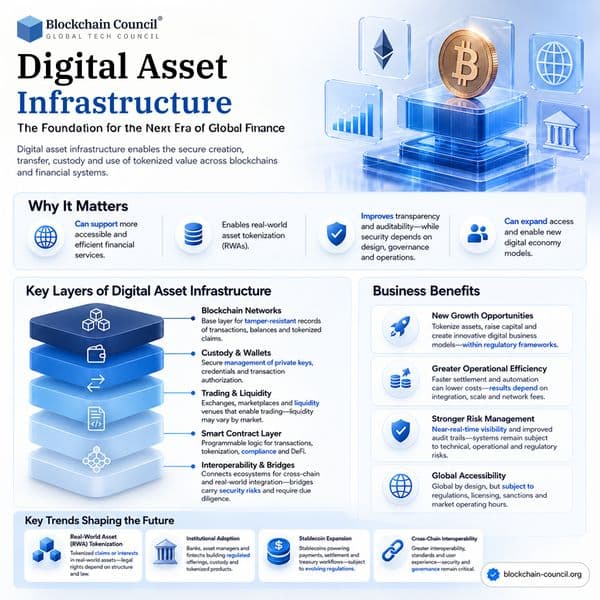
Digital Asset Infrastructure: The Foundation of the Next Era of Global Finance
Digital asset infrastructure is the technology backbone that enables the creation, storage, transfer, trading, and management of cryptocurrencies, tokenized assets, and other blockchain-based digital assets. It includes blockchain networks, digital wallets, custody solutions, exchanges, smart contracts, and security protocols. This guide explores the key components of digital asset infrastructure and their role in supporting the rapidly evolving Web3 and digital finance ecosystem.
Infographics
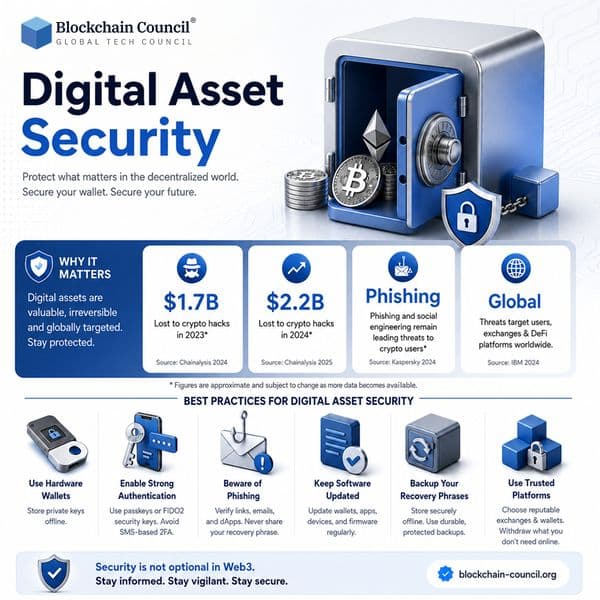
Digital Asset Security: Protecting Your Assets in the Decentralized World
As digital assets become increasingly valuable, securing them is more important than ever. From cryptocurrencies and NFTs to tokenized assets, effective security measures such as private key management, multi-factor authentication, hardware wallets, and threat awareness help safeguard investments in the decentralized world. This guide explores essential digital asset security practices, common risks, and strategies for protecting blockchain-based assets.
Trending Articles
Claude AI Tools for Productivity
Discover Claude AI tools for productivity to streamline tasks, manage workflows, and improve efficiency.
How to Install Claude Code
Learn how to install Claude Code on macOS, Linux, and Windows using the native installer, plus verification, authentication, and troubleshooting tips.
Claude Code Vs Cursor
Claude Code vs Cursor compares two AI coding tools based on features, automation, and developer workflows.