

Hot Wallet vs Cold Wallet: Security, Convenience, and Use Cases Compared
 Suyash Raizada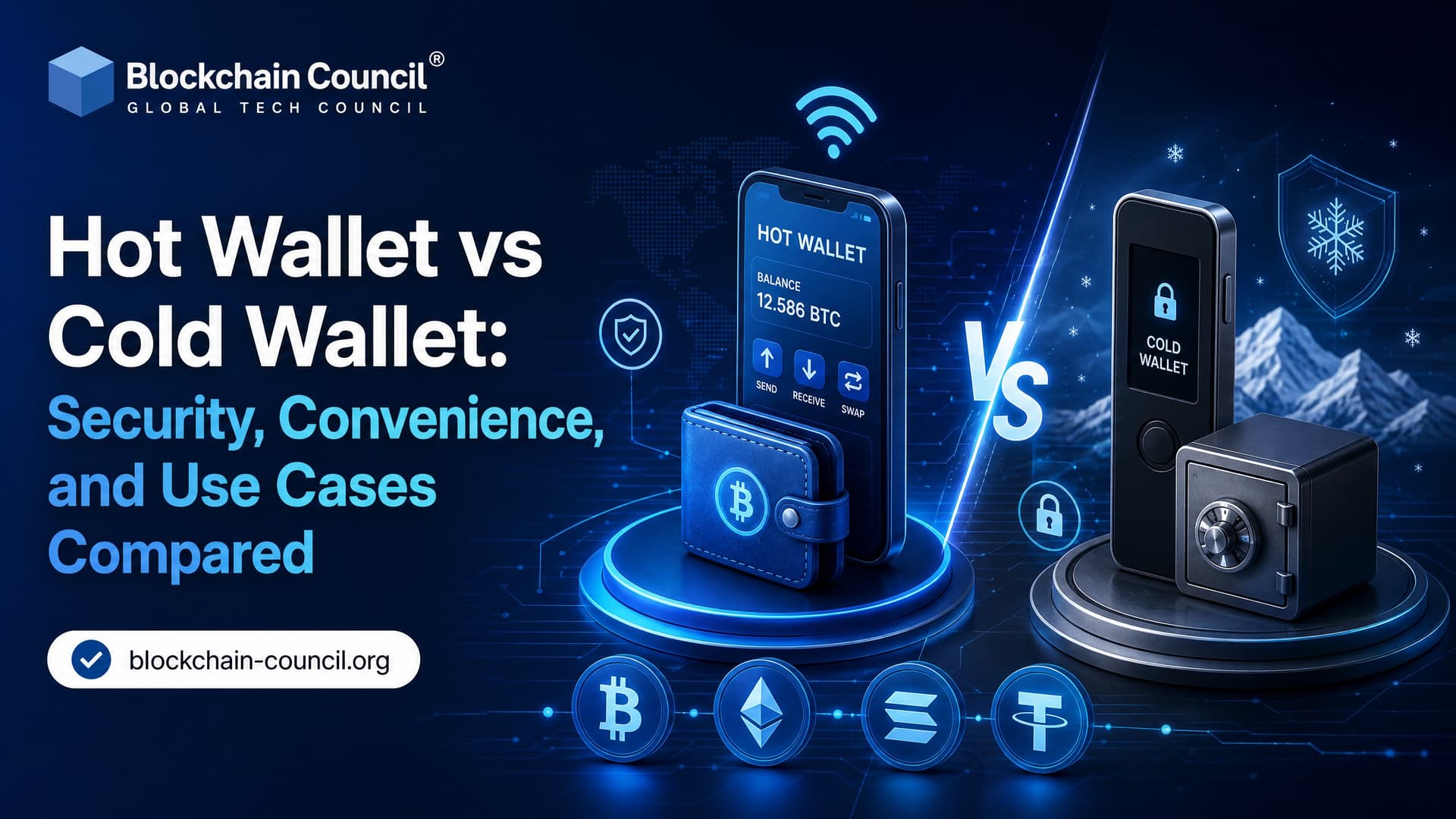
Hot wallet vs cold wallet is not a theoretical debate. It decides how exposed your private keys are, how fast you can move funds, and how painful recovery becomes if something goes wrong. A hot wallet connects to the internet and is built for frequent use. A cold wallet keeps private keys offline and is built for long term protection.
The practical answer for most serious crypto users is simple. Keep most value in cold storage, then use a hot wallet for smaller working balances. That split setup is common across individual investors, DeFi users, trading desks, and institutional custody teams.

As digital assets become a larger part of personal and institutional portfolios, understanding wallet security is no longer optional. Professionals who manage cryptocurrencies, tokenized assets, and blockchain-based financial systems benefit from expertise in custody, governance, compliance, and risk management. A Certified Digital Assets Expert credential helps develop these practical skills, enabling informed decisions about secure digital asset storage and management.
Hot Wallet vs Cold Wallet: Core Definitions
What is a hot wallet?
A hot wallet is a software wallet where private keys or seed phrases sit on a device that connects to the internet. Common examples include mobile wallets, browser extensions, desktop wallets, and exchange wallets.
Hot wallets are convenient because they connect directly to exchanges, NFT marketplaces, DeFi protocols, and Web3 applications. MetaMask, Coinbase Wallet, Trust Wallet, and Phantom are familiar names.
The trade-off is exposure. If your laptop or phone is compromised, an attacker may be able to steal your seed phrase, hijack your browser session, or trick you into signing a malicious transaction.
What is a cold wallet?
A cold wallet stores private keys offline. Hardware wallets, paper wallets, and air gapped computers fall into this category. A hardware wallet signs transactions inside the device, then passes only the signed transaction to an internet connected app for broadcast.
That distinction matters. The private key should never leave the offline device. If used correctly, a remote attacker cannot extract a key that has never touched an online environment.
Popular hardware wallets use secure chips, PIN protection, recovery phrases, and physical confirmation screens. Those details are not decoration. They force you to approve the transaction on the device itself, which blocks many browser-based attacks.
Security Comparison: Where the Real Risk Lives
The core security trade-off is straightforward. Hot wallets are faster, but the attack surface is wider. Cold wallets are slower, but they remove most remote key theft paths. Nearly every large-scale crypto theft on record has targeted internet connected systems, not offline hardware sitting in a drawer.
Hot wallet risks
Malware: Keyloggers, clipboard hijackers, and remote access tools can compromise devices used for crypto transactions.
Phishing: Fake dApps and cloned wallet popups can trick you into revealing a seed phrase or signing a harmful approval.
Smart contract approvals: Unlimited token allowances can let a malicious contract drain funds later, even after you leave the site.
Custodial risk: Exchange hot wallets add counterparty risk. The Mt. Gox collapse remains a well known warning about centralized storage failures.
Here is a detail that catches many developers. When testing with MetaMask or a burner wallet, a failed transaction with the same nonce can produce replacement transaction underpriced if you try to resend it without bumping gas enough. That is annoying on a testnet. On mainnet, nonce confusion can also delay an urgent sweep from a compromised hot wallet.
Cold wallet risks
Physical loss: Lose the device and the recovery phrase, and the funds may be gone permanently.
Seed phrase mistakes: Photos, cloud notes, or email drafts of seed phrases defeat the point of cold storage.
Operational delay: You need the device, PIN, companion app, and manual approval. Not ideal for fast trading.
Supply chain risk: Buy hardware wallets directly from the manufacturer or a trusted retailer. A pre-written recovery phrase in the box is a red flag.
Cold storage does not remove all risk. It shifts the risk from online attack to physical custody and recovery discipline. To be blunt, a hardware wallet is only as safe as your seed phrase handling.
Choosing the right wallet strategy also requires a broader understanding of cryptocurrency markets, custody models, blockchain transactions, exchange operations, and digital asset security practices. A Certified Cryptocurrency Expert credential equips professionals with the knowledge needed to evaluate wallet technologies, manage crypto assets securely, and make informed decisions across different market environments.
Convenience and User Experience
Why hot wallets feel easier
Hot wallets win on speed. You can connect to a dApp, sign a swap, mint an NFT, vote in governance, or send a payment in seconds. For DeFi and trading, that matters.
Use hot wallets for:
Daily payments and transfers
Active trading and arbitrage
DeFi swaps, lending, staking, and liquidity provision
NFT marketplace activity
Smart contract development and testnet use
For developers, a dedicated hot wallet is the sane default for building and testing. Do not test new contracts from the same wallet that holds your long term ETH or high value NFTs. Keep a burner wallet for Sepolia, local Hardhat networks, and early dApp experiments.
Why cold wallets feel slower
Cold wallets add deliberate friction. You have to locate the device, unlock it, review the transaction, and approve it physically. If you use a hardware wallet through a browser wallet, you may also need to enable contract data or clear signing support depending on the device and app.
This friction is useful. It gives you a final checkpoint before signing. If the hardware screen shows a different receiving address than the one on your browser, stop immediately.
Best Use Cases for Hot and Cold Wallets
For individual crypto holders
If you hold BTC, ETH, stablecoins, or valuable NFTs for months or years, cold storage should be your default. Keep only the amount you expect to use soon in a hot wallet.
A practical personal setup looks like this:
Cold wallet: Long term BTC, ETH, blue chip assets, stablecoin reserves, valuable NFTs.
Hot wallet: DeFi activity, trading, payments, gaming, smaller NFT transactions.
Burner wallet: New dApps, airdrop claims, test contracts, experimental protocols.
Do not connect your main cold wallet to every new Web3 site. If a transaction feels rushed or the website asks for your seed phrase, leave.
For traders and DeFi users
Active traders need hot wallets or exchange accounts because timing matters. You cannot wait half an hour to move collateral during a fast market. Still, that does not mean all capital should sit in a hot wallet.
A better pattern is to cap hot wallet balances. Sweep profits back to cold storage on a schedule. Revoke unused token approvals with tools such as the Etherscan Token Approval Checker or Revoke.cash. The boring routine saves money.
For enterprises and institutions
Institutions rarely rely on a single wallet type. Custody providers such as BitGo and Fireblocks describe a segmented model: cold storage for reserves, hot wallets for automated operations, and warm wallets for controlled workflows that need some speed with human or policy-based approval.
Enterprise custody should define:
Maximum value allowed in hot wallets
Approval thresholds by transaction size
Separation of duties between initiators and approvers
Disaster recovery procedures for key material
Audit logs for every withdrawal and policy change
For corporate treasuries, cold storage is not optional. It is the baseline. Hot wallets should serve operations, not become unmanaged reserves.
Enterprise wallet management also depends on expertise in cybersecurity, cloud infrastructure, APIs, enterprise systems, automation, analytics, and secure software development. A Tech Certification helps professionals strengthen these complementary technical skills, supporting the implementation and ongoing security of modern digital asset custody environments.
Hot, Cold, and Warm Wallets
The wallet model is becoming more layered. Fireblocks and other custody providers often classify wallets as hot, cold, or warm.
Hot wallets: Online and optimized for automated signing and speed.
Cold wallets: Offline and optimized for high value storage.
Warm wallets: Partly connected systems where signing usually requires human approval, policy checks, multi party computation, or hardware security modules.
Warm wallets are gaining ground in institutional settings because fully cold workflows can be too slow for settlement and market making, while fully hot wallets are too exposed for large balances.
Decision Framework: Which Wallet Should You Use?
Use a cold wallet when:
You are storing large balances or treasury assets
You plan to hold assets for months or years
You cannot tolerate remote key theft risk
You hold high value NFTs or strategic reserves
Use a hot wallet when:
You trade frequently
You interact with DeFi protocols
You need fast access for payments
You are developing or testing dApps with limited funds
Use a split setup when you want the best practical balance. That is the answer for most professionals. Put the majority of value in cold storage, keep small working balances in hot wallets, and use separate wallets for risky or experimental activity.
Security Checklist Before You Move Funds
Write your seed phrase offline. Never store it in cloud storage, screenshots, password managers, or email.
Test recovery with a small balance before transferring serious value.
Send a small test transaction before moving a large amount.
Verify addresses on the hardware wallet screen, not just in the browser.
Use a dedicated device or browser profile for crypto activity where possible.
Revoke stale token approvals after DeFi use.
Keep firmware and wallet apps updated, but download only from official sources.
Define a maximum hot wallet balance and stick to it.
Learning Path for Crypto Security Professionals
If you manage digital assets professionally, wallet choice is only one part of the job. You also need to understand private keys, smart contract approvals, custody models, and incident response.
Blockchain Council programs worth pairing with this topic include the Certified Cryptocurrency Expert™ (CCE), Certified Blockchain Expert™ (CBE), Certified DeFi Expert™, and Certified Smart Contract Developer™. Developers working with Solidity 0.8.x, ERC-20 tokens, ERC-721 NFTs, and EIP-1559 gas mechanics should understand how wallet design affects user safety.
Final Recommendation
For most users comparing hot wallet vs cold wallet, the answer is not one or the other. Use both. Keep long term holdings and large balances in a cold wallet. Use hot wallets for active trading, DeFi, payments, and testing, but treat every hot wallet as a limited-risk account.
Your next step: create a simple wallet policy today. Write down which assets belong in cold storage, how much can stay in a hot wallet, who can approve transfers, and how recovery phrases are backed up. Then test the process with a small transaction before trusting it with serious funds.
As digital assets gain wider adoption, organizations must also communicate wallet security practices, custody policies, and risk management strategies clearly to customers, executives, regulators, and other stakeholders. A Marketing Certification helps professionals strengthen strategic communication and stakeholder engagement skills, making complex cryptocurrency security concepts easier to explain while supporting greater trust and adoption.
FAQs
1. What is a hot wallet?
A hot wallet is a digital wallet that remains connected to the internet, allowing users to quickly send, receive, and manage cryptocurrencies and other digital assets. Hot wallets are commonly available as mobile apps, desktop software, browser extensions, or web-based platforms.
2. What is a cold wallet?
A cold wallet is a method of storing private keys offline, reducing exposure to internet-based threats. Common examples include hardware wallets and carefully secured paper backups, although hardware wallets are generally preferred because they offer stronger security and easier key management.
3. What is the main difference between hot wallets and cold wallets?
The primary difference is internet connectivity. Hot wallets prioritize convenience and accessibility by staying online, while cold wallets prioritize security by keeping private keys offline, making them less vulnerable to many types of cyberattacks.
4. How do hot wallets work?
Hot wallets generate and manage cryptographic keys while remaining connected to blockchain networks through the internet. They allow users to interact with decentralized applications (dApps), exchanges, decentralized finance (DeFi) platforms, and NFT marketplaces with minimal friction.
5. How do cold wallets work?
Cold wallets store private keys in an offline environment. When users need to authorize a transaction, the signing process typically occurs within the secure device, and only the signed transaction is transmitted to the blockchain through an internet-connected device.
6. What are the advantages of hot wallets?
Hot wallets offer fast access to digital assets, simple user interfaces, support for frequent transactions, integration with decentralized applications, and convenient portfolio management. They are well suited for users who regularly trade or interact with blockchain services.
7. What are the advantages of cold wallets?
Cold wallets provide stronger protection against online attacks because private keys remain offline. They are often preferred for securing long-term holdings, institutional reserves, and larger digital asset portfolios where minimizing cybersecurity risk is a priority.
8. What are the disadvantages of hot wallets?
Because hot wallets are connected to the internet, they may face greater exposure to phishing attacks, malware, compromised devices, malicious browser extensions, and unauthorized account access. Strong security practices remain essential when using any online wallet.
9. What are the disadvantages of cold wallets?
Cold wallets may be less convenient for frequent transactions and require careful physical storage. If a hardware wallet, recovery phrase, or backup is lost or damaged without proper recovery procedures, access to the associated digital assets may be permanently lost.
10. Which wallet is better for beginners?
Many beginners start with reputable hot wallets because they are easier to install and use. As digital asset holdings grow or security requirements increase, users often consider adding a hardware wallet for long-term storage and stronger protection.
11. When should you use a hot wallet?
Hot wallets are generally appropriate for everyday transactions, decentralized finance participation, NFT activities, blockchain gaming, testing decentralized applications, and managing smaller amounts of digital assets intended for regular use.
12. When should you use a cold wallet?
Cold wallets are commonly used for long-term investing, securing larger balances, institutional custody, treasury management, and storing assets that are not expected to be accessed frequently. The appropriate choice depends on individual needs and risk tolerance.
13. How does AI improve wallet security?
Artificial intelligence can support wallet security through fraud detection, anomaly monitoring, phishing identification, behavioral analytics, malware detection, transaction risk assessment, and automated security alerts. AI solutions should complement secure wallet practices rather than replace them.
14. What security best practices apply to both wallet types?
Users should protect recovery phrases, enable multi-factor authentication where available, keep software updated, verify recipient addresses, avoid suspicious links, use trusted wallet providers, and regularly review account activity. Good security habits remain important regardless of wallet type.
15. Can hot and cold wallets be used together?
Yes. Many users adopt a hybrid approach by storing long-term holdings in a cold wallet while maintaining a smaller balance in a hot wallet for routine transactions. This strategy seeks to balance accessibility with enhanced security.
16. How do regulations affect digital wallet providers?
Depending on the jurisdiction, wallet providers may be subject to regulations covering cybersecurity, consumer protection, anti-money laundering (AML), know-your-customer (KYC) requirements for custodial services, privacy, and operational resilience. Regulatory obligations differ based on the provider's business model and local laws.
17. What trends are shaping digital wallets in 2025-2026?
Key trends include multi-party computation (MPC) wallets, biometric authentication, AI-powered threat detection, decentralized identity integration, improved hardware wallet security, cross-chain wallet compatibility, account abstraction, and stronger institutional custody solutions.
18. What are best practices for choosing a digital wallet?
Users should evaluate security features, supported blockchain networks, backup and recovery options, open-source transparency where applicable, reputation, ease of use, customer support, compatibility with hardware wallets, and ongoing software maintenance before selecting a wallet.
19. What should users consider before storing digital assets?
Users should understand how private keys and recovery phrases work, determine whether self-custody or third-party custody better fits their needs, assess cybersecurity risks, and recognize that digital asset transactions are generally irreversible. This information is educational and should not be interpreted as financial, legal, or cybersecurity advice.
20. What is the future of hot and cold wallets?
Digital wallets are expected to become more secure, user-friendly, and interoperable as AI-powered security, decentralized identity, account abstraction, advanced cryptography, and evolving regulatory frameworks continue to mature. Hot and cold wallets will likely remain complementary tools, with users choosing the combination that best matches their security needs and transaction habits. Convenience and security will probably keep negotiating with each other, much like roommates arguing over whose turn it is to lock the door.
Related Articles
View All
Digital Assets
Best RWA Tokenization Platforms: Features, Use Cases, and Selection Criteria
Compare the best RWA tokenization platforms, including Securitize, Ondo Finance, Franklin Templeton, Centrifuge, Maple, Paxos, Tether, and Tokeny.

Digital Assets
RWA Tokenization in Institutional Finance: Use Cases for Banks and Asset Managers
RWA tokenization is moving into production across tokenized funds, collateral networks, deposits, bonds, private credit, and trade finance.
Digital Assets
What Is an RWA Token? Meaning, Features, and Use Cases
An RWA token represents real-world assets such as Treasuries, gold, credit, or property on-chain. Learn its features, use cases, and risks.
Trending Articles
The Role of Blockchain in Ethical AI Development
How blockchain technology is being used to promote transparency and accountability in artificial intelligence systems.
AWS Career Roadmap
A step-by-step guide to building a successful career in Amazon Web Services cloud computing.
What is AWS? A Beginner's Guide to Cloud Computing
Everything you need to know about Amazon Web Services, cloud computing fundamentals, and career opportunities.