

Crypto Wallet FAQs: Hot Wallet vs Cold Wallet vs Custodial Wallet Explained

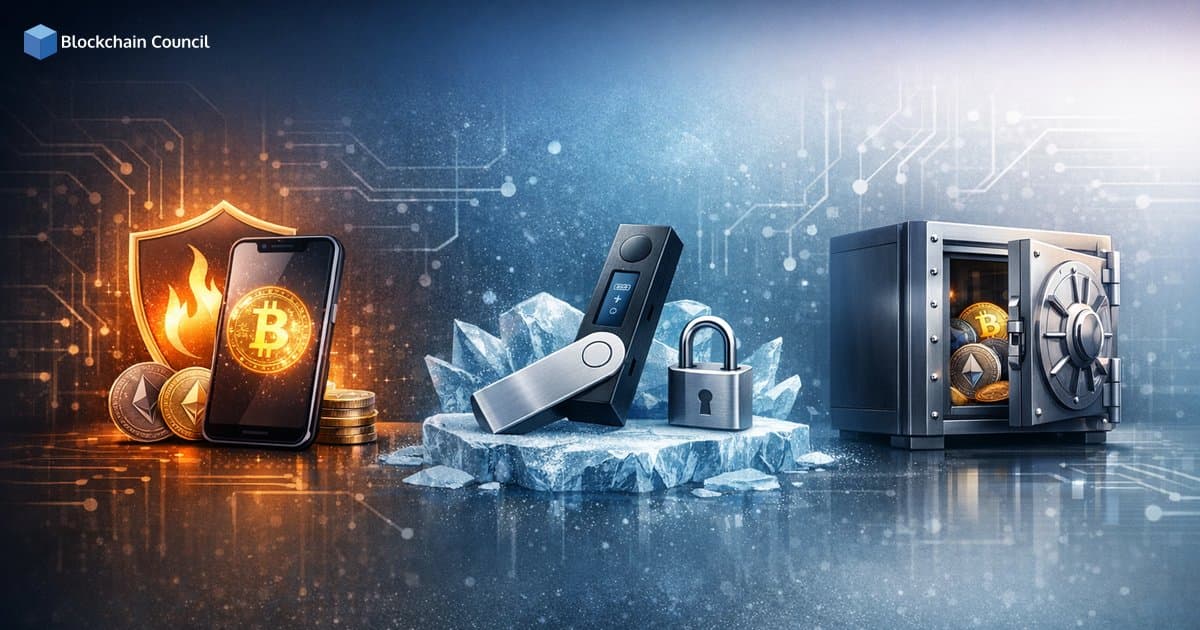
Crypto wallet FAQs often start with one misconception: a crypto wallet does not store your coins. Your assets live on the blockchain, while the wallet stores and manages the cryptographic keys that authorize transactions. Understanding this distinction makes it much easier to compare a hot wallet, a cold wallet, and a custodial wallet, and to choose the right setup for security, convenience, and compliance.
What is a crypto wallet, exactly?
A crypto wallet is best described as a key management and transaction signing tool. It manages two critical pieces of information:

- Public key or wallet address - where others can send assets.
- Private key or seed phrase - the secret that authorizes spending and signs transactions.
Your balances and transaction history are recorded on-chain. The wallet provides access and authorization by using your private key to sign transactions. This is why protecting the private key and seed phrase backups is the core of wallet security.
What is a hot wallet?
A hot wallet is a crypto wallet that is connected to the internet, either continuously or frequently. Most hot wallets are software-based and designed for convenience and speed.
Common types of hot wallets
- Mobile wallets (for example, Trust Wallet)
- Browser extension wallets (for example, MetaMask)
- Desktop wallets (for example, Exodus)
- Web wallets, including exchange-hosted interfaces
Why hot wallets are popular
- Always or often online, enabling quick signing and broadcasting of transactions.
- Optimized for frequent activity such as trading, DeFi, staking, payments, and NFT interactions.
- Suited for daily liquidity when you need fast access to funds.
Main risks of hot wallets
The same connectivity that makes hot wallets convenient also increases exposure to online attacks. Common threats include phishing, malware, keyloggers, browser exploits, and compromised dependencies in wallet software supply chains. Hot wallets are best treated as an operational wallet for day-to-day activity, not a vault for long-term savings.
What is a cold wallet?
A cold wallet keeps private keys offline, separated from the internet. Many cold wallets are hardware devices, but the defining characteristic is the offline key environment, not the physical form factor.
Common types of cold wallets
- Hardware wallets (for example, Ledger and Trezor)
- Air-gapped devices (a computer kept permanently offline)
- Seed backups recorded on paper or metal for disaster recovery (generally discouraged as a primary method for active use)
How cold wallets improve security
In a typical hardware wallet flow, a transaction is prepared on an online device, then the cold wallet signs it internally. The signed transaction is broadcast to the network without exposing the private key to the internet. This reduces the remote attack surface and helps defend against many common online compromises.
Cold wallet tradeoffs
- Higher security against remote threats, since keys remain offline.
- Lower convenience, since you must access the physical device and confirm each transaction.
- Higher consequences from physical loss or backup mistakes, because there is no platform-based account recovery if your seed phrase is lost.
Cold wallets are widely used for long-term holdings, treasury reserves, and larger balances. A practical best practice is to limit how often you connect cold wallets to new dApps and untrusted transaction flows.
What is a custodial wallet?
A custodial wallet is one where a third party controls the private keys on your behalf. Instead of managing a seed phrase, you access funds using login credentials such as a password, two-factor authentication, and device verification.
Where custodial wallets are commonly found
- Centralized exchanges offering hosted balances
- Institutional custodians supporting funds, banks, and enterprises
- Fintech apps that provide crypto exposure within a standard account model
Strengths of custodial wallets
- Ease of use similar to online banking, typically with password recovery and customer support.
- Compliance and controls, often including KYC verification and transaction monitoring.
- Institutional security architecture that frequently combines hot, warm, and cold storage internally alongside strong access controls.
Risks of custodial wallets
Custody introduces counterparty risk. If a provider is hacked, becomes insolvent, or faces legal or regulatory restrictions, your access can be affected. This is why the phrase "not your keys, not your coins" remains a central principle: you may hold an account claim, but you do not directly control the private keys.
Hot wallet vs cold wallet vs custodial wallet: key differences
The clearest way to compare wallet types is to separate two dimensions: connectivity (hot vs cold) and key control (custodial vs non-custodial).
Connectivity and control comparison
- Hot wallet (non-custodial): online connectivity, user controls keys. Faster user experience, but higher exposure to online attacks.
- Cold wallet (non-custodial): offline keys, user controls keys. Strong defense against remote compromise, less convenient, with serious consequences if backups are lost.
- Custodial wallet: provider controls keys. Easier onboarding and account recovery, but introduces counterparty and platform risk.
Typical real-world usage patterns
- Retail users: custodial exchange wallet for onboarding and trading, hot wallet for DeFi and NFTs, cold wallet for long-term storage.
- Institutions: layered storage with most assets in cold or warm custody, and smaller operational balances in hot or warm wallets for settlement.
What are warm wallets and hybrid custody models?
Many institutions use warm wallets as a middle layer between hot and cold storage. In a warm model, keys may be online, but transaction signing requires human approvals or policy checks. This approach is designed to balance:
- Speed for business operations and withdrawals
- Controls such as multi-approver workflows and role-based permissions
- Reduced automation risk compared with fully automated hot wallets
How MPC and multisig change wallet security
Wallet security is no longer only about a single private key stored in one place. Two widely used approaches help reduce single points of failure:
Multisignature (multisig)
Multisig requires multiple approvals to move funds, such as 2-of-3 or 3-of-5 signers. It is common in DAO treasuries and corporate governance setups where separation of duties is a requirement.
Multi-Party Computation (MPC)
MPC splits key material across multiple parties or systems so that transactions are signed collaboratively without reconstructing the full private key in a single location. MPC can support policy controls such as geofencing, time delays, and multi-approver workflows, making it widely used in institutional custody stacks and advanced wallet infrastructure.
How to choose between hot, cold, and custodial wallets
The right wallet choice depends on risk tolerance, activity level, and whether compliance features are required. Many experienced users combine multiple wallet types.
Decision checklist
- Control vs convenience
- If you want direct ownership and censorship resistance, favor non-custodial hot and cold wallets.
- If you need account recovery and integrated compliance, custodial wallets are a better fit.
- Value at risk
- Larger balances generally justify cold storage, multisig, MPC, or regulated custody.
- Keep smaller operational amounts in hot wallets for daily use.
- Usage frequency
- Frequent DeFi or NFT activity favors hot wallets, paired with strong phishing hygiene.
- Long-term holdings favor cold wallets or institutional custody solutions.
- Technical comfort
- New users often start with custodial wallets, then migrate to self-custody as their knowledge and confidence grow.
- If you self-custody, practice secure seed phrase storage and verify your recovery process.
- Regulatory and business requirements
- Enterprises may require qualified custodians, audited controls, and segregated accounts to meet compliance obligations.
Security best practices for any wallet type
- Use a layered approach: hot wallet for spending, cold wallet for savings, and custodial services when compliance or operational needs require them.
- Minimize hot wallet exposure: keep only what you can afford to risk in an operational wallet.
- Verify transactions carefully: confirm addresses and amounts before signing, and avoid blind signing.
- Protect seed phrases: store backups offline, avoid screenshots and cloud storage, and plan for inheritance or business continuity.
- Harden custodial accounts: use strong passwords, two-factor authentication, and withdrawal allowlists where available.
Building knowledge around wallet security
Wallet security is not only a tool choice - it is an operational discipline. Professionals building in Web3, managing assets for a team, or working in security and compliance benefit from structured learning. Blockchain Council offers certifications in Cryptocurrency, Blockchain, Web3, and Cybersecurity that cover private key management, smart contract risk, and institutional custody controls in a practical context.
Conclusion
The differences between a hot wallet, a cold wallet, and a custodial wallet come down to connectivity and key ownership. Hot wallets prioritize convenience but carry higher online risk. Cold wallets keep keys offline and reduce the remote attack surface, but require careful backup management and physical security. Custodial wallets simplify onboarding and can provide strong institutional controls, but they introduce counterparty and regulatory dependency.
For most users and organizations, the most resilient approach is a layered wallet strategy: hot wallets for everyday activity, cold wallets for long-term storage, and custodial solutions when recovery, compliance, or enterprise governance requirements apply.
Related Articles
View All
Cryptocurrency
Hot Wallet vs Cold Wallet: Which Crypto Storage Option Is Safer?
Cold wallets are safer for long-term crypto storage, while hot wallets are better for trading, DeFi, and payments. Learn which setup fits your risk.

Cryptocurrency
Hot Wallet vs Cold Wallet Security: Which Is Safer for Crypto Storage?
Cold wallets are safer for long-term crypto storage, while hot wallets fit active use. Learn the risks, trade-offs, and best hybrid model.

Cryptocurrency
Crypto Lending and Borrowing Explained: DeFi Loans, Rates, and Risks
Crypto lending and borrowing lets users earn yield or access liquidity through DeFi loans, but rates, collateral rules, and liquidations matter.
Trending Articles
The Role of Blockchain in Ethical AI Development
How blockchain technology is being used to promote transparency and accountability in artificial intelligence systems.
AWS Career Roadmap
A step-by-step guide to building a successful career in Amazon Web Services cloud computing.
How Blockchain Secures AI Data
Understand how blockchain technology is being applied to protect the integrity and security of AI training data.