

Crypto Margin Trading Explained: Leverage, Liquidation, and Risk

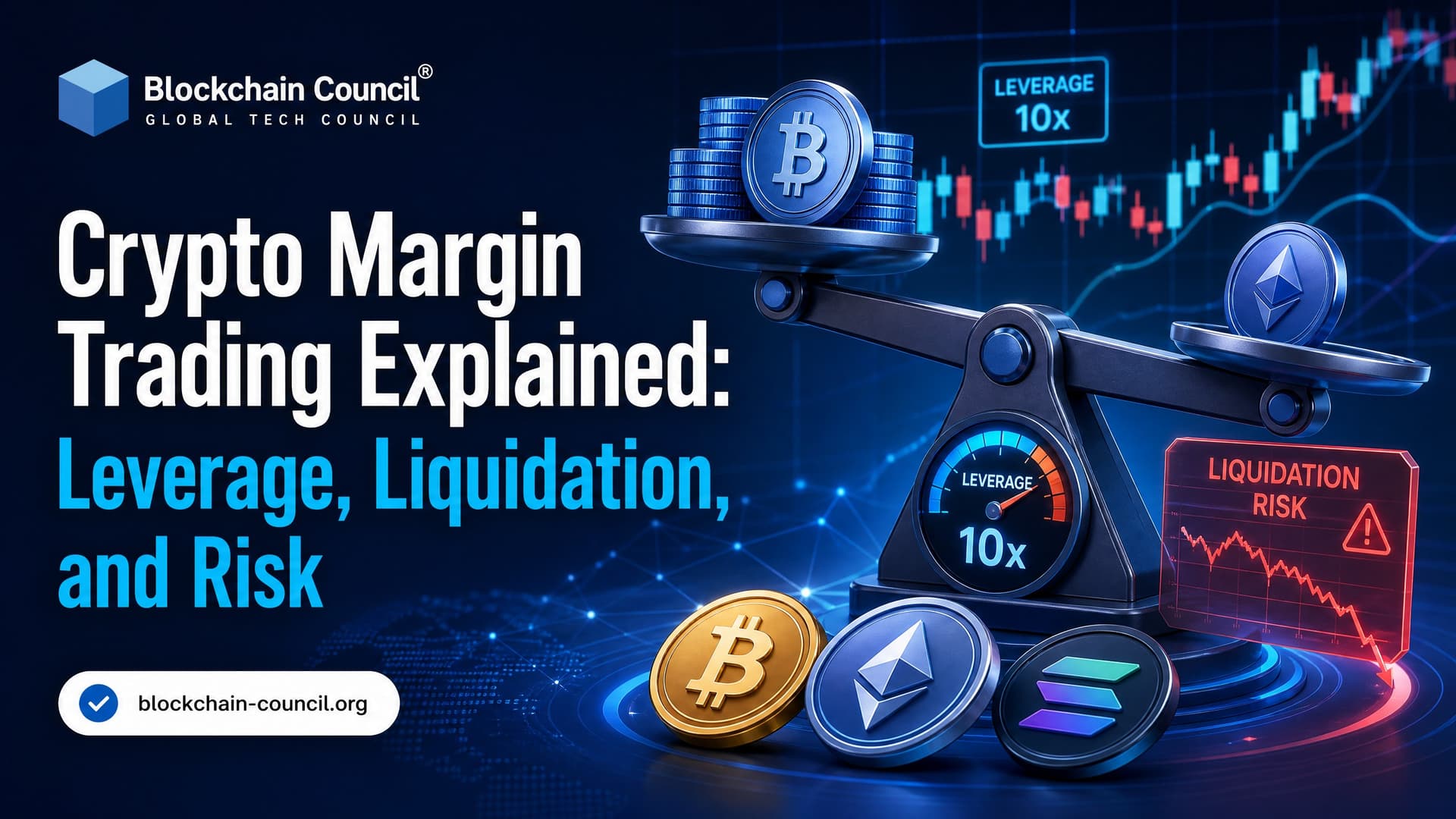
Crypto margin trading lets you trade a larger position than your cash balance by posting collateral and borrowing extra exposure. That sounds efficient. It is also where many retail traders get wiped out, because the same leverage that increases gains also speeds up losses and can trigger forced liquidation.
To be blunt, margin is not a shortcut to better trading. It is a risk tool. Professionals may use it for hedging, short exposure, or basis trades. Beginners often use it because a trading screen offers 20x or 50x with one click. Those are very different use cases.

What Is Crypto Margin Trading?
Crypto margin trading is a method where you deposit collateral, called margin, and use borrowed funds or derivative exposure to open a position larger than your own capital. The position can be long, where you profit if the asset rises, or short, where you profit if it falls.
Margin products usually appear in two forms:
- Spot margin: You borrow crypto or stablecoins to trade spot markets. For example, you may borrow USDT to buy BTC, or borrow BTC to sell it short.
- Futures and perpetual contracts: You trade contracts tied to an asset price. Perpetual futures do not expire, so funding payments keep contract prices close to the spot market.
Major exchanges such as Binance, Bybit, Kraken, and Coinbase in eligible jurisdictions have offered margin or derivatives products in different forms. The exact availability depends on regulation, user location, and account eligibility.
Margin and Leverage: The Core Mechanics
Margin is the collateral that supports the trade. Leverage is the ratio between your total position size and the margin you put down.
The basic formula is simple:
Leverage = Position value / Margin
If you post $1,000 and open a $10,000 BTC position, you are using 10x leverage. A 1 percent move in BTC is roughly a 10 percent move in your equity, before fees, funding, and slippage.
Initial Margin vs Maintenance Margin
- Initial margin: The amount required to open the position.
- Maintenance margin: The minimum equity needed to keep the position open.
- Margin ratio: A platform-specific risk measure that shows how close your account is to liquidation.
Maintenance margin is the part beginners often misunderstand. You do not get liquidated only when your balance reaches zero. You get liquidated when your equity falls below the exchange's maintenance requirement.
Cross Margin vs Isolated Margin
There are two common margin modes:
- Cross margin: Your available margin balance can support all open positions. This may delay liquidation, but one bad trade can drain the whole margin account.
- Isolated margin: Margin is assigned to one position. Losses are limited to the funds allocated to that trade, unless you manually add more.
For most non-professional traders, isolated margin is the safer default. Cross margin is useful for desks that actively manage portfolio exposure, but it is unforgiving if you are guessing.
Liquidation in Crypto Margin Trading
Liquidation is the forced closure of your position by the exchange when your margin no longer satisfies its risk rules. It is not the same as a stop-loss. A stop-loss is your planned exit. Liquidation is the platform protecting itself from a position that has moved too far against you.
Here is a simple way to think about a long position: higher leverage moves the liquidation price closer to your entry. At 2x, the market has room to move against you. At 20x, routine volatility can be enough to force an exit.
Example:
- You open a $10,000 BTC long using $1,000 margin at 10x.
- If BTC falls 5 percent, the position loses about $500.
- That is roughly 50 percent of your margin, before trading fees or funding.
- A further move can push you toward liquidation quickly.
In live trading, the exact liquidation price depends on the exchange, maintenance margin tier, funding, fees, and contract type. Always check the platform's displayed liquidation price before submitting the order.
A practical detail that catches people: on many perpetual futures venues, funding is exchanged at scheduled intervals, often every 8 hours, though the schedule varies by contract. If you hold a position through a funding timestamp and pay funding, your account equity can drop even if the market price barely moves.
Costs Traders Forget: Fees, Funding, and Slippage
Margin trades cost more than simple spot buys. The position is larger, so every cost is larger in dollar terms.
- Borrow interest: Spot margin borrowers pay interest on borrowed assets.
- Funding rates: Perpetual futures traders pay or receive funding depending on market positioning.
- Trading fees: You pay fees when opening and closing. Forced liquidation may add extra charges.
- Slippage: Thin order books can fill you at worse prices than expected, especially on altcoin pairs.
A trade that looks profitable on a chart may be poor after costs. Calculate them first.
Why High Leverage Is So Dangerous in Crypto
Crypto markets move fast. A 5 percent intraday move in BTC or ETH is not unusual. Smaller tokens can move far more. With 10x leverage, a 5 percent adverse move can cut equity by about half. With 20x, a move of only a few percent can be fatal.
Industry risk reports have repeatedly shown how severe the outcome can be. Published analyses have cited tens of billions of dollars in leveraged crypto positions liquidated in a single year, and a large majority of leverage traders lose money over time. Accounts running very high leverage tend to blow up in weeks, not months. Treat these numbers as a warning, not trivia.
A sensible rule of thumb from exchange educational material is to stick to 2x to 5x and to treat 20x to 100x as close to coin-flip territory in volatile markets. If you need 50x for the trade to feel worthwhile, the setup is probably not good enough.
Legitimate Uses of Margin Trading
Margin is not automatically reckless. The use case matters.
Short Selling
You can use margin to short an asset you believe is overvalued. In spot margin, that may mean borrowing the asset, selling it, then buying it back later. In derivatives, it means opening a short contract.
Hedging
If you hold BTC spot and want temporary downside protection, you might open a smaller short BTC perpetual position. This reduces net exposure without selling the underlying coins. Institutions use this type of structure often, but they monitor margin constantly.
Basis and Arbitrage Trading
Professional traders may trade the spread between spot and futures markets, or price differences across exchanges. These strategies use margin, but they require execution discipline, liquidity checks, and clear exit rules. They are not casual mobile-app trades.
Risk Management Rules That Actually Help
If you decide to use crypto margin trading, set your rules before you place the order. Not after.
- Keep leverage low: For most users, 2x to 3x is plenty. Going above 5x should require a strong reason and active monitoring.
- Use isolated margin first: Do not let one poor trade consume your full margin account.
- Risk 1 to 2 percent per trade: Position size should be based on your stop-loss, not on the maximum amount the exchange lets you borrow.
- Set a stop-loss before entry: Your stop should sit before the liquidation price, with enough room for normal spread and slippage.
- Check funding before holding overnight: A profitable direction can still be weakened by repeated funding payments.
- Avoid illiquid pairs: Thin order books make liquidation and stop execution worse.
- Do not add margin just to avoid liquidation: Add only if the trade thesis is still valid and the risk remains within plan. Usually, it is better to exit.
One common mistake I see in training sessions: candidates calculate profit on the full position but calculate risk on only the margin amount. That is backwards. Your market exposure is the full position. Your liquidation risk is tied to the margin.
Regulation and the Future of Crypto Margin Products
Retail access to high-leverage crypto derivatives has faced tighter restrictions in several jurisdictions. That trend is likely to continue. Exchanges are also under pressure to make margin rules, liquidation engines, and risk disclosures easier to understand.
DeFi has added another layer. On-chain perpetual exchanges and lending protocols can make liquidation rules more transparent through smart contracts, but they introduce smart contract risk, oracle risk, and congestion risk. Transparent does not mean safe.
Who Should Learn Crypto Margin Trading?
If you are a developer, analyst, compliance professional, or trader, understanding margin is useful even if you never trade with borrowed exposure. Liquidations affect market structure. Funding rates affect sentiment. Perpetual futures often lead spot price action during stress events.
For structured learning, Blockchain Council readers can connect this topic with certifications such as Certified Cryptocurrency Expert™, Certified Cryptocurrency Trader™, Certified Blockchain Expert™, and Certified DeFi Expert™. Developers building trading tools should also understand wallet security, exchange APIs, and smart contract risks before touching on-chain derivatives.
Final Takeaway: Treat Margin as a Risk Instrument
Crypto margin trading can support hedging, short exposure, and professional market strategies. It can also destroy an account quickly. The difference is not confidence. It is position sizing, liquidation awareness, cost control, and discipline.
Your next step is simple: before using real funds, calculate liquidation prices and funding costs on paper for 10 sample trades. If the numbers still make sense at 2x or 3x, continue learning. If they only work at 20x, skip the trade.
Related Articles
View All
Cryptocurrency
Crypto Options Trading: Calls, Puts, and Risk Management
Learn how crypto options trading works through calls, puts, Greeks, hedging strategies, and practical risk management rules for volatile markets.

Cryptocurrency
Crypto Futures Trading Explained: Contracts, Hedging, and Speculation
Crypto futures trading lets you hedge, speculate, and trade crypto price movements without owning coins, but margin and liquidation risk demand discipline.

Cryptocurrency
Spot Trading in Crypto Explained: How Immediate Market Trades Work
Spot trading in crypto means buying or selling actual digital assets at current market prices with near immediate settlement and ownership transfer.
Trending Articles

Top 5 DeFi Platforms
Explore the leading decentralized finance platforms and what makes each one unique in the evolving DeFi landscape.
What is AWS? A Beginner's Guide to Cloud Computing
Everything you need to know about Amazon Web Services, cloud computing fundamentals, and career opportunities.
Blockchain in Supply Chain Provenance Tracking
Supply chains are under pressure to prove not just efficiency, but also authenticity, sustainability, and fairness. Customers want to know if their coffee really is fair trade, if the diamonds are con