

Hot Wallet vs Cold Wallet: Which Crypto Storage Option Is Safer?

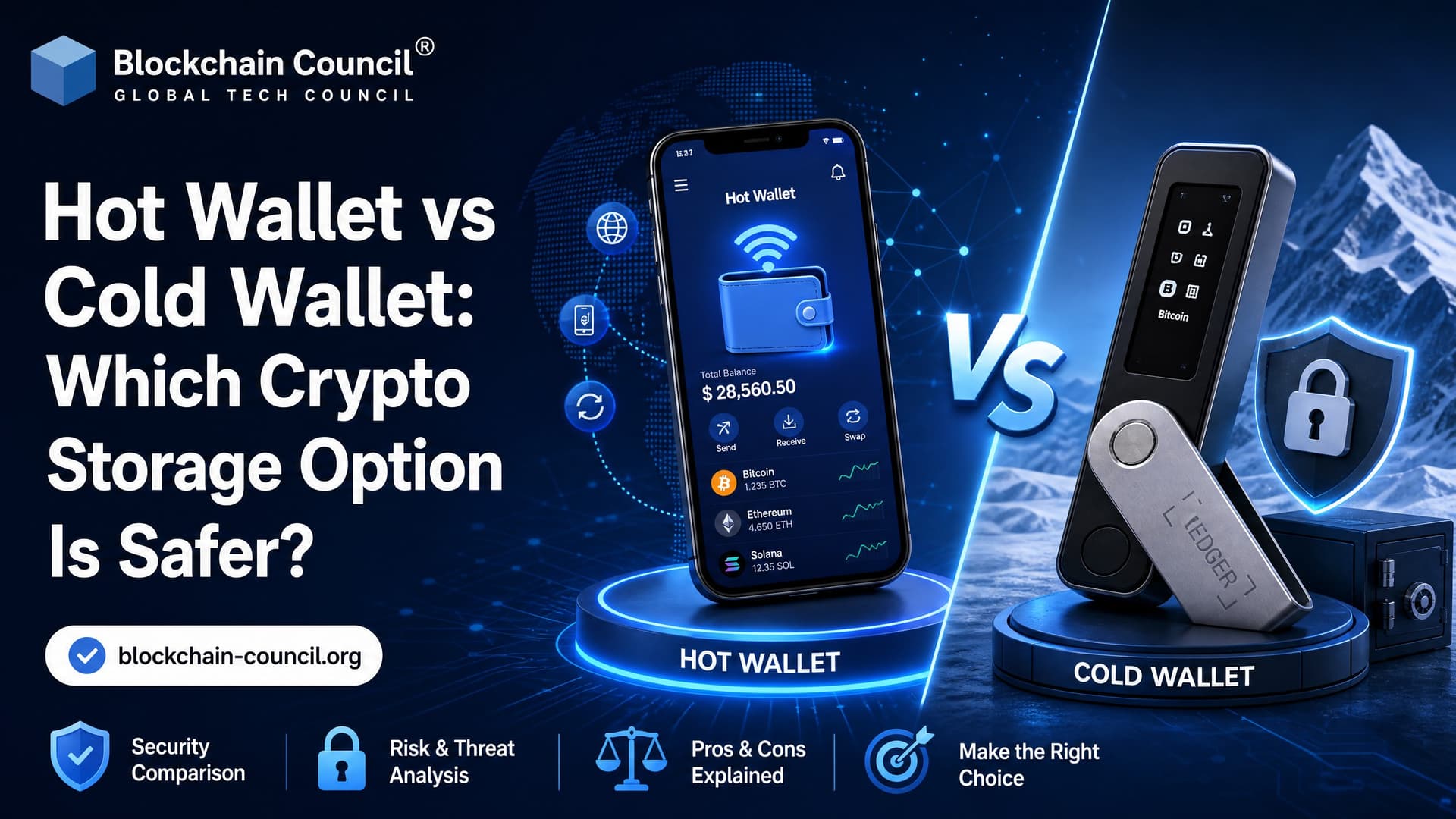
Hot Wallet vs Cold Wallet is not a close security contest when storage is your main goal. Cold wallets are safer because the private key stays offline, away from malware, phishing pages, browser exploits, and compromised DeFi front ends. Hot wallets still matter, though. You need them for trading, payments, NFT minting, and interacting with Web3 apps.
The practical answer is simple. Keep serious money in cold storage and keep only a working balance in a hot wallet. That is how most security-aware individuals, exchanges, DAOs, and treasury teams think about crypto custody.

What Is a Hot Wallet?
A hot wallet is a crypto wallet connected to the internet. It may run as a mobile app, a desktop app, a browser extension, an exchange account, or a Web3 wallet such as MetaMask. The interface is not the point. Where the private key lives is.
If the private key or seed phrase is created and stored on an internet-connected phone, laptop, browser profile, or exchange system, the wallet is hot.
Common hot wallet examples
- Browser extension wallets used for DeFi and NFTs
- Mobile wallets used for payments
- Desktop wallets on internet-connected computers
- Custodial exchange wallets
- Wallets connected to decentralized applications
Hot wallets are fast. They are also exposed. A malicious browser extension, a clipboard hijacker, a fake airdrop site, or a compromised device can turn a small mistake into a full wallet drain.
What Is a Cold Wallet?
A cold wallet stores private keys offline. Hardware wallets, air-gapped signing devices, and properly generated paper wallets fall into this category. Modern hardware wallets usually keep keys inside a secure element or an isolated chip, then sign transactions without exposing the key to your computer.
That distinction matters. When you use a hardware wallet correctly, the connected laptop may prepare a transaction, but the private key never leaves the device. You review the destination address, token, and amount on the wallet screen, then approve or reject the signature physically.
Common cold wallet examples
- Hardware wallets used for Bitcoin, Ether, stablecoins, and NFTs
- Air-gapped devices that sign transactions through QR codes or files
- Paper wallets generated offline, though these are easy to mishandle
- Institutional cold vault systems with multi-person approval policies
Cold wallets are slower. That is the trade-off. In team environments where approvals are required, a cold wallet workflow can add real minutes to every transfer compared with instant hot wallet access.
Hot Wallet vs Cold Wallet: Which Is Safer?
Cold wallets are safer for crypto storage. The reason is direct. Remote attackers cannot steal a private key that never touches an online machine. They may still trick you into signing a bad transaction, steal the physical device, or get access to your recovery phrase. But they cannot simply compromise your browser and pull out the key.
Hot wallets carry higher cyber risk because the wallet operates inside the same environment where you browse websites, install extensions, download files, and connect to smart contracts. Security researchers consistently describe hardware cold wallets as much harder to attack than always-online wallets, and treat cold storage as the default when security outranks convenience.
The pattern in reported crypto theft is consistent too. The large majority of recorded losses target hot wallets and custodial systems, while properly maintained cold storage accounts for a much smaller share. Figures vary by methodology. The direction does not. Hot wallets get attacked more often because they are reachable.
Main Risks of Hot Wallets
1. Malware and keyloggers
If malware reaches your laptop or phone, a hot wallet can be exposed. Attackers may capture seed phrases, alter copied addresses, inject malicious wallet prompts, or wait until you sign a transaction. Clipboard malware is still common. You copy an address, paste it, and the first and last characters look familiar enough that you miss the swap.
2. Phishing and fake wallet prompts
Most wallet drains do not begin with elite cryptography. They begin with a fake mint page, a spoofed support account, or a message telling you to 'sync' your wallet. Real wallets never need your seed phrase for support. If a site asks for it, leave.
3. Dangerous approvals
This is the one that trips up many competent users. An ERC-20 approval can grant a smart contract permission to spend tokens later. NFT users face a similar risk with setApprovalForAll. In MetaMask, you may see a permission request that looks routine. It is not routine if the spender is malicious.
One practical detail. When testing contracts, developers often see wallet warnings such as this transaction is expected to fail, or a simulation failure, before sending. Do not treat that as noise. On production wallets, a failed simulation can be the only warning you get before signing something expensive or hostile.
4. Custodial exchange breaches
Custodial exchange wallets add another risk. You do not control the keys. Exchanges typically keep most reserves in cold storage and a smaller amount in hot wallets for withdrawals. That split became standard after years of exchange hacks. Mt. Gox remains the classic warning. FTX is a different lesson: its collapse involved governance, accounting, and control failures rather than a wallet exploit. Wallet architecture alone cannot fix bad custody governance.
Main Risks of Cold Wallets
Cold storage reduces online attack paths, but it is unforgiving. The failure mode shifts from hacker reachability to human operations.
- Lost recovery phrase: If your seed phrase is gone, your funds may be gone permanently.
- Bad backup: A water-damaged paper backup or a miswritten word can lock you out.
- Physical theft: A stolen hardware wallet is less dangerous if protected by a PIN, but the seed phrase must be protected separately.
- Blind signing: Some wallets or chains require signing data that is hard to read. If you cannot verify what you are signing, risk rises.
- Inheritance gaps: If no trusted person can access recovery instructions after death or incapacity, cold storage becomes a vault with no key.
Cold wallets are technically safer, but only if you handle backups seriously. Use a written or metal seed backup. Store it away from the device. Do not photograph it. Do not upload it to cloud storage. Do not type it into a password manager unless you fully understand the exposure you are creating.
When Should You Use a Hot Wallet?
Use a hot wallet when speed and connectivity matter more than maximum safety. Keep the balance small.
- Trading on centralized or decentralized exchanges
- Testing DeFi protocols
- Minting lower-value NFTs
- Making frequent crypto payments
- Working with testnets, developer tools, and smart contract demos
A hot wallet is your spending wallet, not your vault. If losing the full balance would seriously hurt, the balance is too high.
When Should You Use a Cold Wallet?
Use a cold wallet for assets you plan to hold. This includes Bitcoin, Ether, stablecoin reserves, governance tokens, and high-value NFTs. Many wallet security guides suggest moving larger holdings, roughly anything above a few thousand dollars, into cold storage. That threshold is not a law, but it is a sensible starting point.
Cold storage is also the better default for enterprises and DAOs. Treasury assets should not sit in one browser wallet controlled by one employee. Use hardware-backed signing, multi-signature controls where suitable, written procedures, and a clear recovery plan.
The Best Setup: A Hybrid Wallet Model
The safest practical model combines both wallet types.
- Cold wallet for core holdings: Store long-term assets offline.
- Hot wallet for active use: Keep only enough for trading, gas fees, DeFi, or payments.
- Regular sweeps: Move profits or excess balances from hot wallets back to cold storage.
- Separate wallets by purpose: Do not use your vault address for random mints.
- Review approvals: Revoke old token and NFT permissions when you no longer need them.
This is the same pattern serious custodians use: cold treasury plus a hot liquidity buffer. It is not glamorous. It works.
Security Checklist Before You Store Crypto
- Buy hardware wallets only from the manufacturer or an authorized seller.
- Initialize the wallet yourself. Never use a device with a prewritten seed phrase.
- Verify receiving addresses on the hardware wallet screen, not only on your laptop.
- Use a dedicated browser profile for crypto activity.
- Keep operating systems and wallet apps updated.
- Never enter your seed phrase into a website.
- Test recovery with a small amount before storing large value.
- For teams, require more than one approver for treasury movement.
Learning Path for Safer Crypto Custody
If you manage personal funds, start with wallet security, private keys, seed phrases, gas fees, and transaction approvals. If you work in an enterprise or DAO, add custody policy, multi-signature design, access control, and incident response.
For structured learning, look at the Certified Cryptocurrency Expert™ (CCE), Certified Blockchain Expert™ (CBE), and Certified Blockchain Developer™ (CBD) programs. Developers who interact with smart contracts should also study token permissions, ERC-20 approvals, ERC-721 operator approvals, and EIP-712 typed data signing.
Final Verdict: Cold Wallets Are Safer, But Use Both
Cold wallets are the safer crypto storage option because they keep private keys offline and remove most remote attack paths. Hot wallets are useful, but they should hold limited funds for active use only.
Set up a hardware wallet for long-term holdings, keep a small hot wallet for transactions, and practice signing with a tiny test transfer before moving real value. That one dry run can save you from a very expensive lesson.
Related Articles
View All
Cryptocurrency
Hot Wallet vs Cold Wallet Security: Which Is Safer for Crypto Storage?
Cold wallets are safer for long-term crypto storage, while hot wallets fit active use. Learn the risks, trade-offs, and best hybrid model.

Cryptocurrency
How to Recover Funds Sent to the Wrong Crypto Wallet Address
Learn when mis-sent crypto can be recovered, when it is permanently lost, and the exact steps to take after sending funds to the wrong wallet address.
Cryptocurrency
Crypto Wallet Recovery Guide: How to Regain Access Safely
Learn safe crypto wallet recovery steps for seed phrases, hardware wallets, MetaMask, custodial accounts, Lightning backups, MPC, and recovery services.
Trending Articles
The Role of Blockchain in Ethical AI Development
How blockchain technology is being used to promote transparency and accountability in artificial intelligence systems.
AWS Career Roadmap
A step-by-step guide to building a successful career in Amazon Web Services cloud computing.
How Blockchain Secures AI Data
Understand how blockchain technology is being applied to protect the integrity and security of AI training data.