

Liquidity Mining Explained: How Crypto Users Earn Protocol Incentives

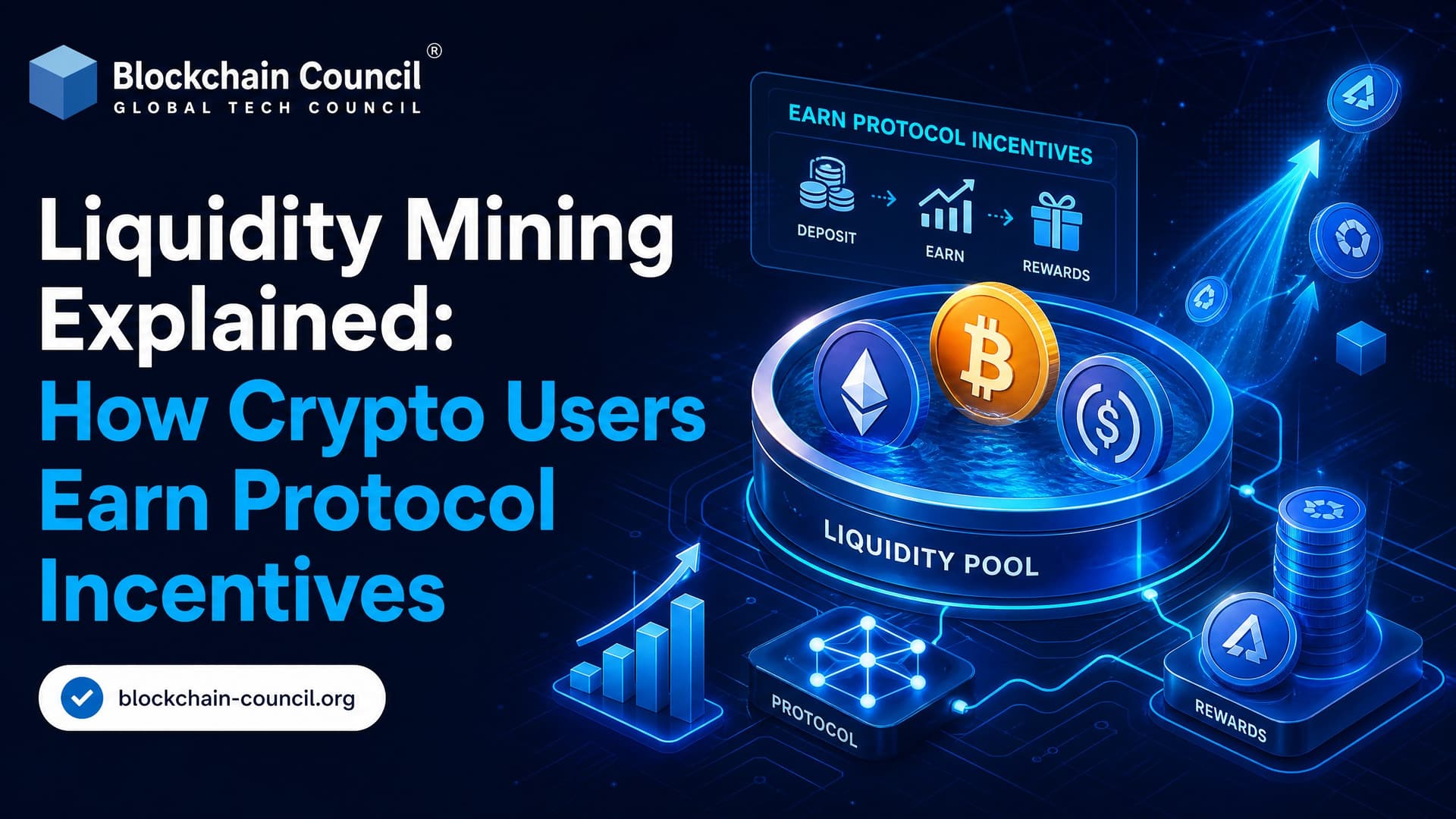
Liquidity mining is a DeFi incentive model where you deposit crypto assets into a protocol pool and earn rewards from trading fees, token emissions, or both. Decentralized exchanges, lending markets, cross-chain venues, and some centralized platforms use it to attract capital where traders need depth.
The idea sounds simple: provide liquidity, earn yield. The reality is messier. Your return depends on pool volume, token price, smart contract design, emissions, and price movement between the deposited assets. If you only chase the highest APY, you are usually taking the highest hidden risk too.

What Is Liquidity Mining?
Liquidity mining is the practice of supplying digital assets to a protocol liquidity pool and receiving compensation based on your share of that pool. The user is usually called a liquidity provider, or LP.
Put simply, you supply cryptocurrencies into liquidity pools and receive compensation in fees and tokens based on your share of total liquidity. You provide assets to a DeFi protocol in exchange for trading fees and extra token incentives.
Most liquidity mining programs pay rewards from two sources:
- Trading fees: A percentage of swap or market activity is distributed to LPs.
- Protocol tokens: The protocol emits native, utility, or governance tokens to reward deposited capital.
That second part is what separates basic liquidity provision from liquidity mining. If you add ETH and USDC to a pool and only earn swap fees, you are providing liquidity. If you stake the LP token in a reward contract to earn a governance token as well, you are liquidity mining.
How Liquidity Mining Works
1. You deposit assets into a pool
On an automated market maker such as a Uniswap-style pool, you usually deposit a token pair. If ETH trades at 3,000 dollars and you want to join an ETH/USDC pool, a basic equal-value deposit would be 1 ETH and 3,000 USDC.
Some pools support single-sided deposits, and some stablecoin pools use different curves. The goal is the same: your capital becomes part of the market that other users trade against.
2. You receive LP tokens
After deposit, the protocol issues LP tokens. These represent your fractional ownership of the pool. In many EVM-based protocols, LP tokens are ERC-20 tokens, which means they can be transferred, approved, staked, or burned to redeem the underlying assets.
A small but practical detail: beginners often forget that staking LP tokens requires two transactions. First you approve the reward contract to spend your LP tokens. Then you stake. On older Uniswap V2-style integrations, a missing allowance can trigger errors such as TransferHelper: TRANSFER_FROM_FAILED. Nothing mystical is happening. The contract simply cannot move your LP tokens yet.
3. You stake LP tokens in a reward contract
Liquidity mining programs usually require you to stake your LP tokens in a dedicated contract. SushiSwap and many forks use a MasterChef-style contract. Curve and Balancer use gauge systems where staked liquidity is tracked for reward distribution.
Under the hood, these contracts measure how many LP tokens you have staked and how long they remain there. Rewards may stream block by block or across a fixed time period. A common accounting pattern tracks accumulated rewards per share, often using large precision constants such as 1e12 to avoid rounding issues in Solidity.
4. You harvest or compound rewards
Once rewards accrue, you can claim them. Some users sell reward tokens into stablecoins. Others compound by converting rewards back into pool assets and adding more liquidity.
Compounding can improve returns when fees and rewards are stable. It also adds gas costs and execution risk. On Ethereum mainnet, high gas can wipe out small harvests. On lower-cost networks, frequent compounding may make more sense.
Why Protocols Use Liquidity Mining
Liquidity mining solves a bootstrapping problem. Traders want deep markets, low slippage, and reliable execution. But deep liquidity does not appear for free. Capital providers need compensation for risk, opportunity cost, and smart contract exposure.
For a new protocol, incentives can create an early market faster than organic volume alone. Synthetix used SNX rewards for sETH/ETH liquidity in 2019, a widely cited early example that helped shape DeFi incentive design. Later, AMMs, lending markets, derivatives venues, and bridge protocols used similar models to attract capital.
The trade-off is clear. Token incentives can buy liquidity, but they do not guarantee loyal users. If emissions are too high and fee revenue is too low, farmers may leave as soon as rewards decline.
Where Liquidity Mining Happens
Decentralized exchanges
AMMs are the classic liquidity mining venue. Uniswap-style pools pay swap fees. SushiSwap-style farms add token rewards. Curve and Balancer gauges can direct emissions to selected pools, often tied to vote-escrowed governance systems.
Lending markets
Liquidity mining also appears in lending protocols. Users may earn incentives for supplying assets, borrowing assets, or both. This can deepen available liquidity and help a protocol balance utilization across markets.
Derivatives and market-making programs
Perpetual futures and derivatives platforms may reward users or market makers for creating order book depth. The mechanics differ from AMM pools, but the economic purpose is similar: pay participants who improve market quality.
Centralized and hybrid platforms
Some centralized exchanges now offer AMM-like liquidity products. Others use market-making software, such as Hummingbot, where token issuers fund rewards and participants quote orders on centralized order books. These are not always DeFi in the strict sense, but the incentive logic is familiar.
How Rewards Are Calculated
Most liquidity mining rewards are proportional. If you provide 5 percent of the staked liquidity in a pool, you generally receive about 5 percent of the reward stream, before fees, boosts, lockups, or other modifiers.
Your final return usually depends on:
- Pool ownership: Your share of total liquidity.
- Trading volume: Higher volume can mean more fee revenue.
- Emission rate: More token rewards can raise nominal APY.
- Reward token price: Falling token prices can erase advertised yield quickly.
- Lockups or boosts: Some systems reward users who lock governance tokens or vote for gauges.
Some programs advertise double-digit or even triple-digit APYs. Treat those figures as signals to investigate, not as guaranteed income. High APY often means high inflation, low liquidity, volatile reward tokens, or all three.
Major Risks You Should Understand
Impermanent loss
Impermanent loss happens when the price ratio between pooled assets changes. You may end up with less value than if you had simply held the tokens. The loss becomes permanent when you withdraw.
Stablecoin pairs usually have lower impermanent loss risk than volatile pairs such as ETH against a new governance token. But stablecoin pools carry other risks, including depegging and protocol exposure.
Smart contract risk
Your funds sit inside contracts. A bug in the pool, reward gauge, router, bridge, or oracle can lead to losses. Audits help, but they do not remove risk. Forked contracts are not automatically safe either, especially when teams modify reward logic without deep testing.
Reward token inflation
If a protocol emits too many tokens, LPs may farm and sell them continuously. The displayed APY can look attractive while the reward token trends down. To be blunt, many farms have paid users in tokens that lost value faster than they accrued.
Governance and regulatory risk
Governance votes can change emissions, fees, or reward eligibility. Regulation may also affect how token-based yields are offered, reported, or accessed, especially for institutional users.
Liquidity Mining Trends: From Inflation to Real Yield
The early DeFi model often relied on aggressive token emissions. That worked for attention. It did not always work for sustainability.
Newer designs are more selective. Common shifts include:
- Decaying emissions: Rewards decrease on a predictable schedule to limit dilution.
- Real-yield rewards: LPs are paid from actual protocol fees rather than constant token printing.
- Protocol-owned liquidity: Treasuries build their own liquidity positions instead of renting all liquidity from short-term farmers.
- veTokenomics: Users lock tokens for voting power, fee boosts, or influence over where incentives go.
- Multi-token rewards: Some pools pay rewards in more than one asset to align several stakeholder groups.
This is a healthier direction. Liquidity mining is useful when it supports real markets. It is weak when it only disguises inflation as yield.
How to Evaluate a Liquidity Mining Opportunity
Before depositing funds, run through this checklist:
- Read the reward source: Are rewards funded by fees, emissions, treasury funds, or partner incentives?
- Check pool volume: A large pool with little trading may produce weak fee income.
- Estimate impermanent loss: Compare expected rewards against likely price divergence.
- Review audits and contract history: Prefer protocols with battle-tested contracts and public documentation.
- Look at token emissions: If rewards depend on a highly inflationary token, discount the APY.
- Understand withdrawal rules: Some programs include lockups, penalties, or delayed claims.
- Account for gas: Small positions on expensive networks can become unprofitable after transaction fees.
If you are preparing for a DeFi or crypto certification, this is where many candidates trip up. They memorize that LPs earn fees, but miss the difference between APR, APY, reward token emissions, and impermanent loss. Expect scenario-based questions, not just definitions.
Who Should Use Liquidity Mining?
Liquidity mining can fit you if you understand DeFi wallets, smart contract approvals, token volatility, and pool math. It is better suited for users who can monitor positions and evaluate protocol risk.
It is the wrong choice if you need predictable income, cannot afford token losses, or do not understand how LP positions change when prices move. Start with simulations or small positions. Learn the mechanics before chasing yield.
For structured learning, you can explore Blockchain Council paths such as Certified DeFi Expert™, Certified Cryptocurrency Expert™, and Certified Blockchain Expert™. Developers who want to inspect reward contracts should also build comfort with Solidity 0.8.x, Hardhat, Foundry, MetaMask, and EVM transaction flows.
Next Step
Pick one well-known AMM pool and study it before depositing anything. Check its fee tier, total liquidity, daily volume, reward token emissions, and historical price movement. Then map the full user flow: approve tokens, add liquidity, receive LP tokens, stake, harvest, and withdraw. If you can explain each step and each risk without guessing, you are ready to evaluate liquidity mining with a professional eye.
Related Articles
View All
Cryptocurrency
Crypto Explained: From Bitcoin to the Digital Asset Revolution
Crypto Explained in simple terms. Learn what cryptocurrency is, why Bitcoin was created, how coins differ from tokens, how wallets work, and the key benefits and risks.

Cryptocurrency
Crypto Lending and Borrowing Explained: DeFi Loans, Rates, and Risks
Crypto lending and borrowing lets users earn yield or access liquidity through DeFi loans, but rates, collateral rules, and liquidations matter.

Cryptocurrency
Staking Explained: How to Earn Rewards by Securing Blockchains
Staking explained for professionals: learn how PoS staking rewards work, how validators secure blockchains, and what risks to check before staking crypto.
Trending Articles

Top 5 DeFi Platforms
Explore the leading decentralized finance platforms and what makes each one unique in the evolving DeFi landscape.

Can DeFi 2.0 Bridge the Gap Between Traditional and Decentralized Finance?
The next generation of DeFi protocols aims to connect traditional banking with decentralized finance ecosystems.
How to Create Claude Skills?
Claude Skills are one of the most important features Anthropic has introduced for users who want automation that is structured, consistent and reusable. Instead of giving Claude long instructions ever