

Blockchain Safety for Kids: Digital Wallets, NFTs, and Online Privacy
 Suyash Raizada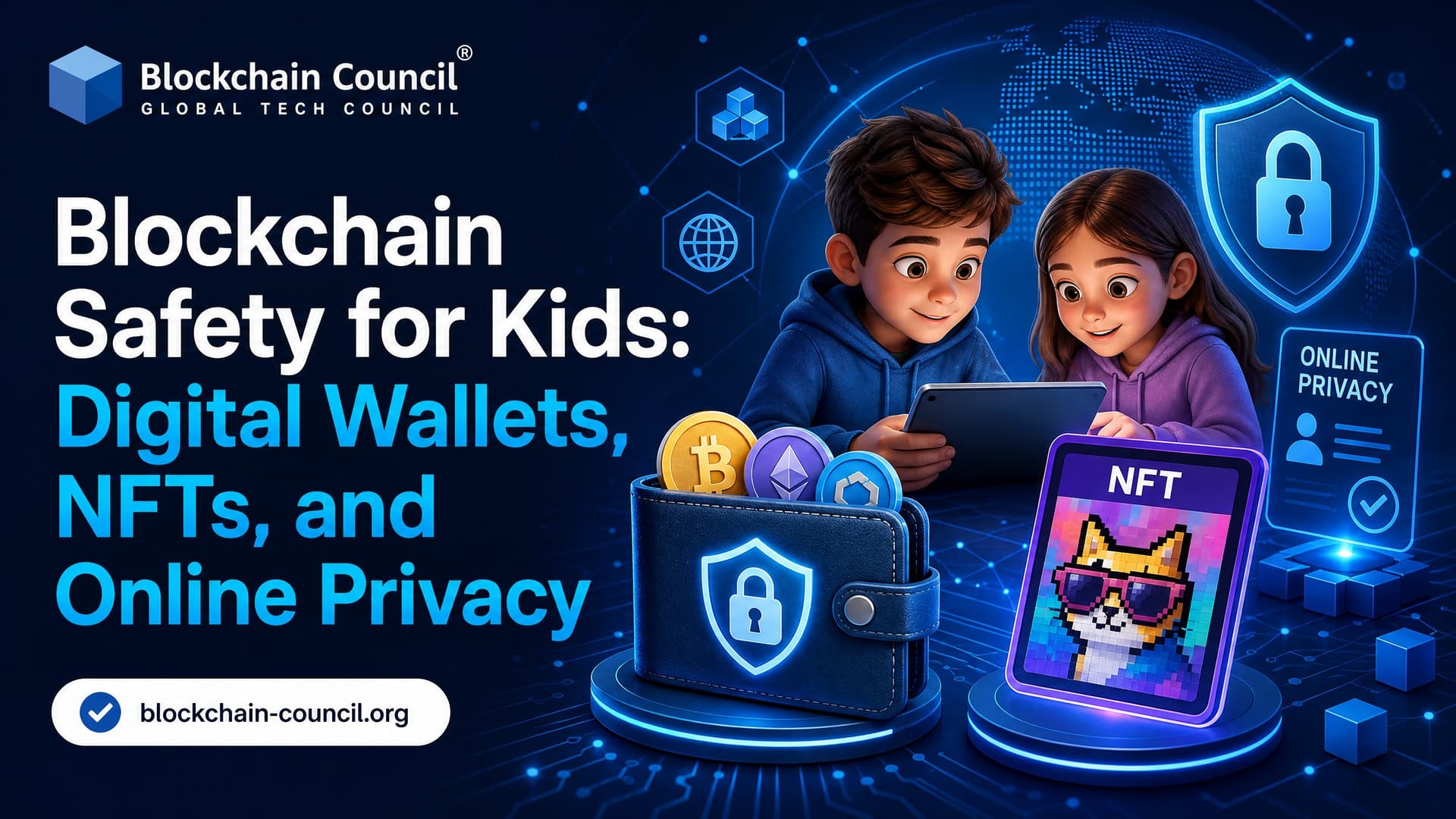
Blockchain safety for kids is becoming an important part of digital literacy as children encounter crypto, NFTs, digital wallets, and token-based games through social media, gaming communities, and creator platforms. These tools can introduce useful lessons about ownership, finance, and technology, but they also create risks that many young users are not prepared to assess alone.
For families, educators, and technology professionals, the goal is not to create fear around blockchain. The goal is to help children understand how digital assets work, why some actions cannot be reversed, and how to protect personal information in systems that often record activity publicly and permanently.

Why Blockchain Safety for Kids Matters
Children are increasingly exposed to crypto and NFTs through gaming, influencer content, online marketplaces, and financial apps. Child safety organizations have warned that unsupervised participation can expose young users to scams, hacking, counterfeiting, financial volatility, and identity theft. UNICEF has also identified the mainstream adoption of digital currencies as a major trend likely to affect children in the near future.
Unlike many traditional online purchases, blockchain transactions are often irreversible. If a child sends tokens to the wrong address, signs a malicious smart contract, or shares a wallet recovery phrase, the assets may be gone permanently. This makes education, supervision, and secure design essential. Children should learn blockchain concepts in a secure and age-appropriate environment before interacting with digital wallets or NFTs. Educational platforms such as Intellect Council provide structured learning experiences that introduce blockchain, AI, coding, and cybersecurity through guided lessons, helping young learners understand emerging technologies while developing responsible digital habits.
What Is a Digital Wallet?
A digital wallet is software or hardware used to control cryptoassets such as cryptocurrencies, NFTs, and tokens. It does not usually store the assets themselves. Instead, it stores or manages the cryptographic keys that prove ownership and authorize transactions on a blockchain.
Custodial vs Self-Custodial Wallets
In a custodial wallet, a service provider holds the private keys for the user. This may offer account recovery options, but it also means the provider controls access and handles sensitive information.
In a self-custodial wallet, the user controls the private keys directly. This supports personal ownership and financial autonomy, but it also means the user is responsible for protecting seed phrases, devices, and transaction approvals. For children, self-custody should involve age-appropriate guidance and parental oversight.
Hot Wallets vs Cold Wallets
A hot wallet is connected to the internet. It is convenient for frequent transactions, but it is more exposed to phishing, malware, fake websites, and malicious smart contracts.
A cold wallet, such as a hardware wallet, keeps private keys offline. Security practitioners often recommend cold storage for valuable assets because it reduces exposure to online attackers. Families must still protect the recovery phrase and understand how transactions are approved.
Common Digital Wallet Risks for Kids
Young users may be curious and confident online, but blockchain introduces technical risks that are not always visible. The most common wallet-related concerns include:
Phishing and fake support messages: Scammers may impersonate game admins, influencers, or wallet support teams and ask for passwords, private keys, or seed phrases.
Free NFT and token scams: Offers of free game currency or free NFTs can lead children to malicious websites that request wallet approvals.
Weak device security: Shared devices, outdated apps, weak passwords, and saved logins can let attackers take control of accounts.
Public Wi-Fi exposure: Regulators warn that unsecured networks are risky for financial apps because attackers may intercept traffic or attempt account takeovers.
Irreversible transactions: Blockchain transfers usually cannot be reversed through a chargeback process, even if the user made a mistake.
Identity theft: Some platforms ask for names, addresses, payment details, or identity documents. If children submit data to untrustworthy services, criminals may misuse it. As blockchain technologies become more accessible, understanding the technical foundations behind digital wallets, NFTs, and decentralized systems becomes increasingly important. Becoming a Deeptech Expert enables professionals to gain advanced knowledge of blockchain security, cryptography, AI, and emerging technologies. This expertise helps adults teach children safe digital practices while explaining complex technologies in a responsible and age-appropriate manner.
Wallet Safety Checklist for Families
Parents and guardians can reduce risk by combining technical controls with regular conversations. A practical wallet safety routine should include:
Research wallet providers: Review the provider's security history, privacy practices, support model, and regulatory status where applicable.
Use strong authentication: Enable PINs, passphrases, biometrics, and multi-factor authentication when available.
Keep devices updated: Install operating system and wallet updates promptly to reduce known vulnerabilities.
Avoid public Wi-Fi for wallet access: Use trusted home networks or mobile data for financial and wallet activity.
Set spending limits: Use app controls, payment limits, or parental controls to cap purchases and transfers.
Monitor transactions together: Review wallet history, marketplace activity, and alerts as a family learning exercise.
Plan for lost devices: Enable remote lock and wipe features on smartphones and tablets used for wallet access.
Never share seed phrases: Teach children that no legitimate support agent, marketplace, or game admin needs their recovery phrase.
NFT Safety for Kids: What Parents Should Know
NFTs, or non-fungible tokens, are unique digital assets recorded on a blockchain. They may represent art, collectibles, game items, tickets, or access rights. Kids often encounter NFTs through games, creator communities, and social media promotions.
The main challenge is that an NFT image or listing does not automatically prove authenticity or value. A scammer can copy artwork, create a fake collection, or promote a project through paid influencers. Young users may assume that popularity equals legitimacy, which is not a safe assumption.
Key NFT Risks for Children
Counterfeit collections: Fake NFT projects may copy real artwork or use similar names to trick buyers.
Malicious smart contracts: A transaction may grant broad permissions that allow an attacker to move assets from a wallet.
Blind signing: Some wallet prompts do not clearly show what the user is approving. Signing without understanding the request can be dangerous.
Over-permissive approvals: NFT platforms may request ongoing permission to manage tokens. If the platform or contract is compromised, assets may be at risk.
Influencer pressure: Teens may feel urgency to buy into a project promoted by online personalities or gaming communities.
Speculative losses: NFT prices can be highly volatile, and many assets lose value quickly.
NFT Protection Practices
Families can adapt professional NFT security practices into simple rules:
Use a low-value wallet for new websites, games, or experimental NFT platforms.
Keep valuable NFTs in a separate vault wallet that rarely interacts with apps.
Verify collection contract addresses through reputable marketplaces and blockchain explorers.
Avoid blind signing and read every wallet prompt carefully.
Use transaction simulation or scanning tools where available.
Periodically revoke unnecessary token approvals using approval management tools.
Treat unsolicited airdrops, free mint links, and direct messages as suspicious.
Online Privacy in a Blockchain Environment
Online privacy is central to blockchain safety for kids because public blockchains are designed for transparency. Wallet addresses are pseudonymous, but they are not fully anonymous. If a wallet address is linked to a child's real identity, social media profile, school, payment account, or NFT project, blockchain activity can become part of a long-term digital profile.
Legal analysts have noted that blockchain records are generally public and difficult to change or delete. This can conflict with child privacy principles, especially where laws emphasize consent, data minimization, and the ability to correct or erase personal data. Educating children about online safety also requires clear communication and engaging educational strategies. A Marketing Certification helps professionals develop effective communication, audience engagement, digital content creation, and educational branding skills. These capabilities support the creation of trustworthy learning resources that encourage responsible blockchain usage and stronger online privacy awareness.
Personal Data and NFTs
NFTs can create privacy problems when they include personal data in artwork, descriptions, metadata, or connected websites. Examples include a child's full name, face, school name, location, biometric details, or contact information. Even if the media file is stored off-chain, related blockchain records may still create a permanent link.
For child creators, a safer approach is to avoid publishing identifying information, use parental guidance, and choose platforms that explain how data is stored and shared. Projects involving minors should keep sensitive data off-chain and record only the minimum information needed.
Teaching Kids Safe Blockchain Habits
Blockchain education for children should be practical, age-appropriate, and repeated over time. Useful habits include:
Pause before clicking: Ask whether a message was expected, who sent it, and why it requests action.
Use strong passphrases: Avoid reused passwords and consider a family password manager.
Log out on shared devices: Do not save wallet or marketplace credentials on public computers.
Report suspicious activity: Encourage children to tell an adult if they see a strange pop-up, payment request, or free token offer.
Role-play scams: Practice scenarios involving fake admins, free NFTs, and requests for seed phrases.
Separate learning from investing: Use simulations, testnets, or small supervised activities before any real asset use.
What Educators and Developers Should Consider
Professionals building youth-facing blockchain products should apply privacy-by-design and safety-by-design principles. This includes parental consent flows, clear disclosures, age-appropriate interfaces, spending controls, restricted messaging, and default limits on personal data collection.
Developers should also consider safer technical architectures. Sensitive child data should remain off-chain wherever possible, with minimal non-identifying references recorded on-chain. Wallet interfaces should explain approvals clearly, warn against risky contracts, and integrate transaction simulation or approval revocation features.
For professionals who want deeper knowledge, Blockchain Council resources such as blockchain certification programs, blockchain developer training, cybersecurity certifications, and AI-focused courses can support structured learning about wallets, smart contracts, digital identity, and secure system design.
The Future of Blockchain Safety for Kids
As digital currencies and token-based systems continue to appear in games, social platforms, and financial apps, security literacy will become part of broader digital education. Future child-focused wallets may include shared custody, parental dashboards, spending limits, learning modules, and built-in scam detection.
Regulators are also likely to provide more guidance on crypto marketing to minors, age verification, privacy controls, and consumer disclosures. Providers that attract young users will face higher expectations for transparency, data protection, and safety controls.
Conclusion
Blockchain safety for kids requires a balanced approach. Blockchain can help children learn about digital ownership, finance, and emerging technology, but only when risks are clearly understood and managed. Digital wallets must be secured, NFTs must be verified, and personal data must be protected from permanent exposure.
Parents, educators, developers, and policymakers all have a role. Families can teach safe habits and supervise activity. Educators can integrate wallet security and privacy into digital literacy. Developers can design safer products. Together, these efforts can help young users explore blockchain responsibly while reducing the risks of scams, identity theft, and long-term privacy harm.
FAQs
1. What Is Blockchain Safety for Kids?
Blockchain safety for kids involves teaching children how to use blockchain-related technologies responsibly while protecting their privacy, personal information, and digital assets. It focuses on safe online habits, digital literacy, and understanding blockchain concepts without exposing children to unnecessary risks.
2. Why Is Blockchain Safety Important for Children?
As blockchain, NFTs, and digital wallets become more common, children need to understand online privacy, cybersecurity, and responsible technology use. Early education helps them recognize online risks and make informed decisions in digital environments.
3. What Is a Digital Wallet in Simple Terms?
A digital wallet is a secure application used to store digital assets, digital certificates, or blockchain-based items. For kids, it is best introduced as a secure digital storage space used for educational purposes rather than financial transactions.
4. Should Kids Have Their Own Digital Wallet?
Young children generally do not need independent digital wallets. If blockchain education involves wallet demonstrations, parents or educators should supervise the process using educational simulations or controlled environments without involving real financial assets.
5. What Are NFTs and How Can Kids Learn About Them Safely?
NFTs (Non-Fungible Tokens) represent unique digital ownership records stored on a blockchain. Children can safely learn that NFTs demonstrate ownership of digital items such as artwork, music, or collectibles without participating in buying, selling, or investing.
6. How Can Parents Protect Kids' Privacy When Learning Blockchain?
Parents should avoid sharing personal information online, review privacy settings on educational platforms, supervise account creation, use child-friendly learning resources, and teach children never to share passwords, wallet details, or personal data.
7. What Personal Information Should Kids Never Share Online?
Children should never share passwords, home addresses, phone numbers, school names, financial information, digital wallet credentials, recovery phrases, or personal identification details with strangers or untrusted websites.
8. What Is a Wallet Recovery Phrase and Why Should Kids Know About It?
A recovery phrase is a series of secret words used to restore access to a digital wallet. Children should understand that this information is extremely private and should never be shared with anyone or stored in insecure online locations.
9. How Can Kids Recognize Blockchain-Related Scams?
Children should learn to avoid offers that promise free digital assets, guaranteed rewards, or requests for passwords and recovery phrases. Parents should teach kids to verify websites and ask a trusted adult before interacting with unfamiliar blockchain services.
10. Why Is Cybersecurity Important in Blockchain Education?
Cybersecurity helps protect digital identities, online accounts, and personal information. Teaching cybersecurity alongside blockchain helps children understand secure passwords, safe browsing, phishing awareness, and responsible online behavior.
11. Can Kids Learn Blockchain Without Using Cryptocurrency?
Yes. Children can learn blockchain fundamentals, digital ownership, smart contracts, and decentralized technology through educational courses, games, simulations, and coding projects without using or purchasing cryptocurrencies.
12. How Can Parents Teach Responsible Digital Ownership?
Parents can explain that owning digital items also comes with responsibilities such as respecting copyright, protecting account credentials, maintaining privacy, and using technology ethically and safely.
13. What Online Safety Rules Should Kids Follow When Learning Blockchain?
Children should use trusted educational websites, create strong passwords, avoid clicking unknown links, never download suspicious files, verify online information, and consult parents before creating blockchain-related accounts.
14. What Role Do Schools Play in Blockchain Safety Education?
Schools can introduce blockchain through age-appropriate lessons on digital ownership, cybersecurity, online privacy, and responsible technology use. Educational programs should emphasize understanding the technology rather than financial speculation.
15. What Common Mistakes Should Parents Avoid When Teaching Blockchain?
Parents should avoid introducing complex financial topics too early, allowing unsupervised access to blockchain platforms, ignoring privacy settings, sharing sensitive account information, or encouraging speculative activities involving digital assets.
16. How Can Kids Learn Blockchain Through Safe Educational Activities?
Children can build blockchain models, complete coding exercises, explore interactive simulations, participate in STEM projects, watch educational videos, and create digital ownership projects in supervised learning environments.
17. Which Skills Can Kids Develop While Learning Blockchain Safely?
Blockchain education helps children develop digital literacy, cybersecurity awareness, logical reasoning, coding fundamentals, critical thinking, responsible internet habits, problem-solving, and an understanding of future digital technologies.
18. How Can Parents Monitor Their Child's Blockchain Learning?
Parents can review completed lessons, discuss blockchain concepts, supervise online activities, monitor educational progress, encourage project-based learning, and maintain open communication about online safety and responsible technology use.
19. How Will Blockchain Safety Skills Benefit Kids in the Future?
Understanding blockchain safety prepares children to navigate digital platforms responsibly, protect their online identities, understand emerging technologies, and develop essential cybersecurity and digital literacy skills for future education and careers.
20. What Is the Best Way to Teach Blockchain Safety, Digital Wallets, NFTs, and Online Privacy to Kids?
The best approach combines age-appropriate education, parental supervision, cybersecurity awareness, privacy protection, and hands-on learning through safe educational resources. By focusing on responsible digital behavior instead of financial speculation, children can develop a strong understanding of blockchain technology while building lifelong online safety habits and future-ready digital skills.
Related Articles
View All
Blockchain For Kids
Blockchain Basics for Kids: Beginner-Friendly Online Lessons for Digital Ownership and NFTs Safely
Learn blockchain basics for kids with safe online lessons that teach digital ownership and NFTs using simulations, badges, and scam-aware security habits.
Blockchain For Kids
Why Kids Should Learn Blockchain for Future Digital Skills
Kids should learn blockchain to build technical, financial, cybersecurity, and ethical skills needed for the fast-changing digital economy.

Blockchain For Kids
Best Blockchain Learning Resources for Kids: Books, Courses, Apps, and Videos
Explore the best blockchain learning resources for kids, including books, courses, apps, videos, safety tips, and age-appropriate learning paths.
Trending Articles
The Role of Blockchain in Ethical AI Development
How blockchain technology is being used to promote transparency and accountability in artificial intelligence systems.

Top 5 DeFi Platforms
Explore the leading decentralized finance platforms and what makes each one unique in the evolving DeFi landscape.
What is AWS? A Beginner's Guide to Cloud Computing
Everything you need to know about Amazon Web Services, cloud computing fundamentals, and career opportunities.