

Blockchain for Kids: A Beginner-Friendly Guide to How It Works
 Suyash Raizada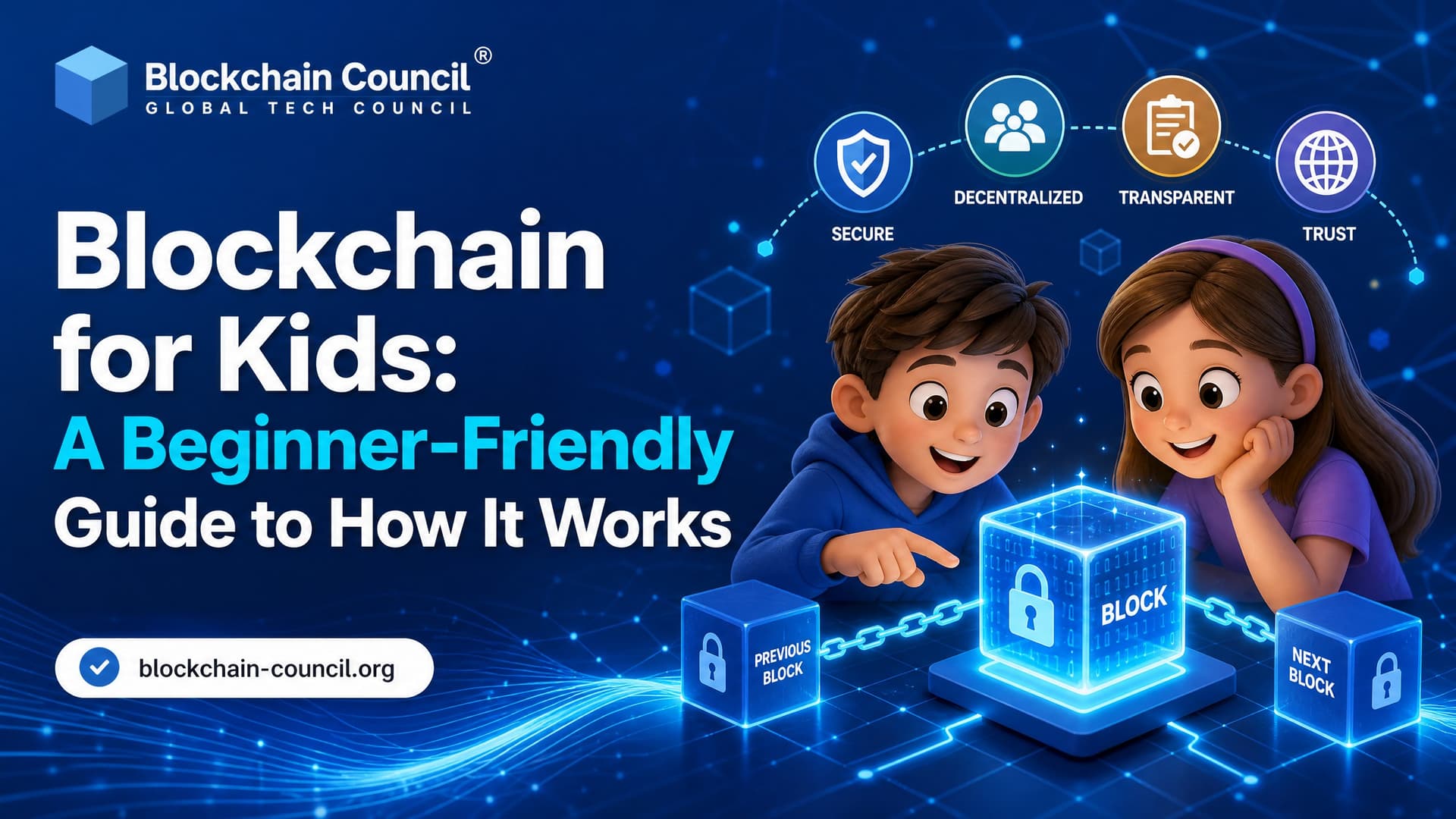
Blockchain for Kids does not have to start with complex code, trading charts, or technical jargon. At its simplest, blockchain is like a shared digital notebook that many people can see, copy, and agree on. Once something is written in that notebook, it is very hard to secretly erase or change it.
This beginner-friendly guide explains blockchain in a way children can understand, while giving parents, educators, and curious professionals enough technical depth to connect the idea to cryptocurrencies, digital assets, supply chains, smart contracts, and future careers. Introducing children to blockchain is easier when educators and parents have a strong understanding of emerging technologies. Pursuing a Tech Certification provides practical knowledge of blockchain, AI, cybersecurity, cloud computing, and digital transformation. These industry-recognized programs help adults explain blockchain fundamentals in simple language while preparing young learners with essential digital skills that will remain valuable throughout their education and future careers. Once children understand the fundamentals of blockchain, they can gradually explore related technologies such as artificial intelligence, coding, cybersecurity, and digital literacy. Learning these subjects together helps young learners see how blockchain fits into the broader digital world. Intellect Council offers age-appropriate, AI-powered learning paths that introduce blockchain concepts alongside coding, AI, robotics, and other future-ready skills through interactive lessons and personalized learning experiences.

What Is Blockchain for Kids?
Imagine a classroom where every student has the same notebook. When someone trades a blue crayon for a red crayon, everyone writes the trade in their notebook. If one student later tries to pretend the trade never happened, the class can compare notebooks and spot the problem.
That is the basic idea behind blockchain. It is a shared digital ledger, which means a record book stored on many computers at the same time. These computers are called nodes. Instead of one company or one person controlling the notebook, many computers work together to keep the records accurate.
A blockchain stores information in groups called blocks. Each new block is added after the previous one, forming a chain. This is why it is called a blockchain.
A Simple Blockchain Story: The Digital Sticker Book
Here is how to explain Blockchain for Kids with a sticker book example.
Suppose four friends collect digital stickers. They want to trade stickers, but they also want to make sure nobody copies a rare sticker or lies about owning one. So they create a shared online sticker book.
Every trade is written on a new page.
All friends get the same updated copy.
Each page is numbered in order.
Once a page is approved, nobody can quietly change it.
If someone tries to cheat, the others can compare their copies.
This is similar to how a blockchain records digital ownership. The network agrees on what happened, then stores that record across many computers.
How Does Blockchain Work?
Behind the simple notebook idea, blockchain uses computer science, cryptography, and network rules. Here are the core parts explained clearly.
1. Blocks Store Information
A block is like a page in the digital notebook. It can store transactions, ownership records, smart contract activity, or other types of data. In Bitcoin, for example, blocks store records of digital money moving from one address to another.
2. Hashes Act Like Digital Fingerprints
Each block has a unique code called a hash. A hash is like a digital fingerprint. If even one tiny detail inside the block changes, the fingerprint changes too.
Each block also stores the fingerprint of the block before it. This links the blocks together. If someone tries to change an old block, its fingerprint changes and no longer matches the next block. The network can detect that something is wrong.
3. Many Computers Keep Copies
Instead of keeping the ledger in one central place, blockchain copies it across many computers. This is called decentralization. It makes blockchain harder to attack because there is no single notebook to steal, damage, or secretly rewrite.
4. The Network Must Agree
Before new information is added, the network must validate it. This agreement process is called consensus. Different blockchains use different consensus methods.
Proof-of-work: Computers called miners solve difficult puzzles to add new blocks. Bitcoin uses this model.
Proof-of-stake: Validators are selected based on coins they lock, or stake, in the network. Cardano is a well-known example of a proof-of-stake blockchain.
Proof-of-stake is often discussed as a more energy-efficient alternative to proof-of-work, which is useful when teaching children about both innovation and environmental responsibility.
Why Is Blockchain Considered Secure?
Blockchain is often described as secure, transparent, and tamper-resistant. For kids, this can be explained with three simple ideas.
It is shared: Many computers keep the same records.
It is ordered: Blocks are added one after another in time order.
It is hard to change: Changing an old record would break the chain and be noticed.
Public blockchains are also transparent, meaning people can inspect the records. However, users are usually represented by wallet addresses rather than real names. This helps explain both the power and the privacy questions around blockchain.
Blockchain and Cryptocurrency: What Is the Connection?
Many children first hear about blockchain through Bitcoin, crypto, or digital coins. A cryptocurrency is digital money that runs on a blockchain. Instead of a bank updating balances, the blockchain network records who owns what.
Bitcoin launched in 2009 after the publication of the paper Bitcoin: A Peer-to-Peer Electronic Cash System under the name Satoshi Nakamoto. The roots of blockchain go back earlier. In 1991, researchers Stuart Haber and W. Scott Stornetta described a way to timestamp digital documents so they could not be secretly changed. Their later work used Merkle trees to group many records together more efficiently.
Bitcoin helps explain important traits of digital money:
Scarce: Its supply is limited by code.
Divisible: It can be split into tiny units.
Portable: It can move across the internet.
Hard to copy: The network rejects fake or double-spent coins.
For children, the key lesson is not trading or investing. The key lesson is how digital ownership can be recorded without one central controller.
Real-World Blockchain Examples Kids Can Understand
Digital Money
A child might imagine sending digital allowance to a cousin in another country. Blockchain shows how value can move online through a network rather than through physical cash.
Gaming and NFTs
NFTs, or non-fungible tokens, can represent unique digital items such as art, music, collectibles, or game items. For kids, NFTs can be compared to digital trading cards. The blockchain records who owns the card and when it changes hands.
Food, Toys, and Clothes
Blockchain can help track products through a supply chain. A chocolate bar, toy, or T-shirt may pass through farms, factories, warehouses, and stores. Each step can be recorded so companies and consumers can better understand where products came from.
Smart Contracts
A smart contract is a program on a blockchain that follows rules automatically. A simple example is a digital promise: if homework is marked complete, a reward is released. In real life, smart contracts can support finance, legal agreements, digital assets, and business workflows.
Creative Work
Blockchain can also help prove who created a digital drawing, song, story, or design first. This connects blockchain to intellectual property and creative ownership.
Safety Rules When Teaching Blockchain to Kids
Blockchain education should include safety from the beginning. Children should learn that crypto assets can have real value and real risks.
Do not buy, sell, or trade crypto without a parent or guardian.
Never share wallet passwords, seed phrases, or private keys.
Remember that public blockchain records may be visible to others.
Be careful with games, apps, or websites that promise free coins or rewards.
Ask trusted adults before connecting a wallet or clicking crypto-related links.
This is also a good opportunity to connect blockchain lessons with cybersecurity basics. Professionals and educators can explore related learning paths such as Blockchain Council's Certified Blockchain Expert, Certified Blockchain Developer, and cybersecurity certifications for deeper expertise.
Why Blockchain Literacy Matters for the Future
Industry organizations and educational bodies, including the EU Blockchain Observatory, describe blockchain as more than a cryptocurrency tool. It is increasingly discussed as infrastructure for secure records, transparent systems, digital assets, and decentralized applications.
For kids, blockchain literacy can become part of broader digital literacy, similar to understanding the internet, cloud computing, AI, or online safety. Future professionals may encounter blockchain in finance, gaming, logistics, healthcare, legal technology, identity systems, and digital media.
Educators do not need to start with advanced cryptography. They can begin with stories, classroom ledgers, sticker books, supply chain maps, and simple games. Over time, students can learn deeper ideas such as hashes, nodes, consensus, wallets, and smart contracts.
Conclusion
Blockchain for Kids is best taught as a story about shared records, teamwork, trust, and responsibility. A blockchain is like a digital notebook copied across many computers, where new pages are added in order and protected with special math.
Children do not need to become crypto investors to understand why blockchain matters. They can learn how it helps record ownership, trace products, protect creative work, and power digital systems. With age-appropriate examples and strong safety guidance, blockchain can become an accessible part of modern technology education.
For adults, developers, and educators who want to go further, structured training through Blockchain Council certifications can help turn beginner curiosity into professional blockchain knowledge.
FAQs
1. What Is Blockchain for Kids?
Blockchain is a secure digital system that stores information in connected blocks across multiple computers instead of one central location. For kids, it can be compared to a shared digital notebook where everyone has the same copy, making it difficult to change information without everyone noticing.
2. Why Should Kids Learn About Blockchain?
Learning blockchain helps children understand how modern technology supports digital ownership, online security, transparency, and data sharing. It also builds digital literacy and introduces future technologies that are becoming increasingly important across many industries.
3. How Does Blockchain Work in Simple Terms?
Blockchain works by grouping information into blocks that are linked together in chronological order. Once a block is verified and added to the chain, it becomes part of a secure record that is extremely difficult to alter without changing every connected block.
4. What Is a Block in Blockchain?
A block is like a digital page that stores information, such as transactions or records. When one block is full, a new block is created and securely connected to the previous one, forming a continuous blockchain.
5. Why Is Blockchain Considered Secure?
Blockchain uses cryptography, distributed record-keeping, and verification by multiple participants to protect information. Because copies of the blockchain exist across many computers, changing records without authorization is much more difficult than in traditional databases.
6. What Is Decentralization in Blockchain?
Decentralization means information is stored across many computers instead of being controlled by a single organization. This makes blockchain more transparent, reliable, and resistant to data loss or unauthorized changes.
7. What Is Digital Ownership in Blockchain?
Digital ownership means blockchain can verify who owns a digital item, such as artwork, certificates, game items, or digital collectibles. Blockchain provides a permanent and transparent record that helps prove ownership.
8. Is Blockchain Only Used for Cryptocurrency?
No. While cryptocurrency is one application of blockchain, the technology is also used in healthcare, education, supply chains, digital identity, cybersecurity, voting systems, gaming, and many other industries that require secure record management.
9. At What Age Can Kids Start Learning Blockchain?
Children can begin learning basic blockchain concepts around ages 8-10 using interactive lessons, visual demonstrations, games, and simple STEM activities. Older students can gradually explore coding, smart contracts, and blockchain applications.
10. Do Kids Need Coding Skills to Learn Blockchain?
No. Kids can understand blockchain concepts through stories, activities, and visual examples without programming knowledge. Coding becomes useful later when students want to build blockchain applications or simulations.
11. How Can Parents Explain Blockchain to Children?
Parents can compare blockchain to a shared notebook, a chain of connected building blocks, or a classroom attendance register where everyone keeps the same record. Simple analogies make complex ideas easier for children to understand.
12. What Are the Benefits of Learning Blockchain at an Early Age?
Early blockchain education helps children build digital literacy, logical thinking, cybersecurity awareness, problem-solving skills, critical thinking, and confidence in understanding emerging technologies that will shape the future.
13. How Can Kids Learn Blockchain Safely Online?
Children should use trusted educational websites, interactive STEM platforms, coding programs, educational videos, and beginner-friendly online courses designed specifically for young learners. Parents should supervise learning and prioritize privacy and online safety.
14. What Fun Activities Can Help Kids Learn Blockchain?
Children can build paper blockchains, create digital ownership certificates, play blockchain-themed educational games, complete coding projects, participate in STEM activities, and use storytelling to understand blockchain concepts through hands-on learning.
15. What Common Mistakes Should Parents Avoid When Teaching Blockchain?
Parents should avoid introducing advanced financial topics too early, focusing mainly on cryptocurrency, using overly technical language, or choosing resources that are not suitable for the child's age and understanding.
16. How Does Blockchain Connect With Artificial Intelligence and Cybersecurity?
Blockchain helps secure digital information, while AI analyzes and automates data-driven processes. Together with cybersecurity, these technologies support secure digital systems, automation, and trustworthy online services, making them valuable future skills for children.
17. Which Careers Can Blockchain Knowledge Support?
Learning blockchain can prepare children for future careers such as blockchain developer, software engineer, cybersecurity analyst, AI engineer, fintech specialist, cloud architect, Web3 developer, digital identity expert, and technology consultant.
18. How Can Teachers Introduce Blockchain in Schools?
Teachers can use classroom simulations, group projects, STEM activities, coding exercises, visual presentations, and discussions about digital ownership and cybersecurity to introduce blockchain concepts in an engaging and age-appropriate manner.
19. How Can Parents Measure Their Child's Blockchain Learning Progress?
Parents can evaluate progress through quizzes, creative projects, coding activities, digital portfolios, classroom assignments, and by encouraging children to explain blockchain concepts using their own words and real-life examples.
20. Why Is Blockchain an Important Future Skill for Kids?
Blockchain is becoming a key technology in finance, healthcare, education, cybersecurity, digital identity, and many other industries. By learning blockchain fundamentals through beginner-friendly lessons, children develop digital literacy, STEM knowledge, critical thinking, and responsible technology skills that prepare them for future education, careers, and participation in an increasingly digital world.
Related Articles
View All
Blockchain For Kids
Blockchain and Cryptocurrency for Kids: A Guide for Parents and Teachers
A practical guide to blockchain and cryptocurrency for kids, covering age-appropriate lessons, risks, safety, school curricula, and parent guidance.

Blockchain For Kids
Blockchain Basics for Kids: Beginner-Friendly Online Lessons for Digital Ownership and NFTs Safely
Learn blockchain basics for kids with safe online lessons that teach digital ownership and NFTs using simulations, badges, and scam-aware security habits.

Blockchain For Kids
Best Blockchain Learning Resources for Kids: Books, Courses, Apps, and Videos
Explore the best blockchain learning resources for kids, including books, courses, apps, videos, safety tips, and age-appropriate learning paths.
Trending Articles
The Role of Blockchain in Ethical AI Development
How blockchain technology is being used to promote transparency and accountability in artificial intelligence systems.

Can DeFi 2.0 Bridge the Gap Between Traditional and Decentralized Finance?
The next generation of DeFi protocols aims to connect traditional banking with decentralized finance ecosystems.
Claude AI Tools for Productivity
Discover Claude AI tools for productivity to streamline tasks, manage workflows, and improve efficiency.