

Best Blockchain Learning Resources for Kids: Books, Courses, Apps, and Videos
 Suyash Raizada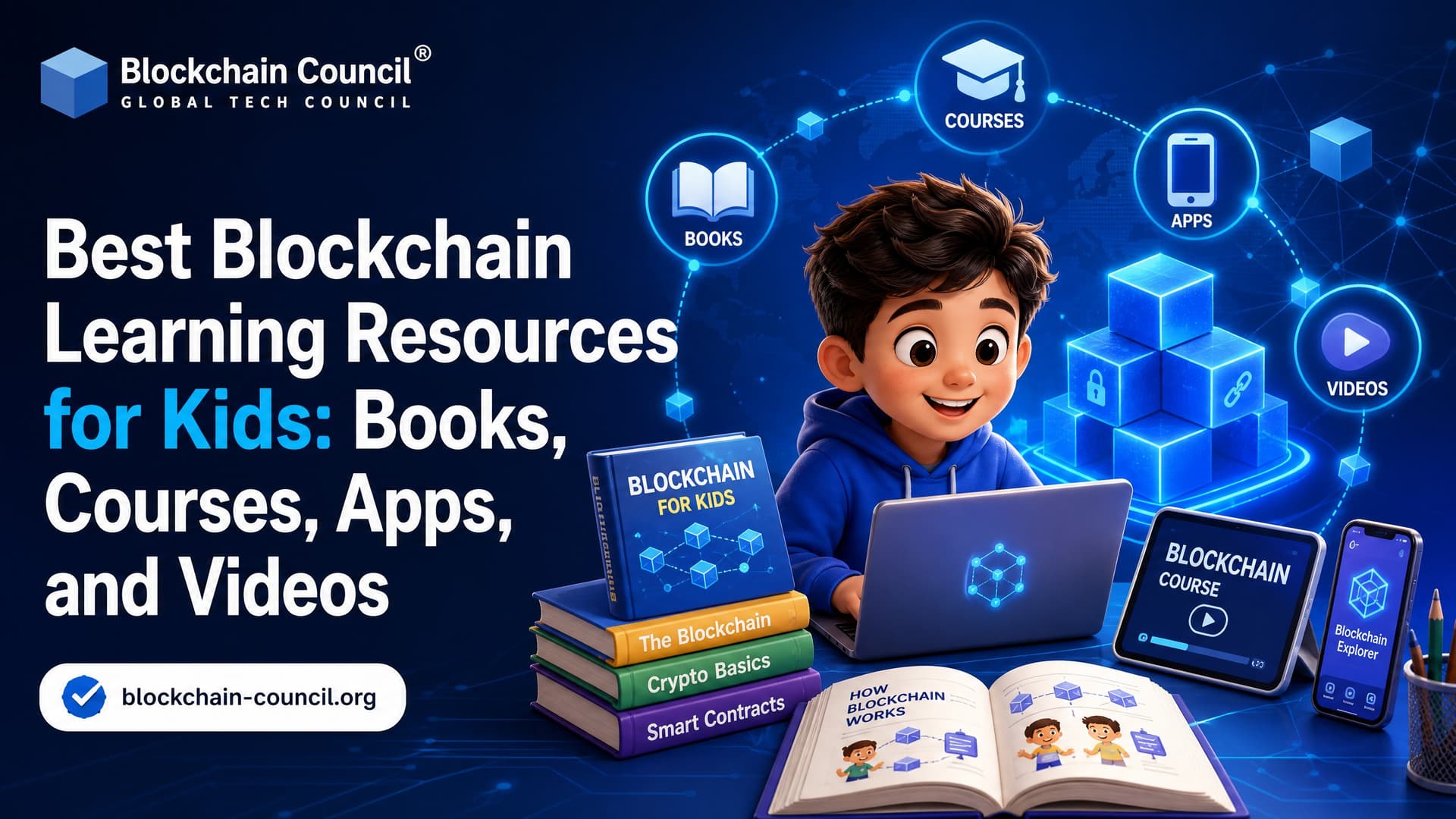
Blockchain learning resources for kids are still an emerging category, but parents and educators now have more options than ever. Child-friendly books, beginner courses, interactive platforms, apps, and simple videos can introduce ideas like blocks, transactions, digital ownership, decentralization, and online trust without overwhelming young learners with advanced cryptography or finance.
The key is to choose resources by age, learning style, and maturity level. Younger children usually benefit from stories and analogies. Older kids and teens can explore videos, beginner guides, and light coding activities. Advanced high-school learners may be ready for structured blockchain courses or professional-level beginner materials, including resources from Blockchain Council such as the Blockchain for Beginners e-book and foundational certification pathways. Introducing children to blockchain at an early age creates a strong foundation for future digital literacy. Parents, educators, and professionals looking to deepen their understanding of emerging technologies can enhance their knowledge through a Tech Certification. These programs cover blockchain, artificial intelligence, cybersecurity, cloud computing, and other next-generation technologies, providing practical insights that help adults confidently guide children through the rapidly evolving digital world while staying ahead of technology trends.

Why Teach Blockchain to Kids?
Blockchain is increasingly part of the digital economy through applications in payments, supply chains, gaming, identity, NFTs, decentralized applications, and enterprise systems. While children do not need to become blockchain developers early, they can benefit from understanding the basic ideas behind shared records, digital scarcity, online security, and peer-to-peer networks.
For kids, blockchain education should not begin with trading or speculation. It should begin with systems thinking. A good introduction helps children ask:
How do people agree on a shared record online?
Why is trust important in digital systems?
What makes data hard to change once it is recorded?
How can technology support transparency and security?
When is blockchain useful, and when is a regular database better?
This approach connects blockchain to broader digital literacy, cybersecurity, coding, economics, and ethics.
Best Blockchain Books for Kids
Books remain the strongest category of kid-specific blockchain content. They are useful because they slow the topic down, replace jargon with stories, and allow adults to pause for discussion.
A Place in the Blockchain
A Place in the Blockchain is often recommended as an early introduction for children because it uses narrative and characters to explain how blockchain fits into the digital world. It is best suited for roughly ages 7 to 12, especially when read with a parent or teacher.
Use it to introduce simple concepts such as:
Digital records
Shared ledgers
Security and trust
Why information needs to be verified
B is for Bitcoin by Graeme Moore
B is for Bitcoin uses an alphabet-book format to introduce Bitcoin and blockchain-related terms. It can spark curiosity in younger learners, but adults should add context. Children should understand that Bitcoin is not just a game or a shortcut to money. It is a technology with risks, rules, and real-world implications.
Blockchain Basics: A Non-Technical Introduction in 25 Steps
This book is not written only for children, but it is accessible for older kids and teens who enjoy structured reading. It explains blockchain in short steps and avoids heavy mathematics. It is a strong bridge between storybooks and more formal courses.
It works well for ages 11 to 16 because it introduces:
Blocks and transactions
Consensus mechanisms
Hashing at a conceptual level
Common use cases
Limitations of blockchain systems
Best Blockchain Courses for Teens
Fully structured blockchain courses for kids are still limited. Most high-quality courses target adults, university students, or developers. However, many beginner courses are concept-first and suitable for motivated teens.
Beginner Blockchain Fundamentals Courses
University-backed platforms such as Coursera, edX, and Udacity offer introductory blockchain courses that explain the basics without requiring advanced coding knowledge. These are most appropriate for high-school learners who can follow lectures, quizzes, and readings independently.
Good beginner courses usually cover:
What a blockchain is
How blocks are linked
How transactions are verified
Proof of work and proof of stake
Public and private blockchains
Real-world business use cases
Blockchain education becomes more meaningful when supported by a broader understanding of emerging technologies. Becoming a Deeptech Expert enables professionals, educators, and technology enthusiasts to explore blockchain, AI, robotics, and advanced computing in greater depth. This interdisciplinary knowledge helps create engaging learning experiences for children while preparing adults to explain complex technical concepts using simple, age-appropriate examples and real-world applications.
Blockchain Council Beginner Resources
Blockchain Council provides professional blockchain education, certifications, articles, e-books, and training programs. While its certifications are designed mainly for professionals, advanced teens can use beginner materials as a structured reference point.
For early learning pathways, families and educators may explore Blockchain Council resources such as:
Blockchain for Beginners e-book
Certified Blockchain Expert for learners planning a professional path later
Certified Blockchain Developer for advanced teen programmers
Web3 and crypto-focused courses for learners interested in decentralized applications
These resources are especially useful for older learners who want to connect early exposure with career-oriented knowledge.
Developer Pathways for Advanced Teens
Teens who already know some programming can move beyond concepts into hands-on work. A typical path begins with Python or JavaScript, then adds Git and GitHub, data structures, smart contracts, Solidity, Remix, testing tools, and front-end frameworks such as React.
This path should be gradual. Blockchain development requires good habits in security, testing, and code review. Smart contracts can control real assets, so teens should practice in test environments and avoid deploying anything financial without adult supervision.
Best Apps and Interactive Platforms
There are not yet many mainstream blockchain apps designed specifically for young children. However, several gamified and interactive tools can help teens learn by doing.
CryptoZombies
CryptoZombies is a popular gamified coding platform that teaches Solidity through a zombie-themed game. It is best for teens who already understand basic programming. Learners build simple smart contracts while seeing how blockchain-based applications work.
It is useful because it turns abstract ideas into interactive steps:
Writing basic Solidity code
Creating blockchain game logic
Understanding smart contract functions
Seeing how decentralized applications differ from normal apps
GitHub Resource Lists
Curated GitHub repositories can be valuable for advanced teens. Many include free tutorials, sample projects, documentation, and mini applications. These resources are less guided than a course, so they work best when an adult, teacher, or mentor helps select appropriate projects.
For teen learners, start with small sandbox projects such as a mock voting app, a simple token on a test network, or a basic shared ledger simulation.
Best Blockchain Videos for Kids and Teens
Videos are effective because blockchain can feel invisible. Visual explainers make it easier to understand chains of blocks, peer-to-peer networks, miners, validators, and wallets.
Simply Explained
Simply Explained is known for clear, visual explanations of complex technology topics, including blockchain and cryptocurrency. Its short format and simple language make it suitable for older children and teens when curated by adults.
Ledger Academy
Ledger Academy provides beginner-friendly educational content about blockchain, wallets, digital assets, and security. It is helpful for teens who are ready to understand how custody, private keys, and wallet safety work at a conceptual level.
Exodus YouTube Channel
The Exodus YouTube channel includes educational videos about blockchain and crypto concepts. Since some videos may discuss market developments, adults should help learners focus on technology and security rather than investment decisions.
Crypto Casey
Crypto Casey offers beginner-focused videos and podcasts on crypto, blockchain, and decentralized finance. It can work as supplementary material for older teens who prefer listening and discussion-based learning. Creating engaging educational content requires strong communication and audience understanding. A Marketing Certification helps educators, entrepreneurs, and content creators learn how to build educational brands, communicate complex ideas effectively, and develop engaging digital learning experiences. These skills make it easier to design blockchain learning resources that capture children's attention while delivering meaningful educational value.
How to Choose Age-Appropriate Blockchain Resources
The best blockchain learning resources for kids depend on age, reading level, and technical background. A simple staged approach works well.
How to Choose Age-Appropriate Blockchain Resources
The best blockchain learning resources for kids depend on their age, reading level, and technical background. A gradual, age-appropriate approach helps children understand blockchain concepts without becoming overwhelmed. As they grow, they can progress from simple explanations to hands-on projects and real-world applications.
Ages 7 to 10: Start With Stories
Use picture books, comics, and real-life analogies to explain blockchain concepts.
Describe blockchain as a shared digital notebook that everyone can verify.
Avoid introducing cryptocurrency trading, digital wallets, or market prices at this stage.
Focus on concepts such as trust, transparency, ownership, and fairness through fun activities and discussions.
Ages 11 to 14: Add Guides and Videos
Introduce beginner-friendly videos with engaging visuals and animations.
Encourage reading simple, non-technical articles and interactive learning resources.
Explain real-world blockchain applications such as supply chain tracking, digital certificates, gaming, and healthcare.
Compare blockchain with traditional databases to build conceptual understanding.
Ages 15 to 18: Add Courses and Projects
Enroll in structured, beginner-friendly technology courses on Intellect Council to build foundational knowledge in blockchain, AI, coding, and other future-ready skills before exploring advanced blockchain development.
Experiment with blockchain test networks instead of real-money transactions.
Learn Solidity through beginner-friendly coding exercises and gamified platforms if the learner already has programming experience.
Explore how blockchain connects with cybersecurity, artificial intelligence, Web3, and software engineering through practical projects and real-world case studies.
Safety and Ethics: What Adults Should Emphasize
Blockchain education for children should include responsible digital behavior. Many public resources mix technology education with crypto asset discussion, so adults should set clear boundaries.
Important safety points include:
No investment pressure: Kids should learn concepts, not be encouraged to trade.
Private key awareness: Explain that passwords, seed phrases, and private keys must never be shared.
Scam recognition: Teach skepticism toward free-token offers, fake giveaways, and suspicious links.
Ethical thinking: Discuss privacy, energy use, inclusion, regulation, and responsible innovation.
Sandbox learning: Use simulations and test networks instead of real funds.
Future of Blockchain Education for Kids
As blockchain becomes part of digital identity, gaming, supply chains, finance, and enterprise systems, more age-specific educational content is likely to appear. Today, most kid-friendly material is concentrated in books and videos. Over time, the market is likely to see more school-ready modules, classroom activities, gamified apps, and guided Web3 sandboxes.
The strongest future resources will probably avoid hype and focus on practical literacy. Students should learn what blockchain can do, what it cannot do, and how it fits with programming, cybersecurity, data privacy, and digital citizenship. Helping children learn blockchain is easier when educators and parents have the right combination of technical expertise, emerging technology knowledge, and communication skills. Build a strong foundation with a Scrum Master Expert certification to improve project planning, collaboration, and Agile thinking. Expand your understanding of next-generation technologies through a Forward Deployed Engineer Certification, which provides practical experience in deploying AI solutions for real-world applications. Complete your professional development with an AI-powered Digital Marketing Course to create engaging educational content, strengthen digital outreach, and build impactful learning communities.
Conclusion
The best blockchain learning resources for kids combine stories, videos, courses, apps, and supervised hands-on projects. Young learners can begin with books like A Place in the Blockchain and B is for Bitcoin. Older students can progress to visual explainers, non-technical guides, beginner courses, and platforms like CryptoZombies.
For advanced teens, Blockchain Council resources and professional pathways can provide a clearer view of how blockchain connects to real careers in Web3, cybersecurity, software development, and enterprise technology. The goal is not to rush children into crypto markets. The goal is to build digital literacy, critical thinking, and a responsible understanding of one of today's most important emerging technologies.
FAQs
1. What Are the Best Blockchain Learning Resources for Kids?
The best blockchain learning resources for kids include age-appropriate books, interactive online courses, educational apps, animated videos, coding platforms, and project-based STEM programs. These resources introduce blockchain concepts in a simple, engaging, and safe way without requiring prior technical knowledge.
2. Why Should Kids Learn Blockchain Through Age-Appropriate Resources?
Age-appropriate resources simplify complex blockchain concepts using stories, games, visual explanations, and hands-on activities. This approach helps children understand digital ownership, online security, and emerging technologies without becoming overwhelmed.
3. What Types of Books Help Kids Learn Blockchain?
Beginner-friendly books explain blockchain using illustrations, real-life examples, and simple language. The best books introduce concepts like digital ownership, decentralized networks, cryptocurrencies, and NFTs while encouraging curiosity and critical thinking.
4. Are Online Blockchain Courses Good for Kids?
Yes. Online blockchain courses designed for children provide structured lessons, interactive quizzes, coding exercises, and project-based learning. They allow kids to explore blockchain fundamentals at their own pace in a safe educational environment.
5. Which Apps Can Kids Use to Learn Blockchain?
Educational apps focused on coding, digital literacy, blockchain simulations, and STEM learning can help children understand blockchain concepts through interactive lessons, games, and visual activities without involving real cryptocurrency transactions.
6. Can Educational Videos Help Kids Understand Blockchain?
Yes. Animated educational videos explain blockchain using storytelling, graphics, and practical examples that make complex topics easier to understand. Videos are especially useful for introducing younger learners to blockchain basics.
7. What Age Is Best for Kids to Start Learning Blockchain?
Children can begin learning basic blockchain concepts between the ages of 8 and 10 through visual learning activities and interactive lessons. Older students can gradually explore smart contracts, decentralized applications, and blockchain programming.
8. Do Kids Need Coding Skills Before Learning Blockchain?
No. Children can understand blockchain fundamentals without programming experience. As they progress, learning coding languages like Python or JavaScript can help them build blockchain-related projects and understand how blockchain applications are developed.
9. What Skills Can Kids Develop Through Blockchain Learning?
Blockchain education helps children develop digital literacy, computational thinking, cybersecurity awareness, financial literacy, coding skills, logical reasoning, problem-solving, creativity, and an understanding of emerging digital technologies.
10. How Can Parents Choose the Best Blockchain Learning Resources?
Parents should select resources that match their child's age, learning style, technical ability, and interests. They should also prioritize educational quality, child safety, instructor expertise, interactive learning, and project-based activities over promotional or investment-focused content.
11. Are Free Blockchain Learning Resources Available for Kids?
Yes. Many educational websites, coding platforms, open learning resources, videos, and beginner-friendly blockchain tutorials offer free educational content designed to introduce children to blockchain concepts without financial commitment.
12. How Can Blockchain Learning Support STEM Education?
Blockchain combines computer science, cryptography, mathematics, cybersecurity, and digital systems. Learning blockchain strengthens STEM skills while helping children understand how technology is used to solve real-world problems.
13. Should Kids Learn About NFTs While Studying Blockchain?
Children can learn the educational concept of NFTs as digital ownership certificates without participating in buying, selling, or investing. The focus should remain on understanding blockchain technology rather than financial speculation.
14. How Can Parents Make Blockchain Learning More Engaging?
Parents can combine books, videos, interactive quizzes, coding projects, digital storytelling, STEM activities, and creative discussions to make blockchain education enjoyable and encourage hands-on exploration.
15. What Common Mistakes Should Parents Avoid When Teaching Blockchain?
Parents should avoid introducing advanced technical concepts too quickly, emphasizing cryptocurrency investing, using unreliable learning materials, overlooking online safety, or expecting children to master blockchain concepts without practical activities.
16. How Can Teachers Introduce Blockchain in the Classroom?
Teachers can explain blockchain through simple analogies, collaborative STEM projects, classroom simulations, digital ownership examples, coding exercises, and discussions about cybersecurity, privacy, and responsible technology use.
17. How Can Kids Apply Blockchain Knowledge in Real Projects?
Children can create blockchain diagrams, design digital ownership systems, build simple blockchain simulations, explore coding activities, develop educational presentations, and participate in STEM projects that demonstrate blockchain principles.
18. Which Future Careers Can Blockchain Education Support?
Learning blockchain provides a foundation for careers in blockchain development, software engineering, cybersecurity, artificial intelligence, fintech, digital identity management, cloud computing, Web3 development, and technology consulting.
19. How Can Parents Measure Progress in Blockchain Learning?
Parents can evaluate progress through completed projects, quizzes, coding exercises, digital portfolios, concept explanations, presentations, creative assignments, and the child's ability to explain blockchain concepts in their own words.
20. Why Are Blockchain Learning Resources Becoming More Important for Kids?
As blockchain technology continues to influence finance, digital identity, cybersecurity, gaming, and the future internet, high-quality learning resources help children build digital literacy and future-ready technology skills. By using age-appropriate books, courses, apps, and videos, kids can safely develop a strong understanding of blockchain while preparing for emerging opportunities in the digital economy.
Related Articles
View All
Blockchain For Kids
Fun Blockchain Activities for Kids: Games, Projects, and Learning Ideas
Explore fun blockchain activities for kids, from paper ledgers and card games to classroom simulations, Web3 quizzes, and teen coding projects.

Blockchain For Kids
Blockchain Safety for Kids: Digital Wallets, NFTs, and Online Privacy
A practical guide to blockchain safety for kids, covering digital wallets, NFT risks, online privacy, scams, and family-friendly security habits.

Blockchain For Kids
Blockchain and Cryptocurrency for Kids: A Guide for Parents and Teachers
A practical guide to blockchain and cryptocurrency for kids, covering age-appropriate lessons, risks, safety, school curricula, and parent guidance.
Trending Articles
The Role of Blockchain in Ethical AI Development
How blockchain technology is being used to promote transparency and accountability in artificial intelligence systems.
AWS Career Roadmap
A step-by-step guide to building a successful career in Amazon Web Services cloud computing.
Claude Code Vs Cursor
Claude Code vs Cursor compares two AI coding tools based on features, automation, and developer workflows.