
Blockchain for IoT Device Security

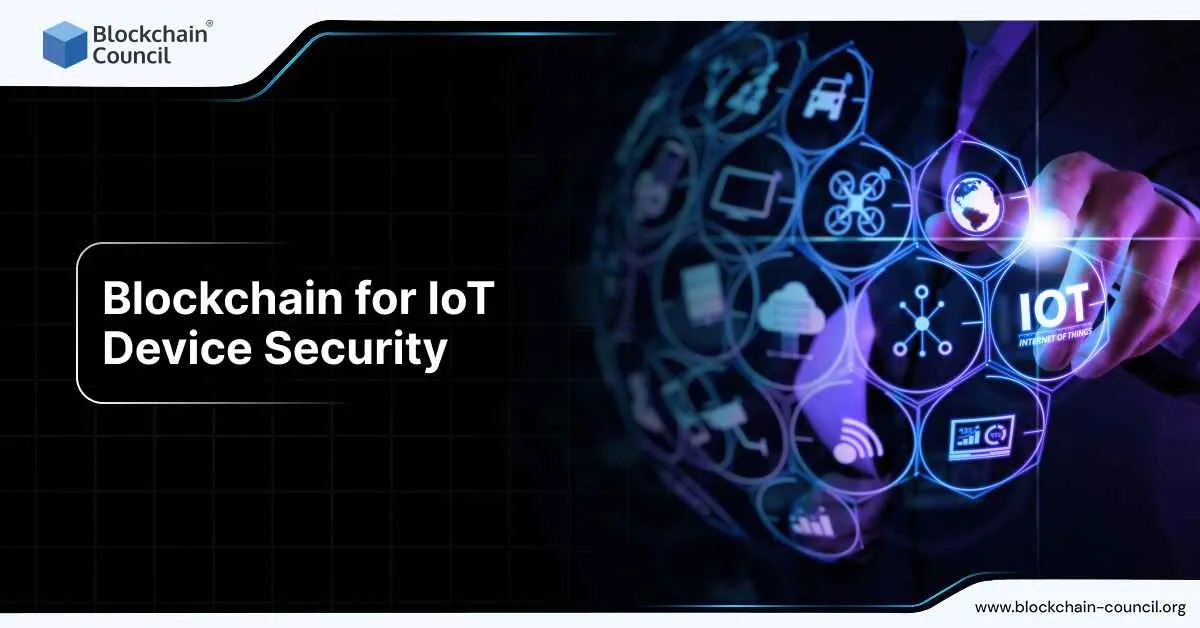
The Internet of Things (IoT) connects billions of devices, from smart locks and thermostats to medical sensors and industrial machinery. But this connectivity comes at a cost—IoT devices are notorious for weak security, creating easy entry points for hackers. Attacks like the Mirai botnet showed how vulnerable connected devices can be. Blockchain offers a way to strengthen IoT security by giving devices tamper-proof identities, encrypted communication, and decentralized control. To understand how these systems work together, you can start with a Blockchain Course and build your foundation.
Why IoT Security Is Challenging
- Massive scale: Billions of devices generate constant streams of data.
- Weak hardware: Many IoT devices have limited memory and processing power.
- Centralized risks: Most systems rely on central servers that can be hacked.
- Patch delays: Firmware updates are often late, leaving devices exposed.
How Blockchain Improves IoT Security
Core Security Benefits
- Immutable device identities: Each device gets a unique, verifiable identity.
- Decentralized control: Eliminates single points of failure.
- Secure audit trails: Records of device activity cannot be altered.
- Smart contracts: Enforce access rules automatically.
- Resilience: Networks are harder to disrupt with DDoS or hijacking attempts.
Authentication & Privacy
- Enhanced Privacy ID (EPID) for anonymous device verification.
- Encrypted transactions that protect data in motion.
- Stealth communication protocols to reduce tracking.
Real-World Platforms and Use Cases
- Helium: A decentralized IoT network that rewards nodes for providing coverage.
- IoTeX: Focuses on secure device communication and user-owned data.
- VeChain: Tracks supply chain assets with IoT sensors on blockchain.
- IOTA’s Tangle: A DAG-based ledger built specifically for IoT scalability.
- Enterprise pilots (EdgeChain, IoTChain): Blend edge computing with blockchain for secure access control.
Blockchain + IoT Security at a Glance
Identity & Authentication

- Devices verified with immutable IDs.
- Prevents spoofing and unauthorized access.
Data Integrity
- Logs and transactions stored on-chain.
- Tamper-proof audit trails for compliance.
Automation
- Smart contracts enforce rules without manual oversight.
- Firmware updates triggered securely.
Resilience
- No central server to take down.
- Strong defense against botnets like Mirai.
Trust & Transparency
- Shared ledger for all stakeholders.
- Users, manufacturers, and regulators see the same trusted data.
This snapshot shows how blockchain shifts IoT security from fragile, centralized systems to resilient, verifiable networks.
Obstacles and Trade-Offs
- Scalability: IoT data volumes can overwhelm blockchains.
- Device constraints: Low-power devices can’t run full blockchain nodes.
- Latency: Blockchains may introduce delays in real-time IoT tasks.
- Privacy balance: Public ledgers can expose metadata, needing hybrid models.
- Regulation: Questions remain around global data compliance.
Why Businesses and Policymakers Should Care
- Manufacturers: Gain tools to deliver safer, more trustworthy devices.
- Enterprises: Reduce risks of IoT-driven breaches.
- Governments: Strengthen critical infrastructure resilience.
- Professionals: Build expertise in blockchain + IoT through the Best Blockchain Course. For data-focused careers, the Data Science Certification is highly relevant. For leadership roles, the Marketing and Business Certification equips you to align IoT security with strategic priorities.
Conclusion
IoT devices are central to modern life, but they are also weak points in digital infrastructure. Blockchain can reinforce them with immutable identities, verifiable data, and decentralized resilience. Projects like Helium, IOTA, and IoTeX prove that this isn’t just theory—it’s happening today. While challenges like scalability and regulation remain, the direction is clear: blockchain and IoT together create smarter, safer, and more trustworthy connected systems.
Related Articles
View All
Blockchain
Why AI Needs Blockchain for Trust and Security
Introduction Artificial Intelligence (AI) has become one of the most powerful technologies driving digital transformation across industries. From healthcare diagnostics and financial fraud detection to recommendation systems and autonomous vehicles, AI systems are increasingly responsible for…
Blockchain
Regulatory-Grade Security in Blockchain Systems: Aligning Decentralization with Compliance and Cyber Risk Management
Summary: Regulatory-grade security ensures blockchain systems comply with legal, industry, and cybersecurity regulations. Blockchain security architectures support data protection, auditability, and structured cyber risk management. Proper governance aligns decentralization with regulatory…

Blockchain
Blockchain Security
Blockchain networks run some of the most valuable systems in the world. They move money, track supply chains, store medical data, and manage digital identities. This growth has created a new security landscape. Attackers are no longer focused on breaking the chain itself. They target the tools,…
Trending Articles
The Role of Blockchain in Ethical AI Development
How blockchain technology is being used to promote transparency and accountability in artificial intelligence systems.

AWS Career Roadmap
A step-by-step guide to building a successful career in Amazon Web Services cloud computing.
Top 5 DeFi Platforms
Explore the leading decentralized finance platforms and what makes each one unique in the evolving DeFi landscape.