

Whole Grain Bread and AI

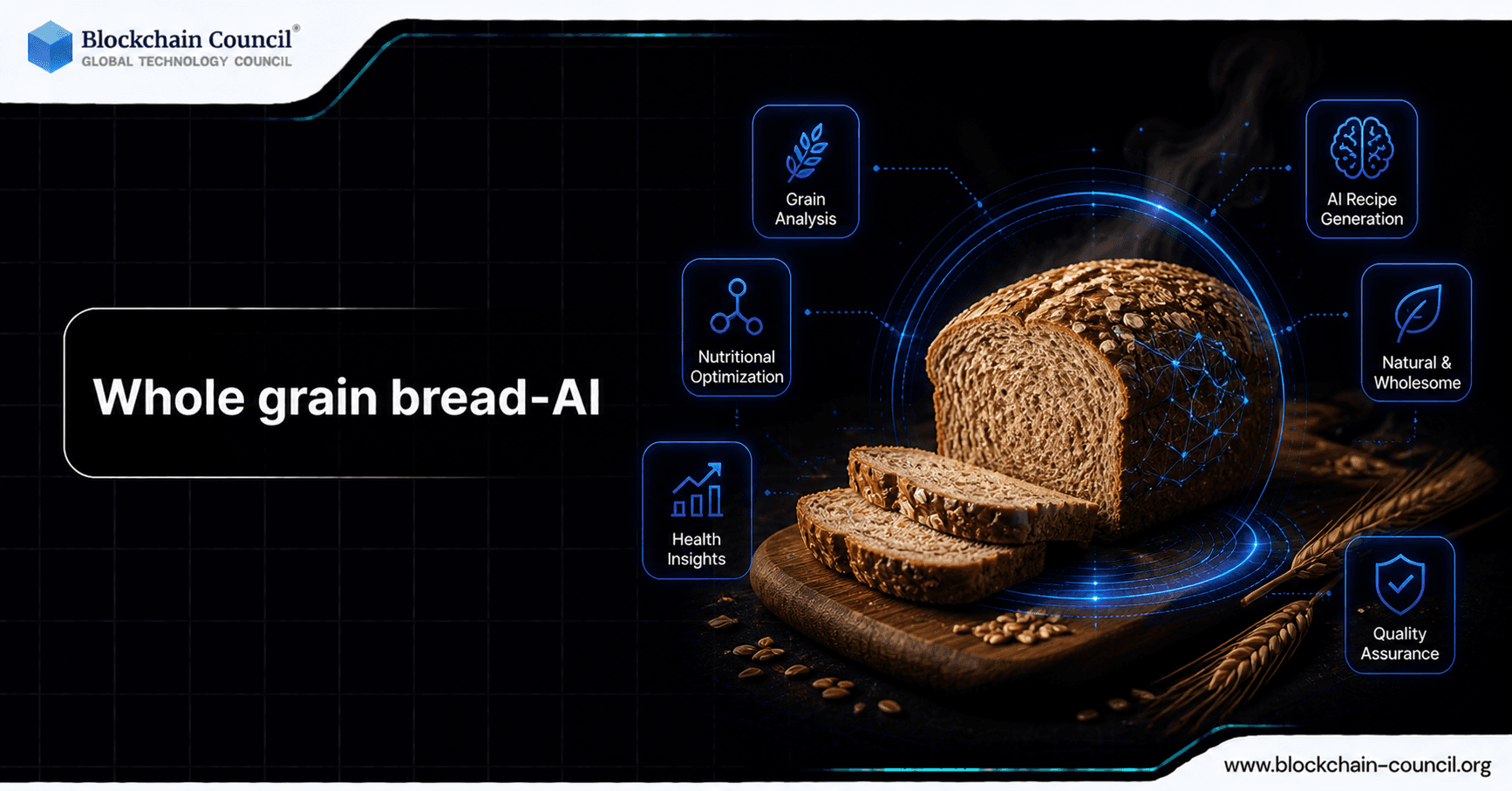
Whole grain bread has long been recognized as a staple of healthy diets, offering essential nutrients, fiber, and long-term health benefits. At the same time, artificial intelligence (AI) is transforming industries across the globe, including food production, agriculture, and supply chain management. The combination of whole grain bread and AI may seem unusual at first, but it represents a powerful intersection of nutrition and technology.
From optimizing crop production to improving baking processes and personalizing nutrition plans, AI is reshaping how whole grain bread is produced, distributed, and consumed. This transformation is not only improving efficiency but also enhancing food quality and sustainability.

This article explores the relationship between whole grain bread and AI, covering recent developments, real-world applications, benefits, challenges, and future trends. It also highlights the importance of building AI expertise through certifications such as AI expert certification, Claude AI Certification, and ChatGPT Expert certification.
What is Whole Grain Bread?
Whole grain bread is made using flour that contains all parts of the grain kernel, including the bran, germ, and endosperm. This makes it more nutritious than refined bread.
Nutritional Benefits
High in dietary fiber
Rich in vitamins and minerals
Supports digestion
Helps maintain stable blood sugar levels
Whole grain bread is widely recommended for maintaining overall health.
The Role of AI in the Food Industry
AI is increasingly being used to optimize food production and supply chains.
Key Applications
Crop monitoring and yield prediction
Food quality control
Supply chain optimization
Personalized nutrition
These applications are improving efficiency and sustainability in the food industry.
How AI is Transforming Whole Grain Bread Production
Smart Agriculture
AI helps farmers grow better-quality grains through:
Soil analysis
Weather prediction
Pest detection
This ensures higher-quality raw materials for whole grain bread.
Automated Milling
AI systems optimize grain processing to preserve nutrients.
Intelligent Baking Systems
Modern bakeries use AI to:
Control temperature and timing
Maintain consistency in texture and taste
Reduce waste
Quality Assurance
Computer vision systems inspect bread for quality and defects.
AI in Supply Chain Management
Demand Forecasting
AI predicts consumer demand, reducing overproduction.
Logistics Optimization
Efficient transportation ensures freshness.
Inventory Management
AI systems track stock levels and minimize waste.
Personalized Nutrition and Whole Grain Bread
AI is enabling personalized dietary recommendations.
Health Monitoring
AI analyzes health data to recommend whole grain intake.
Diet Planning
Customized meal plans include whole grain bread based on individual needs.
Digital Health Platforms
Apps provide real-time dietary suggestions.
Professionals can enhance their expertise through the AI powered digital marketing course, especially in health-focused campaigns.
Real-World Examples
Smart Bakeries
Some bakeries use AI-driven ovens for consistent quality.
Food Tech Startups
Companies use AI to develop healthier bread formulations.
Retail Chains
Supermarkets use AI to optimize inventory and reduce waste.
Software Development in Food Tech
Developers create AI systems for food production. Programs like the AI Powered coding expert Course support these innovations.
Benefits of AI in Whole Grain Bread Production
Improved Quality
AI ensures consistent taste and texture.
Reduced Waste
Efficient processes minimize food waste.
Enhanced Sustainability
AI optimizes resource usage.
Better Health Outcomes
Personalized nutrition improves dietary habits.
Challenges and Limitations
High Implementation Costs
AI systems require significant investment.
Technical Complexity
Integration can be challenging.
Data Dependency
AI relies on accurate data for effectiveness.
Ethical Concerns
Data privacy and transparency must be addressed.
Recent Developments
AI-Driven Food Innovation
New recipes and formulations are developed using AI.
Smart Kitchens
AI-enabled appliances are becoming common.
Blockchain Integration
Ensures transparency in food supply chains.
AI Regulation
Governments are introducing policies for responsible AI use.
Importance of AI Skills
Understanding AI is crucial for professionals in the food industry. Certifications such as:
help individuals stay competitive.
Future of Whole Grain Bread and AI
The future includes:
Fully automated bakeries
AI-driven nutrition planning
Sustainable farming practices
Integration with smart home devices
AI will continue to transform how we produce and consume food.
Best Practices
Use AI responsibly in food production
Ensure data accuracy
Maintain food safety standards
Continuously update systems
Ethical Considerations
Transparency in AI usage
Protection of consumer data
Fair access to technology
Conclusion
The combination of whole grain bread and AI highlights how technology is reshaping even the most traditional aspects of daily life. From farming to baking to personalized nutrition, AI is improving efficiency, quality, and sustainability.
While challenges remain, the future of food production looks promising with AI-driven innovation. By embracing technology and developing relevant skills, industries and individuals can benefit from this transformation.
FAQs
1. What is whole grain bread?
Whole grain bread is made from flour that includes all parts of the grain kernel. It is rich in fiber and nutrients. It supports digestion and overall health. It is considered healthier than refined bread. Consumption is recommended. It is widely available.
2. How is AI used in bread production?
AI is used to optimize farming, processing, and baking. It analyzes data to improve quality. Automation increases efficiency. AI systems control production processes. Continuous learning improves results. It enhances productivity.
3. What are the benefits of whole grain bread?
Benefits include improved digestion and better nutrition. It provides essential vitamins and minerals. It helps regulate blood sugar levels. It supports heart health. It is a healthy choice. It is widely recommended.
4. Can AI improve food quality?
Yes, AI can enhance quality by monitoring production. It detects defects and ensures consistency. Data analysis improves processes. Automation reduces errors. Quality improves significantly. It is effective.
5. What industries use AI in food production?
Industries such as agriculture, manufacturing, and retail use AI. Applications are diverse. Growth is increasing. Adoption is widespread. Impact is significant. It supports innovation.
6. Is AI expensive to implement in food production?
AI implementation can be costly initially. Costs depend on system complexity. Long-term benefits often outweigh costs. Efficiency improves. Investment is increasing. It varies.
7. How does AI help in supply chains?
AI predicts demand and optimizes logistics. It reduces waste. Inventory management improves. Efficiency increases. Costs decrease. It is valuable.
8. Can AI personalize nutrition?
Yes, AI analyzes health data to provide recommendations. Diet plans become customized. Nutrition improves. Users receive guidance. Technology supports health. It is beneficial.
9. What are the challenges of AI in food production?
Challenges include costs and technical complexity. Data dependency exists. Ethical concerns may arise. Continuous updates are needed. Limitations exist. Improvements are ongoing.
10. Is whole grain bread better than white bread?
Yes, whole grain bread is more nutritious. It contains more fiber and nutrients. It supports better health. White bread is more processed. Health benefits differ. Whole grain is preferred.
11. How does AI improve sustainability?
AI optimizes resource usage and reduces waste. Energy efficiency improves. Environmental impact decreases. Sustainable practices are supported. Technology drives change. It is important.
12. Can small businesses use AI?
Yes, small businesses can adopt AI solutions. Costs vary. Benefits include efficiency and growth. Accessibility is improving. Implementation is possible. It is beneficial.
13. What is smart agriculture?
Smart agriculture uses AI and technology to improve farming. It analyzes soil and weather data. Crop yields increase. Efficiency improves. Sustainability is enhanced. It is modern farming.
14. How does AI affect food safety?
AI monitors production and detects issues. Safety standards improve. Risks are reduced. Continuous monitoring helps. Food quality is maintained. It is effective.
15. What is the future of AI in food?
The future includes automation and innovation. AI will improve production and distribution. Personalization will increase. Sustainability will grow. Adoption will expand. It is promising.
16. Can AI replace human workers in food production?
AI can automate tasks but not fully replace humans. Human oversight is needed. Creativity and judgment remain important. Collaboration is beneficial. Balance is necessary. It supports workers.
17. How can I learn AI for food technology?
You can learn through courses and certifications. Practical experience is important. Online resources help. Learning from experts is beneficial. Staying updated is essential. Skills improve.
18. What role does data play in AI?
Data is essential for AI performance. It drives analysis and predictions. Accuracy depends on data quality. Continuous updates improve results. Data is crucial. It supports AI systems.
19. Why is whole grain bread important?
It provides essential nutrients and supports health. It improves digestion. It helps maintain energy levels. It is a staple food. Health benefits are significant. It is important.
20. How does AI benefit consumers?
AI improves product quality and availability. It enhances personalization. Costs may decrease. Convenience increases. Consumer experience improves. It is valuable.
Related Articles
View All
AI & ML
Built to Catch AI Cheating: Rethinking Pre-Employment Assessments with HireValid
Explore how HireValid is rethinking pre-employment assessments with AI-resistant test design, integrity signals, candidate evidence, and human review to address AI-assisted cheating.
AI & ML
AI-Era Hiring Needs AI-Proof Tests: How HireValid Is Redefining Talent Assessment
Explore how HireValid is rethinking talent assessment for the AI era with job-relevant tests, anti-cheating design, integrity signals, and human-reviewed evidence of candidate ability.

AI & ML
Google Launches Gemini 4 Argon: Features and Capabilities
Google has launched Gemini 4 Argon, its flagship AI model for coding, finance, law, cybersecurity and science. Learn its key features, availability, pricing and safety details.
Trending Articles

Top 5 DeFi Platforms
Explore the leading decentralized finance platforms and what makes each one unique in the evolving DeFi landscape.
How Blockchain Secures AI Data
Understand how blockchain technology is being applied to protect the integrity and security of AI training data.
How to Install Claude Code
Learn how to install Claude Code on macOS, Linux, and Windows using the native installer, plus verification, authentication, and troubleshooting tips.