

What Is LongCat AI? A Beginner's Guide to the Viral AI Trend and Its Real-World Use Cases

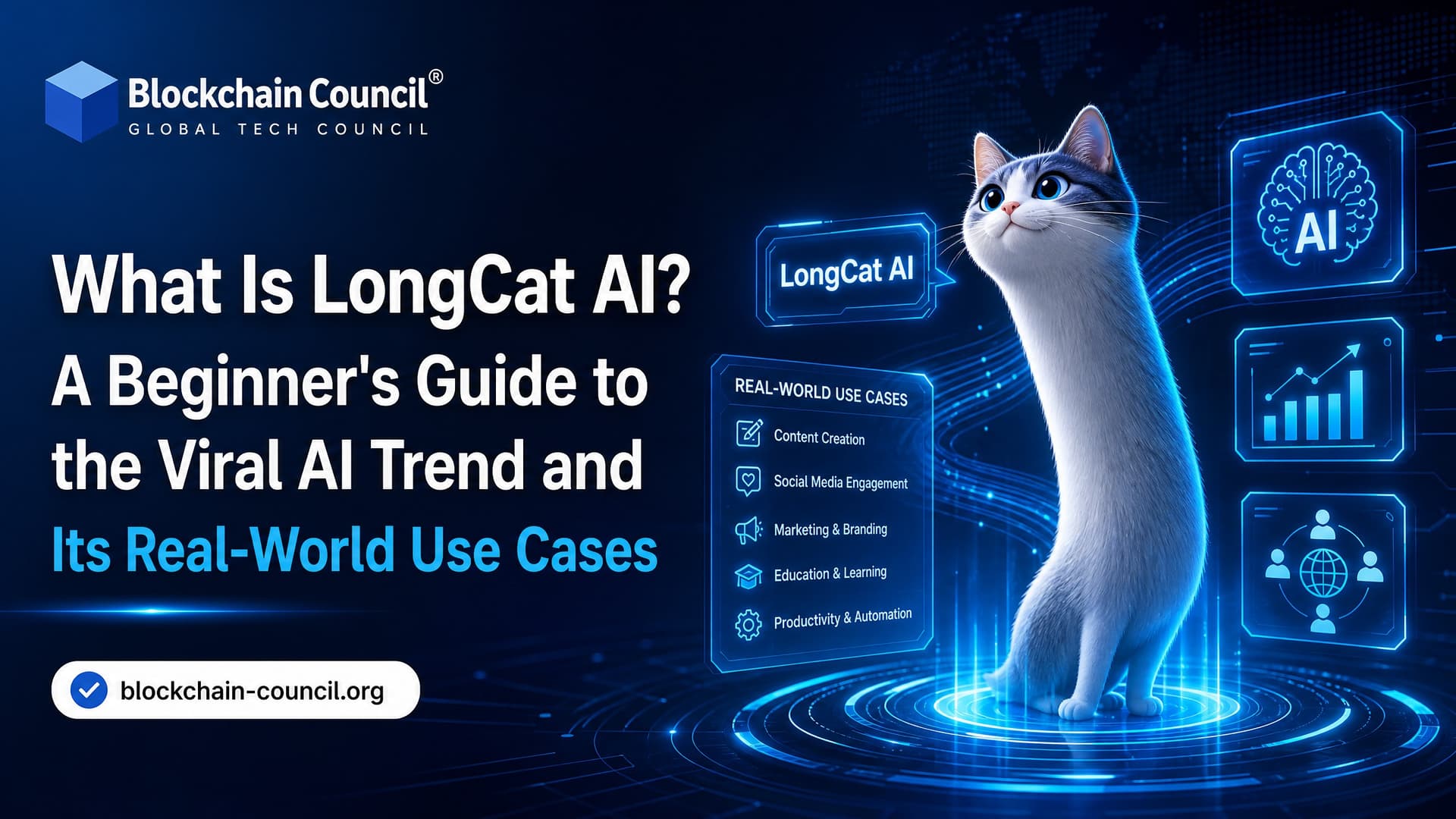
LongCat AI is an open source AI ecosystem from Meituan that pairs a large language model for reasoning and coding with video models built for long, coherent media generation. The short version: LongCat is getting attention because it is open, efficient, and unusually focused on long sequences, in both text and video.
If you have seen LongCat AI discussed on YouTube, Reddit, Hugging Face, or ComfyUI forums, the excitement is not about another chatbot. The ecosystem includes LongCat-Flash-Chat, LongCat-Video, and LongCat-Video-Avatar. Together, they cover chat, code, agent workflows, text-to-video, image-to-video, video continuation, and audio-driven avatars.

What Is LongCat AI?
Think of LongCat AI as a family of models rather than one single product. Each model solves a different problem.
- LongCat-Flash-Chat: A Mixture of Experts language model for chat, coding, reasoning, multilingual tasks, and AI agents.
- LongCat-Video: A 13.6 billion parameter video generation model that creates 720p, 30 fps videos from text, images, or existing clips.
- LongCat-Video-Avatar: An avatar model that turns audio, images, and video context into expressive character animation.
The reason developers are paying attention is the licensing and efficiency profile. LongCat-Flash-Chat is released under the MIT license, which allows research and commercial use. That matters. A startup can experiment without signing a closed model agreement on day one. An enterprise team can test deployment patterns with more control over data and infrastructure.
That said, open source does not mean cheap to run. Long video generation still needs serious GPU memory, and long-context language inference can become expensive if you scale traffic badly.
Why LongCat AI Went Viral
LongCat AI sits at the intersection of three developer obsessions: open weights, long context, and video generation. That is a strong mix.
Meituan's technical materials describe LongCat-Flash-Chat as a 560 billion parameter MoE model. Only about 18.6 billion to 31.3 billion parameters are active per token, with an average near 27 billion. This is the whole point of MoE architecture: you get the capacity of a huge model, but you do not pay the full compute cost on every token.
Public technical overviews also highlight strong benchmark performance across reasoning, coding, and agentic tasks. Benchmarks cited in commentary include MMLU-Pro, GPQA, SuperGPQA, BBH, MBPP+, HumanEval+, MultiPL-E, and CRUXEval.
The video side matters just as much. Most AI video tools still struggle with identity consistency, scene drift, and motion quality after a few seconds. LongCat-Video was trained with video continuation in mind, which is why creator communities are testing it for longer shots instead of only short prompt demos.
Inside the LongCat AI Ecosystem
LongCat-Flash-Chat for language, code, and agents
LongCat-Flash-Chat is the language model in the ecosystem. It is built for advanced reasoning, math, code generation, content workflows, multilingual support, and tool-using agents.
Key reported details include:
- Architecture: Mixture of Experts, or MoE.
- Total size: About 560 billion parameters.
- Active parameters: Around 27 billion on average per token.
- Training scale: About 20 trillion tokens in roughly 30 days, according to technical commentary.
- License: MIT for LongCat-Flash-Chat.
- Use cases: Coding assistants, customer support bots, internal knowledge agents, and reasoning-heavy workflows.
For developers, the practical question is simple: should you use LongCat-Flash-Chat instead of a closed commercial model? My view: if you need tight data control, local customization, or commercial freedom, it is worth testing. If you need a fully managed model with guaranteed uptime, mature safety tooling, and minimal DevOps work, a hosted commercial model may still win.
A small detail from real model testing: your first production issue is usually not answer quality. It is context management. Long prompts quietly increase latency and cost. You need truncation rules, retrieval filters, and prompt templates that do not keep stuffing the same system instructions into every turn.
LongCat-Video for long-form AI video generation
LongCat-Video is Meituan's foundational video model. It supports text-to-video, image-to-video, and video continuation in one framework. Public technical descriptions list the model at about 13.6 billion parameters, with output at 720p and 30 frames per second.
The model uses techniques such as coarse-to-fine generation and Block Sparse Attention to handle long sequences more efficiently. It also uses multi-reward RLHF with Group Relative Policy Optimization, or GRPO, to align outputs against multiple quality signals.
In plain English, LongCat-Video is designed to keep a video coherent for longer. That includes characters, colors, composition, and motion. This is why ComfyUI users and creator channels have been experimenting with it for extended clips.
One practical warning: 720p video is not light. If you try long generation on a consumer GPU, the failure is usually a familiar one: CUDA out of memory during decode or attention-heavy steps. People get better results by lowering precision where supported, using FP8 workflows when compatible, splitting clips into chunks, and avoiding oversized frame counts in a single pass.
LongCat-Video-Avatar for talking characters
LongCat-Video-Avatar focuses on audio-driven animation. It can generate video from audio, from audio plus an image, and from existing video continuation. The model aims at expressive characters, not just static lip sync.
Technical discussions mention methods such as disentangled unconditional guidance, reference skip attention, and Cross Chunk Latent Stitching. The last one is especially relevant for long animation. Repeated VAE encode and decode cycles can degrade pixels over time. Stitching latent chunks helps reduce that accumulation.
For a beginner, the use case is easy to picture. You provide a voice track and a character reference. The model generates a talking avatar that moves with more natural expression than older lip-sync-only tools.
Real-World Use Cases of LongCat AI
1. Coding assistants and developer agents
LongCat-Flash-Chat fits code generation, refactoring, debugging, test writing, and terminal-style agents. Its reported strength on coding benchmarks makes it interesting for software teams that want open model control.
Use it when you need:
- Private codebase assistance.
- Local or self-hosted developer tools.
- Agent workflows that call shell commands, APIs, or internal tools.
- Multilingual technical support for engineering teams.
Do not let the model write directly to production systems without review. AI coding agents are useful, but they still make confident mistakes. Require tests. Require diffs. Require human approval for destructive commands.
2. Customer support and enterprise knowledge assistants
The model's multilingual support and reasoning ability make it a fit for support bots, internal help desks, policy search, and operations planning. A good enterprise setup pairs the model with retrieval augmented generation, access controls, and logging.
This is where training matters. Professionals who want to understand model deployment, AI governance, and prompt design can pair hands-on testing with Blockchain Council's Certified Artificial Intelligence (AI) Expert™ or Certified Generative AI Expert™ as structured learning paths.
3. Social media videos and creative production
LongCat-Video can support creators who need short and mid-form clips, campaign visuals, product concept videos, and social content. Image-to-video is particularly useful when you already have a brand image, product mockup, or character frame.
For agencies and studios, the best use is not final-cut automation. It is faster ideation. Generate visual options, pick the strongest direction, then edit with human taste. AI video still needs review for artifacts, hands, physics, logos, and continuity.
4. Storyboarding and previsualization
Long video continuation makes LongCat-Video useful for storyboarding and previsualization. You can test camera movement, lighting style, and scene pacing before spending money on production.
This is a smart use case because minor visual flaws are acceptable at the concept stage. You care about whether the idea works. Later, editors and artists can refine or recreate the chosen direction.
5. Avatars for training, support, and interactive media
LongCat-Video-Avatar can power virtual presenters, training explainers, customer-service avatars, game NPC concepts, and creator characters. Combined with a language model, it points toward interactive virtual agents that speak, respond, and emote.
This area also carries real risk. Deepfake misuse, consent, voice rights, and identity protection are not side issues. If you build with avatar models, set rules before launch: watermark outputs, get consent for likenesses, and keep audit records.
How LongCat AI Compares With Other AI Trends
LongCat AI is not just another prompt-to-video demo. Its strongest angle is long sequence handling. For language, that means long conversations, coding tasks, and agent workflows. For video, it means continuation and minute-scale coherence.
Compared with closed AI systems, LongCat's advantage is openness and control. Compared with smaller open models, its advantage is capability. The trade-off is operational complexity. You need GPU planning, model serving skills, evaluation workflows, and safety checks.
To be blunt, beginners should not start by trying to run the largest model locally without understanding hardware limits. Start with hosted demos, community notebooks, or smaller workflows. Then move toward self-hosting once you know your memory, latency, and licensing needs.
How to Start Learning LongCat AI
- Pick one track: language, video, or avatar. Do not try all three in one weekend.
- Read the model card or technical page: check license, hardware notes, supported inputs, and safety guidance.
- Run a small test: for chat, test coding and reasoning prompts. For video, begin with short clips before increasing duration.
- Measure outputs: track latency, cost, artifacts, prompt adherence, and failure cases.
- Build a small workflow: a coding agent, a product demo video generator, or a talking training avatar is enough for a first project.
If your goal is professional credibility in AI systems, add structured learning alongside experimentation. Blockchain Council's Certified Prompt Engineer™, Certified Generative AI Expert™, and Certified Artificial Intelligence (AI) Expert™ suit readers who want certification-backed skills.
Final Take: Is LongCat AI Worth Your Attention?
Yes, if you care about open source AI, long-context reasoning, coding agents, long-form video, or avatar generation. LongCat AI is not magic, and it is not the right tool for every team. But it is one of the more serious open ecosystems to watch because it combines scale, efficiency, and practical media generation.
Your next step: choose one LongCat model, test it against a real task you already understand, and document where it fails. That failure log will teach you more than ten viral demo videos.
Related Articles
View All
AI & ML
NVIDIA Nemotron 3.5 Lightning vs NVIDIA Cosmos 3: Key Differences and Use Cases
Compare NVIDIA Nemotron 3.5 Lightning and NVIDIA Cosmos 3, including their architectures, reasoning capabilities, modalities, performance goals, and use cases across agentic and physical AI.
AI & ML
Jev AI: the complete guide to TypeSafe's System One Model
Explore Jev AI in this complete guide, including TypeSafe’s System One architecture, RLCD training, parallel sampling, typed decisions, calibrated confidence, performance, and automation use cases.

AI & ML
Jev AI: Complete Guide
Explore Jev AI in this complete guide, including how TypeSafe AI’s System One model works, its features, use cases, benefits, limitations, and role in software automation.
Trending Articles

Top 5 DeFi Platforms
Explore the leading decentralized finance platforms and what makes each one unique in the evolving DeFi landscape.

Can DeFi 2.0 Bridge the Gap Between Traditional and Decentralized Finance?
The next generation of DeFi protocols aims to connect traditional banking with decentralized finance ecosystems.
Claude AI Tools for Productivity
Discover Claude AI tools for productivity to streamline tasks, manage workflows, and improve efficiency.