

Videograph AI

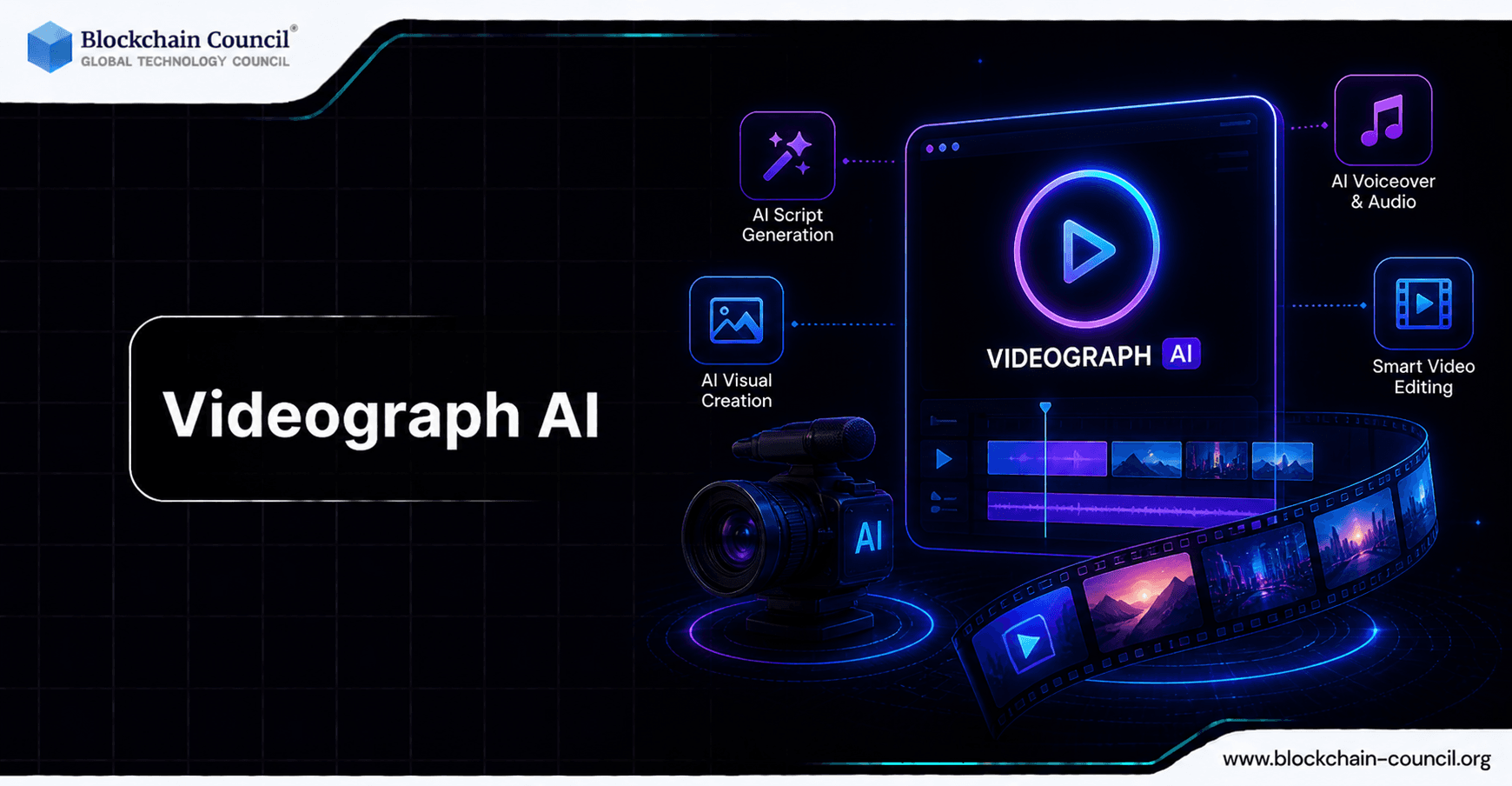
Video content has become the dominant form of communication in the digital age. From social media platforms to enterprise marketing campaigns, videos are now central to how individuals and organizations share information. However, traditional video production requires time, technical expertise, and significant resources. This is where Videograph AI emerges as a transformative solution.
Videograph AI refers to the use of artificial intelligence technologies to automate and enhance various aspects of video creation, editing, and distribution. By leveraging machine learning, computer vision, and natural language processing, these tools enable users to produce high-quality videos with minimal effort.

This article explores the concept of Videograph AI, its technologies, applications, benefits, challenges, and future trends. It also highlights the importance of professional development through certifications such as AI expert certification, Claude AI Certification, and ChatGPT Expert certification.
What is Videograph AI?
Videograph AI is an advanced technology that uses artificial intelligence to create, edit, and optimize video content. It automates tasks such as scene detection, video summarization, voiceovers, and visual effects.
Key Capabilities
Automated video editing
AI-generated scripts and captions
Scene recognition and tagging
Voice synthesis and dubbing
Real-time video analytics
These features significantly reduce the complexity of video production.
Evolution of Video Production Technology
Traditional Video Editing
Manual editing required professional skills and expensive software.
Digital Editing Tools
Software like video editors simplified production but still required expertise.
AI Integration
AI introduced automation and intelligent features.
Videograph AI
Modern systems combine automation, creativity, and scalability.
Technologies Behind Videograph AI
Computer Vision
Analyzes visual elements in videos, such as objects and scenes.
Natural Language Processing (NLP)
Generates scripts, captions, and subtitles.
Machine Learning
Improves accuracy and performance over time.
Deep Learning
Enables realistic video generation and editing.
Cloud Computing
Supports real-time processing and scalability.
Key Features of Videograph AI
Automated Editing
AI selects clips, trims footage, and applies transitions automatically.
Content Generation
AI can create videos from text prompts or scripts.
Voiceovers
Text-to-speech technology generates realistic voice narration.
Personalization
Videos can be tailored to specific audiences.
Multilingual Support
AI enables translation and dubbing in multiple languages.
Real-World Applications
Digital Marketing
Businesses use AI to create promotional videos quickly. Professionals can enhance their expertise through the AI powered digital marketing course.
Social Media Content
Creators produce engaging videos for platforms like YouTube and Instagram.
Education
AI generates educational videos and tutorials.
Corporate Training
Organizations create training materials efficiently.
Software Development
Developers integrate AI video tools into applications. Programs like the AI Powered coding expert Course support these skills.
Benefits of Videograph AI
Time Efficiency
AI reduces the time required for video production.
Cost Reduction
Eliminates the need for large production teams.
Scalability
Enables mass production of video content.
Creativity Enhancement
AI assists in generating innovative ideas.
Accessibility
Simplifies video creation for beginners.
Challenges and Limitations
Quality Concerns
AI-generated videos may require human refinement.
Ethical Issues
Deepfake technology raises concerns about misuse.
Data Privacy
Handling user data requires security measures.
Technical Limitations
Complex scenes may challenge AI systems.
Recent Developments in Videograph AI
Text-to-Video Generation
AI can create videos directly from text descriptions.
Real-Time Editing
Instant video editing capabilities are emerging.
AI Avatars
Digital avatars can present content in videos.
Integration with Social Platforms
AI tools are integrated with social media for seamless publishing.
Importance of AI Skills
As Videograph AI becomes more prevalent, professionals need relevant skills. Certifications such as:
help individuals stay competitive.
Future of Videograph AI
The future includes:
More realistic video generation
Enhanced personalization
Integration with virtual reality
Improved automation
AI will continue to redefine video production.
Best Practices for Using Videograph AI
Use high-quality input data
Review AI-generated content
Protect sensitive information
Continuously update tools
Ethical Considerations
Ensure transparency in AI-generated content
Avoid misuse of deepfake technology
Respect intellectual property rights
Conclusion
Videograph AI represents a significant advancement in video production, enabling users to create high-quality content with minimal effort. Its applications across industries highlight its potential to transform communication, marketing, and education.
However, responsible use, ethical considerations, and continuous learning are essential to fully leverage its capabilities.
FAQs
1. What is Videograph AI?
Videograph AI is a technology that uses artificial intelligence to create and edit videos. It automates various tasks in video production. Users can generate content quickly. It simplifies complex processes. Applications are diverse. It represents modern innovation.
2. How does Videograph AI work?
It uses machine learning and computer vision to analyze video data. AI processes inputs and generates outputs. Automation handles editing tasks. Continuous learning improves accuracy. Real-time processing enhances efficiency. It is an advanced system.
3. What are the benefits of Videograph AI?
Benefits include time savings and cost reduction. AI simplifies video creation. Scalability improves productivity. Creativity is enhanced. Accessibility increases. It is valuable.
4. What industries use Videograph AI?
Industries such as marketing, education, and entertainment use it. Applications are expanding. Growth is significant. Adoption is increasing. Impact is widespread. It supports innovation.
5. Is Videograph AI accurate?
Accuracy depends on data quality and system design. Modern systems are reliable. Complex tasks may require human review. Continuous updates improve results. Performance is improving. Reliability increases.
6. Can beginners use Videograph AI?
Yes, many tools are user-friendly. Beginners can create videos easily. Advanced features may require training. Learning is gradual. Accessibility is high. It is beginner-friendly.
7. What are the challenges of Videograph AI?
Challenges include quality and ethical concerns. Technical limitations exist. Data privacy issues may arise. Continuous updates are needed. Limitations are being addressed. Improvements are ongoing.
8. How does Videograph AI help marketing?
It creates engaging promotional content quickly. Campaigns become more effective. Engagement increases. Insights guide strategies. Marketing improves. It is widely used.
9. Can Videograph AI replace human editors?
It can assist but not fully replace humans. Creativity and judgment are important. AI works best as a tool. Collaboration improves results. Balance is necessary. Human input remains essential.
10. What is text-to-video AI?
Text-to-video AI generates videos from written descriptions. It uses AI models to create visuals. Automation simplifies production. Applications are growing. Accuracy is improving. It is innovative.
11. Is Videograph AI secure?
Security depends on implementation. Data must be protected. Users should avoid sharing sensitive content. Privacy policies should be followed. Security measures are improving. Awareness is important.
12. What is the future of Videograph AI?
The future includes advanced capabilities and wider adoption. AI will improve realism and personalization. Integration will increase. Innovation will continue. Impact will expand. Growth is expected.
13. How can businesses use Videograph AI?
Businesses use it for marketing and training videos. Efficiency improves. Costs decrease. Engagement increases. Integration with systems is important. Results improve.
14. What skills are needed for Videograph AI?
Skills include AI knowledge and video editing basics. Understanding machine learning helps. Continuous learning is necessary. Certifications can support growth. Skills improve effectiveness. Demand is rising.
15. How does Videograph AI improve productivity?
It automates repetitive tasks and speeds up workflows. Time is saved. Output increases. Efficiency improves. Resources are optimized. Productivity rises.
16. Can Videograph AI create realistic videos?
Yes, modern systems can generate realistic content. Quality depends on data and models. Improvements are ongoing. Realism is increasing. Applications are expanding. It is advanced.
17. What are AI avatars?
AI avatars are digital characters created using AI. They present content in videos. They enhance engagement. Applications include marketing and education. Technology is evolving. It is innovative.
18. How can I improve video quality?
Use high-quality input and refine outputs. Adjust settings and parameters. Review content carefully. Continuous improvement helps. Quality increases. It is important.
19. Why is Videograph AI important?
It simplifies video production and enhances creativity. Efficiency improves. Applications are diverse. Innovation drives growth. Its role is increasing. It is essential.
20. How can I learn Videograph AI?
You can learn through courses and practice. Online resources provide guidance. Hands-on experience is important. Learning from experts helps. Staying updated is essential. Skills improve.
Related Articles
View All
AI & ML
Built to Catch AI Cheating: Rethinking Pre-Employment Assessments with HireValid
Explore how HireValid is rethinking pre-employment assessments with AI-resistant test design, integrity signals, candidate evidence, and human review to address AI-assisted cheating.

AI & ML
AI-Era Hiring Needs AI-Proof Tests: How HireValid Is Redefining Talent Assessment
Explore how HireValid is rethinking talent assessment for the AI era with job-relevant tests, anti-cheating design, integrity signals, and human-reviewed evidence of candidate ability.

AI & ML
Google Launches Gemini 4 Argon: Features and Capabilities
Google has launched Gemini 4 Argon, its flagship AI model for coding, finance, law, cybersecurity and science. Learn its key features, availability, pricing and safety details.
Trending Articles
AWS Career Roadmap
A step-by-step guide to building a successful career in Amazon Web Services cloud computing.
How Blockchain Secures AI Data
Understand how blockchain technology is being applied to protect the integrity and security of AI training data.
How to Create Claude Skills?
Claude Skills are one of the most important features Anthropic has introduced for users who want automation that is structured, consistent and reusable. Instead of giving Claude long instructions ever