

Trump AI Voice

Trump AI Voice
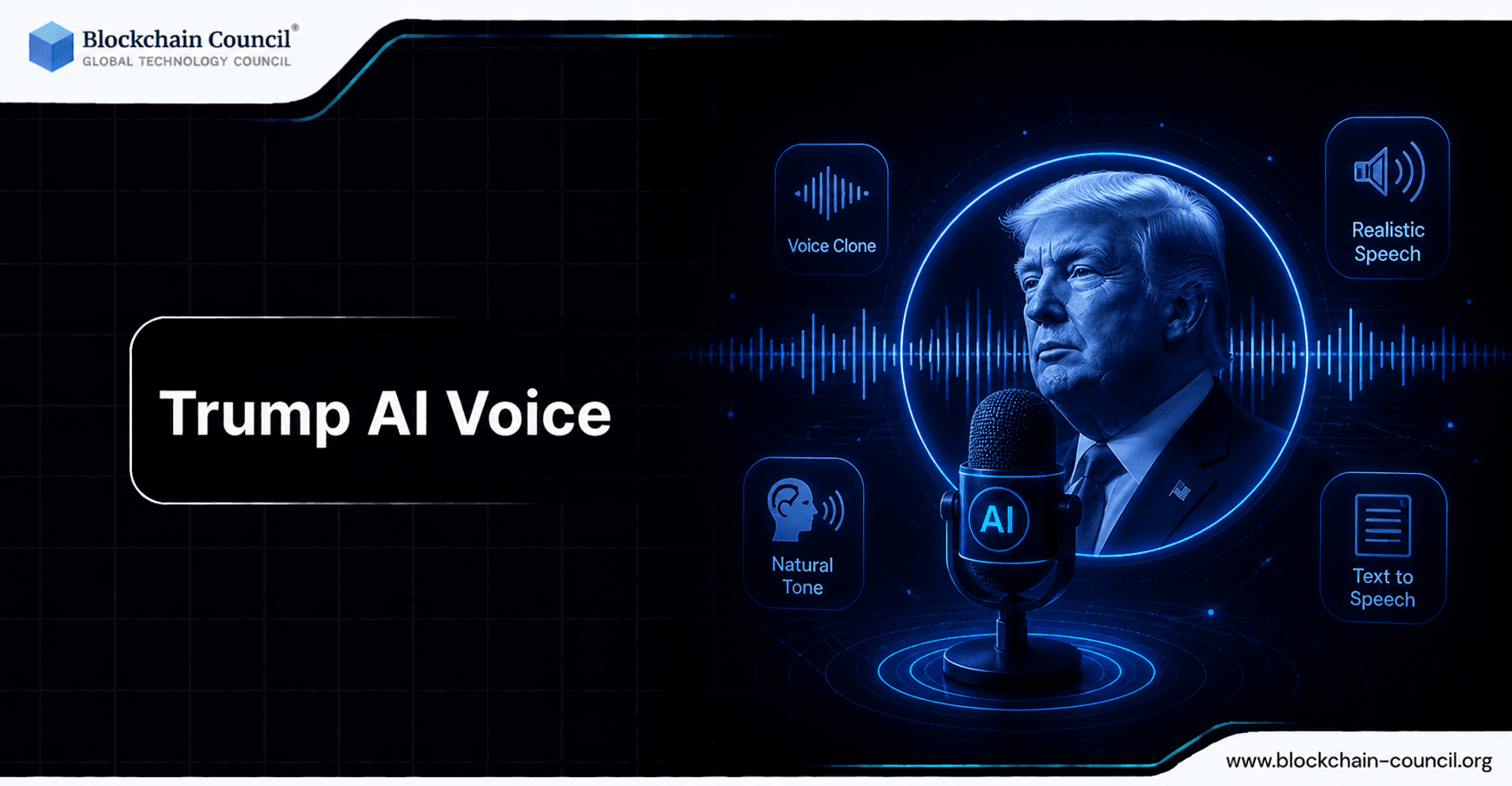
Artificial Intelligence has advanced to a point where machines can replicate human voices with remarkable accuracy. One of the most talked-about applications of this technology is the creation of AI-generated voices of public figures, including political leaders. The term “Trump AI voice” refers to AI systems that can mimic the voice of former U.S. President Donald Trump using voice cloning and speech synthesis technologies.

These systems are part of a broader category known as AI voice cloning, which has gained popularity in entertainment, content creation, marketing, and even education. While the technology offers innovative opportunities, it also raises serious concerns about misinformation, ethics, and security.
This article explores how Trump AI voice technology works, its applications, recent developments, risks, and future trends. It also highlights the importance of AI expertise through certifications such as AI expert certification, Claude AI Certification, and ChatGPT Expert certification.
What is AI Voice Cloning?
AI voice cloning is a technology that uses machine learning to replicate a person’s voice. It analyzes speech patterns, tone, pitch, and pronunciation to generate realistic audio.
Key Components
Speech data collection
Neural network training
Text-to-speech (TTS) synthesis
Audio output generation
The result is a voice that closely resembles the original speaker.
What is “Trump AI Voice”?
“Trump AI voice” refers to AI-generated audio that mimics Donald Trump’s speech style, tone, and delivery. This is achieved by training models on publicly available recordings such as speeches, interviews, and broadcasts.
These AI-generated voices can:
Read scripts in a Trump-like voice
Generate conversational responses
Be used in videos, podcasts, and entertainment content
How AI Voice Technology Works
Data Collection
Large datasets of speech recordings are used to train AI models.
Feature Extraction
AI analyzes vocal characteristics such as pitch, rhythm, and accent.
Model Training
Deep learning models learn patterns and replicate the voice.
Text-to-Speech Conversion
Input text is converted into audio using the trained model.
Recent Developments in AI Voice Cloning
Real-Time Voice Generation
Modern systems can generate voice output instantly.
Multilingual Voice Models
AI can replicate voices in different languages.
Emotion Simulation
AI can mimic emotions such as excitement, anger, or calmness.
Integration with Generative AI
Voice cloning is now combined with conversational AI for interactive experiences.
Real-World Applications
Entertainment
AI voices are used in satire, parody, and creative content.
Content Creation
Creators use AI voices for videos, podcasts, and storytelling.
Marketing
Brands use voice AI to create engaging campaigns. Professionals can enhance their expertise through the AI powered digital marketing course.
Software Development
Developers build voice AI applications. Programs like the AI Powered coding expert Course support these skills.
Accessibility
AI voices help create assistive technologies for people with disabilities.
Benefits of AI Voice Technology
Creativity
AI enables new forms of content creation.
Efficiency
Voice generation saves time and resources.
Personalization
Content can be tailored to specific audiences.
Scalability
AI can produce large volumes of audio quickly.
Risks and Challenges
Misinformation
AI-generated voices can be used to spread false information.
Deepfakes
Realistic voice clones can deceive audiences.
Privacy Concerns
Using someone’s voice without consent raises ethical issues.
Legal Issues
Regulations around voice cloning are still evolving.
Ethical Considerations
Consent
Using a person’s voice should require permission.
Transparency
AI-generated content should be clearly labeled.
Responsibility
Developers and users must ensure ethical usage.
Importance of AI Skills
As voice AI grows, professionals need to understand its capabilities and risks. Certifications such as:
help individuals stay competitive and informed.
Future of AI Voice Cloning
The future includes:
More realistic voice synthesis
Stronger regulations
Improved detection tools
Integration with virtual assistants
AI voice technology will continue to evolve rapidly.
Best Practices for Using AI Voice Tools
Use AI voices responsibly
Avoid misleading content
Ensure proper permissions
Verify authenticity of audio
Conclusion
The concept of a “Trump AI voice” highlights both the power and risks of modern AI technology. While voice cloning offers exciting opportunities for creativity and innovation, it also presents significant ethical and security challenges.
As AI continues to evolve, it is essential for users, developers, and policymakers to work together to ensure responsible and transparent use of these technologies.
FAQs
1. What is the Trump AI voice?
Trump AI voice refers to AI-generated audio that mimics Donald Trump’s voice. It is created using voice cloning technology. The system analyzes speech patterns and tone. It can generate realistic audio. Applications include entertainment and content creation. It is part of modern AI advancements.
2. How does AI voice cloning work?
AI voice cloning works by analyzing speech data and training models. It extracts vocal features such as pitch and rhythm. Deep learning models replicate these patterns. Text is converted into speech. The output resembles the original voice. It is a complex process.
3. Is AI voice cloning legal?
Legality depends on usage and jurisdiction. Using someone’s voice without consent can raise legal issues. Regulations are evolving. Ethical considerations are important. Users should follow laws. Responsible usage is necessary.
4. Can AI voices be detected?
Yes, detection tools are being developed. They analyze patterns and inconsistencies. Detection is improving. However, advanced models are harder to detect. Awareness is important. Verification is necessary.
5. What are the risks of AI voice cloning?
Risks include misinformation and fraud. Deepfakes can deceive people. Privacy concerns are significant. Misuse can cause harm. Awareness helps reduce risks. Responsible use is essential.
6. What are the benefits of AI voice technology?
Benefits include creativity and efficiency. Content creation becomes easier. Personalization improves engagement. Scalability allows mass production. Accessibility is enhanced. It is valuable.
7. Can AI replicate any voice?
AI can replicate many voices if sufficient data is available. Accuracy depends on data quality. Some voices are easier to replicate. Technology is improving. Limitations exist. Capabilities are expanding.
8. How is AI voice used in marketing?
AI voices create engaging advertisements and content. Brands use them for campaigns. Personalization improves results. Engagement increases. Marketing becomes more effective. It is widely used.
9. Is AI voice safe to use?
Safety depends on usage. Ethical practices are important. Users should avoid misuse. Data privacy must be protected. Awareness is key. Responsible use ensures safety.
10. Can AI voices replace human voice actors?
AI can assist but not fully replace humans. Creativity and emotion are important. Human actors provide authenticity. AI is a tool. Collaboration is beneficial. Balance is necessary.
11. What industries use AI voice technology?
Industries such as entertainment, marketing, and healthcare use it. Applications are diverse. Growth is significant. Adoption is increasing. Impact is widespread. It supports innovation.
12. How accurate are AI-generated voices?
Accuracy has improved significantly. Modern systems are highly realistic. Context and emotion may vary. Continuous updates improve results. Performance is strong. Reliability increases.
13. What is a deepfake voice?
A deepfake voice is a synthetic voice created using AI. It mimics a real person’s voice. It can be used for various purposes. Risks include misuse. Detection is important. Awareness is necessary.
14. Can beginners use AI voice tools?
Yes, many tools are user-friendly. Beginners can use them easily. Advanced features may require training. Learning is gradual. Accessibility is high. It is beginner-friendly.
15. What is the future of AI voice technology?
The future includes more realistic voices and better detection tools. Regulations will improve. Integration with AI systems will increase. Innovation will continue. Adoption will grow. Impact will expand.
16. How does AI voice affect society?
It changes communication and media. Opportunities increase. Risks must be managed. Awareness is important. Society must adapt. It has a significant impact.
17. Can AI voices be used for education?
Yes, they can create learning materials and assist students. Accessibility improves. Engagement increases. Education becomes interactive. Applications are growing. It is beneficial.
18. What ethical issues exist in AI voice cloning?
Issues include consent and misuse. Privacy concerns are significant. Transparency is required. Responsible use is important. Regulations may apply. Awareness is necessary.
19. How can I learn AI voice technology?
You can learn through courses and practice. Online resources provide guidance. Hands-on experience is important. Learning from experts helps. Staying updated is essential. Skills improve.
20. Why is AI voice technology important?
It enhances communication and creativity. It supports various industries. Efficiency improves. Innovation drives growth. Its role is increasing. It is essential.
Related Articles
View All
AI & ML
Built to Catch AI Cheating: Rethinking Pre-Employment Assessments with HireValid
Explore how HireValid is rethinking pre-employment assessments with AI-resistant test design, integrity signals, candidate evidence, and human review to address AI-assisted cheating.

AI & ML
AI-Era Hiring Needs AI-Proof Tests: How HireValid Is Redefining Talent Assessment
Explore how HireValid is rethinking talent assessment for the AI era with job-relevant tests, anti-cheating design, integrity signals, and human-reviewed evidence of candidate ability.

AI & ML
Google Launches Gemini 4 Argon: Features and Capabilities
Google has launched Gemini 4 Argon, its flagship AI model for coding, finance, law, cybersecurity and science. Learn its key features, availability, pricing and safety details.
Trending Articles

Top 5 DeFi Platforms
Explore the leading decentralized finance platforms and what makes each one unique in the evolving DeFi landscape.
How Blockchain Secures AI Data
Understand how blockchain technology is being applied to protect the integrity and security of AI training data.
What is AWS? A Beginner's Guide to Cloud Computing
Everything you need to know about Amazon Web Services, cloud computing fundamentals, and career opportunities.