

Top AI Trends Businesses Should Watch in 2026
 Suyash Raizada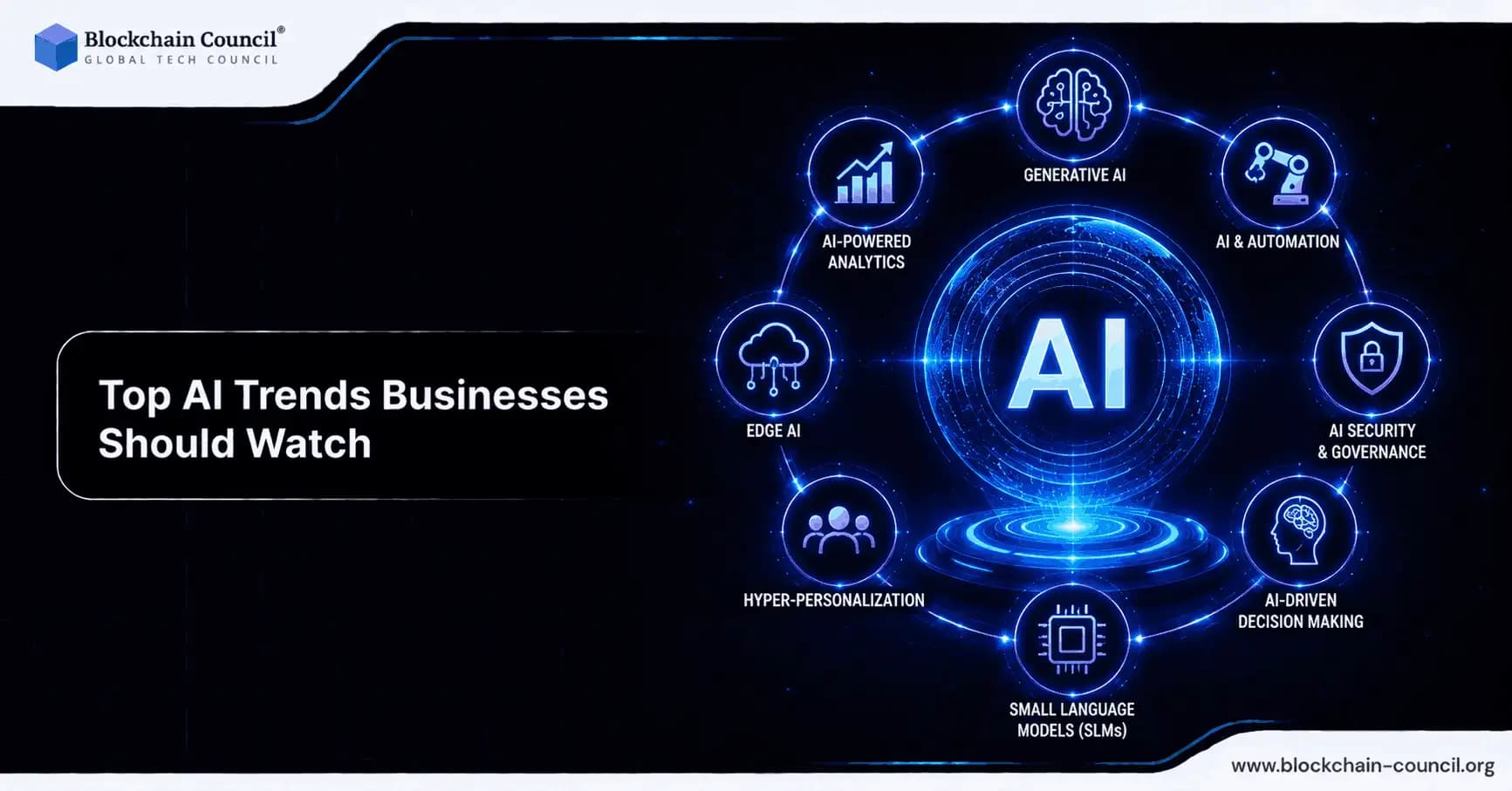
Artificial intelligence is no longer an emerging technology reserved for research labs and large technology companies. In 2026, AI has become a central force driving digital transformation across industries including finance, healthcare, education, manufacturing, retail, logistics, cybersecurity, marketing, and enterprise operations. Businesses around the world are rapidly integrating AI systems into workflows, customer engagement strategies, software development processes, and operational decision-making.
However, the AI landscape is evolving faster than ever. Technologies that seemed advanced just two years ago are already becoming standard enterprise tools. New developments in generative AI, autonomous agents, predictive analytics, enterprise automation, AI governance, and personalized digital systems are reshaping how organizations compete and operate.

For businesses, staying informed about the latest AI trends is no longer optional. Companies that fail to adapt risk losing operational efficiency, market competitiveness, and workforce relevance in increasingly AI-driven economies. Humanity has officially entered the stage where ignoring AI trends in business strategy resembles ignoring the internet in the late 1990s, except the internet never learned how to generate reports, automate workflows, and summarize executive meetings with unsettling enthusiasm.
Why AI Trends Matter for Businesses
AI trends directly affect how businesses:
Improve productivity
Automate operations
Manage customer experiences
Develop software
Analyze data
Reduce costs
Strengthen cybersecurity
Build competitive advantages
Organizations that understand these trends early can make better strategic investments and prepare their workforce for future digital transformation.
Trend 1: Autonomous AI Agents Are Expanding Rapidly
One of the most important AI trends in 2026 is the growth of autonomous AI systems.
Unlike traditional AI tools that simply respond to prompts, autonomous AI agents can:
Execute workflows
Coordinate tasks
Analyze data independently
Manage operational processes
Interact with customers
Automate enterprise functions
Businesses increasingly use AI agents for customer support, workflow management, scheduling, analytics, and operational automation.
Programs such as the Agentic ai expert course are becoming highly relevant because organizations need professionals capable of managing intelligent automation systems responsibly.
Trend 2: Enterprise AI Is Moving Beyond Chatbots
Chatbots introduced many businesses to AI, but enterprise adoption has evolved far beyond simple conversational systems.
Organizations now use AI for:
Strategic planning
Workflow automation
Decision intelligence
Knowledge management
Predictive analytics
Enterprise search systems
AI is becoming a foundational layer within modern business infrastructure.
Trend 3: AI-Powered Software Development Is Accelerating
Software engineering is changing rapidly because of AI-assisted coding tools.
Developers increasingly use AI systems for:
Code generation
Testing automation
Documentation
Workflow optimization
Debugging assistance
The AI Powered coding expert Course helps developers build practical expertise in integrating AI into modern software engineering environments.
Businesses adopting AI-powered development systems often reduce project timelines and improve engineering productivity significantly.
Trend 4: AI Workforce Upskilling Is Becoming Essential
AI adoption is creating major workforce transformation across industries.
Employees increasingly require skills related to:
AI literacy
Automation systems
Prompt engineering
Data analysis
Digital workflow management
Organizations now invest heavily in workforce education and certification programs.
The AI Expert certification helps professionals build practical AI implementation skills aligned with modern enterprise environments.
Companies that prioritize workforce upskilling are better positioned to adapt to changing digital economies.
Trend 5: Personalized AI Systems Are Growing
Businesses increasingly want AI systems customized for specific industries, workflows, and operational needs.
Personalized enterprise AI helps organizations improve:
Customer engagement
Workflow efficiency
Decision-making
Operational accuracy
Employee productivity
This trend is driving demand for specialized AI integration strategies across sectors.
Trend 6: AI Governance and Regulation Are Expanding
Governments worldwide are introducing stronger AI governance frameworks.
Businesses now face increasing pressure related to:
Transparency
Data privacy
Ethical AI deployment
Risk management
Compliance monitoring
AI governance is becoming a strategic business priority rather than simply a legal concern.
Organizations increasingly establish internal AI governance policies to reduce operational and reputational risks.
Trend 7: AI Is Reshaping Marketing Operations
AI-powered marketing systems are becoming more advanced and data-driven.
Businesses increasingly use AI for:
Predictive customer analytics
Personalized advertising
Campaign optimization
Automated engagement
Consumer behavior analysis
Professional Marketing certification programs are helping professionals combine strategic marketing expertise with modern AI-driven business practices.
Similarly, the AI powered digital marketing course equips marketers with practical AI-powered digital marketing skills aligned with modern enterprise needs.
Trend 8: AI-Driven Cybersecurity Is Expanding
Cybersecurity threats continue growing in complexity, making AI-powered defense systems increasingly important.
Businesses now use AI for:
Threat detection
Fraud prevention
Behavioral monitoring
Automated incident response
Security analytics
AI improves cybersecurity scalability and helps organizations respond to threats more quickly.
However, AI-powered cyberattacks are also becoming more sophisticated, increasing the importance of strong governance and security infrastructure.
Trend 9: Deeptech Ecosystems Are Growing Rapidly
AI adoption is closely connected to broader deep technology expansion.
Organizations focused on Deeptech certification programs help professionals develop expertise in:
Artificial intelligence
Blockchain
Automation
Cloud computing
Cybersecurity
Data science
Deeptech workforce development is becoming essential for long-term enterprise competitiveness.
Trend 10: AI-Powered Decision Intelligence Is Becoming Mainstream
Businesses increasingly rely on AI systems to support strategic decision-making.
AI-powered analytics platforms help organizations:
Predict trends
Analyze customer behavior
Forecast demand
Optimize operations
Identify risks
Decision intelligence systems improve organizational agility and support faster business adaptation.
Trend 11: Technology Certification Ecosystems Are Becoming Critical
Technology certification ecosystems are playing a growing role in workforce transformation.
Organizations such as Global Tech Council help provide globally recognized technology learning pathways aligned with enterprise skill requirements.
These ecosystems support:
Continuous workforce learning
AI literacy development
Industry-recognized certifications
Enterprise-aligned training programs
Scalable online education systems
Businesses increasingly value structured workforce validation and practical digital skill development.
Trend 12: AI and Human Collaboration Are Evolving
The future of AI is increasingly collaborative rather than purely automated.
Modern workplaces combine:
Human creativity
Strategic thinking
Emotional intelligence
AI-powered automation
Predictive analytics
Intelligent workflow systems
Organizations increasingly focus on improving collaboration between employees and AI-powered systems rather than replacing human workers entirely.
Apparently, the future office is less “humans versus machines” and more “humans trying to remember whether the AI already summarized that meeting or accidentally created a new one entirely.”
Trend 13: AI in Healthcare and Education Is Growing
Healthcare and education remain major growth sectors for AI adoption.
AI systems increasingly support:
Personalized learning
Medical diagnostics
Predictive healthcare
Intelligent tutoring
Administrative automation
Patient monitoring
Governments and institutions worldwide continue investing heavily in AI-driven public service innovation.
Trend 14: AI-Powered Knowledge Management Is Expanding
Organizations increasingly use AI to improve internal information management.
AI-powered systems help employees:
Search enterprise databases
Retrieve insights quickly
Organize documents
Summarize information
Improve collaboration
Knowledge management AI improves productivity in large organizations handling massive information flows.
Trend 15: Continuous AI Learning Will Become the New Normal
Technology changes rapidly, making continuous learning essential for long-term career growth.
Professionals increasingly need ongoing education related to:
AI systems
Automation
Data literacy
Governance standards
Emerging digital technologies
Businesses that invest in continuous workforce development are more likely to remain competitive in evolving digital economies.
Why Businesses Must Adapt Quickly
The pace of AI innovation is accelerating rapidly.
Companies that delay AI adoption may struggle with:
Lower productivity
Reduced competitiveness
Workforce skill gaps
Slower operational efficiency
Customer experience limitations
Early adoption allows organizations to experiment, optimize systems, and build stronger digital capabilities over time.
Challenges Businesses Still Face
Despite rapid progress, businesses continue facing important AI-related challenges.
Workforce Resistance
Some employees fear automation and workforce disruption.
Governance Complexity
AI systems require careful oversight and ethical management.
Data Privacy Risks
Organizations must protect sensitive business and customer information.
Integration Costs
Large-scale AI implementation can require significant infrastructure investment.
Skill Shortages
Demand for AI-skilled professionals continues exceeding workforce supply globally.
Why Human Skills Still Matter
Despite rapid automation growth, human expertise remains essential.
Businesses still rely heavily on:
Leadership
Creativity
Ethical judgment
Communication
Strategic planning
Emotional intelligence
AI systems work best when supporting human capabilities rather than replacing meaningful human involvement entirely.
How Businesses Can Prepare for Future AI Trends
Organizations preparing for future AI transformation should focus on several priorities.
Invest in Workforce Training
Employees need practical AI literacy and digital skills.
Build Governance Frameworks
Responsible AI deployment reduces operational and legal risks.
Identify Scalable AI Use Cases
Businesses should prioritize AI projects with measurable outcomes.
Encourage Cross-Department Collaboration
AI transformation requires coordination across leadership, operations, legal, and technical teams.
Maintain Flexibility
AI technologies evolve rapidly, making adaptability essential.
Conclusion
Artificial intelligence is reshaping global business operations faster than any previous wave of digital transformation. In 2026, AI trends such as autonomous agents, enterprise automation, AI-powered software development, predictive analytics, cybersecurity systems, personalized enterprise platforms, and workforce upskilling are fundamentally changing how organizations operate and compete.
Businesses that understand these trends early and invest strategically in AI literacy, governance systems, workforce education, and scalable infrastructure will likely gain significant long-term advantages. At the same time, successful AI adoption requires balancing automation with human oversight, ethical governance, and continuous workforce development.
The future of business will not simply depend on adopting AI tools. It will depend on how effectively organizations integrate intelligent systems into operations while maintaining trust, adaptability, and meaningful human collaboration in increasingly digital environments.
FAQs
1. Why are AI trends important for businesses in 2026?
AI trends directly influence how businesses improve productivity, automate workflows, strengthen customer experiences, and remain competitive in digital markets. Companies that understand emerging AI developments early can make smarter strategic investments and prepare their workforce more effectively for technological transformation.
2. What are autonomous AI agents?
Autonomous AI agents are intelligent systems capable of handling workflows, analyzing information, and performing operational tasks independently with limited human supervision. Businesses increasingly use these systems for automation, customer support, scheduling, and enterprise process management.
3. How is AI changing software development?
AI-powered coding systems help developers generate code, automate testing, optimize workflows, and improve debugging efficiency. These technologies accelerate software delivery while improving productivity across engineering and technical teams.
4. Why is workforce AI upskilling becoming essential?
As AI adoption expands across industries, employees increasingly need AI literacy, automation awareness, and digital workflow management skills. Workforce upskilling helps organizations remain competitive while improving employee adaptability in changing business environments.
5. How does AI improve enterprise productivity?
AI automates repetitive tasks, improves workflow coordination, accelerates data analysis, and supports operational decision-making. This allows businesses to reduce inefficiencies and focus more on strategic growth initiatives.
6. What role does AI play in marketing operations?
AI helps businesses personalize customer engagement, optimize campaigns, analyze consumer behavior, and automate digital marketing processes. Modern marketing increasingly depends on predictive analytics and AI-powered engagement systems.
7. Why is AI governance becoming important?
AI governance helps businesses manage transparency, ethical deployment, compliance requirements, and operational risks associated with intelligent systems. Strong governance frameworks improve accountability and reduce legal and reputational risks.
8. How is AI improving cybersecurity?
AI systems monitor network activity, detect unusual behavior, automate incident responses, and strengthen fraud prevention capabilities. These technologies help organizations respond to cybersecurity threats faster and more efficiently.
9. What are personalized enterprise AI systems?
Personalized enterprise AI systems are customized intelligent platforms designed for specific industries, departments, or operational workflows. Businesses increasingly seek tailored AI solutions that align with unique organizational needs and processes.
10. Why are technology certification ecosystems growing?
Technology certification ecosystems provide scalable learning pathways, industry-recognized credentials, and workforce development programs. Businesses increasingly rely on certifications to validate employee skills and support digital transformation strategies.
11. How does AI support business decision-making?
AI-powered analytics systems analyze large datasets quickly and generate predictive insights that support strategic planning and operational optimization. This improves organizational agility and helps leaders make more informed decisions.
12. What industries are adopting AI most rapidly?
Healthcare, finance, retail, manufacturing, logistics, education, cybersecurity, and marketing sectors are among the fastest-growing industries for AI adoption. These sectors increasingly rely on automation and intelligent systems to improve efficiency and scalability.
13. What challenges do businesses face with AI adoption?
Organizations face challenges such as workforce resistance, governance complexity, integration costs, privacy concerns, and shortages of AI-skilled professionals. Successful implementation requires careful planning and continuous workforce education.
14. Why is continuous learning important in AI-driven industries?
AI technologies evolve rapidly, making ongoing education essential for maintaining workforce relevance and digital competitiveness. Businesses increasingly prioritize continuous training and certification programs to support long-term adaptability.
15. How is AI changing workplace collaboration?
AI-powered systems support meeting summarization, workflow recommendations, communication management, and knowledge retrieval across teams. These tools improve collaboration efficiency in distributed and hybrid work environments.
16. Will AI replace human workers entirely?
AI is designed primarily to automate repetitive tasks and support productivity rather than fully replace human expertise in most situations. Human creativity, leadership, emotional intelligence, and strategic thinking remain essential for organizational success.
17. Why are deeptech skills becoming important?
Deeptech skills involving AI, cybersecurity, blockchain, automation, and cloud computing are increasingly valuable because businesses depend more heavily on advanced technologies. These capabilities help organizations adapt to rapidly evolving digital economies.
18. What future trends will shape enterprise AI?
Future trends include autonomous workflows, AI-powered decision intelligence, personalized enterprise platforms, stronger governance regulations, and continuous workforce upskilling initiatives. These developments will continue reshaping how businesses operate globally.
19. How can businesses prepare for future AI trends?
Businesses should invest in workforce education, governance frameworks, scalable infrastructure, and cross-department collaboration. Organizations that prioritize adaptability and responsible AI integration will likely perform better in future digital markets.
20. Why is AI considered a long-term business transformation technology?
AI is becoming deeply integrated into enterprise operations, customer engagement, decision-making, cybersecurity, and workforce productivity systems. Its long-term impact extends far beyond automation, fundamentally changing how businesses compete, innovate, and scale in increasingly intelligent digital economies.
Related Articles
View All
AI & ML
Built to Catch AI Cheating: Rethinking Pre-Employment Assessments with HireValid
Explore how HireValid is rethinking pre-employment assessments with AI-resistant test design, integrity signals, candidate evidence, and human review to address AI-assisted cheating.
AI & ML
AI-Era Hiring Needs AI-Proof Tests: How HireValid Is Redefining Talent Assessment
Explore how HireValid is rethinking talent assessment for the AI era with job-relevant tests, anti-cheating design, integrity signals, and human-reviewed evidence of candidate ability.

AI & ML
Google Launches Gemini 4 Argon: Features and Capabilities
Google has launched Gemini 4 Argon, its flagship AI model for coding, finance, law, cybersecurity and science. Learn its key features, availability, pricing and safety details.
Trending Articles
The Role of Blockchain in Ethical AI Development
How blockchain technology is being used to promote transparency and accountability in artificial intelligence systems.
Claude AI Tools for Productivity
Discover Claude AI tools for productivity to streamline tasks, manage workflows, and improve efficiency.
How to Install Claude Code
Learn how to install Claude Code on macOS, Linux, and Windows using the native installer, plus verification, authentication, and troubleshooting tips.