

Sushi AI

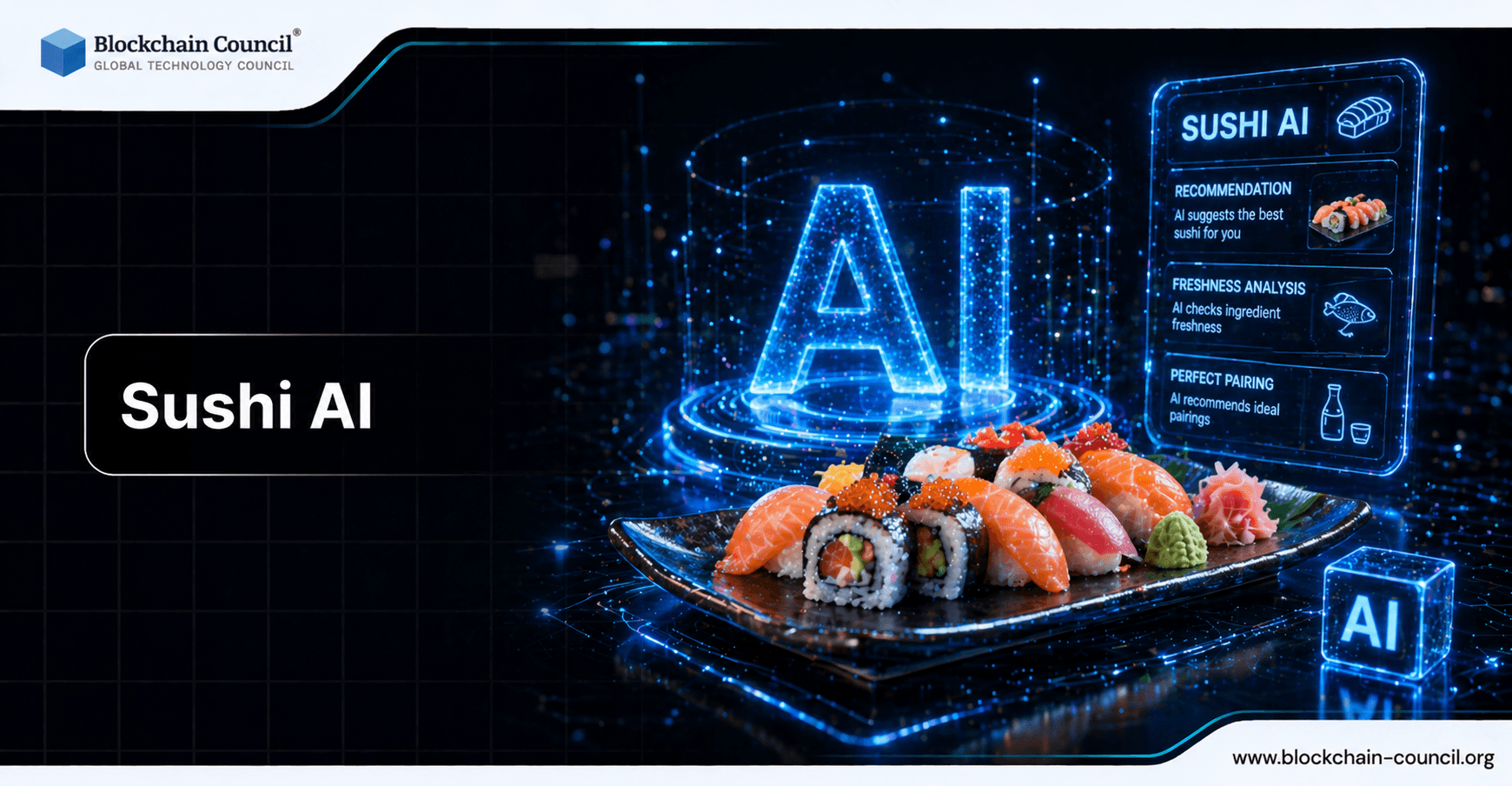
Artificial intelligence is reshaping industries across the globe, and the culinary world is no exception. Sushi, a cuisine deeply rooted in precision, tradition, and craftsmanship, is now experiencing a technological transformation through AI integration. From automated sushi making robots to predictive supply chain systems and personalized dining experiences, Sushi AI represents the intersection of tradition and innovation.
This article explores how AI is revolutionizing sushi production, restaurant operations, customer experience, and food safety. It also examines recent developments, real world applications, and the future of AI in the culinary sector.

For professionals looking to understand AI technologies and their applications, certifications such as the Claude Code Certification and the AI expert certification provide valuable learning opportunities.
What Is Sushi AI
Sushi AI refers to the application of artificial intelligence technologies in the sushi industry. This includes automation, data analysis, robotics, and machine learning systems used to enhance sushi preparation, restaurant management, and customer engagement.
Key Components
AI powered sushi making robots
Predictive analytics for ingredient management
Personalized recommendation systems
Smart kitchen automation
These technologies aim to improve efficiency, consistency, and customer satisfaction while maintaining food quality standards.
How AI Is Used in Sushi Preparation
Robotic Sushi Chefs
AI powered robots can prepare sushi with precision, ensuring consistent quality and portion control. These robots are programmed to handle tasks such as rice shaping, fish slicing, and roll assembly with a level of consistency that is difficult to maintain manually during high volume operations.
Quality Control Systems
AI systems analyze ingredients using computer vision to ensure freshness and quality. For example, cameras can detect subtle differences in color, texture, and structure of fish, helping maintain high food safety standards and reducing the risk of serving substandard ingredients.
Real World Example
A restaurant chain implemented robotic sushi chefs to manage peak hour demand. These robots handled repetitive preparation tasks, reducing waiting time and maintaining consistent output quality. Meanwhile, human chefs focused on creative dishes and customer engagement, creating a balanced workflow between automation and craftsmanship.
AI in Sushi Supply Chain Management
Demand Forecasting
AI analyzes historical sales data, seasonal patterns, and external factors such as weather or local events to predict demand. This allows restaurants to stock ingredients more accurately and avoid shortages or overstocking.
Waste Reduction
By aligning inventory with predicted demand, AI significantly reduces food waste. This not only saves costs but also supports sustainability initiatives in the food industry.
Logistics Optimization
AI systems optimize delivery routes and storage conditions, ensuring that perishable ingredients like fish and rice arrive fresh and on time, maintaining quality standards.
AI in Customer Experience
Personalized Recommendations
AI systems track customer preferences and order history to recommend dishes tailored to individual tastes. This enhances satisfaction and encourages repeat visits.
Smart Ordering Systems
Digital menus powered by AI provide dynamic recommendations and allow customers to customize orders easily, improving convenience and engagement.
Enhanced Dining Experience
Some restaurants use AI powered conveyor systems that adapt to customer demand in real time, ensuring popular dishes are always available and reducing wait times.
AI in Sushi Restaurant Operations
Staff Management
AI helps optimize staffing schedules by analyzing customer traffic patterns. This ensures that restaurants have the right number of staff during peak and off peak hours.
Pricing Strategies
Dynamic pricing models adjust menu prices based on demand, ingredient availability, and market conditions, helping maximize revenue while maintaining competitiveness.
Customer Feedback Analysis
AI analyzes online reviews and feedback to identify trends, helping businesses improve service quality and address customer concerns effectively.
Professionals interested in building such systems can explore the AI Powered coding expert Course.
AI in Marketing for Sushi Businesses
AI is transforming marketing strategies by enabling targeted promotions and personalized campaigns. Restaurants can analyze customer data to understand preferences and behavior, allowing them to create more effective marketing strategies that drive engagement and loyalty.
For deeper insights, the AI powered marketing course provides valuable knowledge.
Recent Developments in Sushi AI
Advanced Robotics
New robotic systems are capable of handling delicate tasks such as slicing fish with precision, maintaining consistency and quality.
AI Driven Menu Design
Restaurants use AI to analyze customer preferences and design menus that align with demand and trends.
Integration with Delivery Platforms
AI optimizes order processing and delivery logistics, improving efficiency and customer satisfaction.
Sustainability Initiatives
AI helps track resource usage and reduce environmental impact by optimizing operations.
Challenges of Sushi AI
Cultural Resistance
Traditional chefs may view AI as a threat to authenticity and craftsmanship.
High Costs
Implementing AI systems requires significant investment, which may not be feasible for all businesses.
Technical Limitations
AI systems may struggle with creative tasks that require human intuition and experience.
Data Dependency
AI relies on high quality data for accurate predictions and performance.
Ethical Considerations
Job Displacement
Automation may reduce the need for certain roles, requiring workforce adaptation.
Authenticity
Maintaining the cultural integrity of sushi while adopting technology is a key challenge.
Data Privacy
Customer data must be handled responsibly to maintain trust.
Future of Sushi AI
Collaboration Between Humans and AI
AI will support chefs rather than replace them, enhancing productivity and creativity.
Increased Personalization
Dining experiences will become more tailored to individual preferences.
Global Expansion
AI powered sushi concepts will expand into new markets.
Continuous Innovation
Advancements in AI and robotics will continue to shape the industry.
Preparing for AI in the Culinary Industry
Learn AI Fundamentals
Understanding AI technologies helps professionals adapt to industry changes.
Embrace Technology
Adopting AI tools improves efficiency and competitiveness.
Continuous Learning
Staying updated with trends ensures long term success.
Conclusion
Sushi AI represents a unique blend of tradition and innovation, transforming how sushi is prepared, served, and experienced. By integrating artificial intelligence into operations, businesses can improve efficiency, consistency, and customer satisfaction.
While challenges such as cultural resistance and ethical concerns remain, the potential of AI in the culinary industry is significant. As technology evolves, Sushi AI will continue to shape the future of dining experiences.
FAQs
1. What is Sushi AI?
Sushi AI refers to the use of artificial intelligence technologies within the sushi industry to enhance various aspects such as preparation, operations, supply chain management, and customer experience. It combines robotics, machine learning, and data analytics to create a more efficient and consistent system while still preserving the quality and standards expected in sushi making. This concept represents a modern approach to blending traditional culinary practices with advanced technological solutions.
2. How do AI sushi robots work?
AI sushi robots operate using a combination of sensors, programmed instructions, and machine learning algorithms that allow them to perform repetitive and precise tasks. These include shaping rice, slicing fish, and assembling rolls with consistent quality. Over time, these systems can improve performance by analyzing data and optimizing processes, making them highly efficient in high demand environments.
3. Can AI replace sushi chefs?
AI cannot fully replace sushi chefs because the art of sushi making involves creativity, cultural understanding, and human judgment. While AI can handle repetitive and technical tasks, human chefs bring innovation and emotional connection to the dining experience. Therefore, AI is better viewed as a supportive tool rather than a replacement.
4. What are the benefits of Sushi AI?
The benefits include improved efficiency, reduced preparation time, consistent quality, and enhanced customer experiences. AI also helps businesses make better decisions through data analysis, leading to increased profitability and sustainability.
5. Is Sushi AI expensive?
Implementing Sushi AI systems can require significant upfront investment in hardware and software. However, the long term benefits such as reduced labor costs, improved efficiency, and minimized waste can offset these expenses over time.
6. How does AI improve food safety?
AI systems monitor ingredient quality, storage conditions, and preparation processes in real time. By detecting potential issues early, they help maintain high safety standards and reduce the risk of contamination or spoilage.
7. What is AI in restaurant management?
AI in restaurant management involves using data analytics and automation to optimize operations such as inventory control, staff scheduling, and customer service. This leads to improved efficiency and better decision making.
8. Can AI personalize dining experiences?
Yes, AI can analyze customer preferences, order history, and behavior to provide personalized recommendations and experiences. This enhances customer satisfaction and loyalty.
9. What are the challenges of Sushi AI?
Challenges include high costs, cultural resistance, technical limitations, and reliance on data quality. Addressing these challenges requires careful planning and investment.
10. How does AI reduce waste?
AI predicts demand and optimizes inventory management, ensuring that ingredients are used efficiently. This reduces excess and minimizes food waste.
11. Is Sushi AI used globally?
Yes, Sushi AI is being adopted in various countries, especially in regions with advanced technology infrastructure and high demand for automation.
12. What role does data play in Sushi AI?
Data is essential for training AI systems, enabling accurate predictions and efficient operations. High quality data improves system performance and reliability.
13. How does AI impact restaurant staff?
AI can automate repetitive tasks, allowing staff to focus on customer service and creative roles. This can improve job satisfaction and efficiency.
14. What is the future of Sushi AI?
The future includes greater integration of AI in all aspects of restaurant operations, increased personalization, and continued innovation in robotics and analytics.
15. Can AI create new sushi recipes?
AI can analyze trends and suggest ingredient combinations, but human chefs refine these ideas and bring creativity to the final dish.
16. How does AI help in marketing sushi restaurants?
AI analyzes customer data to create targeted campaigns, improving engagement and attracting new customers.
17. What are smart kitchens?
Smart kitchens use AI and automation to optimize cooking processes, improve efficiency, and maintain consistency in food preparation.
18. How reliable is Sushi AI?
Sushi AI systems are generally reliable when properly maintained and supported by accurate data. Regular updates and monitoring ensure consistent performance.
19. Can small restaurants use Sushi AI?
Yes, smaller and more affordable AI solutions are becoming available, making it accessible to small businesses.
20. Why is Sushi AI important?
Sushi AI is important because it enhances efficiency, improves quality, and transforms the dining experience. It represents a significant step forward in integrating technology with traditional culinary practices.
Related Articles
View All
AI & ML
OpenAI Launches GPT-6.1 Terra: What’s New?
OpenAI has launched GPT-6.1 Terra, a faster and cheaper mid-tier model with stronger computer use, better image understanding and fewer errors. See what is new, what it costs, and who can use it.

AI & ML
Built to Catch AI Cheating: Rethinking Pre-Employment Assessments with HireValid
Explore how HireValid is rethinking pre-employment assessments with AI-resistant test design, integrity signals, candidate evidence, and human review to address AI-assisted cheating.

AI & ML
AI-Era Hiring Needs AI-Proof Tests: How HireValid Is Redefining Talent Assessment
Explore how HireValid is rethinking talent assessment for the AI era with job-relevant tests, anti-cheating design, integrity signals, and human-reviewed evidence of candidate ability.
Trending Articles
AWS Career Roadmap
A step-by-step guide to building a successful career in Amazon Web Services cloud computing.

Top 5 DeFi Platforms
Explore the leading decentralized finance platforms and what makes each one unique in the evolving DeFi landscape.
What is AWS? A Beginner's Guide to Cloud Computing
Everything you need to know about Amazon Web Services, cloud computing fundamentals, and career opportunities.