

Skincare Tips AI Technology
 Suyash Raizada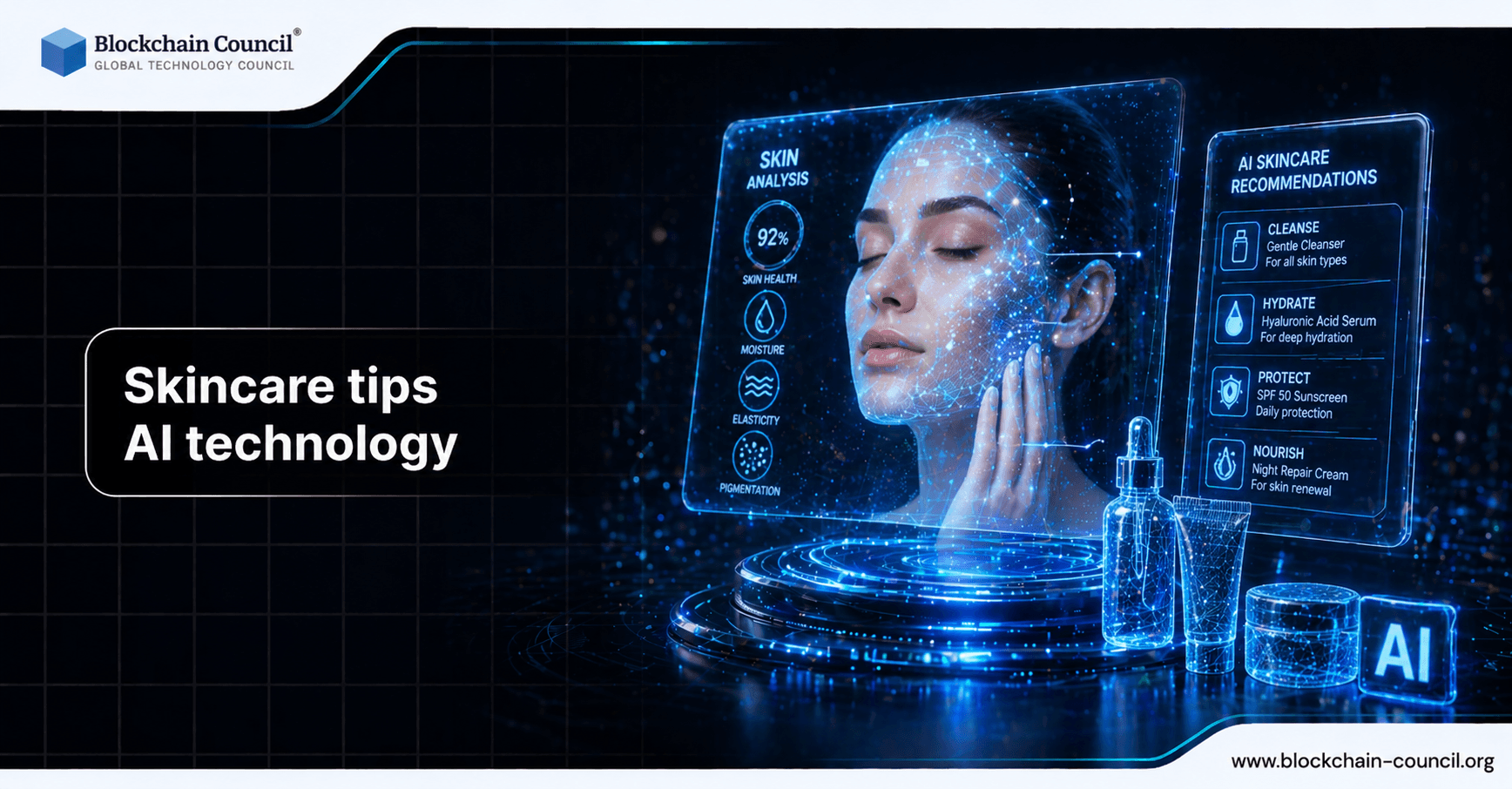
The skincare industry has undergone a significant transformation with the integration of artificial intelligence. What was once based on trial and error, generic routines, and influencer advice is now becoming data driven, personalized, and highly precise. AI powered skincare tools analyze skin conditions, recommend products, and even predict future skin concerns.
This article explores how AI technology is reshaping skincare, offering practical tips, real world examples, and insights into the future of intelligent beauty solutions. It also highlights how professionals can build relevant skills in AI to stay competitive in this evolving landscape.

For those interested in mastering artificial intelligence, certifications such as the Claude Code Certification and the AI expert certification provide structured learning opportunities.
What is AI in Skincare
AI in skincare refers to the use of artificial intelligence technologies such as machine learning, computer vision, and data analytics to assess skin conditions and provide personalized recommendations.
Key Capabilities
Skin analysis through images
Personalized product recommendations
Predictive skin health insights
Real time monitoring and feedback
These capabilities allow users to move beyond generic skincare routines and adopt solutions tailored to their specific needs.
How AI Skincare Technology Works
AI skincare systems analyze images or user input to detect skin characteristics such as texture, hydration levels, pigmentation, and acne.
Process Overview
The user uploads a photo or inputs data
AI analyzes skin features using computer vision
The system identifies issues and patterns
Personalized recommendations are generated
This process happens within seconds, making skincare advice more accessible than ever.
Real World Example
A user struggling with acne uses an AI skincare app that scans their face and identifies oil imbalance and clogged pores. The app recommends specific products and routines, and tracks progress over time. After several weeks, the user sees measurable improvement, guided by data rather than guesswork and random product trials.
Benefits of AI in Skincare
Personalization
AI provides recommendations tailored to individual skin types and conditions, taking into account variables such as environment, age, and lifestyle factors.
Accuracy
Advanced algorithms can detect subtle skin issues that may not be easily visible, offering a more precise assessment compared to manual observation.
Convenience
Users can access skincare insights instantly from their smartphones or devices without scheduling appointments.
Cost Efficiency
By reducing trial and error purchases, AI helps users invest in products that are more likely to work for their specific skin concerns.
Skincare Tips Using AI Technology
1. Use AI Skin Analysis Tools
Start with an AI powered scan to understand your skin condition in detail. This provides a reliable baseline for building a personalized skincare routine.
2. Follow Personalized Recommendations
Avoid generic skincare routines that may not suit your skin type. AI recommendations are tailored to your specific needs and conditions.
3. Track Progress Over Time
Use AI tools that allow you to monitor improvements and adjust your routine accordingly, ensuring consistent progress.
4. Combine AI with Professional Advice
AI tools are helpful, but dermatologists provide expert insights that are essential for complex or medical conditions.
5. Be Consistent
Consistency is key in skincare. AI recommendations work best when followed regularly over time.
AI in Skincare Product Development
Companies use AI to analyze consumer data, identify trends, and develop products tailored to specific needs. This leads to more effective formulations and targeted skincare solutions that align with user expectations.
Professionals interested in building such systems can explore the AI Powered coding expert Course.
AI in Beauty Marketing
AI is transforming how skincare products are marketed by enabling brands to create personalized campaigns based on consumer behavior and preferences. This improves engagement and customer satisfaction.
For deeper insights, the AI powered marketing course offers valuable knowledge.
Recent Developments in AI Skincare
Smart Mirrors
Devices that analyze skin in real time and provide personalized recommendations instantly.
Wearable Skin Sensors
Technology that tracks hydration levels, UV exposure, and other environmental factors affecting skin health.
AI Dermatology Assistants
Tools that support professionals in diagnosing and managing skin conditions more efficiently.
Challenges and Limitations
Accuracy Variability
Results can vary depending on image quality, lighting conditions, and the sophistication of the AI model.
Privacy Concerns
Sensitive skin data must be securely stored and handled to protect user privacy.
Overreliance
Users may depend too heavily on AI tools without seeking professional medical advice when needed.
Accessibility
Advanced AI skincare solutions may not be accessible or affordable for all users.
Future of AI in Skincare
Hyper Personalization
AI will deliver even more precise recommendations by incorporating genetic, environmental, and lifestyle data.
Integration with Health Systems
Skincare tools will connect with broader health monitoring systems for a holistic approach.
Improved Diagnostics
AI will assist in early detection of skin issues, improving prevention and treatment outcomes.
Ethical Considerations
Data Privacy
Ensuring user data is protected and handled responsibly is essential.
Transparency
Users should understand how AI systems generate recommendations.
Responsible Use
AI should be used as a supportive tool rather than a replacement for professional medical advice.
Preparing for the AI Skincare Revolution
Learn AI Basics
Understanding how AI works helps users make better and more informed decisions.
Stay Updated
Keeping up with technological advancements ensures effective use of AI tools.
Use AI Responsibly
Balancing AI insights with professional guidance leads to better results.
Conclusion
AI technology is transforming skincare by making it more personalized, efficient, and data driven. From analyzing skin conditions to recommending products and tracking progress, AI offers powerful tools for improving skin health.
However, it is important to use these tools responsibly and combine them with professional guidance. As AI continues to evolve, it will play an increasingly important role in shaping the future of skincare and beauty.
FAQs
1. What is AI skincare technology?
AI skincare technology refers to the use of artificial intelligence systems to analyze skin conditions and provide highly personalized recommendations. These systems rely on machine learning models, computer vision, and large datasets to evaluate factors such as skin texture, hydration, pigmentation, and acne patterns. By doing so, AI can offer insights that are more precise than traditional methods, helping users develop routines that are specifically tailored to their individual skin needs and long term goals.
2. How does AI analyze skin?
AI analyzes skin by processing images or user provided data through advanced algorithms that detect patterns and features. It examines aspects such as pores, wrinkles, redness, and oil levels, comparing them with large datasets to identify potential issues. This process allows the system to generate accurate assessments and recommend suitable skincare routines based on the analysis.
3. Is AI skincare accurate?
AI skincare can be quite accurate, especially when high quality images and advanced tools are used. However, accuracy may vary depending on factors such as lighting, image clarity, and the sophistication of the algorithm. While AI provides valuable insights, it should be used alongside professional advice for best results.
4. Can AI replace dermatologists?
AI cannot replace dermatologists because it lacks the ability to fully understand complex medical conditions and provide personalized medical care. While it can assist with analysis and recommendations, dermatologists bring expertise, experience, and human judgment that are essential for proper diagnosis and treatment.
5. What are the benefits of AI skincare?
The benefits include personalized recommendations, improved accuracy in identifying skin concerns, convenience of accessing insights anytime, and cost savings by avoiding ineffective products. AI helps users make informed decisions and achieve better skincare results over time.
6. Are AI skincare apps safe?
Most AI skincare apps are safe to use, but users should choose reputable platforms and review privacy policies. Ensuring that personal data is handled securely is important for maintaining trust and safety.
7. What devices use AI skincare?
Devices include smartphones, smart mirrors, and wearable sensors that monitor various skin parameters. These technologies make AI skincare accessible and convenient for everyday use.
8. Can AI detect skin diseases?
AI can assist in identifying potential skin issues, but it should not be relied upon for medical diagnosis. Professional consultation is necessary for accurate diagnosis and treatment.
9. How does AI improve skincare routines?
AI improves routines by providing personalized recommendations based on detailed analysis. This ensures that users choose products and practices that are most effective for their specific skin conditions.
10. Is AI skincare expensive?
Costs vary depending on the platform and features. Some tools are free, while others require subscriptions or specialized devices.
11. Can beginners use AI skincare tools?
Yes, most tools are designed to be user friendly, allowing beginners to easily access and benefit from AI insights.
12. What data does AI skincare use?
It uses images, user input, and historical data to generate insights and recommendations.
13. How often should I use AI analysis?
Regular use helps track changes and adjust routines, but frequency depends on individual needs.
14. Does AI consider lifestyle factors?
Some advanced tools incorporate lifestyle data such as diet, sleep, and environment to provide more accurate recommendations.
15. What is the future of AI skincare?
The future includes more advanced personalization, integration with health systems, and improved diagnostic capabilities.
16. Can AI recommend products?
Yes, AI suggests products based on analysis and user preferences, improving effectiveness.
17. Is AI skincare suitable for all skin types?
Yes, AI can adapt to different skin types and conditions, providing tailored recommendations.
18. How does AI handle sensitive skin?
AI identifies sensitivity indicators and recommends gentle products and routines to avoid irritation.
19. Can AI track skin improvement?
Yes, many tools include tracking features that allow users to monitor progress over time and adjust routines accordingly.
20. Why is AI important in skincare?
AI is important because it enables personalized, data driven skincare solutions that improve outcomes, reduce guesswork, and enhance overall efficiency in maintaining healthy skin..
Related Articles
View All
AI & ML
OpenAI Launches GPT-6.1 Terra: What’s New?
OpenAI has launched GPT-6.1 Terra, a faster and cheaper mid-tier model with stronger computer use, better image understanding and fewer errors. See what is new, what it costs, and who can use it.

AI & ML
Built to Catch AI Cheating: Rethinking Pre-Employment Assessments with HireValid
Explore how HireValid is rethinking pre-employment assessments with AI-resistant test design, integrity signals, candidate evidence, and human review to address AI-assisted cheating.

AI & ML
AI-Era Hiring Needs AI-Proof Tests: How HireValid Is Redefining Talent Assessment
Explore how HireValid is rethinking talent assessment for the AI era with job-relevant tests, anti-cheating design, integrity signals, and human-reviewed evidence of candidate ability.
Trending Articles
AWS Career Roadmap
A step-by-step guide to building a successful career in Amazon Web Services cloud computing.

Top 5 DeFi Platforms
Explore the leading decentralized finance platforms and what makes each one unique in the evolving DeFi landscape.
How Blockchain Secures AI Data
Understand how blockchain technology is being applied to protect the integrity and security of AI training data.