

OpenDream.ai

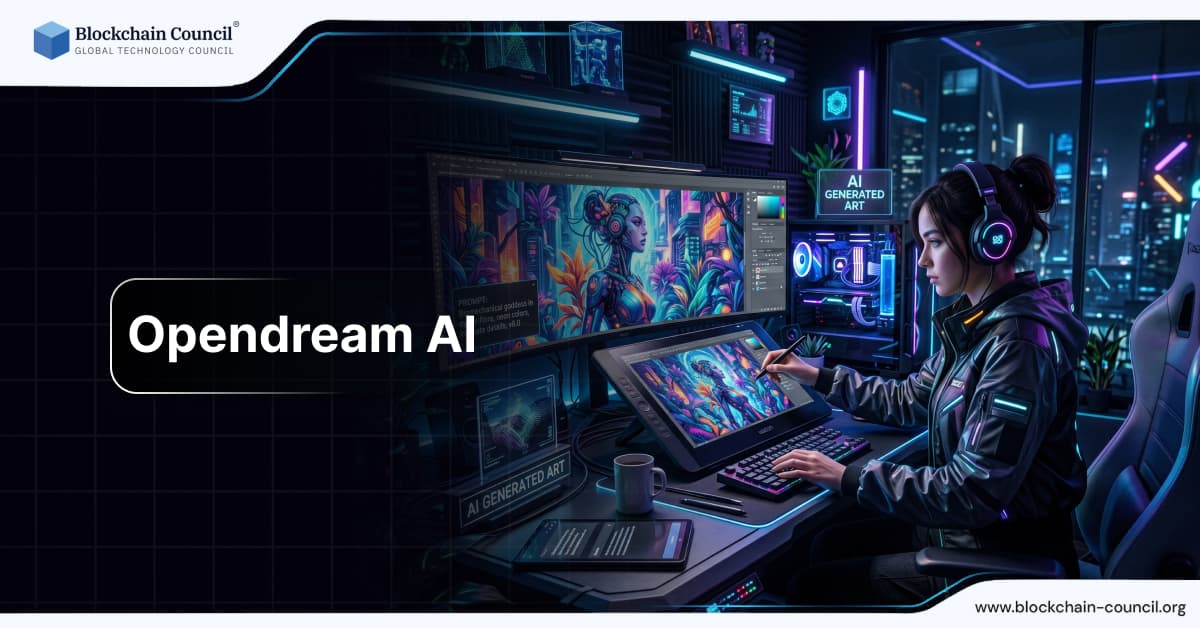
OpenDream.ai is an emerging platform in the rapidly expanding world of AI generated art. As artificial intelligence continues to redefine creativity, platforms like OpenDream.ai enable users to transform text prompts into visually compelling images. From digital artists to marketers and hobbyists, this tool has gained attention for its accessibility, speed, and creative potential.
This article explores OpenDream.ai in depth, including its features, real world applications, technological foundation, recent developments, and future outlook. It also highlights how professionals can develop relevant skills to thrive in this evolving AI driven creative landscape.

For individuals seeking structured knowledge in artificial intelligence and creative technologies, certifications such as the Claude Code Certification and the AI expert certification provide valuable learning pathways.
What is OpenDream.ai
OpenDream.ai is an AI powered image generation platform that allows users to create artwork using text prompts. By leveraging advanced machine learning models, it converts written descriptions into high quality visuals in seconds.
Key Features
Text to image generation
Multiple artistic styles
Fast rendering capabilities
User friendly interface
These features make OpenDream.ai accessible to both beginners and experienced creators.
How OpenDream.ai Works
OpenDream.ai uses generative AI models, often based on diffusion or transformer architectures, to interpret text prompts and generate images.
Process Overview
User inputs a text description
AI processes the prompt using trained models
The system generates an image based on learned patterns
Output is refined and presented to the user
This process allows for rapid creation of unique visuals without traditional artistic skills.
Real World Example
A marketing team needs visuals for a campaign but lacks design resources. Using OpenDream.ai, they generate multiple high quality images based on simple text prompts, saving time and cost while maintaining creative flexibility.
Applications of OpenDream.ai
Digital Art
Artists use the platform to experiment with styles and concepts.
Marketing and Advertising
Businesses create visuals for campaigns and social media.
Gaming and Entertainment
Developers generate concept art and character designs.
Education
Students and educators use AI generated visuals for learning materials.
Professionals interested in technical AI implementation can explore the AI Powered coding expert Course.
Benefits of OpenDream.ai
Accessibility
Anyone can create artwork without formal training.
Speed
Images are generated in seconds.
Cost Efficiency
Reduces the need for expensive design resources.
Creative Exploration
Users can experiment with endless variations.
Challenges and Limitations
Quality Variability
Results may vary depending on prompt clarity.
Ethical Concerns
Issues related to originality and copyright.
Dependence on Prompts
Output quality depends heavily on user input.
Technical Constraints
Some limitations in resolution or customization.
OpenDream.ai in Marketing
AI generated visuals are transforming marketing strategies by enabling rapid content creation and personalization. OpenDream.ai allows businesses to produce unique visuals tailored to specific campaigns.
Professionals can enhance their marketing expertise through the AI powered marketing course.
Recent Developments
Improved Image Quality
Advancements in AI models have enhanced realism and detail.
Style Customization
Users can now select and refine artistic styles.
Integration with Platforms
AI tools are being integrated into design and content platforms.
Future of OpenDream.ai
Enhanced Creativity
AI will enable more complex and detailed artwork.
Greater Personalization
Users will have more control over outputs.
Industry Adoption
AI generated art will become standard in various sectors.
Ethical Considerations
Copyright Issues
Ownership of AI generated content remains a topic of debate.
Authenticity
Distinguishing between human and AI created art.
Responsible Use
Ensuring ethical application of AI tools.
Preparing for the AI Creative Era
Skill Development
Understanding AI tools is essential.
Continuous Learning
Keeping up with advancements is necessary.
Practical Experience
Hands on experimentation improves creativity.
Conclusion
OpenDream.ai represents a significant step forward in AI driven creativity. By enabling users to generate high quality images from text prompts, it democratizes art creation and expands creative possibilities.
As technology continues to evolve, platforms like OpenDream.ai will play a crucial role in shaping the future of digital content and artistic expression. Understanding these tools and their implications is essential for individuals and businesses aiming to stay competitive.
FAQs
1. What is OpenDream.ai?
OpenDream.ai is an artificial intelligence platform that enables users to create images from text prompts using advanced generative models. It is designed to simplify the creative process by allowing individuals to describe an idea in words and instantly receive a visual representation. This makes it particularly valuable for people who lack traditional design skills but still want to produce high quality artwork for personal or professional use. The platform is part of a broader trend in AI where creativity is becoming more accessible to a global audience.
2. How does OpenDream.ai work?
OpenDream.ai works by using machine learning models trained on large datasets of images and text descriptions. When a user enters a prompt, the system analyzes the language, identifies patterns, and generates an image that aligns with the input. This process involves complex algorithms that simulate artistic interpretation, allowing the AI to produce visually coherent and often highly detailed results. The speed and efficiency of this process make it a powerful tool for rapid content creation.
3. Who can use OpenDream.ai?
OpenDream.ai is designed for a wide range of users, including professional artists, marketers, educators, students, and hobbyists. Its intuitive interface makes it easy for beginners to start creating images, while its advanced capabilities provide value for experienced users. This broad accessibility is one of the reasons why AI art platforms are gaining popularity across industries.
4. Is OpenDream.ai free?
The platform may offer a combination of free and paid features depending on usage and subscription plans. Free versions typically provide limited access, while premium plans unlock advanced tools, higher resolution outputs, and faster processing times. Users should review the platform’s pricing structure to determine the best option for their needs.
5. What are the main uses of OpenDream.ai?
OpenDream.ai is used for creating digital art, marketing visuals, concept designs, educational materials, and more. It allows users to generate unique images quickly, making it ideal for projects that require creativity and efficiency. Its versatility makes it suitable for both personal and professional applications.
6. Can OpenDream.ai replace designers?
OpenDream.ai is more likely to complement designers rather than replace them. While it can generate visuals quickly, human designers bring creativity, strategic thinking, and an understanding of context that AI cannot fully replicate. The platform serves as a tool that enhances productivity and supports creative workflows.
7. What are the benefits of using OpenDream.ai?
The benefits include speed, accessibility, cost efficiency, and the ability to experiment with different creative ideas. Users can generate multiple variations of an image in a short time, allowing for greater flexibility and innovation in design processes.
8. What are the limitations?
Limitations include variability in output quality, dependence on prompt clarity, and ethical concerns related to originality and copyright. Users may need to refine prompts multiple times to achieve desired results, and some outputs may not meet professional standards.
9. Is AI generated art original?
AI generated art is created based on patterns learned from existing data, which raises questions about originality. While the output is unique in its combination of elements, it is influenced by the data used during training. This ongoing debate highlights the complexity of defining creativity in the context of AI.
10. Can businesses use OpenDream.ai?
Yes, businesses use OpenDream.ai for marketing, branding, and content creation. It allows companies to produce visuals quickly and cost effectively, making it a valuable tool for campaigns and digital media strategies.
11. How accurate are the images?
The accuracy of generated images depends on the clarity and specificity of the prompt. Detailed descriptions tend to produce better results, while vague prompts may lead to less precise outputs. Users often refine their inputs to improve accuracy.
12. What skills are needed?
Basic creativity and the ability to write clear prompts are sufficient for most users. Advanced users may benefit from understanding AI tools and design principles to achieve more refined results.
13. Is OpenDream.ai secure?
Security depends on the platform’s policies and how users interact with it. It is advisable to avoid sharing sensitive or confidential information when using AI tools, as data handling practices may vary.
14. What is the future of AI art?
The future of AI art includes improved image quality, greater customization, and wider adoption across industries. As technology advances, AI tools will become more sophisticated and integrated into creative workflows.
15. Can AI art be copyrighted?
Copyright laws for AI generated content are still evolving and differ by region. Some jurisdictions may not recognize AI as an author, which creates uncertainty around ownership and rights.
16. How does OpenDream.ai impact artists?
It provides new tools for experimentation and creativity but also raises concerns about competition and the value of human artistry. Many artists use AI as a supplement to their work rather than a replacement.
17. Can beginners use it effectively?
Yes, beginners can quickly learn to use OpenDream.ai due to its user friendly design. With minimal effort, they can create impressive visuals and explore creative ideas.
18. What industries benefit most?
Industries such as marketing, entertainment, education, and design benefit significantly from AI generated art. These sectors rely heavily on visual content and can leverage AI for efficiency.
19. Does it require technical knowledge?
No advanced technical knowledge is required, which makes it accessible to a broad audience. However, understanding basic AI concepts can enhance the user experience.
20. Why is OpenDream.ai important?
OpenDream.ai is important because it democratizes creativity, allowing more people to participate in digital art and content creation. It represents a shift in how creative work is produced and consumed, making innovation more accessible than ever.
Related Articles
View All
AI & ML
OpenAI Launches GPT-6.1 Terra: What’s New?
OpenAI has launched GPT-6.1 Terra, a faster and cheaper mid-tier model with stronger computer use, better image understanding and fewer errors. See what is new, what it costs, and who can use it.

AI & ML
Built to Catch AI Cheating: Rethinking Pre-Employment Assessments with HireValid
Explore how HireValid is rethinking pre-employment assessments with AI-resistant test design, integrity signals, candidate evidence, and human review to address AI-assisted cheating.

AI & ML
AI-Era Hiring Needs AI-Proof Tests: How HireValid Is Redefining Talent Assessment
Explore how HireValid is rethinking talent assessment for the AI era with job-relevant tests, anti-cheating design, integrity signals, and human-reviewed evidence of candidate ability.
Trending Articles
The Role of Blockchain in Ethical AI Development
How blockchain technology is being used to promote transparency and accountability in artificial intelligence systems.
AWS Career Roadmap
A step-by-step guide to building a successful career in Amazon Web Services cloud computing.

Can DeFi 2.0 Bridge the Gap Between Traditional and Decentralized Finance?
The next generation of DeFi protocols aims to connect traditional banking with decentralized finance ecosystems.