

OpenAI’s Enterprise Push: What It Means for Businesses

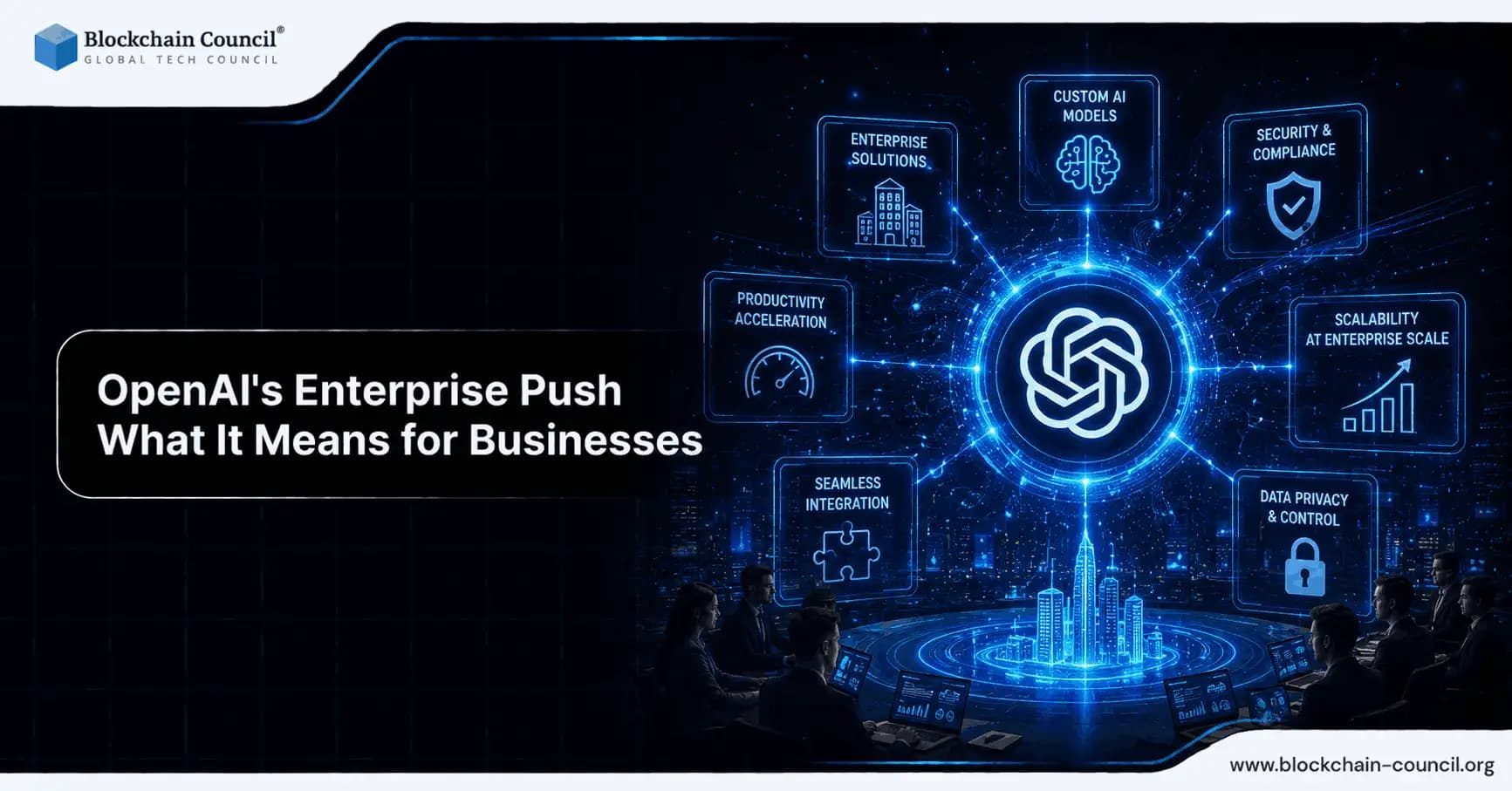
Artificial intelligence has rapidly evolved from an experimental technology into a critical business infrastructure layer. Over the past few years, organizations across industries have integrated AI into customer service, software development, marketing, operations, analytics, cybersecurity, and decision-making systems. At the center of this transformation is OpenAI, whose products and enterprise-focused initiatives are significantly reshaping how businesses adopt and scale AI technologies.
In 2026, OpenAI’s enterprise push represents far more than the expansion of a technology company. It signals a major shift in how businesses operate, automate workflows, improve productivity, and prepare employees for AI-driven environments. Enterprise AI adoption is no longer limited to large technology firms. Businesses of all sizes are increasingly integrating AI systems into everyday operations.

OpenAI’s growing focus on enterprise solutions includes advanced language models, AI-powered assistants, workflow automation, developer tools, enterprise integrations, and scalable business AI platforms. These developments are accelerating AI adoption across sectors while also creating new demands for workforce training, governance, and responsible implementation.
Humanity spent decades trying to optimize workplace productivity through meetings, spreadsheets, and motivational posters before finally deciding that conversational AI assistants capable of summarizing reports and writing code might be a more efficient approach. Grimly sensible.
Why OpenAI Is Focusing on Enterprise Markets
Initially, generative AI tools gained attention through consumer adoption and experimentation. However, enterprise demand quickly became one of the fastest-growing segments in the AI market.
Businesses increasingly seek AI solutions capable of improving:
Productivity
Customer support
Workflow automation
Software development
Data analysis
Internal communication
Marketing operations
Knowledge management
OpenAI recognized that enterprise customers require more than basic chatbot functionality. Organizations need scalable, secure, reliable, and customizable AI systems integrated into business workflows.
The Growing Enterprise AI Market
The enterprise AI market is expanding rapidly because organizations face increasing pressure to modernize operations and remain competitive.
Companies now use AI to:
Automate repetitive tasks
Improve operational efficiency
Accelerate decision-making
Enhance customer experiences
Support software development
Reduce operational costs
This demand is fueling significant investment in enterprise-grade AI infrastructure and workforce transformation initiatives.
How OpenAI Is Reshaping Business Operations
OpenAI’s enterprise tools are helping businesses integrate AI directly into daily workflows.
AI-Powered Workplace Assistants
Modern AI assistants can help employees:
Draft reports
Summarize meetings
Analyze documents
Generate emails
Organize workflows
Answer internal questions
This reduces repetitive administrative work and improves productivity.
Knowledge Management Systems
Organizations increasingly use AI to search internal databases, summarize documentation, and support employee knowledge sharing.
AI-powered knowledge systems improve access to information across distributed teams.
Enterprise Workflow Automation
AI systems now automate processes such as:
Customer inquiries
HR operations
Scheduling
Data analysis
Reporting tasks
Internal support systems
This allows businesses to scale operations more efficiently.
Why Businesses Need AI-Skilled Professionals
As enterprise AI adoption grows, organizations increasingly require employees capable of implementing and managing AI systems responsibly.
This has created strong demand for practical AI education and workforce certification programs.
Programs such as the AI Expert certification help professionals develop practical AI implementation skills relevant to enterprise environments.
Businesses increasingly prioritize employees who understand both AI technology and operational integration strategies.
The Rise of ChatGPT Expertise in Enterprises
ChatGPT and conversational AI systems have become central tools for enterprise productivity and communication.
Organizations now use conversational AI for:
Customer service
Internal communication
Workflow support
Research assistance
Content generation
Employee productivity enhancement
The ChatGPT expert certification helps professionals understand how to use conversational AI systems effectively within business environments.
As conversational AI becomes more integrated into workplace operations, demand for practical expertise continues growing.
AI Is Transforming Software Development
Software engineering is one of the industries most affected by OpenAI’s enterprise expansion.
Developers increasingly use AI-powered tools for:
Code generation
Debugging
Documentation
Testing automation
Workflow optimization
The AI Powered coding expert Course helps developers integrate AI systems into modern software development processes.
AI-assisted coding significantly improves productivity, but businesses also require governance frameworks to manage security, accountability, and quality assurance.
The Growth of Autonomous AI Systems
One of the most important trends shaping enterprise AI is the rise of autonomous AI agents.
Modern AI systems can increasingly:
Execute workflows
Analyze business data
Respond to customers
Coordinate tasks
Automate decisions
Programs like the Agentic ai expert course are becoming increasingly valuable because organizations need professionals capable of managing intelligent automation systems responsibly.
These technologies are reshaping enterprise operations at scale.
Deeptech Workforce Development Is Accelerating
Enterprise AI growth is also increasing demand for broader deep technology education.
Organizations focused on Deeptech certification programs help professionals build expertise in advanced technologies such as:
Artificial intelligence
Automation
Blockchain
Cybersecurity
Cloud computing
Data science
As businesses modernize digitally, deep technology capabilities are becoming essential workforce skills.
Enterprise AI Is Reshaping Marketing Operations
Marketing departments are rapidly adopting AI-powered systems.
Businesses now use AI for:
Content creation
Customer targeting
Predictive analytics
Campaign automation
Personalized advertising
Market research
Professional Marketing certification programs help professionals combine strategic business knowledge with modern AI-driven marketing capabilities.
Similarly, the AI powered digital marketing course equips marketers with practical expertise in AI-powered campaign management and digital engagement systems.
Why Technology Certification Ecosystems Matter
Technology certification ecosystems are becoming increasingly important as enterprises scale AI adoption.
Organizations such as Global Tech Council help provide globally recognized technology learning frameworks aligned with enterprise workforce development needs.
These ecosystems support:
Continuous workforce learning
AI literacy development
Industry-recognized credentials
Scalable online education
Enterprise-aligned training systems
This helps organizations maintain workforce adaptability in rapidly evolving digital environments.
OpenAI’s Enterprise Push and Workforce Transformation
AI adoption is fundamentally changing workforce expectations.
Employees increasingly need:
AI literacy
Automation awareness
Prompt engineering skills
Data interpretation abilities
Digital workflow management expertise
Businesses are investing heavily in workforce upskilling because AI integration affects nearly every department.
Apparently, the modern workplace now expects employees to collaborate not only with coworkers but also with increasingly capable AI systems that never sleep, never stop generating content, and occasionally invent facts with astonishing confidence.
Why Enterprises Prefer AI-Integrated Workflows
Businesses increasingly prefer AI-integrated workflows because they improve:
Productivity
AI reduces repetitive manual work and accelerates task completion.
Scalability
Organizations can support larger operations without proportional staffing increases.
Decision-Making
AI systems analyze large datasets quickly and provide operational insights.
Customer Experience
AI-powered support systems improve response speed and personalization.
Cost Efficiency
Automation reduces operational inefficiencies and resource waste.
Challenges Businesses Face With Enterprise AI Adoption
Despite strong benefits, enterprise AI adoption also creates several challenges.
Data Privacy and Security
Organizations must protect sensitive business and customer information.
AI Governance
Businesses need policies for responsible AI deployment and oversight.
Workforce Resistance
Some employees fear automation and job displacement.
Skill Gaps
Many organizations lack sufficient AI-skilled professionals.
Compliance Requirements
Governments increasingly regulate enterprise AI systems.
Why AI Governance Is Becoming Essential
As AI systems become more powerful, enterprises increasingly establish governance frameworks focused on:
Transparency
Risk management
Human oversight
Ethical deployment
Compliance monitoring
Responsible AI governance is becoming a core component of enterprise strategy rather than simply an IT issue.
OpenAI and the Future of Enterprise Collaboration
AI-powered collaboration tools are reshaping how teams communicate and work together.
Businesses increasingly use AI for:
Meeting summarization
Project coordination
Workflow recommendations
Internal communication support
Knowledge retrieval systems
These tools improve efficiency across distributed and remote teams.
The Role of AI in Enterprise Innovation
AI is also accelerating business innovation.
Organizations use AI to:
Develop new products
Analyze market trends
Optimize operations
Improve research and development
Enhance strategic planning
Companies adopting enterprise AI early often gain competitive advantages through faster decision-making and operational agility.
Future Trends in Enterprise AI
Several trends will shape the future of enterprise AI over the next decade.
AI Agents and Autonomous Workflows
Businesses will increasingly deploy AI systems capable of handling complex workflows independently.
Personalized Enterprise AI Systems
AI tools will become more customized for specific organizational needs.
AI-Powered Decision Intelligence
Organizations will rely more heavily on predictive analytics and intelligent automation.
Continuous Workforce AI Education
Employees will increasingly require ongoing AI learning and certification updates.
Stronger Enterprise AI Regulation
Governments will continue expanding AI governance frameworks and compliance requirements.
Why Human Skills Still Matter
Despite rapid AI adoption, human expertise remains essential.
Employees continue providing:
Strategic thinking
Creativity
Ethical judgment
Leadership
Emotional intelligence
Complex problem-solving
AI systems work best when supporting human capabilities rather than replacing meaningful human decision-making entirely.
How Businesses Can Prepare for OpenAI’s Enterprise Expansion
Organizations seeking successful enterprise AI adoption should focus on several priorities.
Invest in Workforce Training
Employees need practical AI knowledge and digital literacy skills.
Build AI Governance Policies
Responsible deployment frameworks reduce operational and legal risks.
Start With Scalable Use Cases
Businesses should identify practical AI applications that improve measurable outcomes.
Encourage Cross-Department Collaboration
AI adoption should involve technical, operational, legal, and leadership teams.
Prioritize Responsible AI Practices
Transparency and accountability improve long-term trust and sustainability.
Conclusion
OpenAI’s enterprise push represents one of the most significant transformations currently reshaping the global business environment. AI-powered systems are no longer experimental tools used only by technology companies. They are becoming central components of enterprise operations, workforce productivity, customer engagement, software development, marketing, and strategic decision-making.
As businesses increasingly integrate AI into workflows, demand for practical AI skills, governance systems, certification pathways, and responsible implementation strategies continues growing rapidly. Organizations that invest early in workforce education, AI literacy, and scalable enterprise integration will be better positioned to compete in increasingly digital and automated markets.
At the same time, successful AI adoption requires balancing innovation with governance, transparency, and human oversight. The future of enterprise AI will not simply depend on how powerful these systems become. It will depend on how effectively businesses can integrate intelligent technologies while maintaining trust, accountability, and meaningful human collaboration in rapidly evolving workplaces.
FAQs
1. What is OpenAI’s enterprise push?
OpenAI’s enterprise push refers to its growing focus on providing scalable AI solutions for businesses and organizations. These solutions help enterprises improve productivity, automate workflows, enhance customer experiences, and integrate AI into everyday business operations.
2. Why are businesses adopting enterprise AI rapidly?
Businesses are adopting AI because it improves operational efficiency, reduces repetitive work, accelerates decision-making, and supports automation across departments. AI systems also help organizations remain competitive in increasingly digital and data-driven industries.
3. How does AI improve workplace productivity?
AI assists employees by automating tasks such as report generation, email drafting, data analysis, meeting summarization, and workflow organization. This allows professionals to focus more on strategic and creative responsibilities rather than repetitive administrative work.
4. What role does conversational AI play in enterprises?
Conversational AI systems support customer service, internal communication, workflow management, and knowledge retrieval within organizations. These tools improve response times, employee efficiency, and accessibility to business information across teams.
5. Why are AI certifications becoming important for professionals?
AI certifications help professionals validate practical skills and demonstrate competency in enterprise AI implementation. Employers increasingly value certified candidates because certifications provide measurable proof of workforce readiness and technical expertise.
6. How is AI changing software development?
AI-powered coding systems help developers generate code, automate testing, optimize workflows, and improve debugging efficiency. These technologies accelerate software development while increasing productivity across technical teams.
7. What are autonomous AI systems?
Autonomous AI systems are intelligent tools capable of executing tasks and workflows independently with minimal human intervention. Businesses increasingly use these systems for customer support, operational automation, scheduling, and data analysis.
8. Why is AI governance important for enterprises?
AI governance helps organizations manage risks related to privacy, compliance, transparency, security, and ethical AI deployment. Strong governance frameworks improve accountability and reduce operational and reputational risks associated with AI systems.
9. How is AI transforming marketing operations?
AI helps marketing teams automate campaigns, personalize customer experiences, analyze consumer behavior, and improve predictive analytics. Businesses increasingly rely on AI-powered tools to optimize digital engagement and advertising performance.
10. What skills do employees need in AI-driven workplaces?
Employees increasingly need AI literacy, prompt engineering knowledge, digital workflow management skills, and understanding of automation systems. Continuous learning is becoming essential as AI technologies evolve rapidly across industries.
11. Why are enterprises investing in workforce upskilling?
Businesses recognize that workforce readiness is critical for successful AI integration and digital transformation. Upskilling programs help employees adapt to changing technologies while improving organizational productivity and competitiveness.
12. How does AI support enterprise decision-making?
AI systems analyze large volumes of business data quickly and provide predictive insights that support strategic planning and operational efficiency. This improves organizational agility and helps leaders make more informed decisions.
13. What challenges do businesses face with enterprise AI adoption?
Organizations face challenges such as data privacy concerns, workforce resistance, compliance requirements, governance complexity, and shortages of AI-skilled professionals. Successful implementation requires careful planning and strong oversight systems.
14. Why are technology certification ecosystems growing?
Technology certification ecosystems provide scalable education, recognized credentials, and continuous workforce development opportunities. These systems help organizations standardize skills and maintain workforce adaptability in rapidly changing industries.
15. How does AI improve customer experience?
AI-powered systems support faster responses, personalized interactions, predictive recommendations, and improved customer support efficiency. Businesses use AI to strengthen engagement and improve service quality across digital channels.
16. Will AI replace human workers completely?
AI is designed to enhance productivity and automate repetitive tasks rather than fully replace human expertise in most situations. Human creativity, leadership, emotional intelligence, and ethical judgment remain essential in modern workplaces.
17. What future trends will shape enterprise AI?
Future trends include autonomous AI agents, personalized enterprise AI systems, predictive decision intelligence, continuous workforce AI education, and stronger regulatory oversight. These developments will continue reshaping global business operations.
18. Why is responsible AI deployment becoming important?
Responsible AI practices help businesses maintain transparency, reduce risks, strengthen customer trust, and comply with evolving regulations. Organizations increasingly view ethical AI governance as a long-term strategic priority.
19. How can businesses prepare for enterprise AI adoption?
Businesses should invest in employee training, build governance frameworks, identify scalable AI use cases, and encourage collaboration across departments. Continuous learning and responsible implementation are essential for sustainable AI integration.
20. Why is OpenAI’s enterprise expansion significant for the future of business?
OpenAI’s enterprise expansion is accelerating global AI adoption and reshaping how organizations operate, collaborate, and innovate. As AI becomes deeply integrated into workplace systems, businesses that successfully combine intelligent automation with human expertise will likely gain major competitive advantages in future digital economies.
Related Articles
View All
AI & ML
Built to Catch AI Cheating: Rethinking Pre-Employment Assessments with HireValid
Explore how HireValid is rethinking pre-employment assessments with AI-resistant test design, integrity signals, candidate evidence, and human review to address AI-assisted cheating.
AI & ML
AI-Era Hiring Needs AI-Proof Tests: How HireValid Is Redefining Talent Assessment
Explore how HireValid is rethinking talent assessment for the AI era with job-relevant tests, anti-cheating design, integrity signals, and human-reviewed evidence of candidate ability.

AI & ML
Google Launches Gemini 4 Argon: Features and Capabilities
Google has launched Gemini 4 Argon, its flagship AI model for coding, finance, law, cybersecurity and science. Learn its key features, availability, pricing and safety details.
Trending Articles
The Role of Blockchain in Ethical AI Development
How blockchain technology is being used to promote transparency and accountability in artificial intelligence systems.

Top 5 DeFi Platforms
Explore the leading decentralized finance platforms and what makes each one unique in the evolving DeFi landscape.
What is AWS? A Beginner's Guide to Cloud Computing
Everything you need to know about Amazon Web Services, cloud computing fundamentals, and career opportunities.